
🌿 Canada Thistle
What it looks like
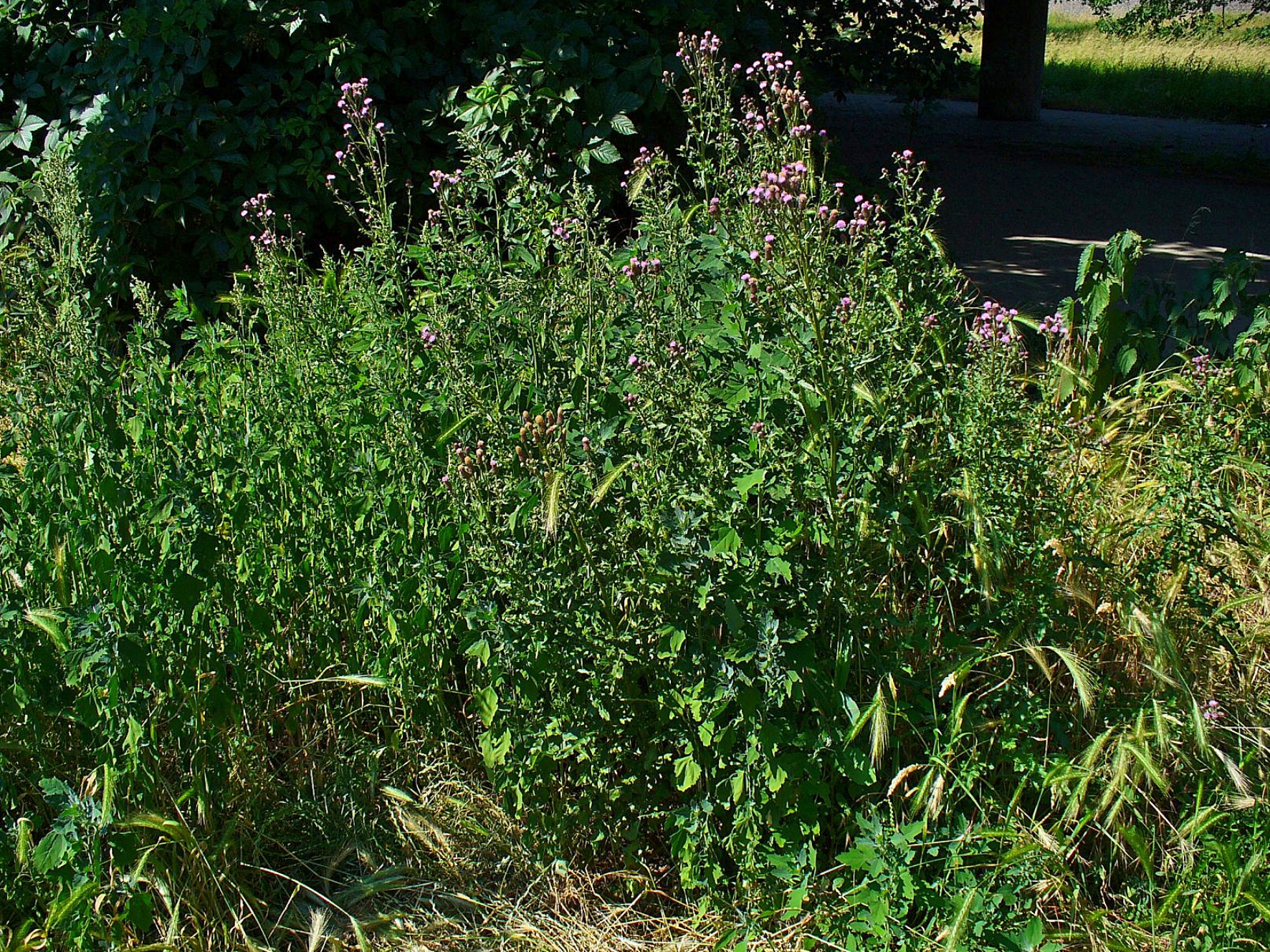
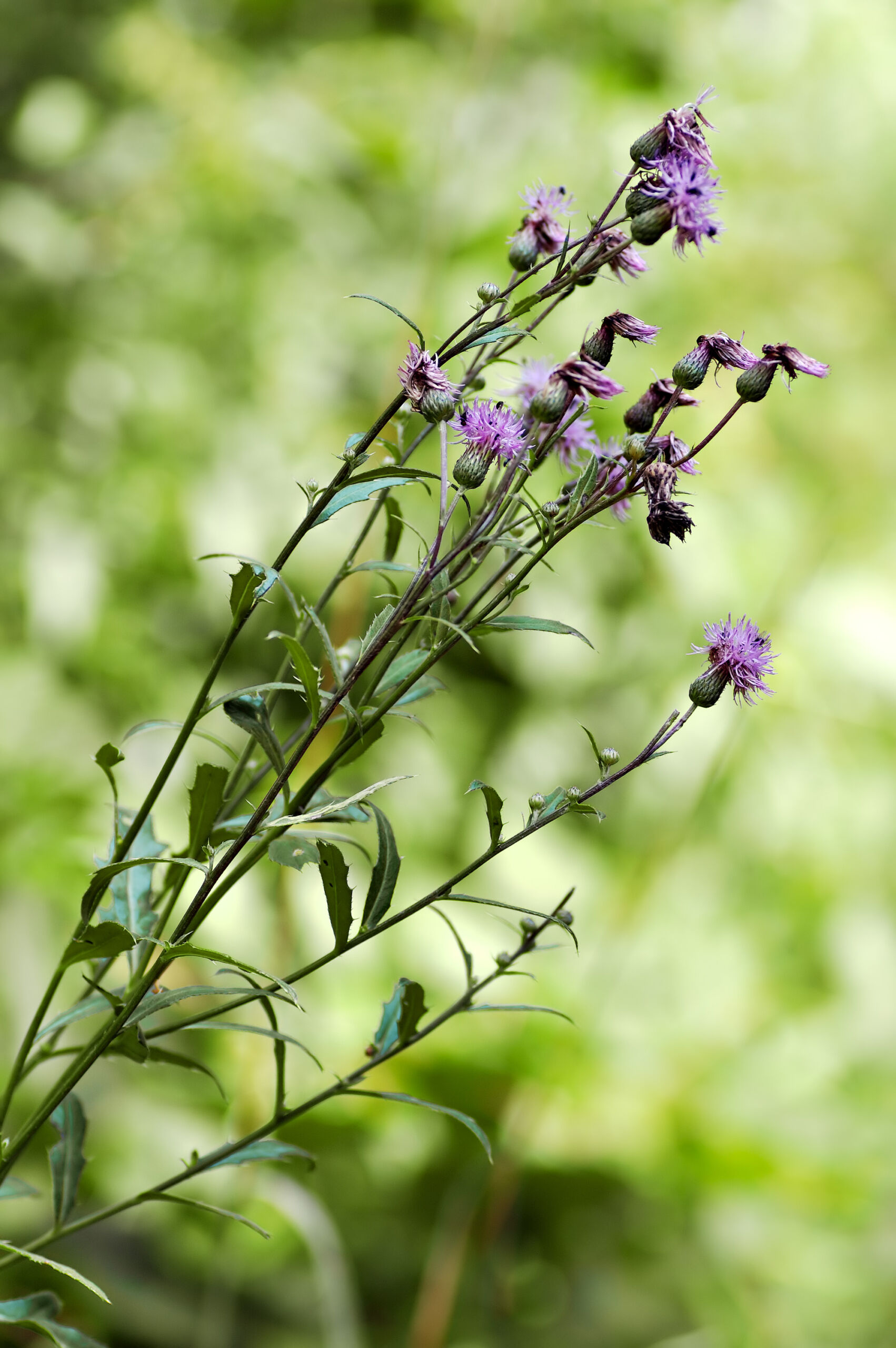
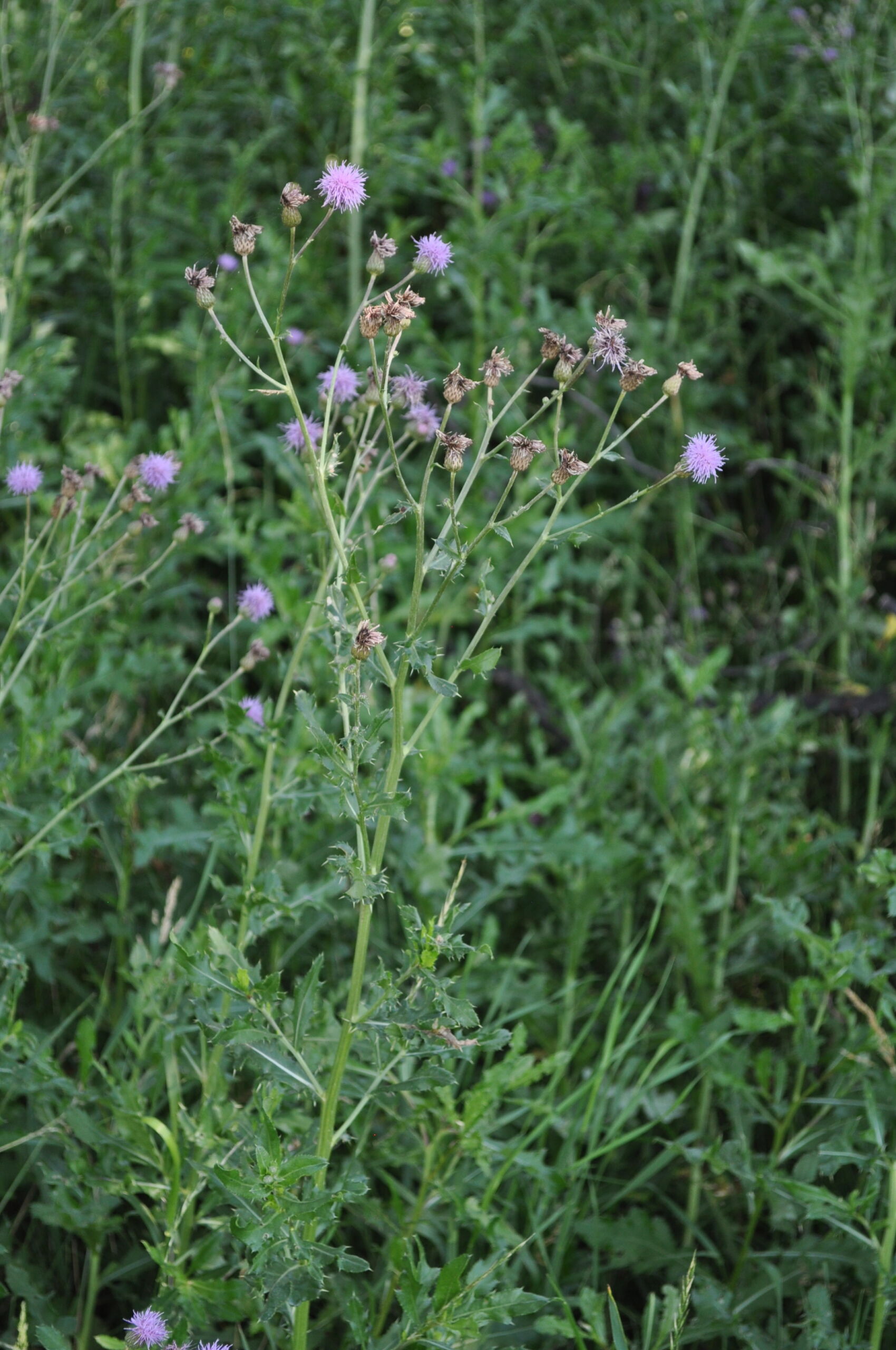
Canada thistle is a name that lies twice over: it is not from Canada, and it is not really a thistle you plant. Its standard English name in its native area is creeping thistle, which is the honest name, because creeping is what it does. Botanically it is Cirsium arvense (L.) Scop., in the aster family (Asteraceae), a perennial herb native throughout Europe, western Asia, and northern Africa, and widely introduced elsewhere — including, in the 1600s, to North America, apparently as a contaminant in seed. It is also called field thistle, and a long tail of folk names follows it around: Canadian thistle, California thistle, corn thistle, cursed thistle, green thistle, hard thistle, perennial thistle, prickly thistle, setose thistle, small-flowered thistle, way thistle, and the splendidly fed-up “lettuce from hell thistle”. The name “Canada thistle” stuck in the United States anyway, despite being, in the words of the standard references, a misleading designation, since it is not of Canadian origin.
Above ground, Canada thistle is a slimmer, more businesslike plant than the bull thistle it is constantly confused with. Stems are 30 to 150 centimetres tall — roughly 1 to 5 feet — slender, green, freely branched toward the top, smooth and hairless, and mostly without spiny wings. That last point is the field mark that matters: bull thistle’s stem is winged with spines all the way down, while Canada thistle’s stem is not conspicuously spiny. The leaves are alternate, sessile and clasping at the base, very spiny and lobed, up to 15 to 20 centimetres long and 2 to 3 centimetres broad, smaller toward the top of the flower stem. The flower heads are the second field mark: small, 10 to 22 millimetres across, pink-purple, with all the florets of similar form, carried 1 to 5 per branch — and a plant in very favourable conditions can carry up to 100 heads per shoot, each head averaging about 100 florets. It is a bouquet of small heads, not a single pom-pom, and once you have seen the difference you will not mix the two thistles again.
Canada thistle also differs from most of its genus in a way you cannot see but that explains its success: unlike other Cirsium species, it is dioecious, with male and female flowers on separate plants, although male plants sometimes produce bisexual flowers. Its flowers are primarily insect-pollinated, and more seeds are produced when male and female plants grow close together. The seeds are 4 to 5 millimetres long with a feathery pappus that rides the wind, and average seed production per plant has been estimated at about 1530 seeds. A plant that can bloom from seed within a year, then throw over a thousand wind-borne seeds per plant per season, does not need your help to spread. It needs your attention to stop.
Below ground is where Canada thistle becomes a legend, and a warning. Its underground structure consists of four types: long, thick, horizontal roots; long, thick, vertical roots; short, fine shoots; and vertical, underground stems. Root buds form adventitiously on the thickened roots and give rise to new shoots, and shoots can also arise from lateral buds on the underground portion of regular shoots, particularly if the shoots are cut off by mowing or when stem segments are buried. Note what that means for the gardener with a hoe: cutting the top off does not kill the plant, and burying a stem segment can plant it. Small root pieces only a few millimetres long can grow new plants, horizontal roots can spread up to 10 feet in a growing season, and individual clones have been recorded reaching 115 feet across. Minnesota Extension notes seeds may survive for up to 20 years in soil. This is not a plant; it is a patch with a root empire, and the patch is the organism.
The butterfly context is two guides, in two different sections, and both matter. The Pale Crescent guide, in its Host plants section, names “Thistles (Cirsium), including bull thistle and Canada thistle” — the genus form belongs to the genus thistle guide, the bull thistle form belongs to the bull thistle species guide, and the Canada thistle form belongs here, and only here. The Viceroy guide names Canada thistle in its Nectar plants and adult food section, among composites including aster, goldenrod, and joe-pye weed: adult Viceroys nectar at it, which is a different relationship from caterpillars eating it, and this guide keeps the two straight. Canada thistle foliage is also recorded as food for over 20 species of Lepidoptera, including the painted lady, and its flowers are visited by a wide variety of insects — bees, moths, wasps, and beetles — with honeybees showing the highest visitation rate in fragrance studies. Its nectar is genuinely rich: in a 2016 study in Britain it ranked as a top producer of nectar sugar, second by production per floral unit. A weed can be ecologically generous and still be a weed. Both things are true, and this guide holds both.
One plain-text disambiguation, because the thistle guides form a family and this one must not swallow its relatives. This guide covers Cirsium arvense only. Bull thistle (Cirsium vulgare) is a biennial with a spiny-winged stem and large single heads, and it has its own species guide; it is not covered here. The genus thistle guide (Cirsium spp.) covers the genus-level “Thistles (Cirsium)” form and lists the group’s species, but it is not a Canada thistle species guide, and this species unit does not replace it. Milk thistle (Silybum marianum) is a different genus entirely, with its own guide. Native thistles — tall, field, swamp, Carolina, yellow thistle and the rest — are named in the genus guide, not claimed here. Buy, plant, or remove by Latin name, and when in doubt, check the stem: spiny wings mean bull thistle, a smooth stem with small clustered heads means Canada thistle, and either way, think twice before you touch it.
How to grow
This section is titled “How to grow” because the template demands it, and its first and firmest advice is: do not grow it. Canada thistle is designated as a noxious weed in 43 states in the United States, was declared a noxious weed by Vermont as early as 1795, was on the weed lists of 25 northern states by 1918 and at least 35 states and 6 Canadian provinces by 1991, and is classified in Canada as a primary noxious weed seed. It is widely considered a weed even where it is native — designated an “injurious weed” in the United Kingdom — and it is cited as a noxious weed in Australia, Brazil, Canada, Ireland, New Zealand, and the United States. It invades prairies, grasslands, riparian areas, cropland, pastures, roadsides, and disturbed sites, forms dense stands that shade out and displace native plants, and changes the plant community it enters. Planting it deliberately, where it is listed, is not gardening; it is an introduction event with paperwork attached. Check your state and local listing before you do anything with this plant, and where it is listed, your legal duty is to prevent its spread, not to cultivate it.
What follows, then, is not growing advice but understanding and management advice, framed the way the bull thistle guide frames it: for the gardener who already has it, or who meets it in the wild and wants to know what they are looking at. Canada thistle establishes on disturbed ground and then holds it with roots. It grows in diverse habitats from moist places to grasslands, mountain slopes, flooded lands, and disturbed sites, at 100 to 4300 metres, and it is a ruderal species — a plant of broken ground, happiest where soil has been opened and competition is thin. In a garden, that means the worst thing you can do is till a patch and walk away: tilling chops roots into fragments, and fragments become plants. The plant’s own biology is the management manual, read backwards: anything that fragments roots without killing them multiplies the problem, and anything that exhausts the roots over seasons reduces it.
Control, from the published record, is a multi-year campaign, not a weekend job. Cutting at flower stem extension, before the flower buds open, prevents seed spread, and repeated cutting at the same growth stage over several years may “wear down” the plant by forcing it to spend root reserves on regrowth. Growing competitive forages such as alfalfa, frequently cut, can help: the frequent cutting hits the thistle too, and the dense forage shades and competes with it, reducing shoot density. Biological control agents recorded for Canada thistle include the gall fly Orellia ruficauda, reported as the most effective biological control agent, whose larvae parasitize fertile seed heads; the weevil Larinus planus, one larva of which can consume up to 95 percent of the seeds in a flower bud, but which has also damaged other thistle species including some that are threatened, so it is not an unqualified good; the rusts Puccinia obtegens and Puccinia punctiformis, the latter used in North America and New Zealand, with systemic disease reported to reduce thistle density substantially over 18 to 42 months after a single spore application in trial sites; and the mite Aceria anthocoptes, considered a good potential agent. None of these is a do-it-yourself release: biocontrol agents are regulated, site-specific, and sometimes the wrong answer where native thistles grow nearby. Chemical control in the literature leans on systemic herbicides, with phenoxy compounds such as MCPA and clopyralid approved in some regions, and glyphosate noted as non-selective and, in other accounts of this weed, not very effective on its own — a reminder to follow your local extension guidance and label law rather than a website’s summary, this one included.
Florida note, stated plainly: Canada thistle is largely absent in the South from Texas to Georgia, and it is a northern weed’s story, not a Florida garden plant. A Florida gardener is unlikely to meet it in a bed, and should not import it to try: the state’s native thistles, named in the genus guide, are the thistles to know, plant, and protect in Florida, and they do not need a northern noxious weed for company. If you are reading this guide in Florida, read it as identification and butterfly context — the Pale Crescent and Viceroy mentions are real, and the plant behind them is real — not as a planting list. And wherever you garden, never add Canada thistle to a cold composting system: seed and root fragments survive it. Bag it, trash it, or hot-compost it under proper guidance, and keep it out of the compost you will spread next spring.
Water & feeding
Water and feeding, for a plant you should not plant, is a description of what it wants, so you can recognize where it will thrive and deny it those conditions where you can. Canada thistle wants open, disturbed, sunlit ground with moisture available — fields, meadows, pastures, waste places, roadsides, prairies, stream banks, wet meadows, wet prairies, and open forests, in the words of the distribution accounts. It tolerates dry to moist open habitats, but its strongholds are the moist, productive ones: deep, well-aerated, productive soils are where it is best adapted, and infestations often start on disturbed ground and then colonize outward, 10 to 12 feet per year by root spread in some accounts. It does not need feeding. It needs no fertilizer program, no compost topdressing, and no irrigation schedule, and giving it any of those things is how a patch gets bigger. The soil science here is the weed’s-eye view of the same nutrient highway the site celebrates elsewhere: moist, humus-rich, productive soil cycles nutrients fast through microbes, fungi, and invertebrates, and a plant with a root empire and a thousand seeds per plant is built to cash in on that highway faster than the natives around it. A thistle patch is, in soil terms, a successful farm — it is just farming the wrong crop.
The one feeding note worth keeping is about what not to feed: do not feed a patch by leaving it alone in a fertile, sunny, disturbed bed and calling it a pollinator planting. Canada thistle’s nectar is real and its pollinator visits are real, but a pollinator planting built on a noxious weed is a planting that exports seed and root fragments to every neighbor’s field. Plant native thistles for the same pollinators, in the same sunny, open ground, and let the native thistles do the nectar work without the legal listing. The butterflies that visit Canada thistle — painted ladies, Viceroys nectaring, Pale Crescent caterpillars — visit native thistles too, and the genus guide names them.
Common problems
- Planting it on purpose. The most consequential problem in this guide. Canada thistle is noxious in 43 states and regulated as seed in Canada. Do not plant it, do not order it, and do not let a “pollinator mix” containing it go into the ground unchecked.
- Confusing it with bull thistle. Bull thistle is a biennial with a spiny-winged stem and large single heads; Canada thistle is a perennial with a mostly smooth, unwinged stem and many small heads. The control differs because the life cycle differs: a biennial dies after seeding, a perennial comes back from roots.
- Tilling or hoeing a patch. Root fragments a few millimetres long become new plants, and buried stem segments sprout. Tilling a Canada thistle patch without a follow-up plan is propagation, not control.
- Letting it seed. About 1530 seeds per plant, wind-borne on a feathery pappus, viable for years in soil. Cut at flower stem extension, before buds open, and do not compost the heads cold.
- Mowing once and declaring victory. Mowing cuts the top and triggers lateral buds on the underground stems. Control is repeated cutting at the same growth stage over several years, plus competition, not a single mow.
- Biocontrol without checking the neighbors. Larinus planus damages native thistles too, including threatened ones. Biocontrol is a regulated, site-specific decision, not a mail-order fix.
- Assuming a small patch is a small problem. A patch is a clone, and clones recorded at 115 feet across started as a fragment. Treat a small patch early, and treat the roots, not just the stems you can see.
Harvest
The harvest of Canada thistle is a cautionary one, and this guide states it the way the old herbals do not. Like other Cirsium species, the roots are edible, though rarely used — not least, in the words of one account, because of their propensity to induce flatulence in some people — and the taproot is considered the most nutritious part. The leaves are also edible, though the spines make their preparation too tedious to be worthwhile, and the stalks are edible and more easily despined. The feathery pappus was used by the Cherokee to fletch blowgun darts, and a distillery on Islay lists creeping thistle among the botanicals in a gin. None of that is a reason to plant it, and none of it is a recommendation to eat it from a patch you are trying to control: harvesting roots from a noxious weed patch spreads fragments, and eating a plant from ground you are managing with herbicides is a separate mistake. The honest harvest here is seed for the birds — goldfinches and linnets feed on the seeds, and painted lady caterpillars eat the foliage — and the knowledge that a plant can be generous to wildlife and still be the wrong plant for your garden. Leave the patch to the goldfinches where it already grows wild, control it where it threatens a field or a native planting, and plant a native thistle where you want the same goldfinches next year.
Browse all plant & pest guides
Propagation
Short version, up front: do not propagate Canada thistle. Do not collect its seed, do not save it, do not sow it, do not share it, and do not transplant a “volunteer” into a garden bed because the flowers looked pretty. This guide exists to help you recognize and deal with the plant, not to help it spread, and this section deliberately contains no germination instructions.
Canada thistle (Cirsium arvense) is one of the most widely regulated weeds in the country. It holds noxious-weed status in more than forty states, is listed as a prohibited noxious weed in states including Minnesota and New York, and sits on quarantine lists — Oregon’s, for example — that prohibit the sale, purchase, and transport of the plants, their seeds, and their parts. That is not a suggestion; in those jurisdictions, moving this plant around is a legal problem, not just a gardening mistake. And the plant earns its reputation honestly: it spreads two ways at once, by wind-borne seed and by creeping underground roots that send up new shoots, so a single patch becomes a colony, and a colony becomes a neighborhood problem that costs farmers real money.
What to do instead: if you find it, keep it from setting seed. Cut or bag flower heads before they fluff out, and dispose of them in the trash, not the compost pile — home compost does not reliably kill thistle seed, and you would only be planting it again with extra steps. Check your own state’s noxious-weed list before you act, since control may be legally required in your county, and your local extension service or noxious-weed board can tell you what applies where you live. If you want thistles for pollinators — a genuinely good instinct — plant a native thistle species that belongs in your region instead. The bees get their flowers, your neighbors get no new infestation, and nobody’s county weed board has to write you a letter. Everybody wins except the Canada thistle, which is exactly the point.
Species
Canada thistle is a single species, so this section names its varieties rather than a list of species, in plain text. Cirsium arvense (Cirsium arvense var. arvense) is the widespread form, most of Europe, with leaves hairless or thinly hairy beneath. Cirsium arvense var. incanum is the southern European form, with leaves thickly hairy beneath. Two further varieties are listed in the Biology of Canadian Weeds account alongside var. arvense, making four in that account in total: Cirsium arvense var. vestitum, with leaves gray-tomentose below; Cirsium arvense var. integrifolium, with leaves all entire or the upper leaves entire and the lower leaves shallowly and regularly pinnatifid or undulating; and Cirsium arvense var. horridum, with thick, subcoriaceous leaves, a wavy surface, and long, stout marginal spines. Variation in leaf characters — texture, hairiness, segmentation, spininess — is the basis for telling these varieties apart, and none of them is a separate garden plant: all of them are Canada thistle, all of them are the same management problem, and none of them should be planted deliberately where the species is listed as noxious.