
🌿 Carolina Indigo
What it looks like

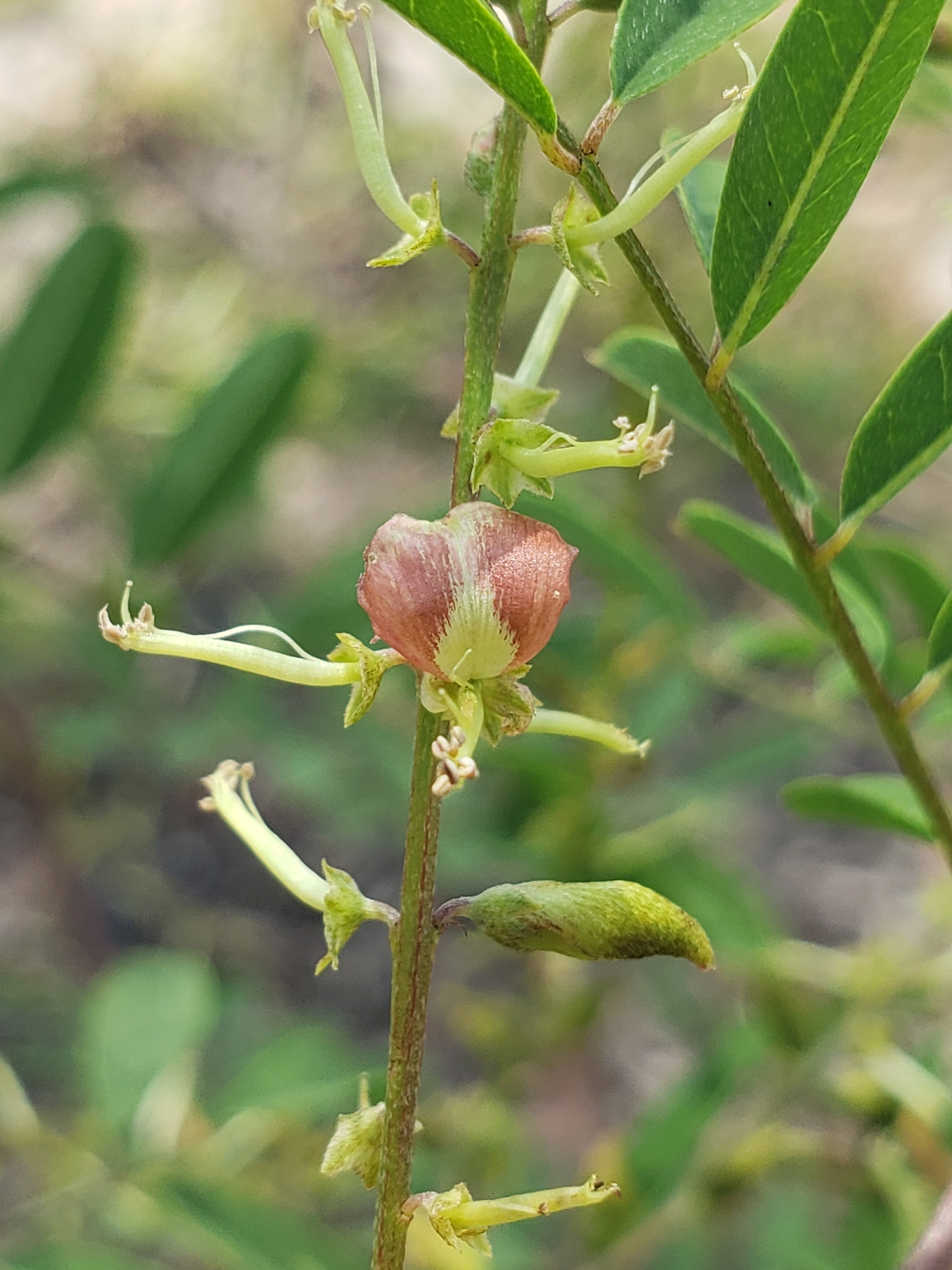
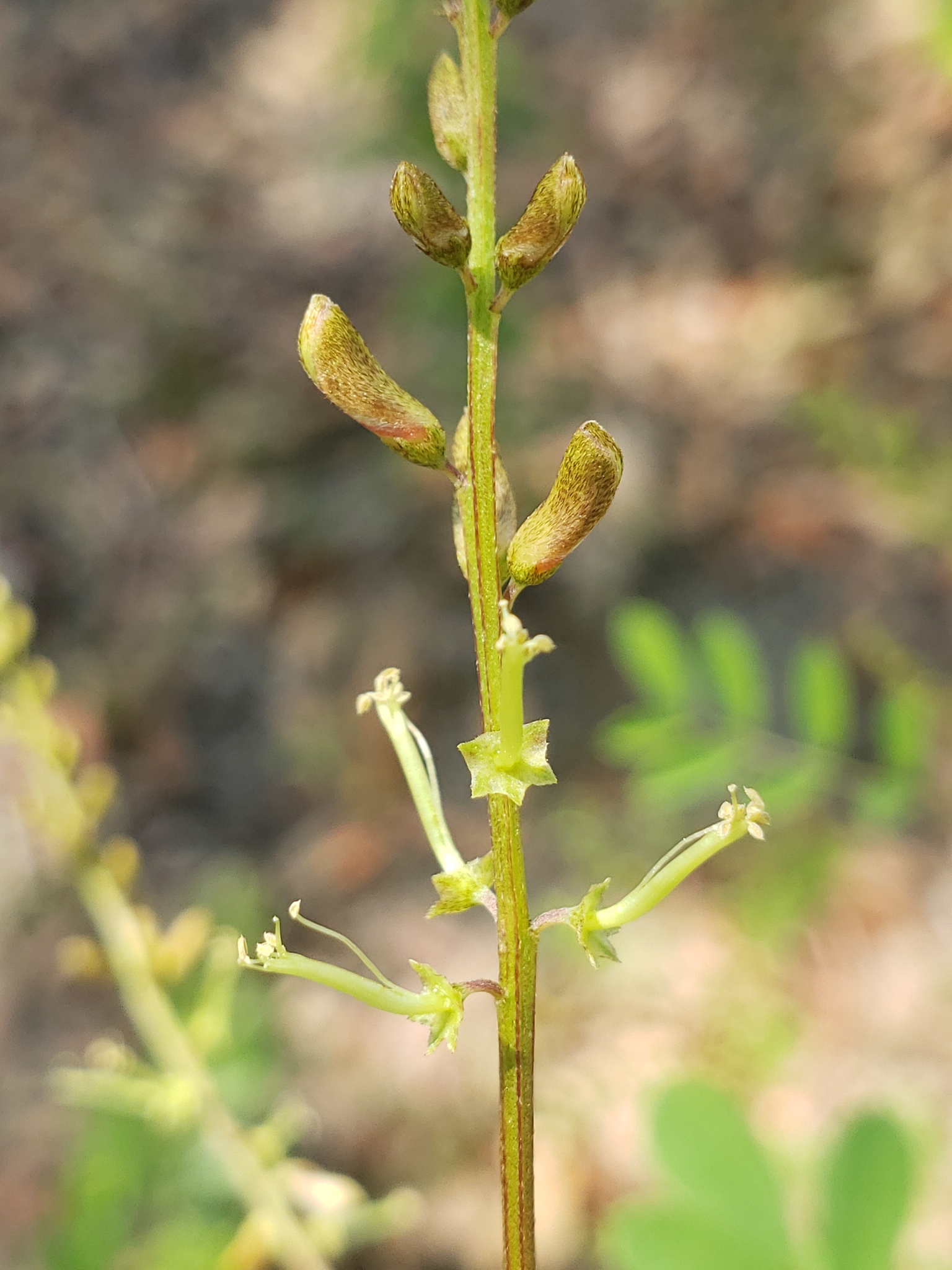
Carolina indigo is the indigo that actually belongs to the southeastern United States, and the first thing to say about it is what it is not. It is not Baptisia, the blue false indigo of eastern gardens, and it is not the plant behind the “Carolina wild indigo” name — that one is Baptisia cinerea, a different genus wearing a confusingly similar common name. Carolina indigo, plain and without the “wild,” is Indigofera caroliniana, a member of the true indigo genus, and it is a suffruticose herb: partially woody at the base, herbaceous above, typically 0.5 to 1.2 metres tall and occasionally reaching 2 metres. It is a legume through and through, and it looks like one — odd-pinnate leaves 5 to 10 centimetres long, with 9 to 15 obovate to oblanceolate leaflets each 1 to 2.5 centimetres long, on a finely hairy rachis, and slender racemes 6 to 20 centimetres long that usually poke out beyond the leaf they spring from. The flowers are small and quietly strange in colour: pinkish to yellowish-brown, with a standard and keel 5 to 6 millimetres long, the wings slightly shorter and stuck to a pouched keel, and diadelphous stamens in the classic pea arrangement of nine fused plus one free. The fruit is a short, beaked little legume, 5 to 10 millimetres long, holding one to three seeds. Nothing about it shouts. It is a sandhill plant, and sandhill plants have learned that shouting is a waste of water.
Its range is a Coastal Plain story: eastern North Carolina south to south Florida and west to southeastern Louisiana, a southeastern endemic that grows in longleaf pine sandhills, maritime forests, Florida scrub, and other sandy forests and woodlands. Flowering runs roughly June to August, with fruit following July to October. That habitat list is also the growing advice, and it is worth reading it as a set of instructions: this is a plant of dry, sandy, sunny, fire-shaped ground, not of rich garden loam and daily irrigation. In the sandhills, the soil is mostly sand, the nutrients are mostly elsewhere, and the plants that thrive are the ones that make their own nitrogen — which is exactly what a legume does, with the help of rhizobia bacteria in root nodules that take nitrogen from the air and turn it into plant food. Carolina indigo is doing quiet soil work while it stands there looking unremarkable, and that is the whole point of a legume in a poor soil: it feeds itself, and when its leaves drop and its roots turn over, it feeds the ground around it too.
The dye question comes up with every Indigofera, so let us settle it honestly. The genus Indigofera is the genus that gave the world indigo dye — indigotin, the blue that coloured denim and empires — and Carolina indigo was used as a dye plant in the eighteenth century. But this species is not the commercial dye crop; that was Indigofera tinctoria and its tropical relatives, grown at plantation scale. Carolina indigo is a wild southeastern shrub, not a dye plantation in miniature, and this guide does not present it as a practical home dye source. Its value in a modern garden is ecological, not industrial: a native legume for dry sandy ground, a nectar and foliage plant for the insects that evolved with it, and a piece of the longleaf pine ecosystem that is far rarer than it used to be.
The butterfly connection is the reason this guide exists, and it is a legume-menu story. The Ceraunus Blue guide lists Carolina indigo in its Host plants section, among a spread of woody and herbaceous legumes: partridge pea, milkpeas, mesquite, rabbitbells, and tropical-puff, among many other legumes. The Ceraunus Blue is a legume generalist as a caterpillar — it is not a one-plant butterfly — and Carolina indigo is one item on a long pea-family menu. That matters for how you plant it: a single Carolina indigo in a garden is not a Ceraunus Blue factory, and no honest guide would promise one. A patch of native legumes in sandy sun, Carolina indigo among them, is a habitat, and habitats are what generalist blues actually use. Plant it as part of that spread, not as a solo act.
One plain-text disambiguation, because the indigo names on this site are a genuine tangle and this guide must not swallow its neighbours. This guide covers Indigofera caroliniana only. The Indigofera genus guide covers the genus as a whole and does not cover this species in particular. Baptisia species — blue false indigo and its relatives, including Baptisia cinerea, the “Carolina wild indigo” — are a different genus and are not covered here, even though some secondary sources loosely call Carolina indigo “wild indigo” or “blue false indigo.” Buy and plant by Latin name, Indigofera caroliniana, and if a seller offers you something called Carolina indigo without a Latin name, ask which genus it is before you pay.
How to grow
Growing Carolina indigo starts with an honest admission: this is a wild species, not a nursery cultivar, and there is no standard garden datasheet for it — no pinned zone range, no pinned soil pH, no named varieties to choose between. What exists is its habitat, and habitat is a good teacher if you listen to it. Plant it in full sun in very well-drained sandy soil, the kind of ground where water disappears fast and the soil never stays soggy. Longleaf pine sandhills, scrub edges, and sandy woodland openings are its home, so a sunny, sandy, unamended spot suits it far better than a rich, mulched, irrigated perennial bed. Do not drown it with kindness: rich soil and constant water are how you kill a sandhill plant, slowly, while congratulating yourself on how well you are treating it. Give it sun, sand, drainage, and room to reach its natural 0.5 to 1.2 metres, and leave the fertilizer bag in the shed — a nitrogen-fixing legume in poor soil does not need you to add nitrogen, and adding it mostly encourages everything around it to outgrow it.
Propagation follows the legume pattern: seed, and patience. Legume seeds often have hard coats that need scarification — a nick, a rub with sandpaper, or a hot-water soak — before they wake up, and this species’ small beaked pods ripen July to October, so seed collected in fall and sown after a scarification treatment is the sensible route. Nursery-grown stock is scarce, because this is not a mainstream garden plant, so expect to hunt for a native-plant nursery that actually grows southeastern sandhill species, and expect to be told it is out of stock. That scarcity is also a conservation note: buy nursery-grown plants, never dig wild ones. In the southern part of its range it is far from common — south Florida records are vanishingly thin, with a single 1964 collection near Miami and later reports never verified — so wild plants are not a resource to harvest, they are a population to leave alone.
Florida note, stated plainly because this site is a Florida site and this plant’s Florida story is complicated. Carolina indigo is native to Florida, but it is a plant of the state’s sandy uplands and scrub, and in peninsular south Florida it is imperiled and barely recorded at all. North and central Florida gardeners with genuinely sandy, sunny ground are in its world; south Florida gardeners should treat it as a plant at the extreme edge of its range, not a reliable garden shrub, and should check local native-plant sources before assuming it will thrive. It is not a plant for a wet, rich, irrigated south Florida bed under any circumstances. Grow it like a sandhill, or do not grow it.
Water & feeding
Water, for a sandhill legume, is mostly a question of drainage. Once established in sandy soil in full sun, Carolina indigo wants the rainfall pattern of its habitat: rain, then drainage, then dryness, not a permanently moist root zone. Water to establish a new planting, then back off and let the sand do what sand does. A mulch of pine straw or fallen leaves, thin rather than deep, suits it better than a thick wood-chip blanket that holds moisture against the crown. Feeding: none, in any normal sense. This is a nitrogen-fixing legume in poor soil; its root nodules and their rhizobia are the fertilizer program, and they run on sunlight and air. Compost topdressing is unnecessary and, in a sandhill planting, counterproductive — it invites weeds and richer-soil competitors into exactly the lean ground this plant is built for. The soil science here is the sandhill story: in sand, nutrients wash through fast, organic matter is scarce, and the plants that persist are the ones that fix their own nitrogen, partner with fungi, and grow slowly on little. Carolina indigo is one of those plants, and its yearly leaf drop returns a little nitrogen to ground that has almost none to spare. That is a small gift, but in a sandhill, small gifts are the whole economy.
Common problems
- Wrong indigo. The most consequential problem in this guide. “Carolina wild indigo” is Baptisia cinerea, a different genus; “Carolina indigo” without “wild” is Indigofera caroliniana. Buy by Latin name or you may grow the wrong plant for years before noticing.
- Too much water, too much richness. Soggy soil and heavy fertilizer are how sandhill plants die in gardens. Sandy drainage and lean soil are not neglect here — they are the habitat.
- Scarcity. Nursery stock is hard to find and wild collection is not an option. Plan ahead, order from a southeastern native nursery, and accept that this plant may take a season to source.
- Slow first year. A wild legume building roots in sand looks unimpressive before it looks good. Give it a full season before judging it.
- Caterpillar nibbling. Legume-feeding caterpillars, including blues, may eat leaves. That is the point of planting a host plant. Do not spray the caterpillars — they are the crop.
- South Florida disappointment. At the southern edge of its range this species is rare and marginal. If you garden in deep south Florida, choose a legume native to your area instead of forcing this one.
Harvest
Carolina indigo’s harvest is seed and habitat, not dye and not dinner. If you grow it, collect the small beaked pods in late summer to fall, when they have ripened after the June-to-August flowering, and save the one to three seeds per pod for scarified sowing — that is the propagation harvest, and it is enough. Do not harvest it for dye: this wild species is not the commercial indigo crop, and stripping a scarce native shrub for a dye experiment is a poor trade. Do not eat any part of it. The real harvest is what you see if you leave it alone: a native legume holding sandy ground, fixing nitrogen into poor soil, and offering its leaves to the blues that evolved to eat legumes — Ceraunus Blue caterpillars among them, when the wider legume spread around it gives them a reason to stay. Leave the plant standing through the season, let its pods ripen, and let the sandhill do what it has always done, slowly, on very little, and entirely without your fertilizer.
Browse all plant & pest guides
Saving seeds
Carolina indigo saves its own seeds in small beaked pods, one to three seeds per pod, ripening in late summer to fall after the June-to-August flowering, and the seed harvest is a quiet one: walk the plant when the pods have turned brown and dry, pinch them off into a paper bag, and let them finish drying indoors for a week or so before you shell them out. Do not collect from wild plants. This is a scarce native shrub of sandhills and pine woods, and a garden plant raised from nursery stock gives you all the seed you need without thinning a wild population. Take seed only from your own plants, leave plenty of pods on the bush for the plant’s own business, and remember that the name trap is real: Carolina indigo is Indigofera caroliniana, not the Baptisia species sold as Carolina wild indigo, so label your jar with the Latin name and save yourself a mystery seedling next spring.
Like most legumes, Carolina indigo wears a hard seed coat, and that coat is why a handful of seed sown raw can sit in the soil and sulk. Nick each seed lightly with a file or a sharp blade on the side away from the little eye, or pour warm water over the seeds and soak them overnight, and sow the ones that swell. Sow shallowly, barely covered, in a free-draining mix, keep the mix warm and evenly moist but never soggy, and expect sprouts over one to four weeks, with some seeds taking their time and some never waking up at all. Sources disagree on the exact timing, which is normal for a wild species that has not been bred for uniform germination, so sow generously and judge success by the pot, not by any single seed. Seedlings grow a taproot early, so start them in deeper pots than you think they need and move them to their final spot while they are still young, because a legume with a taproot does not forgive rough transplanting the way a fibrous-rooted annual does.
Seedlings of a wild species grow true in the only sense that matters here: there is no named cultivar to lose, so a seedling is Carolina indigo, full stop, with the normal variation you would expect from a plant that reproduces by seed rather than by clone. Crossing with other Indigofera species is not a practical concern for a home gardener growing one native shrub, and isolation distances are not something you need to measure, though if you grow several Indigofera species side by side and plan to share seed, keep the seed lots labelled by mother plant so the next gardener knows what they are getting. For storage, dry the seeds thoroughly, jar them airtight with a desiccant packet, and keep them cool and dark; Florida humidity is the enemy here, and a jar of half-dried legume seed in a warm shed will lose viability faster than the same jar in a cool closet. Well-dried legume seed generally keeps for a few years, so date the jar and sow the oldest seed first. And if you want an exact copy of a particular plant rather than its children, take softwood cuttings in the growing season instead, because seed gives you the species and cuttings give you the individual.
Species
Indigofera caroliniana is a single species, and this guide covers that species only — there are no varieties of it named here, because no garden varieties of this wild species were verified. Its relatives in the genus, named here in plain text and not covered by this guide, include Indigofera tinctoria (true indigo, the commercial dye species), Indigofera suffruticosa (anil indigo), Indigofera hirsuta (hairy indigo), and Indigofera australis (Australian indigo), all covered at genus level by the Indigofera genus guide. The plants most often confused with it are not Indigofera at all: Baptisia tinctoria (blue false indigo, wild indigo) and Baptisia cinerea (Carolina wild indigo, grayhairy wild indigo) are Baptisia species, and they are not covered here. Grow Carolina indigo by its Latin name, Indigofera caroliniana, and let the genus guide be the map of its relatives, not a substitute for this species.