
🌿 Carolina Vetch
What it looks like
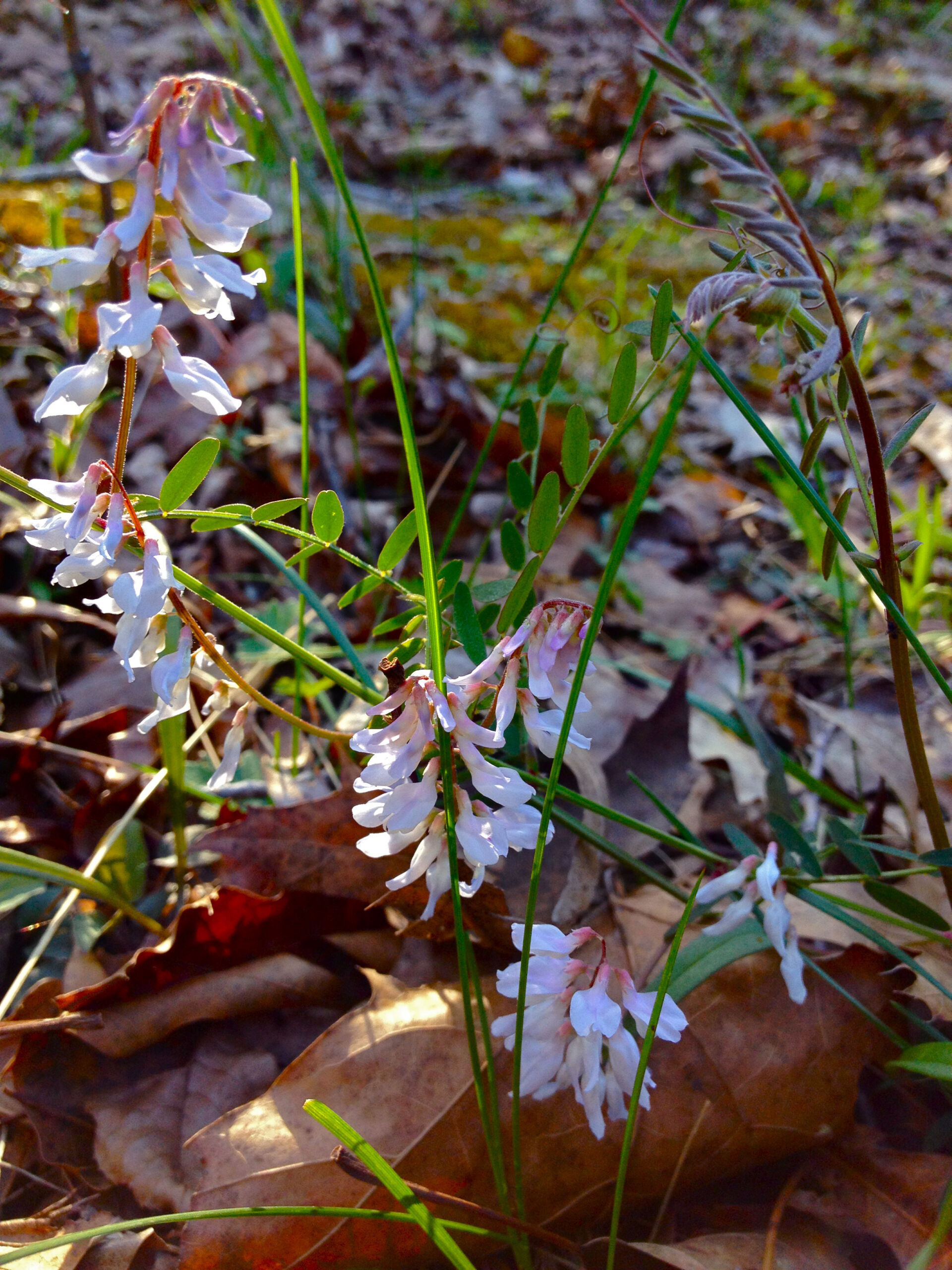
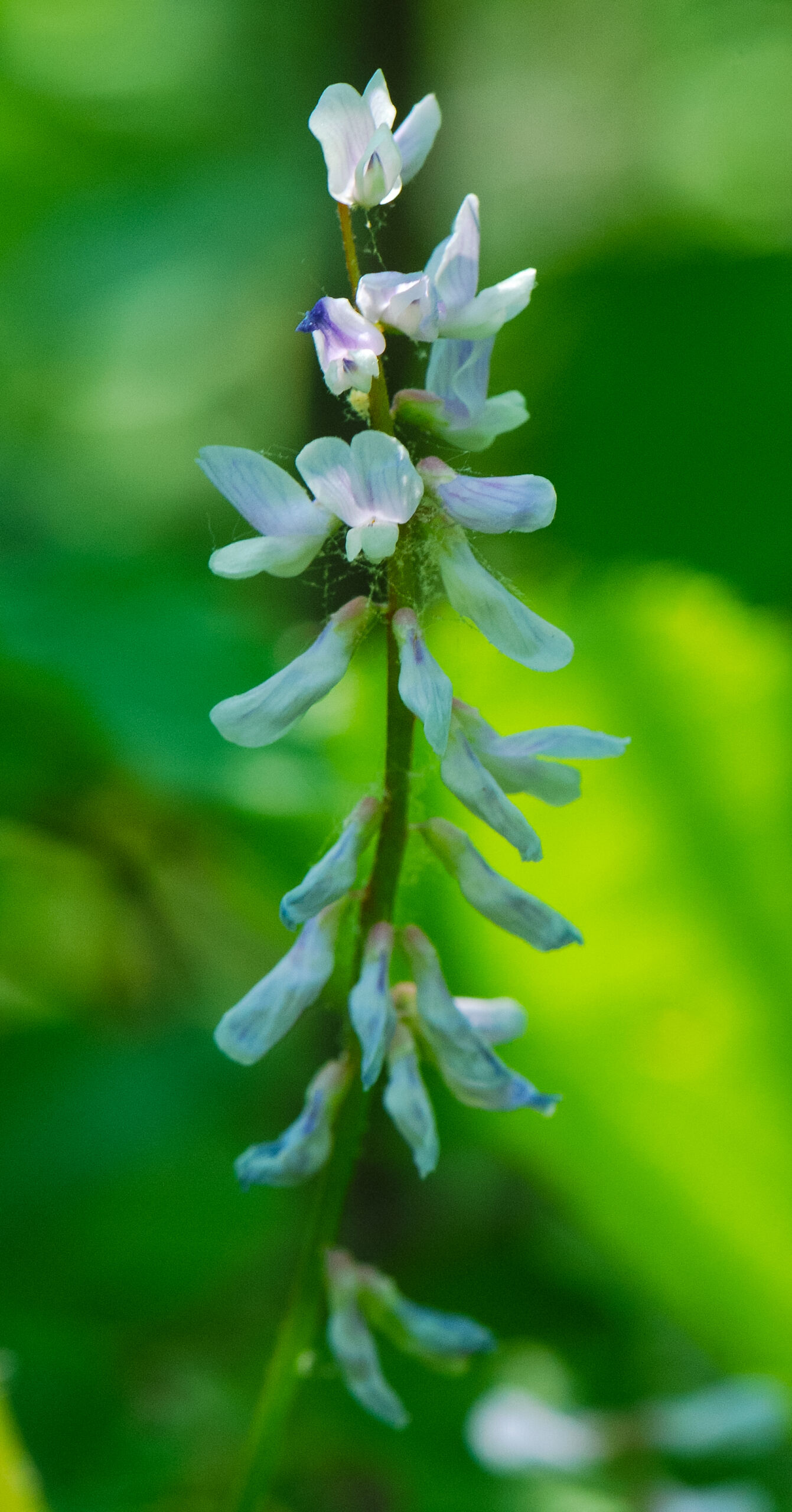
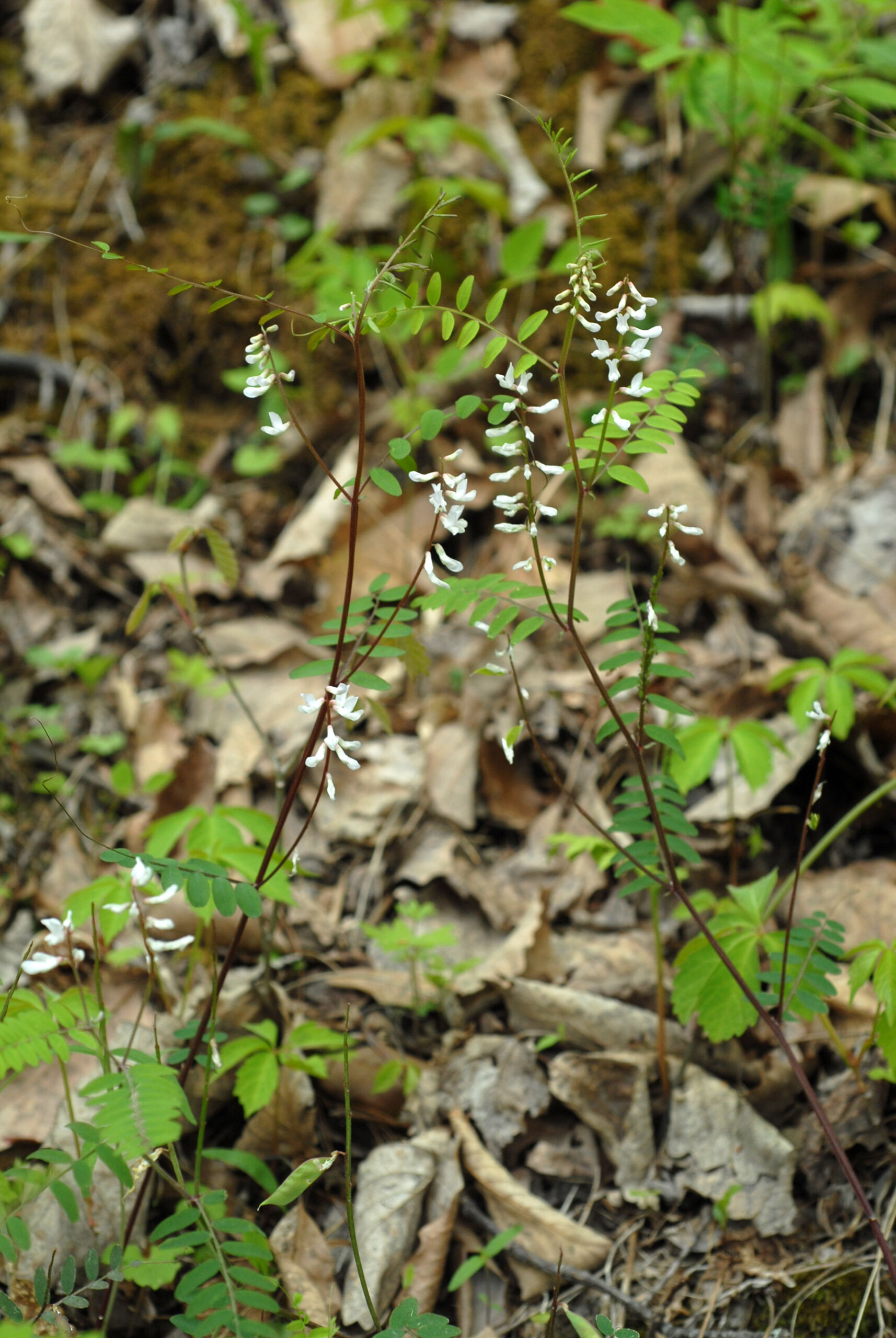
Carolina vetch is the native vetch that does not make a fuss about itself, which is probably why it is easy to walk past and hard to forget once you learn it. Vicia caroliniana is a rhizomatous perennial vine in the pea family, Fabaceae, also called Carolina wood vetch and pale vetch — three common names for one plant, and the “wood” in wood vetch is the useful clue, because this is a vetch of woods and forest edges, not of farm fields and cover-crop mixes. Its stems are slightly winged and hollow, sprawling or climbing to about 1.5 metres, and they climb the way vetches climb: with tendrils, the leaf tips themselves modified into grasping threads that hook onto whatever is nearby. The compound leaves are alternately arranged, with paired stipules at their bases and elliptical to lanceolate leaflets with hairy undersides, and each leaf ends in a single or forked tendril, as if the plant ran out of leaf and decided to become a hand instead. The flowers are the classic pea shape in miniature — five petals, 8 to 12 millimetres long, pale purple to white, sometimes tinged, with bright orange to yellow anthers that give the pale flower a lit centre — borne in loose racemes of 8 to 20 flowers on stalks from the leaf axils. The pods that follow are small dehiscent legumes, 1.5 to 3 centimetres long, that split to release their seeds. It is a small flower on a scrambling vine, and in a woodland edge in spring it is exactly enough.
Its range is broad and eastern: native to the United States across the eastern half of the country, from New York west to Minnesota and south to Texas and Florida, and into southern Canada, in woods, forest edges, clearings, and dry open ground, often at the edges of oak and oak-hickory forests. It prefers woods and forest edges, and it does best in well-drained, mildly acid soils while tolerating most soil types, including clay — a tolerance that makes it far more gardenable than its wild reputation suggests. Unlike some of its genus-mates, it is not weedy: it sprawls and twines, it does not rampage, and it is a plant for a naturalized area or a native pollinator garden, allowed to twine along other plants or sprawl along the ground, rather than a plant that needs a leash.
The name needs one careful note, because “vetch” covers a crowd and this guide is about one member of it. Vicia is a large genus, and the vetches gardeners usually meet are the Old World cover crops and weeds — common vetch, hairy vetch, tufted vetch — while Carolina vetch is the native eastern woodland species, a perennial vine rather than an annual field plant. Its synonyms tell the same story of a plant that botanists kept re-sorting: Cracca caroliniana, Ervum carolinianum, Vicia hugeri, Vicia parviflora, among others, all now folded into Vicia caroliniana. And it has a human history that deserves a respectful sentence rather than a recipe: Native peoples of the southeastern United States, including the Cherokee, used this plant for a variety of medicinal purposes, for back pains, local pains, muscle cramps, and stomach cramps. This guide reports that history; it does not recommend medicinal use, and no part of this plant should be eaten or brewed on the strength of it.
The butterfly connection is a nectar story, and a generalist one. The Juvenal’s Duskywing guide lists Carolina vetch in its Nectar plants section, among winter cress, dandelion, wild plum, wisteria, blueberry, redbud, and lilac flowers — a spring menu of small, open flowers for a skipper with a short proboscis. Adult duskywings are generalists at the flower: they take nectar from whatever is blooming nearby, with a preference for small, open flowers they can reach. Carolina vetch fits that bill exactly — small, pale, open pea flowers in spring, at the woodland edge where a duskywing is already patrolling. It is not listed as a host plant for this skipper, and this guide does not claim it as one. Its butterfly value is nectar, offered in the right shape, at the right season, in the right place.
One plain-text disambiguation, because the vetch names on this site overlap and this guide must not swallow its neighbours. This guide covers Vicia caroliniana only. The Vicia genus guide (vetch) covers the genus as a whole and does not cover this species in particular, and the common, hairy, tufted, narrowleaf, and American vetches are different species, not covered here. Buy and plant by Latin name, Vicia caroliniana, and if a seller offers “vetch” without a species name, you do not yet know what you are buying.
How to grow
Growing Carolina vetch starts with giving it something to climb through and then mostly leaving it alone. Plant it in a naturalized area, a woodland edge, or a native pollinator garden, in part shade to sun, in well-drained soil — mildly acid if you can manage it, but clay-tolerant and unfussy about soil type in general. Let it twine along other plants or sprawl along the ground; it is a vine that wants neighbours, not a trellis all to itself, and it looks best weaving through shrubs and sturdy perennials at a woodland margin, where its pale spring flowers show against darker green. Space it with room to sprawl to its 1.5-metre length, and do not plant it in a formal bed where a scrambling vine will read as a mess — this is a plant for the edge, not the centrepiece, and edges are where it does its best work.
Propagation follows the legume pattern: seed, with the usual hard-coat caveat. Vetch seeds often need scarification — a nick or a soak — before they germinate reliably, and nursery stock of this native species is a specialty item, so expect to source it from a native-plant nursery rather than a garden centre. Its rhizomatous habit means an established plant spreads gently underground, which is a feature in a naturalized planting and a reason to site it where a little wandering is welcome. It is a perennial, so once it is in, it comes back — no annual re-sowing, no cover-crop turnover, just a woodland vine returning each spring with its tendrils out, looking for something to hold onto.
Florida note, stated with the range rather than against it. Carolina vetch is native to Florida and recorded there, but it is a plant of the state’s woodlands and edges, and its heartland is the eastern United States broadly, not the subtropics. North Florida gardeners with woodland edges are in its world; gardeners further south should treat it as a plant at the warm edge of its range and check local native-plant sources before assuming it will persist through a hot, humid summer in rich, wet ground. It wants drainage and an edge, not a swamp and a spotlight.
Water & feeding
Water, for a woodland-edge vetch, is moderate and unremarkable: water to establish, then let normal rainfall carry it, with extra water only in a genuine dry spell. It does not want a wet foot — well-drained soil is the recurring phrase in every account of it, and a soggy hollow is the wrong address. A leaf-litter mulch suits it, as it suits every woodland-edge plant, holding moisture without waterlogging and feeding the soil community as it breaks down. Feeding: none needed, in the legume way. Its root nodules fix nitrogen from the air, so a vetch in ordinary garden soil is already fertilizing itself and, over time, the ground around it. Do not pour high-nitrogen fertilizer on a nitrogen-fixing plant; you will mostly feed its competitors. The soil science here is the woodland-edge story: leaf litter, fungi, and a slow, steady cycle of organic matter, with legumes as the nitrogen importers that keep the whole edge productive on lean inputs. Carolina vetch is a small importer, but in a woodland edge, small importers add up.
Common problems
- Wrong vetch. The most consequential problem in this guide. Common, hairy, and tufted vetches are different species, often annuals, often weedy. Carolina vetch is a native perennial woodland vine. Buy by Latin name, Vicia caroliniana.
- Too formal a bed. A scrambling, twining vine reads as a mess in a formal border. Plant it at a woodland edge or in a naturalized area, where sprawling is the aesthetic.
- Wet feet. Well-drained soil is the requirement. A soggy site will rot what a woodland edge would have kept happy.
- Hard seed. Legume seed coats resist germination. Scarify or soak before sowing, or buy nursery-grown plants.
- Medicinal confusion. Historical medicinal use by Native peoples is reported here, not recommended. Do not eat or brew this plant.
- Expecting a host plant. For Juvenal’s Duskywing this species is nectar, not a caterpillar host. Plant it for spring flowers at the woodland edge, and plant the skipper’s actual hosts alongside if host habitat is the goal.
Harvest
Carolina vetch’s harvest is seed and spring flowers, and both are modest in the best way. Collect the small pods when they ripen and split, save the seed for scarified sowing, and let the plant do the rest — it is a perennial, so the real harvest is the return each spring, tendrils first, then pale purple-to-white flowers with orange anthers, at the woodland edge, feeding the generalist skippers and bees that work small open flowers. Do not eat any part of it, do not brew it, and do not spray it when caterpillars or pollinators show up — a nectar plant that kills its visitors has missed the point entirely. Leave it sprawling through its neighbours, let its rhizomes wander a little, and let a woodland edge be a woodland edge, with a native vetch in it doing quiet nitrogen work underfoot.
Browse all plant & pest guides
Saving seeds
Carolina vetch does not wait around to be harvested, and that is the first thing to know about saving its seed. Its little pea-like pods ripen in summer and then explode open, flinging their seeds away from the mother plant with a pop, which is a wonderful dispersal strategy and a terrible one for a seed saver who arrives a day late. Watch the pods as they turn brown and dry, and slip a small paper bag or a square of muslin over a cluster of pods before they split, or cut the whole stem with pods just turning and let it finish in a paper bag indoors, where the popping seeds land in the bag instead of in your lawn. Each pod holds a handful of small seeds, and a single sprawling plant gives you more seed than one garden needs, so take a modest share and leave the rest to the plant. Do not eat any part of this plant, and do not brew it: vetch seed is for sowing, not for supper.
Carolina vetch seed wears the classic legume hard coat, and it also carries a dormancy that a warm windowsill alone will not break. The nursery protocol for this species uses cold, moist stratification, which is just a formal way of saying winter: mix the scarified seeds into barely damp sand or vermiculite in a sealed bag or small container, and refrigerate them for roughly six to eight weeks, checking now and then that the medium stays damp but not wet and that no mold is moving in. Before the cold treatment, nick each seed coat lightly with sandpaper or a file, or soak the seeds in warm water overnight, to let water in once the cold has done its work. The lazy alternative, and an honest one, is to sow outdoors in fall and let a real winter do the stratifying for you, which suits this plant’s woodland-edge habits and saves you fridge space. Either way, sow shallowly, about a quarter to a half inch deep, in well-drained soil, and expect germination over one to a few weeks after the cold treatment ends, with some seeds straggling behind the first wave. That unevenness is normal for a wild perennial, not a sign that you did it wrong.
Seedlings of a wild species are the species, not a cultivar, so there is no true-to-type problem to worry about and no isolation distance to measure for a home garden: grow one plant, save its seed, and you have Carolina vetch, with the usual gentle variation between seedlings. If you grow several vetch species together and intend to share seed, label each lot by mother plant, because vetch seeds all look like small brown peas and a mixed jar is a mystery nobody enjoys solving. For storage, dry the seeds until they are hard and rattle dry, jar them airtight with a desiccant packet, and keep them cool and dark; in Florida, dry them thoroughly before jarring, because humid air trapped in a jar will quietly kill legume seed that would otherwise keep for a few years. Date the jar, sow the oldest seed first, and remember that the plant itself is a perennial with wandering rhizomes, so the best seed bank of all is a healthy plant left in the ground at the woodland edge, coming back each spring whether or not you remembered the jar.
Species
Vicia caroliniana is a single species, and this guide covers that species only — no subspecies or varieties are recognized, and no garden varieties of it were verified, so none are named here. Its relatives in the genus, named here in plain text and not covered by this guide, include Vicia sativa (common vetch), Vicia villosa (hairy vetch), Vicia cracca (tufted vetch), Vicia angustifolia (narrowleaf vetch), and Vicia americana (American vetch), all covered at genus level by the Vicia genus guide. Grow Carolina vetch by its Latin name, Vicia caroliniana, and let the genus guide be the map of its relatives, not a substitute for this species.