
🌿 Cenizo
What it looks like
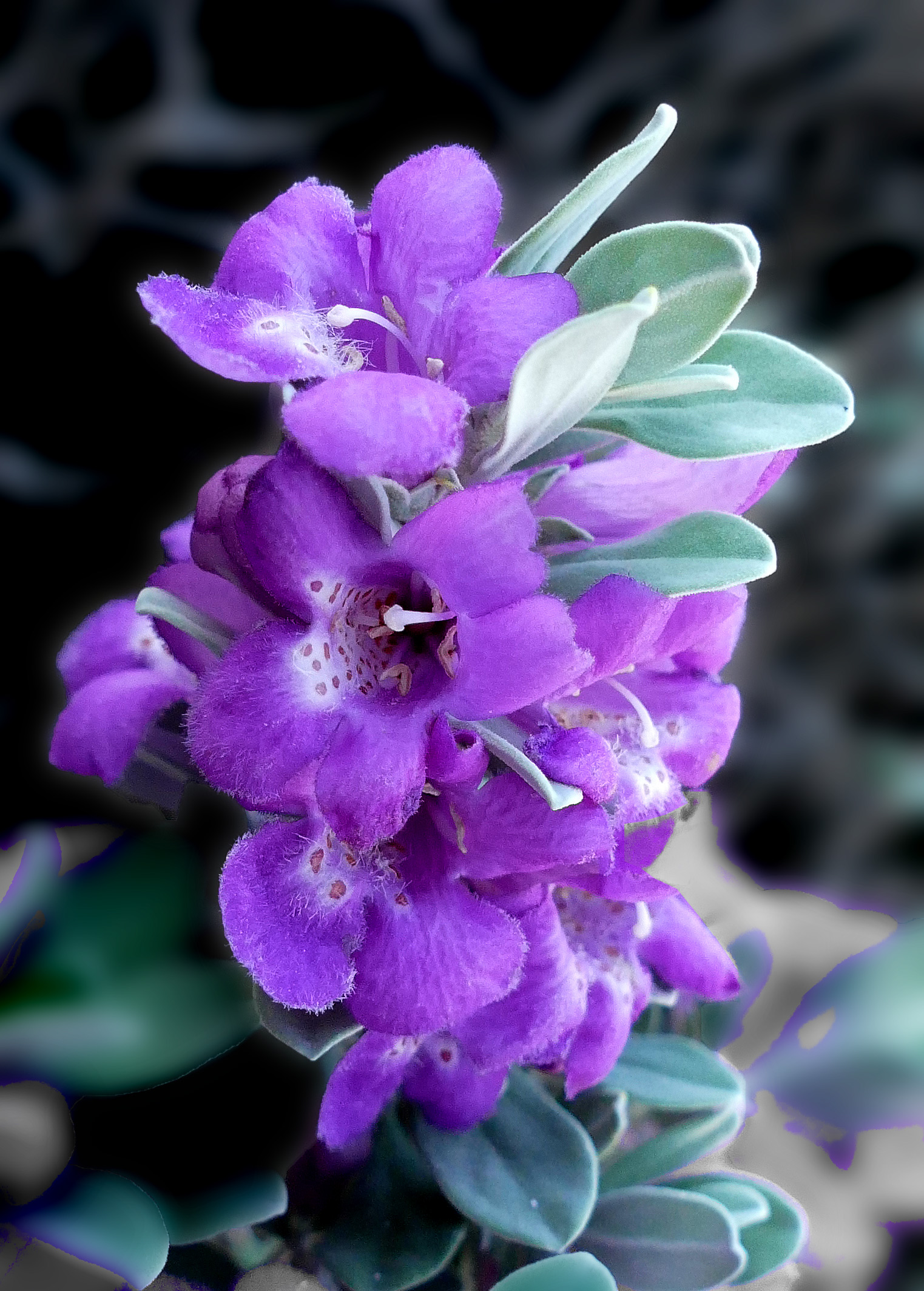
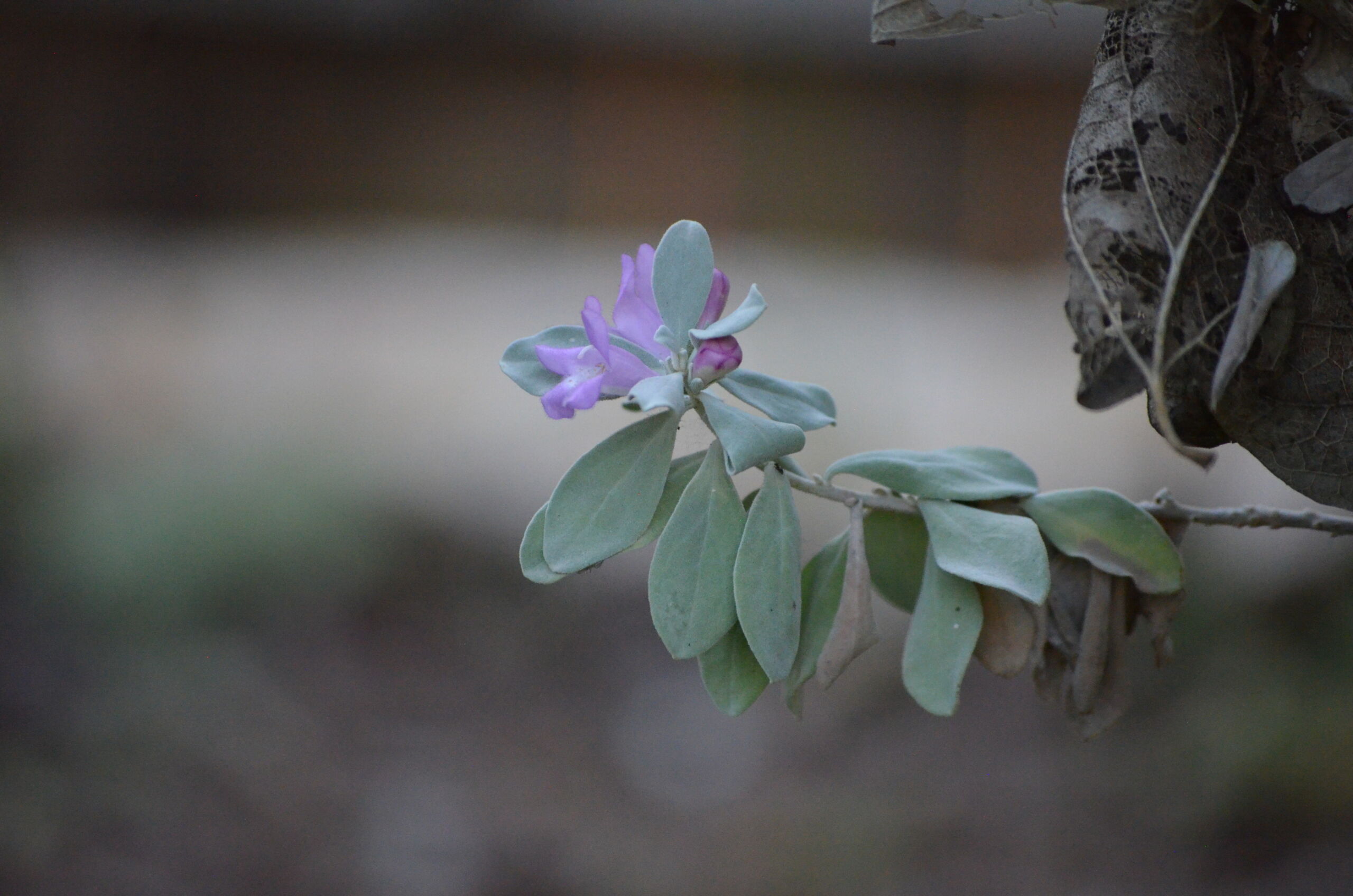
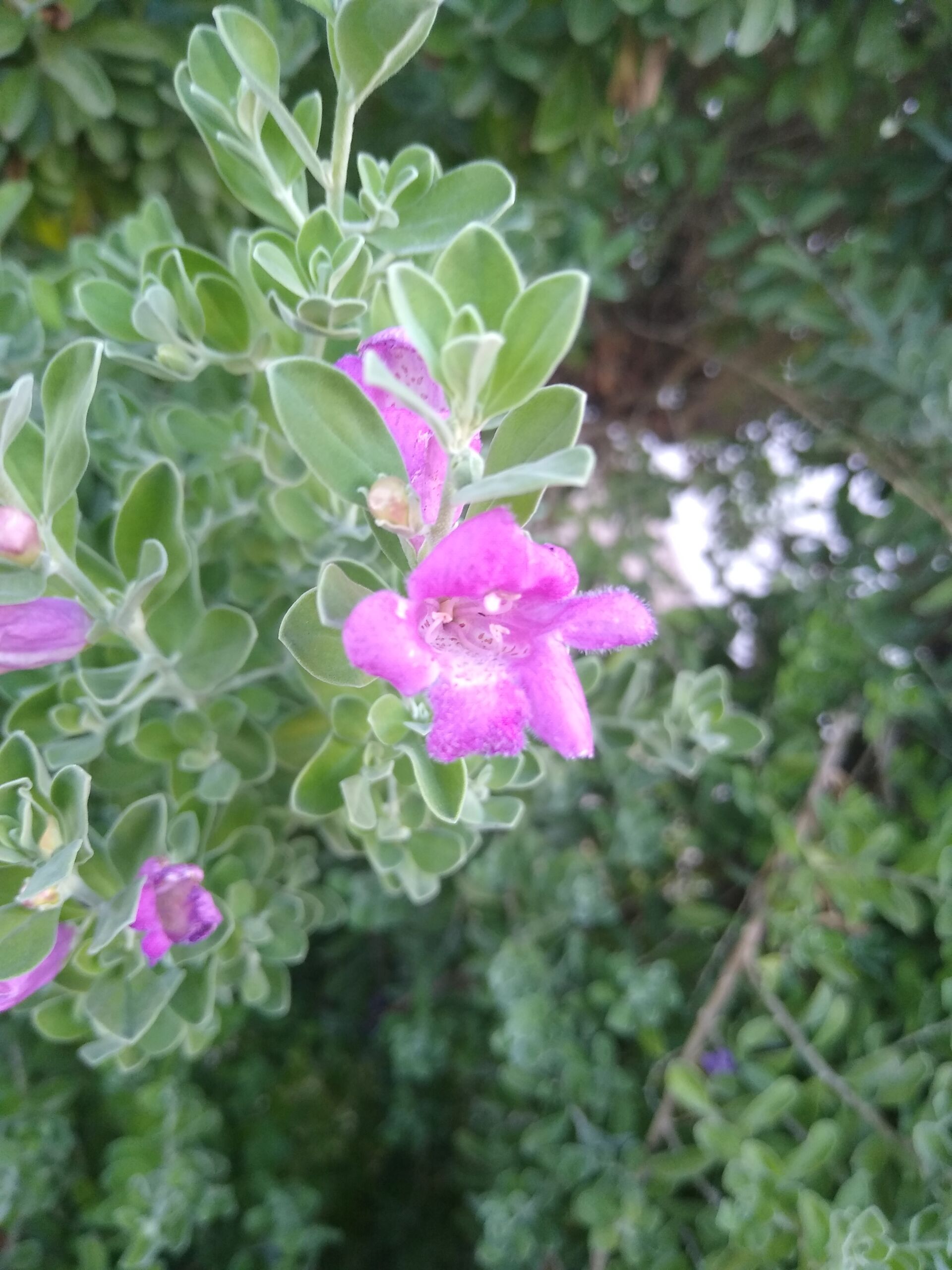
Cenizo is Texas’s official state native shrub, and it earns the title the way Texas plants usually do: by thriving where other shrubs give up and go home. Its scientific name is Leucophyllum frutescens (Berland.) I.M.Johnst., in the figwort family (Scrophulariaceae), and its common names are a whole Texas vocabulary lesson: Texas sage, Texas ranger, Texas rain sage, Texas silverleaf, barometer bush, ash-bush, wild lilac, purple sage, senisa, cenicilla, and palo cenizo. The name “cenizo” itself is Spanish for “ashy,” and it describes the leaves exactly: small, elliptical to obovate, under an inch long, covered in a dense layer of fine, matted hairs that makes them ashy gray. The genus name says the same thing in Greek — leuco for white, phyllum for leaf — and frutescens means “becoming shrubby,” which is a botanist’s way of saying it grows into a shrub and stays one.
First, the name that causes the most trouble: cenizo is not a sage. It is not in the genus Salvia, it is not a culinary herb, and it will not season your dinner. It is a figwort relative — a botanical cousin of snapdragons — that happens to look sage-like because of its gray foliage. Rub a leaf and you get no minty sage scent, which is the quickest field test: true sages smell like sages, cenizo smells like a desert shrub, which is to say, mostly like nothing. Do not confuse it with autumn sage (Salvia greggii), a completely different Texas plant with aromatic green leaves and red or pink tubular flowers, which shares the “Texas sage” nickname and none of the botany.
The flowers are the show, and they arrive on their own schedule. The blooms are solitary, bell- or funnel-shaped, with five lobes and two lips, about 2 cm across, emerging from the leaf axils in pale violet to purple or pink, rarely white. They come in bursts through summer and fall, and the bursts follow rain and humidity — which is where the “barometer bush” nickname comes from, and where the folklore needs a correction. Cenizo does not predict rain. It blooms because humidity rises or low pressure moves in, which can happen before rain, during rain, or after rain, and gardeners who swear it “knew” a storm was coming are remembering the hits and forgetting the blooms that followed a humid afternoon with no storm at all. The plant is responding to moisture, not forecasting it — which is still a wonderful trick, just not a supernatural one.
In the wild, cenizo is a short, unarmed native shrub of rocky limestone and caliche hills, arroyos, and chaparral, most common in Texas south of the Menard-to-Travis county line and into the Trans-Pecos, Edwards Plateau, and South Texas Plains, and in the Mexican states of Coahuila, Nuevo León, and Tamaulipas. It is the most widespread of Texas’s three Leucophyllum species, and one of the state’s most beautiful shrubs when it flowers — a silver mound suddenly covered in purple, standing out in a landscape of green and tan like a shout. It grows slowly to 5 to 8 feet tall and 4 to 6 feet wide in most accounts, though some sources give larger dimensions, up to 10 or even 12 feet — the honest range is “a substantial shrub, bigger than you planned for if you planted it against a wall,” so give it room.
The butterfly context is the Theona Checkerspot. The Theona Checkerspot guide lists cenizo (Leucophyllum frutescens) in its Host plants section, and the species is also recorded as a host for the calleta silkmoth — a moth, not a butterfly, but the same figwort-family chemistry at work. That host record is the reason this guide exists in this project, and it is worth stating what it is not: cenizo is not a nectar plant for checkerspots in the usual garden sense, it is the caterpillar’s food, a tough desert shrub that feeds larvae in a landscape where soft, leafy host plants are in short supply. Plant it for checkerspots only where you live in its range and its climate — a cenizo in a humid, wet garden is a cenizo out of place, and the checkerspots will not follow it there.
How to grow
Growing cenizo is an exercise in restraint, and restraint is the whole method. Plant it in full sun — at least 8 hours a day, because shade makes it leggy with sparse blooms — in rocky, calcareous, alkaline, sharply drained soil, and then largely leave it alone. It is a Chihuahuan Desert plant of limestone slopes, and its native soil is poor, dry, and lime-rich; rich, wet, acidic soil is not a kindness to it, it is a slow death. If your soil is heavy clay, plant it in a raised bed or on a slope with gritty, free-draining soil, or do not plant it at all. Drainage is not a preference for cenizo, it is the plant’s one non-negotiable demand.
Space plants 4 to 6 feet apart for a hedge or mass planting, and expect a slow-growing, rounded, evergreen shrub that eventually reaches 5 to 8 feet tall and about as wide. Plant in spring or fall so roots establish before the heat or the cold, water to establish through the first season, and then water sparingly — established plants need little to no supplemental water in winter, and overwatering is one of the top causes of failure, alongside heavy clay and excess nitrogen. Do not fertilize established cenizo, and never feed it a high-nitrogen product: it pushes soft, fast growth that is vulnerable to pests and disease, and it defeats the point of a plant chosen for toughness. A desert shrub fed like a rose becomes a floppy shrub with fewer flowers, which is the opposite of what you bought it for.
Pruning is light work, and the rule is: prune for its natural look, do not shear it into a hedge ball. Remove dead or crossing wood, shape lightly after a bloom flush, and let the plant keep its rounded, informal form — shearing destroys the loose, silver mound that makes it beautiful, and it removes the current season’s wood that carries the next flowers, since blooms are borne singly on current season’s growth. Propagation is by seed or by soft to semi-hardwood cuttings, and seed-grown plants vary, which is why named cultivars exist for gardeners who want a predictable color and size (see the varieties section, in plain text, below). Cuttings keep a cultivar true; seed keeps the species variable, which is fine for a wild garden and frustrating for a formal one.
Florida note: Florida is not cenizo country, and this guide does not pretend otherwise. Cenizo is a Texas and northern Mexico desert plant, and Florida’s humid summers, heavy rainfall, and acidic soils are the opposite of the rocky, alkaline, dry slopes it evolved on. In the warmest, driest, best-drained corners of north Florida, in a raised bed of gritty, alkaline soil with full sun and no irrigation beyond establishment, it may survive — but it will not thrive the way it does in Texas, and it should be treated as an experiment, not a sure thing. Do not plant it in a wet, rich, irrigated Florida bed and expect a Texas result; the plant will tell you, by rotting, that you ignored its one demand. And the checkerspot case does not transfer: theona checkerspots live in cenizo’s desert range, not in Florida gardens, so a Florida cenizo is an ornamental curiosity, not butterfly habitat.
Water & feeding
Water: less than you think, and then less again. Cenizo is exceptionally drought-tolerant once established, and established plants need no supplemental watering in winter at all. Water deeply but infrequently to establish, let the soil dry between waterings, and never let the plant sit in wet soil — wet feet and poor drainage cause root rot, which is the plant’s main killer in gardens. In its native range it grows where annual rainfall is low and humidity is the trigger for bloom, not for growth; a cenizo that is watered like a lawn shrub will grow soft, bloom poorly, and rot. The soil science is the desert story: limestone and caliche soils drain fast, hold little organic matter, and keep roots aerated even after a desert downpour, because the water runs off or through rather than pooling. Mimic that drainage, and the plant’s silver, hairy leaves — which cut water loss — do the rest.
Feeding: do not. Cenizo evolved on poor, calcareous soils, and it needs no fertilizer program. A light compost mulch at planting is plenty, and in alkaline soil, dolomitic limestone is the amendment of choice if your soil tests acidic — it raises pH toward the alkaline range the plant prefers. High-nitrogen fertilizer is actively harmful, pushing soft growth that pests love and flowers hate. The plant’s real fertilizer is sun, drainage, and neglect, in that order.
Common problems
- Wet soil and poor drainage. The main killer. Cenizo rots in heavy clay and standing water. Plant on a slope, in gritty soil, or in a raised bed, and never in a spot where water stands.
- Overwatering. Established plants need little water, and none in winter. Watering like a lawn shrub produces soft growth, poor bloom, and rot.
- Too much fertilizer. High-nitrogen feed pushes soft, pest-prone growth and fewer flowers. Do not fertilize established plants.
- Shade. Less than 8 hours of full sun gives leggy growth and sparse blooms. Plant in open sun or do not plant it.
- Shearing. Shearing into a formal hedge destroys the natural rounded form and removes flowering wood. Prune lightly for shape, after a bloom flush.
- Mistaken identity. Not a true sage (not Salvia), not culinary, and not autumn sage (Salvia greggii). Buy by Latin name, and check that the leaves are ashy-gray and scentless when crushed.
- Wrong climate. A desert plant of zones 8–10 in most accounts. Humid, wet, acidic gardens — including most of Florida — are a poor match, and no amount of care fixes a climate mismatch.
- Root rot in wet soil. The same drainage failure, stated as a disease outcome: roots that stay wet rot, and there is no easy cure once rot sets in, so site selection and drainage are the prevention.
Harvest
There is no kitchen harvest for cenizo, and this guide makes no medicinal recommendation, though traditional-use reports exist — foliage made into a tea at the first sign of cold or fever in Texas folk practice. A folk report is not a recommendation, and cenizo is not culinary sage, so do not cook with it. The harvest is ornamental and ecological: cut a few flowering stems for a vase during a bloom flush, where the purple flowers against silver foliage are spectacular for several days; leave most of the plant standing for pollinators and for checkerspot caterpillars in its range; and prune lightly after bloom to keep the shape. The real harvest, though, is the bloom flush itself — a silver shrub that does nothing for weeks, then, after a rain, covers itself in purple overnight. That is the plant paying you back for all the neglect, in the only currency it accepts: sun, drainage, and being left alone.
Browse all plant & pest guides
Saving seeds
Cenizo gives you two honest routes to more plants, and which one you choose depends on whether you want the species or an exact cultivar. Seed-grown cenizo (Leucophyllum frutescens) varies — seedlings from one shrub can differ in leaf color, flower shade, and habit, which is part of the charm of wild populations and part of the frustration of a planned hedge. If you want a named selection to repeat itself — Green Cloud’s green foliage, White Cloud’s white flowers, a compact form’s tidy shape — cuttings are the way, because a cutting is a clone and a seedling is a gamble. Both routes are easy by desert-shrub standards; neither requires a greenhouse or a botany degree.
For seed, watch the shrub after a bloom flush. The flowers give way to small capsules, and when those capsules dry and harden, the seed inside is ready. Collect the capsules before they spill, dry them further in a paper bag in an airy spot, and shake or crush them gently to free the seed. Sow in spring in a sharply draining mix — this is a Chihuahuan desert plant, and its seedling roots rot faster than its reputation suggests if kept soggy — covering the small seed only lightly, keeping the mix evenly moist but never waterlogged, and giving it warmth and sun. Germination often arrives within a few weeks under steady warmth and moisture, though seed from a home garden is never as uniform as a packet, so sow more than you need and keep the strongest seedlings.
For cuttings, take four- to six-inch softwood to semi-hardwood stems after blooming ends or in late spring to early fall, choosing healthy, non-flowering shoots. Strip the lower leaves, dip the cut end in rooting hormone if you like — many growers find it optional for this shrub, but it does no harm — and set the cuttings in a well-drained mix of perlite and peat or a similar gritty blend. Keep the mix moist, not wet, in bright indirect light, and roots generally form within a few weeks. Hardwood cuttings taken while the plant is dormant in late fall or winter can also work, though they are slower. Either way, the new plant is genetically identical to the parent, which is the whole point.
Store any seed you are not sowing right away in a labeled envelope in a cool, dry place, and keep the Florida caveat front and center: cenizo hates wet feet and humid, soggy soil more than it hates anything else, and a seedling pampered with daily watering in a Florida summer is a seedling on its way out. Give seed and cuttings drainage first, sun second, and restraint third, and the silver shrub will do what it does in Texas — mostly ignore you, then explode into purple after a rain. And one boundary from the rest of this guide still stands: cenizo is not culinary sage, so none of this seed or cutting work is kitchen work. Propagate it for the garden, not the pantry.
Species
Cenizo (Leucophyllum frutescens) is the species this guide covers. Named cultivars of it, in plain text, include Green Cloud (green foliage with pinkish flowers), White Cloud (silvery foliage with white flowers), Compacta (silvery foliage, compact plant to about 5 feet, pink flowers), Convent (vibrant dark pink flowers, compact growth), and Bert-Star — all selections of Leucophyllum frutescens, not separate species, and all sold under the cenizo name. Other Leucophyllum species, such as Leucophyllum laevigatum (Chihuahuan sage), Leucophyllum candidum, Leucophyllum langmaniae, Leucophyllum pruinosum, and Leucophyllum revolutum, are not covered by this guide, and hybrids such as Heavenly Cloud (a cross of frutescens Green Cloud with laevigatum) and Rain Cloud (frutescens crossed with minus) are likewise separate plants, not cenizo itself. Buy the species or the cultivar by its full name, and check the tag: a nursery that labels any silver shrub “Texas sage” may be selling a different Leucophyllum species, or a Salvia, under cenizo’s famous name.