
🌊 Coastal Searocket
What it looks like
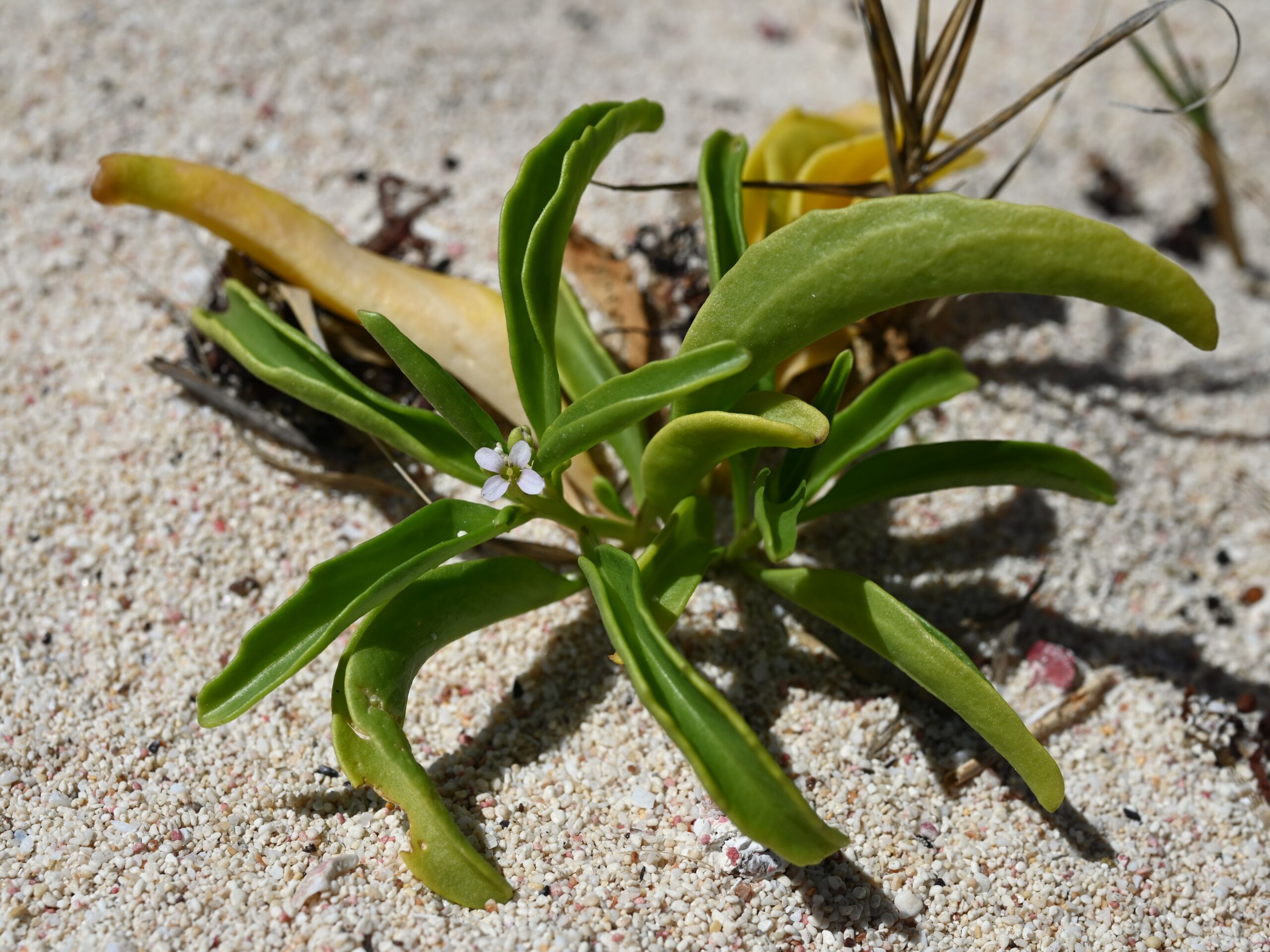
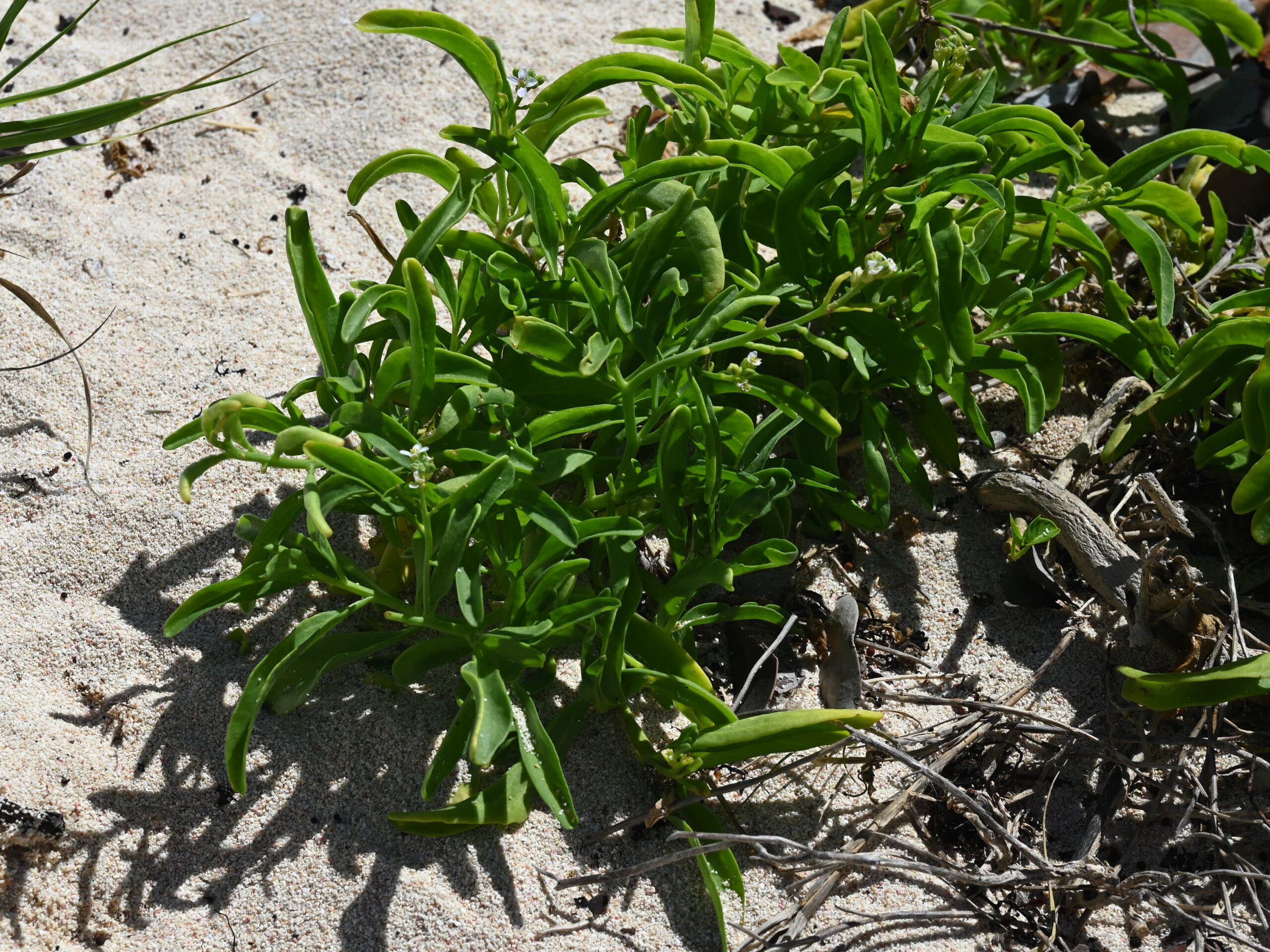
Coastal searocket is the mustard that chose the hardest address in Florida botany and then thrived there: the open sand just above the high-tide line, where salt spray is a daily event, fresh water is a rumor, and the ground itself occasionally rearranges itself in a storm. It is a fast-growing annual or short-lived perennial wildflower in the mustard family (Brassicaceae), native to Florida — found in most coastal counties on both the Atlantic and Gulf sides of the state, plus the Keys — and ranging through Alabama, Louisiana, and Texas, the Caribbean, Mexico, and northern South America. Its other common name, gulf searocket, tells you the same story from the other side of the peninsula. If you walk a Florida beach in spring and spot a low, sprawling, fleshy-leaved plant with small four-petaled flowers tucked into the dunes, you are very likely looking at this plant, doing a job no garden flower could do: holding sand in place while the ocean tries to take it away.
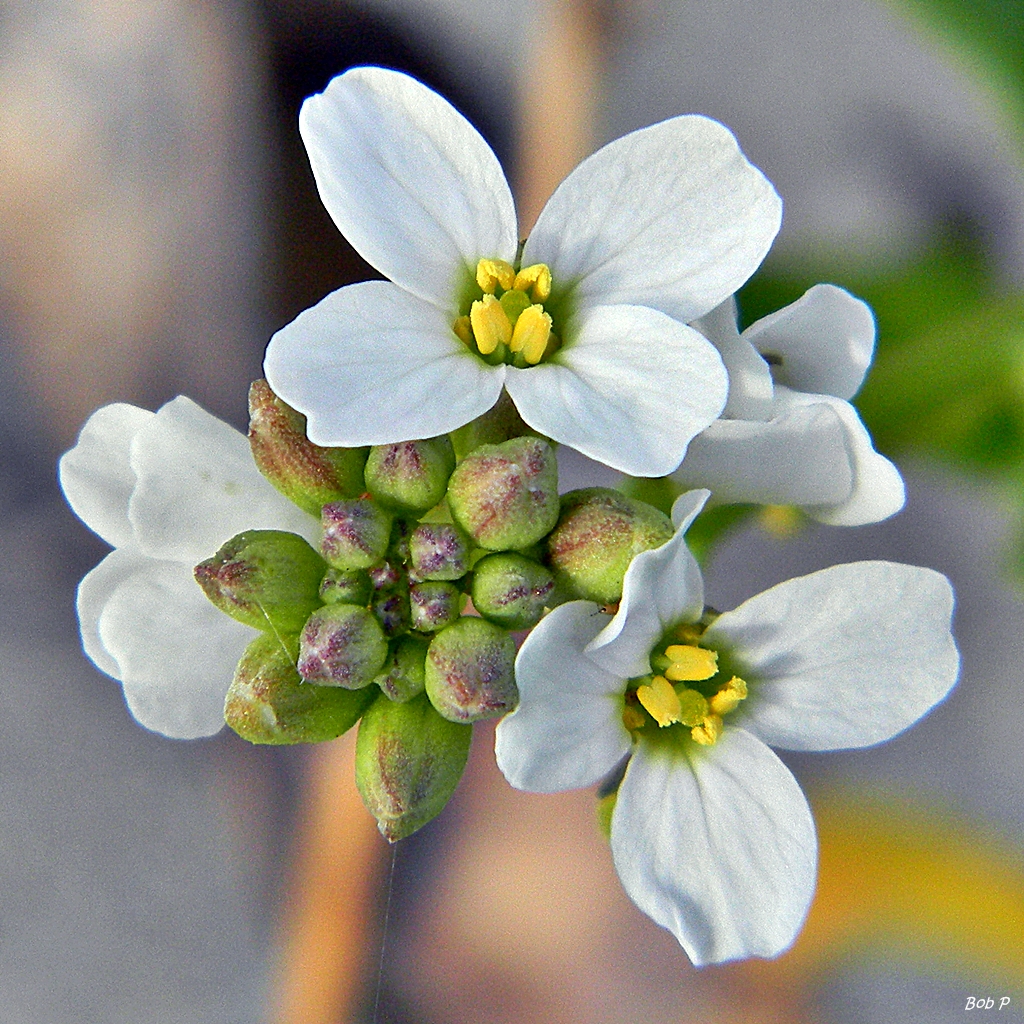
Identification starts with the leaves, because the name is literal: lanceolata means lance-shaped, and the leaves are lance-shaped, long and relatively narrow, fleshy, and arranged alternately along decumbent stems — stems that sprawl along the sand rather than standing upright. The margins are toothed or dissected, and the whole plant has that succulent, waxy look of a plant that stores water because it cannot count on rain. Plants run about 2 feet tall by 2 feet wide, sometimes to about 3 feet in a good spot, forming loose, sprawling mounds in the sand. The flowers are the classic mustard cross: four petals, white to lavender, with bright yellow anthers, small and charming rather than showy, blooming early spring through summer and often year-round in the warmest places. The Florida Wildflower Foundation’s phenology notes say it blooms spring through summer, while other Florida sources report July through September in some places and winter into summer in the far south — the honest version is that bloom timing shifts with latitude, and in south Florida it may hardly stop at all.
And then there is the fruit, which is the whole reason for the common name and the best party trick in the mustard family. The fruit is a rocket-shaped pod, a two-segmented capsule bearing two seeds, and the two segments have different destinies: the lower segment stays attached to the parent plant, while the upper segment breaks off at a joint and is carried away by water or wind — a staged rocket, in the most literal sense, with one stage that holds the launch site and one stage that goes exploring. That split strategy is why searockets colonize new beaches so well: half the seed stays home in proven ground, and half rides the tide to the next dune. It is also why the genus name Cakile, from an old Arabic name for the plant, is attached to a whole clan of beach mustards that all play the same game on different shores.
The butterfly context for this guide is a single, clean host record, and it is the reason this species guide exists at all. The Great Southern White guide lists, in its Host plants section, mustards and capers: Virginia pepperweed, saltwort, coastal searocket, and limber caper. That is a mustard-family menu, and coastal searocket is on it because Great Southern White caterpillars eat mustards — the same chemistry that makes the plant taste peppery to us is the signal the caterpillars are tracking. The Florida Wildflower Foundation confirms the connection from the plant side too, listing the Great Southern White among the butterflies for which coastal searocket is a larval host, alongside the bees the flowers attract. This guide covers Cakile lanceolata only, for that host record: a caterpillar eating coastal searocket is eating this species, not just any searocket, and the guide is written to that precision.
One plain-text disambiguation, because the searockets are a genuine identification tangle and this guide must not swallow its relatives. This guide claims Cakile lanceolata only. American searocket (Cakile edentula) is a different, more northerly species, the searocket of the Atlantic coast from the Maritimes southward and around the Great Lakes. European searocket (Cakile maritima) is the European species, introduced into North America, now spread widely on both the east and west coasts, and regarded as an undesirable invasive in places where it replaces the native searockets. The three look alike at a glance — fleshy beach mustards with pale four-petaled flowers — and their ranges overlap in places, so buy and identify by Latin name, species by species. If a plant is sold or found as just “searocket” with no Latin name attached, it has not been identified yet, whatever the label says.
How to grow
Growing coastal searocket starts with accepting that it is not a garden plant in the usual sense, and that is a compliment, not a complaint. It wants full sun, sandy, well-drained soil, and salt — the conditions of a beach dune, not a raised bed. In a Florida coastal garden, that means the sunniest, sandiest, least-coddled corner you have: a dune garden, a beachfront strip, or a sandy native planting where irrigation is light and fertilizer is absent. Give plants about 2 feet of room to sprawl, and let them sprawl; this is not a plant to stake, prune into shape, or tuck into a tidy border. It is a plant to let do its dune job, which is sprawling over sand and holding it with a network of stems and roots while storms do their worst. Nurseries that specialize in Florida native plants sometimes carry it, and nursery-grown stock is the right way to get it — never dig plants from wild dunes, where they are doing erosion-control work that belongs to the whole beach, and where removing them can do real damage to a fragile system.
From seed, the pattern is beach-simple: sow in sandy, well-drained soil in full sun, keep the seed lightly moist until germination, and then get out of the way. The plant is built for lean conditions, and rich soil, heavy fertilizer, and constant irrigation mostly produce soft, leggy growth that flops and rots in humidity — the opposite of the tough, fleshy dune plant you want. In a coastal native planting, it pairs naturally with the other dune stabilizers of its habitat — beach morning glory, sea oats, and railroad vine country — but it does not need companions to perform; a patch of coastal searocket on bare sand is already doing the work. It is an annual or short-lived perennial, so expect it to reseed and move around the planting over seasons rather than sitting in one spot forever. That wandering is the plant’s life strategy, not a failure: the parent holds its ground, the rocket segment sails, and next year’s plants show up wherever the sand and the season suit them.
Florida note, stated plainly because the Florida story has a wrinkle. Coastal searocket is a Florida native across most coastal counties and the Keys, and it is an important dune plant, protecting dunes against storm surge and hurricanes by binding loose sand. At the same time, the Institute for Regional Conservation considers it rare in South Florida, so southern gardeners should treat it as a plant to source from native nurseries and protect where it grows, not as a weed to yank. Inland gardeners, meanwhile, should be honest with themselves: this is a coastal dune plant, and a plant that evolved for salt spray and beach sand will not be happy in a shady inland yard with clay soil and no salt in the air. Grow it where the beach is, or admire it where the beach is, and let the inland butterfly garden lean on the mustards that actually suit inland ground.
Water & feeding
Water, for coastal searocket, is a question of drainage first and quantity a distant second. Beach sand drains almost instantly, and the plant’s fleshy leaves are its water tank — it stores what it gets and waits out the dry spells. In a dune planting with normal coastal rainfall, established plants largely water themselves, and the most common watering mistake is the gardener’s instinct to water often and deeply, which in sand just leaches away and in a container or amended bed can rot the crown. Water new plantings until established, then back off and let the plant’s succulence do its job. Mulch, if you mulch at all, should be light and sandy — a heavy wood-chip blanket holds moisture against the stems in exactly the humid way this plant dislikes, and it buries the open sand the plant wants to sprawl across.
Feeding: none, in any serious sense. Coastal searocket grows in sand that most gardeners would call starvation rations, and it does so by being a mustard — a family that is famously thrifty, fast, and chemically defended rather than nutrient-hungry. A spring topdressing of compost would be overfeeding in a dune context, and synthetic fertilizer mostly buys soft growth and aphids. The soil science here is the beach story: dune sand is low in organic matter and nutrients, high in salt and drainage, and the plants that succeed there succeed by tolerating salt, storing water in fleshy tissue, and growing fast while conditions allow. Coastal searocket’s peppery mustard chemistry — the glucosinolates that give mustards their bite — is part of that story too: it deters most grazers, signals to the specialist caterpillars that this is food, and flavors the leaves for the humans who eat them. The plant is not starving in the sand; the sand is its native soil, and it is thriving in exactly the place it evolved to thrive.
Common problems
- Wrong searocket. The most common problem in the genus. American searocket (Cakile edentula) and European searocket (Cakile maritima) look alike and overlap in range; European searocket is introduced and invasive in places. Buy and identify by Latin name: this guide is Cakile lanceolata only.
- Too much water, too much food. Rich soil, heavy fertilizer, and constant irrigation produce soft, leggy, rot-prone plants. Sand, sun, and neglect are the recipe; this plant wants a dune, not a vegetable bed.
- Trampling and dune disturbance. Beach foot traffic, beach raking, and dune grading destroy searocket patches and the sand they hold. In a dune planting, keep traffic on paths and let the plants hold the open sand.
- Storms and erosion. The plant’s habitat is, by definition, the place storms hit first. A patch scoured away by a hurricane is not a gardening failure; it is the plant’s habitat doing what its habitat does, and reseeding from the rocket segments is how it comes back.
- Growing it inland. A coastal dune plant in a shady, clay-soiled inland yard will sulk and fail. If you are not near the coast, plant the mustards suited to your ground and visit searocket at the beach.
- Wild collection. Digging plants from wild dunes damages erosion control and may violate local rules. Buy nursery-grown native stock, and leave wild patches standing.
Harvest
Coastal searocket’s harvest is leaves, stems, and seed — in that order, and with one firm rule that this guide states plainly because beach plants demand it. The stems and leaves are edible, raw or cooked, with a taste compared to turnip and to peppery mustard, and the young shoots and tips are the best part. Eat only plants you have positively identified as Cakile lanceolata, grown or gathered where you know the ground is clean — beach plants can carry sand, salt, and whatever the tide brought in, so wash thoroughly, and never eat plants from a beach you would not trust for anything else. The older leaves get strongly flavored as the plant matures, so harvest young and often, the way you would with any mustard green, and cook the older leaves with milder greens if the pepper bite is more than you want.
The seed harvest is the dune gardener’s version of the same plant: let some plants go to fruit, watch the two-segmented pods form, and collect seed from your own plants for sowing in sandy ground — or simply let the plants reseed themselves, which they do enthusiastically, half the seed staying put and half sailing off to found new patches. Leave most plants standing through the season for the caterpillars and the bees, let the rocket segments do their dispersal work, and come back next spring to see where the new plants landed. That is the crop, and it arrives without a single spray — because spraying a dune mustard would kill the very caterpillars this guide was written for, and because a plant that has held Florida dunes against hurricanes does not need your intervention, only your willingness to give it sun, sand, and room to sprawl.
Browse all plant & pest guides
Saving seeds
Coastal searocket saves its own seed with a piece of engineering so clever it deserves a moment of admiration before you touch it. Each fruit is a two-segmented pod shaped, as the name promises, like a little rocket. The upper segment breaks off and sails away on wind and water to found a colony on some distant beach, while the lower segment stays home with the parent plant and germinates right there. You are not improving on that system; you are just borrowing a few rockets for your own patch of sand, and only from garden-grown plants. Never strip seed from wild dune plants: dunes are erosion-control infrastructure, and wild patches should be left standing to do that job.
Collect when the pods have turned from green to tan or brown and feel dry and papery, but before the upper segments start launching themselves — once they go, they are gone, and chasing rocket segments down a beach is a hobby nobody needs. Snip whole fruiting stems into a paper bag and let them finish drying indoors for a week or so, then crumble the pods gently to free the small seeds inside. Pick out the pod fragments, spread the seed thin to finish drying, and only then jar it. In Florida’s humidity, seed that feels dry on a dry afternoon can still hold enough moisture to mold in storage, so give it the full drying time and store it in a labeled, airtight container with a desiccant packet, kept cool and dark.
Sow where the plant is going to live, because searocket grows a long taproot and resents being moved — direct sowing beats transplanting, every time. Press seed lightly into sandy, well-drained soil in spring, barely covering it, and keep the sand consistently moist (not soggy) until seedlings appear. Germination timing varies with warmth and moisture, with sources disagreeing across a range of roughly one to several weeks, so sow, water, and be patient rather than digging up the bed to check. Thin seedlings to about two feet apart and let them sprawl. If you want volunteers next year, leave a few pods on the plant to do what rockets do.
On trueness to type, searocket is a straight species, so seed from a garden plant generally grows up as coastal searocket — but it is a mustard, and mustards are sociable. If you grow more than one Cakile type close together and seed purity matters to you, save from a patch grown on its own, or accept that the next generation may carry a little neighborly influence. For most gardeners the practical rule is simpler: save from your best, healthiest, most dune-worthy plants, label the jar with the year, and use the freshest seed first. A jar of searocket seed is a beach in waiting, and it asks for almost nothing except sand, sun, and the restraint not to plant it anywhere it cannot sprawl.
Species
Cakile is a small genus of about seven accepted species, all seashore plants, and this section names the ones a North American beach walker or butterfly gardener is most likely to meet, in plain text. Coastal searocket (Cakile lanceolata) is this guide, the Gulf and south Atlantic searocket of Florida, the Gulf Coast, the Caribbean, and northern South America. American searocket (Cakile edentula) is the more northerly Atlantic and Great Lakes species. European searocket (Cakile maritima) is the European species, introduced and widely spread in North America, and the one to avoid confusing with either native. Southern searocket (Cakile constricta) and gulf searocket in the narrow sense (Cakile geniculata) are additional Gulf and Caribbean members of the genus, and Cakile arabica and Cakile arctica round out the genus in Middle Eastern deserts and far northern shores respectively. Grow and identify by Latin name, and let this guide be the coastal searocket entry, not a substitute for any of its relatives.