
🌿 California Aster
What it looks like
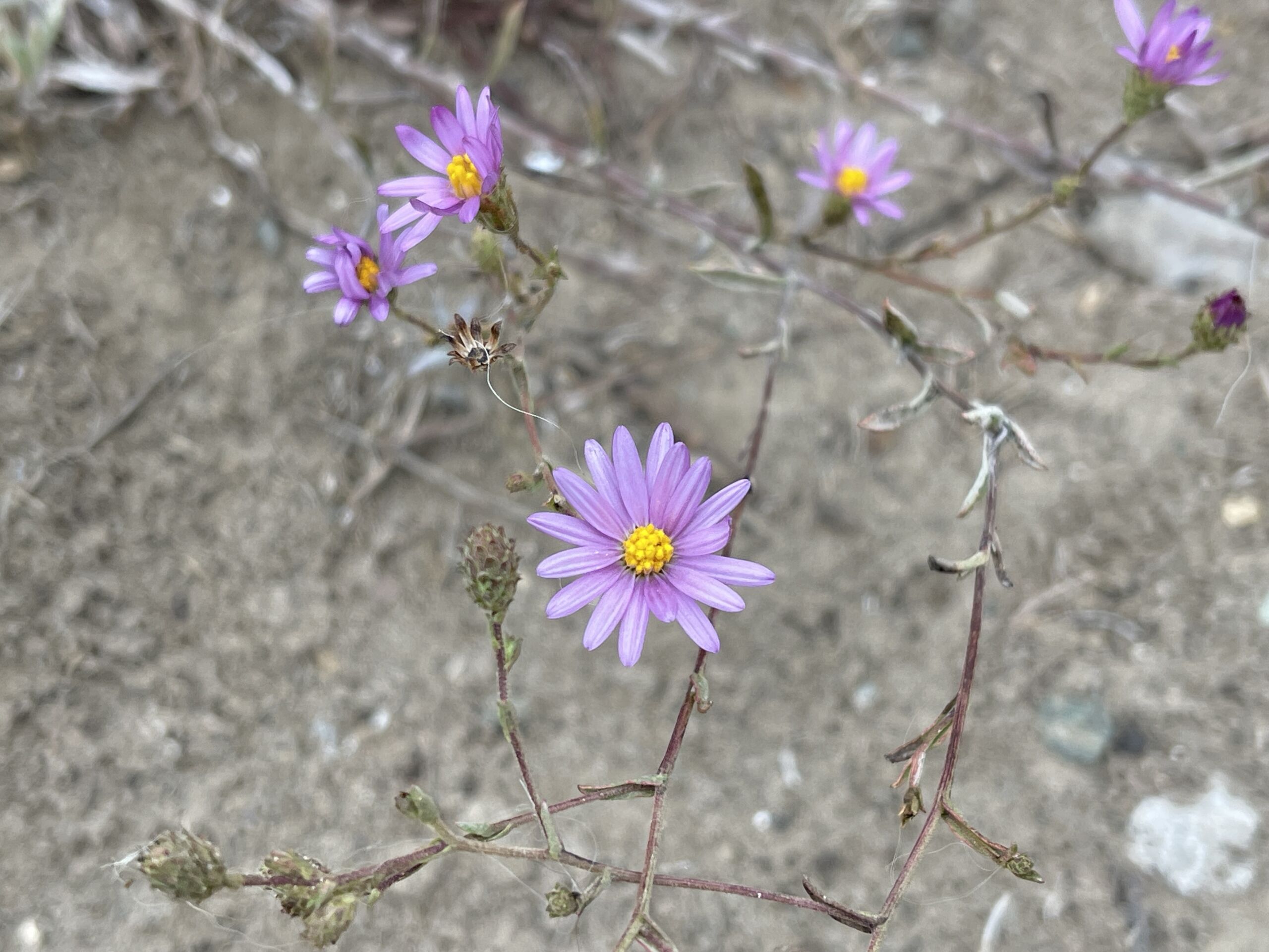
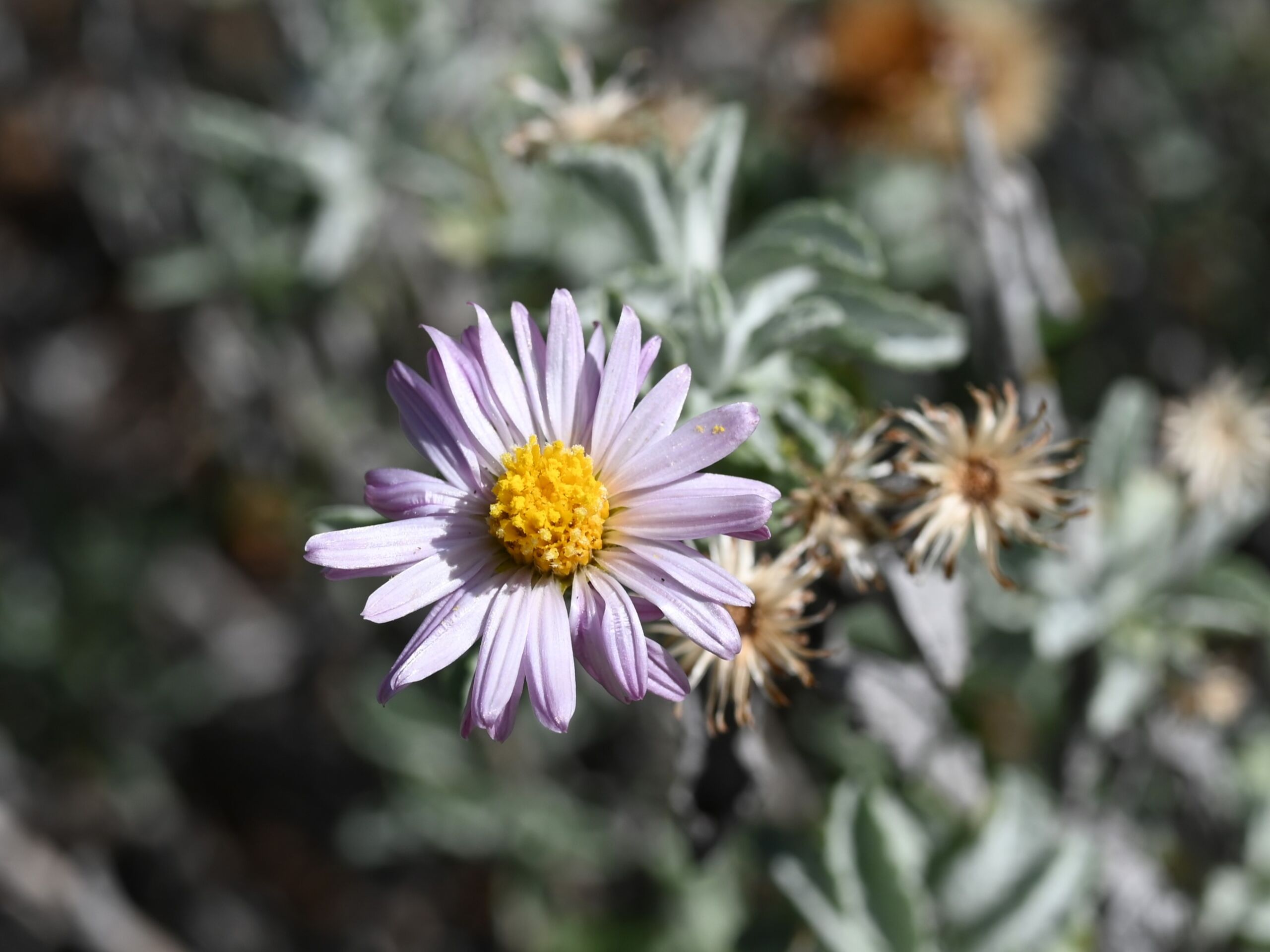
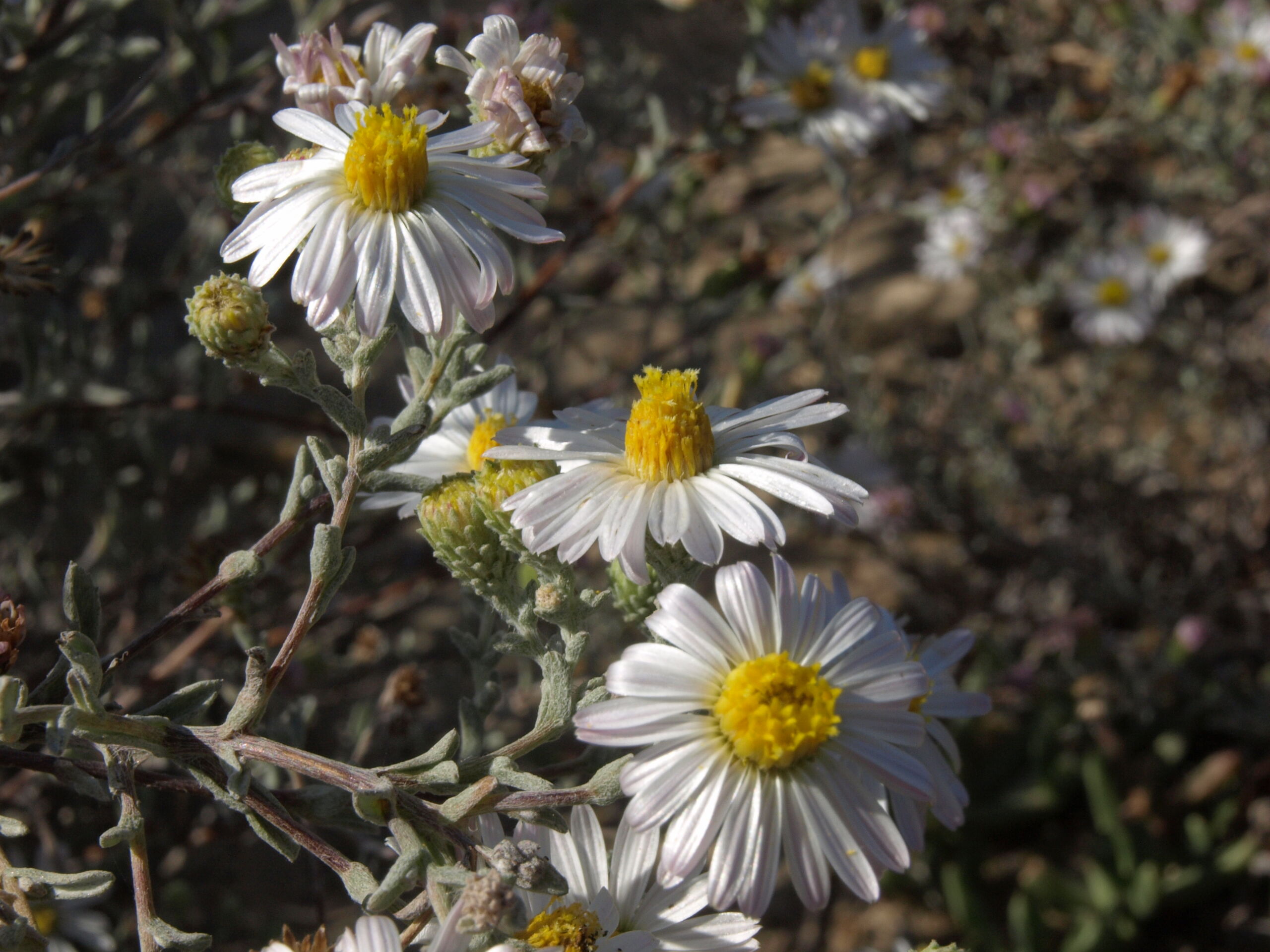
California aster is the plant that makes a California summer-dry garden look intentional instead of abandoned. It is a robust perennial herb to subshrub in the sunflower family (Asteraceae), native to California, southwestern Oregon, and Baja California, and it is the only species in its genus — Corethrogyne is monotypic, which means this guide covers the whole genus in one plant, and there is no sister species to confuse it with. Its other common name is common sandaster, and it also answers to sand aster and beach aster, which tells you most of what you need to know about where it likes to live: open, sunny, sandy or rocky ground in coastal sage scrub, chaparral, coastal strand, oak woodland, and grassland, from coastal bluffs up into the mountains.
The plant itself is a study in drought dressing. Stems run from about 15 centimeters to around a metre tall (roughly 6 inches to 3 feet), branching from a woody base, and the lower growth is densely woolly — gray-green or whitish felted leaves, lance-shaped to spoon-shaped, a few centimeters long, toothed or lobed on the lower stems, often going dormant and dropping in a dry summer after flowering. That woolliness is not decoration: a felted leaf surface slows water loss and bounces back harsh sun, the same trick a dozen Mediterranean plants use, and it is why the plant looks silvery even in August when its neighbors look crispy. Mature size varies a lot by form and site, roughly 1–3 feet tall and 1–2 feet wide, with some sprawling forms reaching 5 feet across, so give it room to be itself rather than shearing it into a box.
The flowers are the payoff, and they arrive exactly when a summer-dry garden needs them. Heads are daisy-like, about 20 millimeters across, carried singly or in loose, flat-topped arrays of a few to twenty or more heads at the branch tips, each lined with narrow, pointed, purple-tipped phyllaries that curl back as the head matures. Inside are purple, lavender, pink, or occasionally white ray florets around a center packed with up to 120 tubular yellow disc florets. Bloom timing varies by source and region — July through October in most references, August through November for seed sources, with some plants flowering on and off through winter in mild coastal spots — so the honest statement is late summer into fall, with winter flowers possible near the coast. The fruit is an achene topped with a pappus of reddish bristles, built to ride the wind, which is how a plant of open ground colonizes the next bare patch.
One naming tangle, stated plainly because it affects buying. This plant spent years classified as Lessingia filaginifolia, and older nursery tags, seed packets, and garden books still carry that name; the current accepted name is Corethrogyne filaginifolia, and the two names are the same plant, not two plants. The genus name comes from Greek korethron, a broom, and gyne, female, alluding to the brush-like style-branch appendages, and filaginifolia means thread-leaved, for the narrow leaves. A second confusion: the common name California aster is also used for Symphyotrichum chilense, a different aster entirely, so if a tag says California aster without a Latin name, check the Latin before you buy. This guide is Corethrogyne filaginifolia only.
The butterfly context is the reason this guide exists. Gabb’s checkerspot lists Corethrogyne filaginifolia in its Host plants section, and the plant doubles as nectar for adult butterflies — one native-plant source calls it excellent butterfly habitat providing both nectar and larval food for Gabb’s checkerspot. That is a genuinely useful combination in a California native garden: one plant that feeds the caterpillars and the adults, in the driest part of the year, in soil most garden plants refuse.
How to grow
Growing California aster starts with unlearning the habits of a watered garden. Site it in full sun along the coast, or full sun to light shade inland, in well-drained soil — sand, loam, or clay all work, provided water does not sit. The single most important rule, repeated by garden sources because beginners keep breaking it, is that summer water kills it: it is drought tolerant and not tolerant of summer irrigation, which will often kill it after its first year. Water it through its first winter and spring to establish, then step back and let the dry season do what the dry season does. In dry sites the leaves may go dormant by late summer after flowering, which looks like death and is not — it is the plant’s drought strategy, and it leafs out again with the rains.
Plant in fall or winter, before the rains, which is the California native gardener’s planting season and the opposite of the spring planting habit most of the country uses. Space plants 1–2 feet apart for a groundcover effect, wider for individual shrubs, and pair it with other summer-dry natives — native bunchgrasses, annual wildflowers, and perennial shrubs — rather than with thirsty bedding plants that will force you to water the whole bed in July and drown the aster. It works as a coastal garden plant, a rock garden plant, a slope groundcover, and a butterfly garden plant, and it tolerates salt spray, deer, clay, and rocky soil. Pruning is light: cut back leggy or spent stems after flowering if you want a tidier shape, and leave the plant alone otherwise; it does not want shaping, and shearing it into a ball defeats the loose, wiry character that makes it beautiful.
Propagation is by seed, sown in fall or winter before the rains, which is how it reseeds itself in the wild on open ground. Seed sources note that adequate winter water produces many blooms per plant, which is the flip side of the summer-water rule: this plant wants its water in winter, when California’s rain falls, and its drought in summer, when California’s rain does not. Match that rhythm and it largely grows itself; fight it with a summer irrigation schedule and you will be replanting it every year and wondering why.
Florida note, stated plainly because this is a Florida site and this is not a Florida plant. California aster is a Mediterranean-climate plant of zones 8–10 that needs a dry summer and well-drained soil, and Florida’s wet, humid summers and summer rainfall are the opposite of its native rhythm. Gardeners in Florida should not plant it expecting it to thrive — this guide exists because Gabb’s checkerspot eats it and the butterfly guides needed a growing guide to link to, not because it belongs in a Florida bed. If you garden in California or a similar summer-dry climate, it is a superb plant; if you garden in Florida, admire it, plant a Florida aster for your own checkerspots, and let this guide be the reference for the butterfly’s menu.
Water & feeding
Water is a winter story for this plant. Along the immediate coast it has low water needs; inland it does best with occasional summer water at most, and many sources say none at all once established — the recurring warning is that summer water kills it, so err on the dry side and let the plant tell you, by going dormant, that it is resting rather than dying. A deep winter soaking, the kind California’s rainy season delivers, is what produces a heavy bloom; a summer sprinkler schedule is what produces rot. If you must water in summer, water rarely and deeply, never daily, and never in a bed shared with thirsty plants.
Feeding: essentially none. This plant grows in sandy to loamy soils of medium to low fertility, including soils derived from granite, gabbro, and serpentine, and it does not want rich soil or fertilizer programs. A plant that evolved on poor, well-drained ground will grow soft, leggy, and short-lived on rich, wet soil, which is the same failure as summer watering with extra steps. The soil science here is the Mediterranean story: lean, well-drained, mineral soil with a microbial community adapted to drying out, and a plant whose woolly leaves, deep-ish roots, and summer dormancy are all tuned to that cycle. Feed it neglect, in the right climate, and it repays you with purple daisies in August when everything else has quit.
Common problems
- Summer water. The number one killer. Daily irrigation, a lawn sprinkler, or a bed shared with thirsty plants rots it, often after the first year. Plant it where summer water does not reach, and let it go dormant.
- Wet, soggy soil. It tolerates clay only if it drains. Standing water and heavy, waterlogged soil cause root rot; raise the bed or pick a slope if your soil holds water.
- Wrong climate. Humid-summer climates, including Florida, are a mismatch for a summer-dry Mediterranean plant. It is a California and summer-dry-climate plant, not a universal aster.
- Wrong aster. Tags reading California aster without a Latin name may be Symphyotrichum chilense. Buy by the Latin name Corethrogyne filaginifolia, and accept Lessingia filaginifolia as the same plant on older tags.
- Leggy growth. Plants can be compact or leggy depending on form and shade. More sun and less water give tighter plants; deep shade and rich soil give floppy ones. Cut back after flowering for a tidier shape.
- Dormant look in late summer. Leaves dropping in a dry summer after flowering is drought dormancy, not death. Wait for the rains before declaring it dead.
Harvest
California aster’s harvest is seed and flowers, in that order, and a long season of butterfly-watching. Collect the achenes — the small dry fruits topped with reddish bristles — as the heads mature and dry, and sow in fall or winter before the rains, which is the plant’s own schedule. The flowers themselves are the summer show: cut a few stems for a vase if you like, but the better harvest is leaving most heads standing, because the late-summer flowers feed adult butterflies and the seed heads feed the next generation of plants on open ground.
One historical note, not a recommendation: a Kumeyaay account quoted in older botanical notes describes boiling the purple flowers for a tea for an aching chest. This guide repeats that as history, not as advice — it is not a tested modern use, and no part of this guide recommends brewing or eating this plant. The modern harvest is simpler and safer: a drought-proof purple daisy, a host plant for Gabb’s checkerspot, and proof that a garden can look its best in the driest month of the year.
Browse all plant & pest guides
Saving seeds
California aster plays the classic sunflower-family trick: it makes a lot of small, wind-ready seed and then trusts the breeze to do the marketing. Each flower head ripens into a cluster of achenes — the dry, single-seeded fruits — each one topped with a tuft of reddish bristles called a pappus. When the head has gone brown and fluffy and the bristles catch the wind at the slightest touch, the seed is ready. Leave it much longer and you will be saving seed for your neighbours’ gardens instead of your own, because that pappus works exactly as designed.
Collect on a dry day, snipping whole heads into a paper bag rather than picking at individual seeds in the garden. Let the bag sit open indoors for a few days until everything is crisp, then rub the heads gently over a tray and winnow away the fluff and chaff with a light breath or a fine sieve. What you keep should be plump, dark, dry achenes; pale, hollow husks are unfertilised duds and can go on the compost. There is no fleshy pulp to ferment off here, which makes cleaning mercifully simple — the fiddly part is stopping the good seed from floating away while you work.
Now comes the dormancy question, and here the advice genuinely splits. Some growers sow straight outdoors in fall and let winter do the work, while others give the seed a few weeks of moist cold in the refrigerator before spring sowing. Both approaches are really the same idea: this is a plant whose seed expects a cold season before it wakes up. Fall sowing is the low-effort winner wherever winters are actually cold — scatter the seed on the surface of well-drained soil, press it in so it makes contact, and barely cover it, because aster seed germinates best with light reaching it. If you are starting indoors, a moist paper towel in a sealed bag in the fridge for roughly a month to six weeks, followed by surface sowing in warm, bright conditions, is the usual stand-in for winter. Germination is typically a matter of a few weeks once conditions are right, though stragglers are normal, so do not throw the tray out in a fit of impatience.
For storage, dry the seed thoroughly first — this matters doubly in Florida, where humid air will re-wet seed left out on a counter and invite mould. Once it snaps rather than bends, seal it in an airtight jar with a small desiccant packet and keep it cool and dark. Aster seed is best used fresh or within the next season or two; older seed is not poison, just a lottery ticket with worsening odds, so sow it thickly if you are gambling on an old packet. Seedlings from a species plant like this generally grow recognisably true to the species, though individual plants will vary in height and flower shade — that is normal variation, not a labelling error. If two different asters are blooming cheek by jowl, insect pollinators will happily mix pollen, so keep seed plants away from close aster relatives if uniformity matters to you. And if seed feels too slow, stem cuttings taken from fresh growth are the reliable shortcut: seed is for quantity and for sharing, cuttings are for an exact copy of a plant you already love.
Species
Corethrogyne is a monotypic genus, so this section is short by design: there is exactly one species, Corethrogyne filaginifolia, the California aster and common sandaster covered by this guide, and no other species to list. Former varieties that appear on older tags and in older books — including var. filaginifolia, var. virgata, var. californica, and var. sessilis — are now treated as part of the single variable species, not as separate plants, and the low-growing cultivar Silver Carpet, with silvery foliage, is a garden selection of this same species used as a quick groundcover on slopes, over walls, and in rock gardens. Buy the species by its Latin name, and treat any older variety name on a tag as a form of this one plant, not a different one.