
🌿 Crowberry
What it looks like
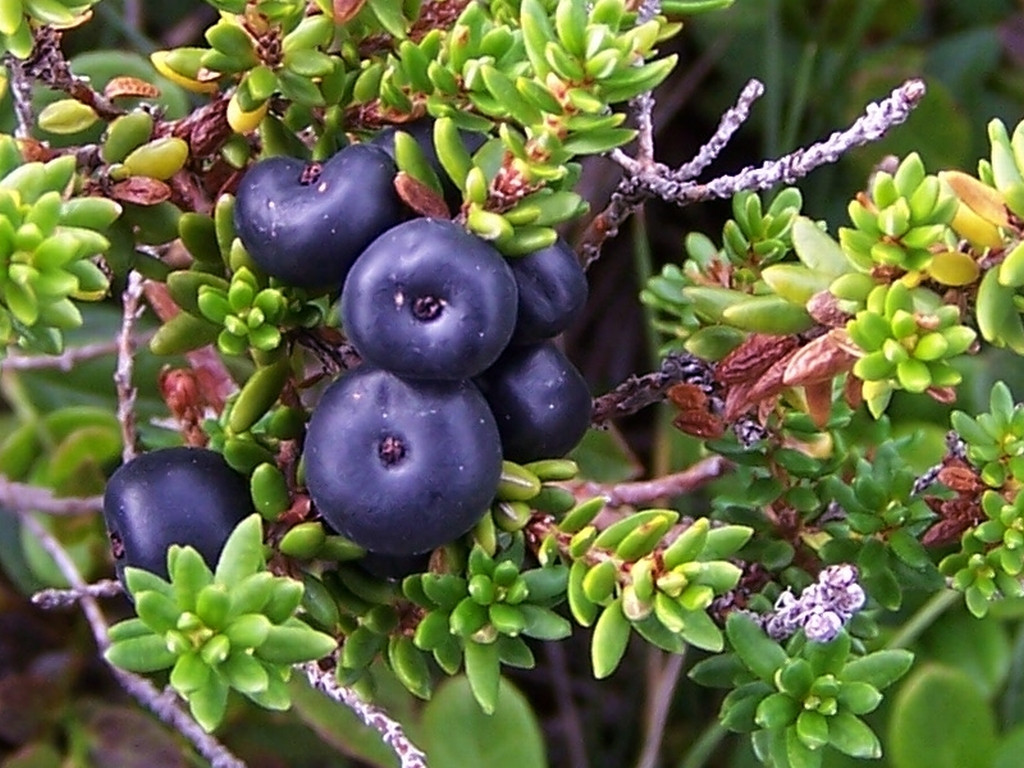
Only one verifiable Wikimedia Commons photograph of this exact species was secured for this draft, so this guide shows one photograph rather than padding the gallery with a wrong species. The plant itself needs no padding: crowberry is one of the most successful small shrubs on Earth, and it looks like it means it.
Crowberry (Empetrum nigrum), also called black crowberry, mossberry, or rockberry — and, in western Alaska and Labrador, simply blackberry — is a low-growing, evergreen shrub in the heath family (Ericaceae), with a near circumboreal distribution across the Northern Hemisphere. Its scientific name is a small poem about where it lives: Greek en (upon) plus petros (rock) gives Empetrum, upon a rock, and Latin niger gives nigrum, black. A black-berried plant that grows upon rocks is, in this case, exactly what the label says. It is a creeping, much-branched, mat-forming subshrub, with stems that are red when young and fade to brown, growing slowly, around 7 to 15 centimeters a year, and forming thick, clonal mats that can prevent other plants from overgrowing them. A crowberry patch is not a plant so much as a carpet that decided to stay.
The leaves are the first identification clue, and they are tiny on purpose: 3 to 6 millimeters long, narrow, needle-like, leathery and evergreen, arranged alternately along the stem and often appearing whorled, with margins rolled under so far that they form a hollow cylinder concealing the hairy underside. That rolled leaf is a water-saving device, a way to carry a humid pocket of air against the leaf surface in cold, windy places where water is locked up as ice for much of the year, and it is why crowberry looks, at a glance, more like a miniature conifer than like its blueberry and heather cousins. The flowers are the opposite of showy: solitary in the leaf axils, small (3 to 6 millimeters), with little or no scent, three greenish-pink sepals that turn reddish purple, three petals that drop off early, and, in male flowers, three stamens. They open in May and June, from buds that started developing the summer before, because in the far north you do not waste a spring growing a bud you could have grown last summer.
The fruit is the reason people know this plant at all: round drupes, 4 to 6 millimeters wide, usually black or purplish-black but occasionally red, each containing on average about 7.8 seeds, and, crucially, able to persist on the plant through the winter because they are well protected against pathogens. A berry that stays edible on the bush from autumn into spring is a winter pantry, and crowberry’s pantry feeds rodents, foxes, bears, caribou, and many bird species, with the fruit an especially important food for red-backed voles at a time of year when few other foods are available. For people, the fruit is edible, can be dried, and may taste acidic, or, in the Alaskan tundra, sweet and slightly tart; it is mixed with other berries in pies and puddings, made into jams, jellies, juice, wine, and liqueur in Scandinavia, used for Alaskan ice cream, and, in Newfoundland and Labrador, where the berries are known locally as blackberries, used in buns and puddings. Its high anthocyanin pigment can also be used as a natural dye, which is a second career for a berry that already feeds half the tundra.
The butterfly context for this species guide is a single host listing, and it is written at the species level in the guide itself. The Cranberry Blue guide lists, in its Host plants section, crowberry (Empetrum nigrum) alongside bog cranberry and bilberry, as one of the heath-family shrubs the caterpillars feed on. The Cranberry Blue is a butterfly of bogs — acidic, waterlogged, nutrient-poor ground where heath shrubs thrive because other plants starve — and crowberry is one of the shrubs that makes that difficult habitat work, for the butterfly and for everything else that eats there.
One plain-text disambiguation, because crowberry has lookalikes and name-twins that cause real confusion. This guide covers Empetrum nigrum only. It does not cover the other crowberries of the genus: rockberry (Empetrum eamesii), with pink to red translucent drupes, or the red-fruited southern hemisphere species (Empetrum rubrum). It does not cover bearberry, lingonberry, or bog rosemary, all heath-family neighbors that share crowberry’s ground and, in bog rosemary’s case, a passing resemblance that matters, because bog rosemary is poisonous and its hanging light-pink berries are not crowberries. Crowberry’s berries sit without a stem, right up against the branch, and that sessile, stemless look is one of the handiest field marks for telling the pantry from the poison.
How to grow
Growing crowberry starts with climate honesty, and the honest answer for most readers of this site is: admire it, do not plant it. Crowberry is a plant of bogs, coastal heathlands, sea cliffs and headlands, rocky mountain slopes, subalpine parkland, and alpine tundra, from sea level to alpine elevations, across the circumboreal north. It grows in acidic soils in shady, moist areas and in subalpine and alpine habitats, it tolerates soils with a pH as low as 2.5, and it does not grow in basic soils above pH 8. In a suitable cool climate, the garden form is a rock garden, a raised acidic bed, or a bog margin: full sun to semi-shade, moist but well-drained acidic soil rich in organic matter, and a pocket where its creeping stems can spread into a mat without being mowed, smothered, or stepped on. Give one plant one pocket, mulch with acidic organic matter, and let it creep.
The sex question changes the fruiting plan, and this guide states it openly because it decides whether a planting ever berries. Crowberry is usually dioecious, with male and female flowers on separate plants, though a few individuals are bisexual with perfect flowers, and because the species is highly clonal, an entire patch may be of a single sex. If you plant a dioecious form and want berries, you need both male and female plants, and you need to know which you bought, because a mat of one sex is a handsome evergreen carpet that will never fruit. The subspecies question sits underneath this one, and it is genuinely unresolved in the literature: subspecies nigrum has male and female flowers on separate plants, while subspecies hermaphroditum has bisexual flowers, and North American plants are generally the tetraploid hermaphroditum form, while the typical European diploid is dioecious. Some current treatments, including Flora of North America and Plants of the World Online, treat hermaphroditum as a synonym of Empetrum nigrum rather than a separate taxon, so a gardener buying stock may meet the plant under either name. Buy from a nursery that can tell you whether its stock is fruiting on its own, and plant more than one if fruit matters to you.
Propagation is cuttings or seed, and both are slow, which suits a plant that grows 7 to 15 centimeters a year. Semi-ripe cuttings taken in summer root in acidic, moist, well-drained mix, and seed, cleaned from ripe berries and sown promptly on acidic mix, germinates slowly and unevenly. Do not expect a crowberry to fill a bed in a season; expect it to creep, mat, and thicken over years, which is the whole point of a groundcover that outlasts the gardener’s patience. Its roots host ericoid mycorrhizal fungi, which increase its access to nitrogen and phosphorus in the nutrient-poor soils it prefers, so a crowberry planted in rich, fertilized garden soil is a crowberry planted in the wrong economy: it wants the lean, acidic, fungal-fed soil of the heath, not the fed soil of the vegetable bed.
Florida note, stated plainly rather than hopefully: crowberry is not a Florida garden plant. It is a circumboreal, cold-climate shrub, hardy to UK zone 3, and Florida’s heat and long warm season are not a substitute for the cool, acidic, northern ground it evolved in. It is also rare and protected at the southern edge of its United States range — state-endangered in Minnesota, where it is known from a single Lake Superior island population last found in 1929 and not since rediscovered, and state-threatened in Michigan — so southern-edge plants should be left where they are, not collected. A Florida gardener who loves the plant should grow a Florida-native heath groundcover at home, and let crowberry keep its northern bogs, cliffs, and tundra.
Water & feeding
Water, for crowberry, is a question of moist, never soggy, and never alkaline. In its native ground it grows on sites from dry to wet, but it is intolerant of prolonged flooding, and in the garden it wants moist, well-drained acidic soil that stays cool and damp without standing water. A rock-garden pocket with acidic organic matter, or a bog margin above the waterline, suits it; a waterlogged hollow or a limed bed does not. Rainwater is the ideal top-up where tap water is hard, because repeated hard water pushes acidic soil toward the basic side that crowberry refuses, and a mulch of pine needles or acidic bark helps hold both moisture and acidity at the root zone.
Feeding: almost nothing, by design. Crowberry is a plant of nitrogen-poor soils, and its ericoid mycorrhizae do the nutrient work that fertilizer would do badly: the fungi extend the root’s reach into organic matter and return nitrogen and phosphorus in forms the plant can use. A spring topdressing of acidic compost or leaf mold is the right scale of feeding, and a dose of general fertilizer, let alone lime, is the wrong one — lime is actively harmful to a plant that stops growing above pH 8. The soil science here is the heath story: acidic, nutrient-poor soil is not failed soil, it is a different economy, run by fungi and slow decomposition, and crowberry is one of its most successful citizens. Plant it in that economy, and it will carpet the ground for decades; plant it in rich soil, and it will sulk, thin out, and leave.
Common problems
- Wrong climate. The commonest failure, and the most avoidable. Crowberry is a cold-climate plant; in hot climates it will not persist no matter how acidic or moist the soil, because heat, not water, is the limit. Do not plant it in Florida or the Deep South.
- Basic or limed soil. Crowberry does not grow above pH 8, and lime is poison to its plans. Never lime a crowberry bed, and check the pH before planting, not after the plant has failed.
- Prolonged flooding. Moist is right; waterlogged is not. Crowberry tolerates wet ground but not standing water for long periods, so site it above the waterline, not in it.
- One sex, no berries. A dioecious planting of a single sex will never fruit, and a clonal patch may all be one sex. If berries matter, confirm the stock fruits on its own or plant both sexes.
- Confusing it with bog rosemary. Bog rosemary is poisonous and shares crowberry’s heath ground. Crowberry berries sit stemless against the branch; bog rosemary berries hang on stalks and are light pink. When in doubt, do not eat it.
- Wild collection at the southern edge. Crowberry is state-endangered in Minnesota and state-threatened in Michigan. Never collect southern-edge plants; use nursery-grown stock, and leave wild mats alone.
- Allelopathy. Crowberry can hamper seed germination and root extension of neighboring plants, with the strength depending on soil type. Give it its own pocket rather than interplanting it cheek-by-jowl with slow seedlings.
Harvest
Crowberry’s harvest is berries, and the harvest calendar is generous in a way few fruit plants manage: the berries ripen in late summer to autumn, and if not picked, they persist on the plant through the winter and can be picked in spring, when they are often sweeter after frost. Pick by hand from the mat, taking care not to tear the creeping stems, and leave plenty standing for the birds, voles, and other wildlife that depend on the winter pantry. The berries are the only part to eat; they can be eaten raw, though they are mild and watery on their own, and they shine mixed with other berries, cooked into pies, jams, jellies, and puddings, or made into juice, wine, and liqueur. Cooking enhances the flavor, and a crowberry that tastes bland raw can taste entirely respectable in a pie.
The simplest harvest is a late-autumn walk to a northern headland or bog margin, where the black berries sit stemless against the evergreen mat and the whole carpet looks jeweled against the moss. Take a few, leave most, and let the winter pantry do its work for the animals that need it more than you do. That is the crop, and it arrives without a single spray, because a heath plant that feeds the tundra all winter does not need your intervention, only your willingness to leave its ground acidic, moist, and alone.
Saving seeds
Crowberry seed saving is a project for the patient, which suits a plant that grows a few centimeters a year and thinks in decades. The good news is that the raw material is almost embarrassingly easy to get: the black berries ripen in late summer to autumn and then simply stay on the plant, persisting through winter and often tasting sweeter after frost, so you can collect from autumn all the way into spring. Pick fully ripe, soft berries by hand, taking care not to tear the creeping stems, and leave plenty standing for the birds and voles that treat the mat as a winter pantry.
Cleaning is a mash-and-rinse job. Squash the berries in water, stir, and pour off the floating pulp; the small seeds sink, and those are the keepers. Rinse them clean and sow them promptly if you can, because fresh seed sown as soon as it is ripe in a cold frame on acidic mix is the most reliable route this plant offers. Crowberry is an ericaceous plant, so the sowing mix should be acidic, moist, and well drained, the same kind of ground it grows in wild, and the seedlings should never be allowed to dry out.
If you must store the seed, be ready for a disagreement among the references, and this guide will not pretend it away. Some sources call for a long dormancy-breaking routine of months warm followed by months cold; others report good results with a couple of months of cold, moist chilling; still others say fresh seed needs no chilling at all. The practical way through the argument is to sow fresh seed in autumn and let winter do the stratifying, or to give stored seed a cold, moist spell in the refrigerator before spring sowing, and then to wait without panic. Germination is famously slow and uneven, stretching over weeks to months, and seedlings stay small their first year. Grow them on sheltered through their first winter and plant them out in late spring or early summer, after the last frost.
Two things to check before you sow. First, sex: the typical European form of crowberry carries male and female flowers on separate plants, so a lone female may fruit poorly or not at all, while the circumboreal hermaphrodite form fruits on its own; buy from a nursery that can tell you which form its stock is, and plant more than one if fruit matters to you. Second, honesty about speed: seedlings grow true to the species, but they do not grow fast. If you want a groundcover this decade rather than next, semi-ripe cuttings taken in summer root far more quickly than seed ever will. Save seed for the love of the process and for plants to share; take cuttings when you need a mat.
A Florida footnote, because this is a northern plant wearing a southern gardener’s attention: crowberry seed wants cool, moist conditions to wake up, and Florida heat works against that at every step. Northern gardeners can sow outdoors and let winter help; Florida gardeners attempting this should sow in pots, chill the seed, and keep seedlings cool and shaded, and should expect a fight. Sometimes the honest seed-saving advice is that the seed belongs to a colder garden than yours.
Browse all plant & pest guides
Varieties
Empetrum nigrum is a single species with a subspecies question that gardeners should know about, in plain text. Subspecies nigrum is the typical European diploid form, with male and female flowers on separate plants. Subspecies hermaphroditum is the circumboreal tetraploid form with bisexual flowers, and North American plants are generally this form; some current treatments treat hermaphroditum as a synonym of Empetrum nigrum rather than a separate subspecies, so the two names may describe the same plant depending on the source. Subspecies asiaticum, the Korean crowberry, is the Asian subspecies. Subspecies subholarcticum is another northern form recognized by some authorities. The yellow-leaved cultivar Empetrum nigrum Lucia is the ornamental groundcover and rock-garden form, grown for its yellow foliage rather than its fruit. This guide covers Empetrum nigrum as a species; it does not cover rockberry (Empetrum eamesii) or the red-fruited southern hemisphere crowberry (Empetrum rubrum), which are separate species with their own guides to come, not varieties of this one.