
🌿 Crownbeard
What it looks like
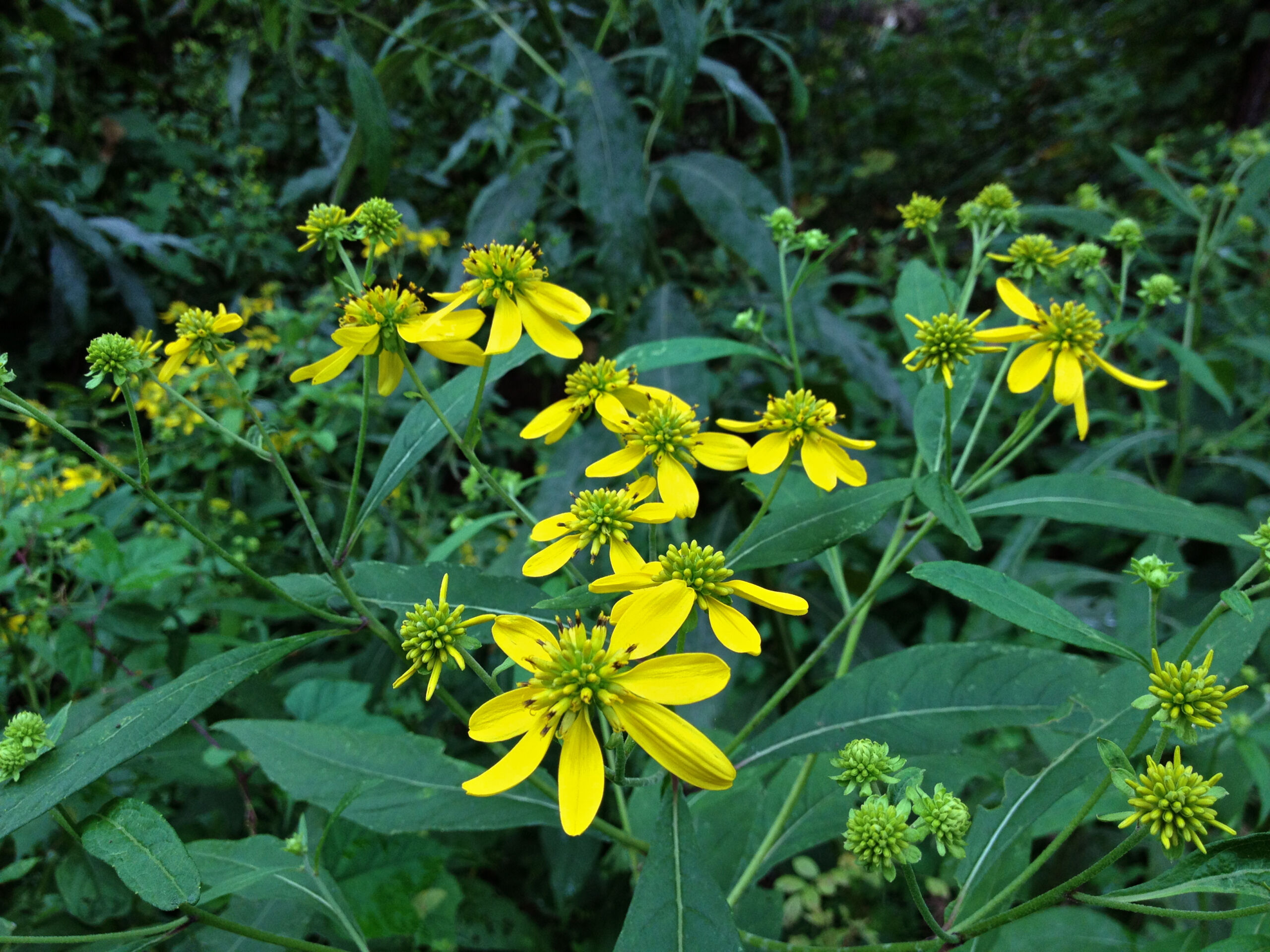
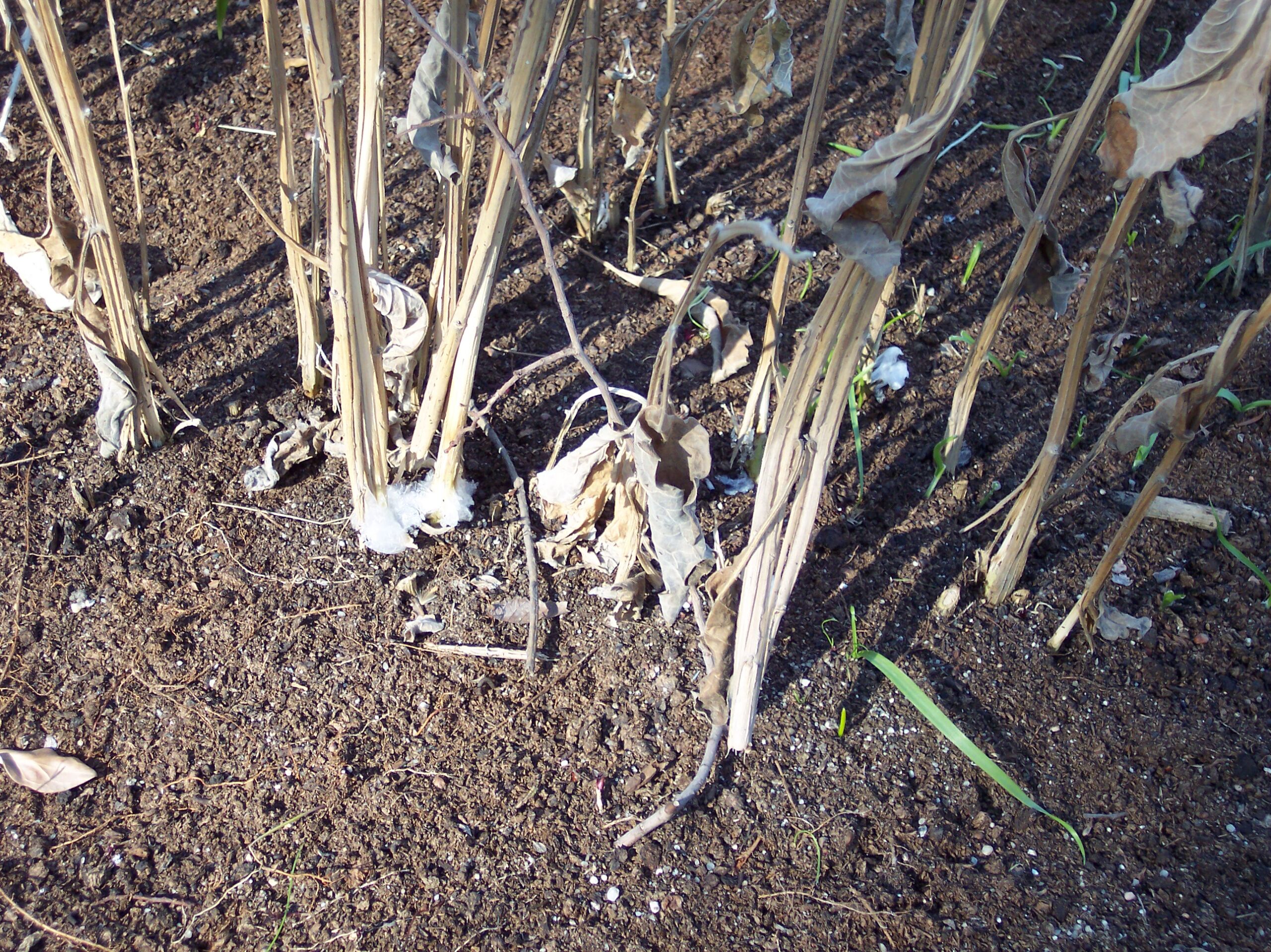
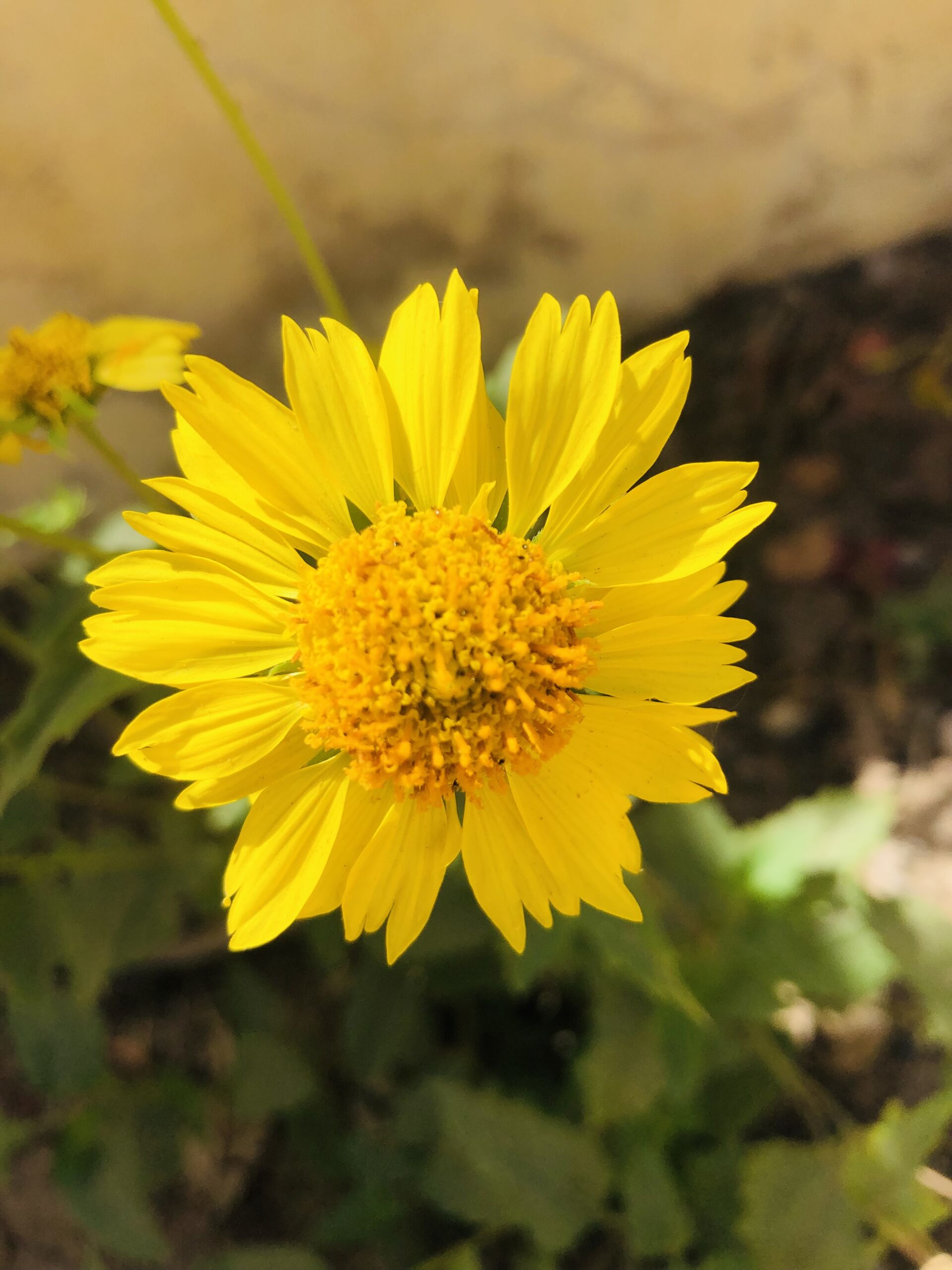
Crownbeard is the common name for the genus Verbesina, and if you have ever walked a weedy field edge in late summer and seen a tall plant with a winged stem and a head of small sunflower-like flowers, you have probably met one. Verbesina is a large genus — about 350 species — in the sunflower family (Asteraceae), and many of its species carry crownbeard somewhere in their common name. All of them bear white or yellow flowers similar to small sunflowers, and the genus name very likely refers to the similarity of the foliage to that of the unrelated Verbena. The plants are mostly robust, leafy perennials (with one famous annual exception below), native mainly to the Americas, and they are the kind of plant that looks like a weed until you notice the butterflies working it — and then it looks like a weed you are glad to have.
The genus signature is the stem. Many Verbesina species have winged stems: the leaf tissue runs down the stem below the leaf attachment, forming a pair of green flanges or wings along the stalk. It is the single best field mark for the genus, and it is why several species share the alternate common name wingstem. The leaves themselves are usually toothed, often hairy or rough to the touch, and arranged alternately or oppositely depending on the species. The flower heads are classic Asteraceae: a center of tubular disc florets ringed by strap-shaped ray florets, yellow in most species, white in the white crownbeard, and the heads are carried in loose, open clusters at the top of tall stems. Individual heads are smaller than a sunflower’s — a couple of inches across at most — but a single plant can carry dozens or hundreds of them, and from a distance a crownbeard in full bloom reads as a yellow or white cloud on stilts.
The species a North American gardener is most likely to meet, and the reason this guide is organized the way it is, are these. Wingstem (Verbesina alternifolia) is the tall one: typically 3 to 8 feet, sometimes taller in rich bottomland, with alternate leaves, drooping yellow rays, and a profusion of heads — 8 to 100 per stem — that make it a late-summer tower. White crownbeard (Verbesina virginica), also called frostweed, is the white-flowered species of the Southeast, 4 to 6 feet tall, with winged stems, clusters of white ray and disc florets with contrasting purplish-black anthers, blooming late summer through fall, and famous for the frost flowers it makes in winter (more on that below). Yellow crownbeard (Verbesina helianthoides), also called gravelweed, is a shorter perennial, around 3 feet tall, with hairy, winged stems and larger, showier yellow heads, about 2 inches across, blooming May to October in the Upper South and South Central states. Southern or yellow crownbeard (Verbesina occidentalis) is the southeastern perennial of pastures and hayfields, 3 to 8 feet tall, with opposite, broadly ovate leaves and sparse, disheveled-looking yellow rays. Golden crownbeard (Verbesina encelioides), also called cowpen daisy, is the odd one out: a summer annual of the Southwest, up to 5 feet tall, with yellow heads up to 2 inches wide, native to the Southwest and northern Mexico and naturalized widely since. And bigleaf crownbeard (Verbesina dissita) is the rare one, a federally listed threatened species of southern California and northern Baja California — named here for completeness only, with no planting advice, because a threatened species is not a garden recommendation.
The butterfly context for this genus guide is a single Host plants mention at exactly the genus level, and it is the reason a genus guide, rather than a species guide, is the honest unit. The Bordered Patch guide lists its hosts as sunflowers (Helianthus), ragweeds (Ambrosia), crownbeard (Verbesina), cockleburs (Xanthium), and other sunflower-family plants — crownbeard named as the genus Verbesina, with no species stated. This draft covers that genus-level form, “crownbeard” and “Verbesina”, only. It does not assign the Bordered Patch’s crownbeard to any one species, because the guide does not say which one. The same genus-level honesty applies in the other direction: the Silvery Checkerspot guide names wingstem as Verbesina alternifolia, a species-level form, and that form belongs to the wingstem species guide, not to this genus guide. And a consistency note worth recording: the cocklebur genus guide recommends crownbeard as a sunflower-family alternative to cocklebur for gardeners who want the butterfly menu without the burs — this guide is that alternative, not a duplicate of it.
One plain-text disambiguation, because the shared common names in this genus cause real confusion. “Crownbeard” alone, in a butterfly guide, means the genus Verbesina. “Wingstem” usually means Verbesina alternifolia, which has its own species guide. “White crownbeard” or “frostweed” means Verbesina virginica. “Yellow crownbeard” is ambiguous between Verbesina helianthoides and Verbesina occidentalis, which is why this guide insists on Latin names wherever a species is meant. Buy and plant by Latin name, species by species, and let this guide be the map of the genus, not a substitute for any one of its members.
How to grow
Growing crownbeard starts with the only decision that matters: which species, native to your region, are you actually planting? The genus spans southeastern bottomlands, southwestern deserts, and midwestern prairies, and the growing advice for a bottomland perennial and a desert annual are not interchangeable, so this section gives the genus pattern and names the species differences where they change the plan. The pattern is: full sun to part shade, average to moist, well-drained soil, and room. Most species are big plants — 3 to 8 feet tall, some taller — and they want the back of the border, the meadow edge, or the wild corner, not the front of a formal bed. Give each plant several feet of space, plant in spring from seed or nursery stock, and expect a plant that looks unimpressive in year one and takes over its corner by year three. Deadhead if you want tidiness, or leave the seed heads standing for birds; either way, expect self-seeding, because crownbeards are enthusiastic about making more of themselves.
By species, the differences that change the plan are these. Wingstem wants moist, fertile ground — bottomland, streambank, rain-garden margin — and reaches its full, towering height only where the soil stays moist; in dry ground it stays shorter and thinner. White crownbeard is the shade-tolerant one: part to full shade suits it, with medium to moderately dry moisture, sandy, clay, or loamy soil, and a pH it does not fuss over, which makes it the crownbeard for a woodland edge rather than a sunny meadow. Yellow crownbeard wants sun and the open communities of its home range — prairies, savannas, glades, and dry upland forests — and it blooms earlier than its relatives, starting in May while the others are still thinking about it. Golden crownbeard, the annual, wants sun and disturbed ground, grows fast from seed, blooms June to September, and then dies, leaving seed for next year — which is why it is both an easy garden annual and a weed of fields and roadsides, depending on where you stand. In every case, sow seed in fall or spring, or divide established perennials in winter dormancy, and give new plantings a season to establish before you judge them.
Florida note, stated by species rather than by genus, because the genus-level answer would be a lie. In Florida, the crownbeard story is the white crownbeard story. Verbesina virginica is native nearly throughout Florida, vouchered across the state, and the species Florida gardeners should grow for the genus — a fall-blooming, butterfly- and bee-visited perennial for a part-shade, naturalized corner. Wingstem reaches only the Panhandle, per its species guide, and is not a peninsular Florida plant. The southwestern and midwestern species are not Florida plants at all. And the Bordered Patch itself, the butterfly behind this guide’s genus mention, ranges through Texas and the Southwest to southern California, not through Florida — so Florida gardeners planting white crownbeard are planting it for the monarchs, bees, and other butterflies that actually visit it here, not for a butterfly that does not fly here. That distinction matters, and this guide states it rather than letting a genus mention imply a Florida host relationship that does not exist.
Water & feeding
Water, for the garden crownbeards, is a question of matching the species to the site and then largely leaving it alone. The bottomland species — wingstem first among them — want soil that stays moist, and in a genuinely moist site with normal rainfall they largely water themselves once established, while in a dry spell they want deep watering and a root zone that does not dry out, because a thirsty wingstem thins out and stops being a tower. The shade species — white crownbeard — wants medium to moderately dry moisture and tolerates a dry spell once established, which is part of why it suits a woodland edge that nobody irrigates. The annual golden crownbeard wants sun and average soil and will take what rain gives it. A thick mulch of wood chips or leaf litter helps all of them in the first year, holding moisture and cooling the roots, and it doubles as habitat for the soil life that keeps garden soil healthy rather than sour.
Feeding: modest, across the genus. Crownbeards prefer average soil, and a spring topdressing of compost is the right scale of feeding — not a heavy fertilizer program, which mostly produces soft, leggy growth that flops. In a meadow or woodland-edge site, the nutrients arriving with leaf litter are often plenty on their own. The soil science here is the sunflower-family story: deep roots, big leafy tops, and a yearly return of leaves and stems to the soil as organic matter, feeding the microbes and fungi that cycle nutrients for the next season’s growth. A crownbeard at the back of a border is therefore not just a butterfly plant — it is a soil-building machine with yellow flowers on top, and the caterpillars and pollinators working it are the visible part of a much larger underground economy.
Common problems
- Wrong species, wrong region. The most common problem in the genus. A Panhandle wingstem in south Florida, a desert annual in a wet eastern garden, or a southeastern white crownbeard in a dry western bed will all disappoint. Check the species’ native range before you buy, and buy by Latin name.
- Self-seeding enthusiasm. Crownbeards seed freely, and a plant you loved in year two can become a patch you are editing in year five. Deadhead before seed ripens if you want one plant, or let it seed if you want a colony — but make that choice deliberately.
- Size surprise. A 3-foot seedling becomes a 6- to 8-foot plant with a winged stem as thick as your thumb. Plant it at the back of the border, away from paths and small neighbors, or you will be moving it in year two.
- Flopping in rich, wet soil. Heavy fertilizer and constant wet feet produce tall, soft growth that leans. Lean soil, sun, and a site that matches the species keep the stems upright.
- Weedy reputation, honestly earned in places. Golden crownbeard is a weed of disturbed ground in much of its naturalized range, and southern crownbeard is a weed of hayfields. Growing a crownbeard means accepting that your neighbors may call it a weed — and, in a hayfield, they are right.
- Caterpillar defoliation. Bordered Patch and checkerspot caterpillars may eat the leaves, and that is the point of planting it. A healthy crownbeard recovers quickly, so do not spray the caterpillars — they are the crop.
Harvest
Crownbeard’s harvest is seed, cuttings, and butterfly-watching — in that order. If you want seed, collect the dry heads in fall, when the winged achenes are ripe and the head comes apart in your hand, and sow in fall or spring; the seed needs no special treatment beyond a cold season for the temperate perennials. If you want more plants, divide established perennials in winter while dormant, because a crownbeard crown in dormancy transplants far better than one in full leaf. If you want cut flowers, cut the stems when the heads are freshly open, and expect a vase life measured in days rather than weeks — these are meadow flowers, not florist flowers, and they know it.
The simplest harvest, though, is a late-summer afternoon at the back of the border with no agenda at all: checkerspots and bordered patches working the yellow heads, bees queuing for the disc florets, and the knowledge that the tall, wing-stemmed plant in front of you is feeding all of them from soil nobody fertilized. Leave most plants standing through the season for the caterpillars, cut back in winter after dormancy, and let the crowns come back bigger next spring. And if you are in the Southeast in winter, watch the white crownbeard on the first hard freeze morning: water exudes from splits in the lower stem and freezes into ribbons of ice — frost flowers, delicate as spun glass, gone by midmorning. That is the harvest nobody plants for and everybody remembers.
Saving seeds
One framing note first, because this is a genus guide: the method below is genus-level, covering the Verbesina crownbeards as a group. The pattern holds across the genus, but individual species differ in timing and temperament, so let the species guide for your particular crownbeard have the last word where one exists, and never collect from the rare Bigleaf crownbeard, a federally listed threatened species that is named in this guide only so it is not mistaken for a garden plant.
Collecting is a watch-the-heads job. Crownbeard flowers fade into dry seed heads, and the seed, small dry achenes in the daisy family’s familiar style, is ready when the heads are brown and dry to the touch and the seed comes away easily when you rub a head between your fingers. Cut whole heads into a paper bag, let them dry indoors for a week or so, then rub and shake out the seed and winnow away the chaff. Dry the seed thoroughly before storage; in Florida humidity, seed put away even slightly damp is seed put away dead, so use an airtight container with a little desiccant and keep it cool and dark.
Sowing depends on which kind of crownbeard you hold, and this is where the genus splits into two habits. The perennial crownbeards carry the usual wildflower dormancy, and their seed wants a cold, moist spell before it will wake up. The easy way to give it one is dormant sowing: sow on the surface of a weed-free spot in late fall or winter and let the weather stratify the seed for you, or chill damp seed in the refrigerator for several weeks before spring sowing. Sow shallow, barely covered, keep the soil moist, and expect germination over a few weeks in warm soil. The annual golden crownbeard is the opposite kind of easy: it needs no such ceremony, sows in spring after frost, germinates in roughly one to two weeks, and then self-sows so freely that your real job becomes deadheading if you do not want it everywhere.
Seedlings of a wild species generally grow true to that species, which makes seed the honest way to increase a native crownbeard, and the economical way too, since a single plant gives you a packetful. A prized individual plant, though, is still best multiplied by division in spring or fall, or by softwood cuttings in the growing season, since a cutting is a clone and a seedling, even a true one, is a sibling. Save seed to spread a species around your garden and share it with neighbors; divide or cut to keep one exact plant going.
One last genus-level habit to plan around: several crownbeards spread by rhizomes as well as by seed, so a plant grown from your saved seed can become a colony. That is a gift in a meadow border and a takeover in a small bed, so give seedlings room, or deadhead before the seed ripens if you want the flowers without the family reunion.
Browse all plant & pest guides
Species
Verbesina is a genus of about 350 species, and no guide can list them all, so this section names the species a North American gardener or butterfly-watcher is most likely to meet, in plain text, and states plainly which ones have their own guides. Wingstem (Verbesina alternifolia) is the tall, yellow, many-headed perennial, with its own plant-guides growing guide, and it is listed here for completeness, not claimed by this genus guide. White crownbeard (Verbesina virginica) is the white-flowered southeastern species, also called frostweed. Yellow crownbeard (Verbesina helianthoides) is the shorter, showier yellow perennial of the Upper South and South Central states, also called gravelweed. Southern crownbeard (Verbesina occidentalis) is the southeastern pasture and hayfield perennial, also called yellow crownbeard and stickweed. Golden crownbeard (Verbesina encelioides) is the annual southwestern species, also called cowpen daisy. Bigleaf crownbeard (Verbesina dissita) is a rare, federally listed threatened species of southern California and northern Baja California, named here only so it is not mistaken for a garden plant. Grow the native species of your region, by its Latin name, and let the genus guide be the map, not a substitute for any species on it.