
🌳 Garry Oak
What it looks like
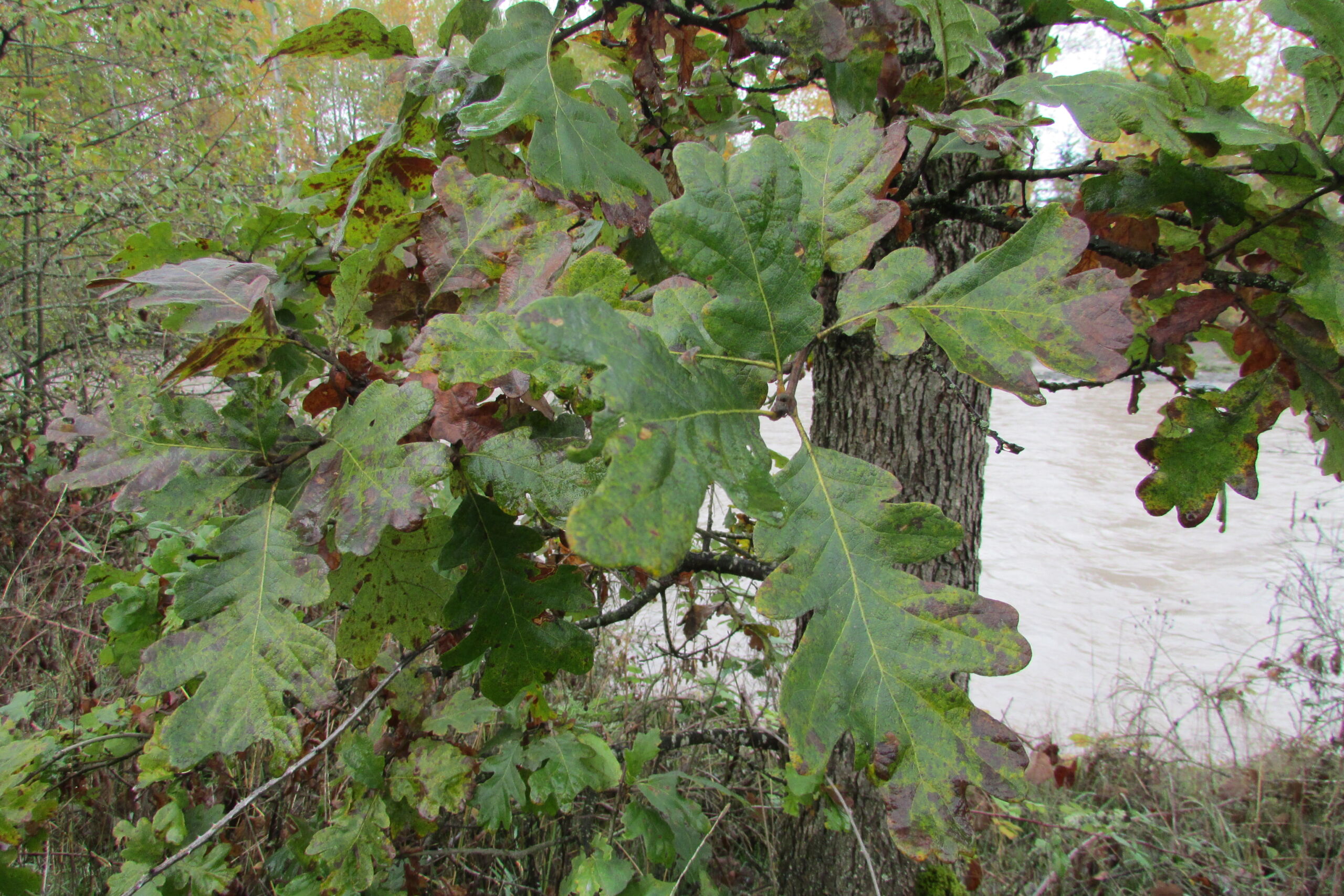
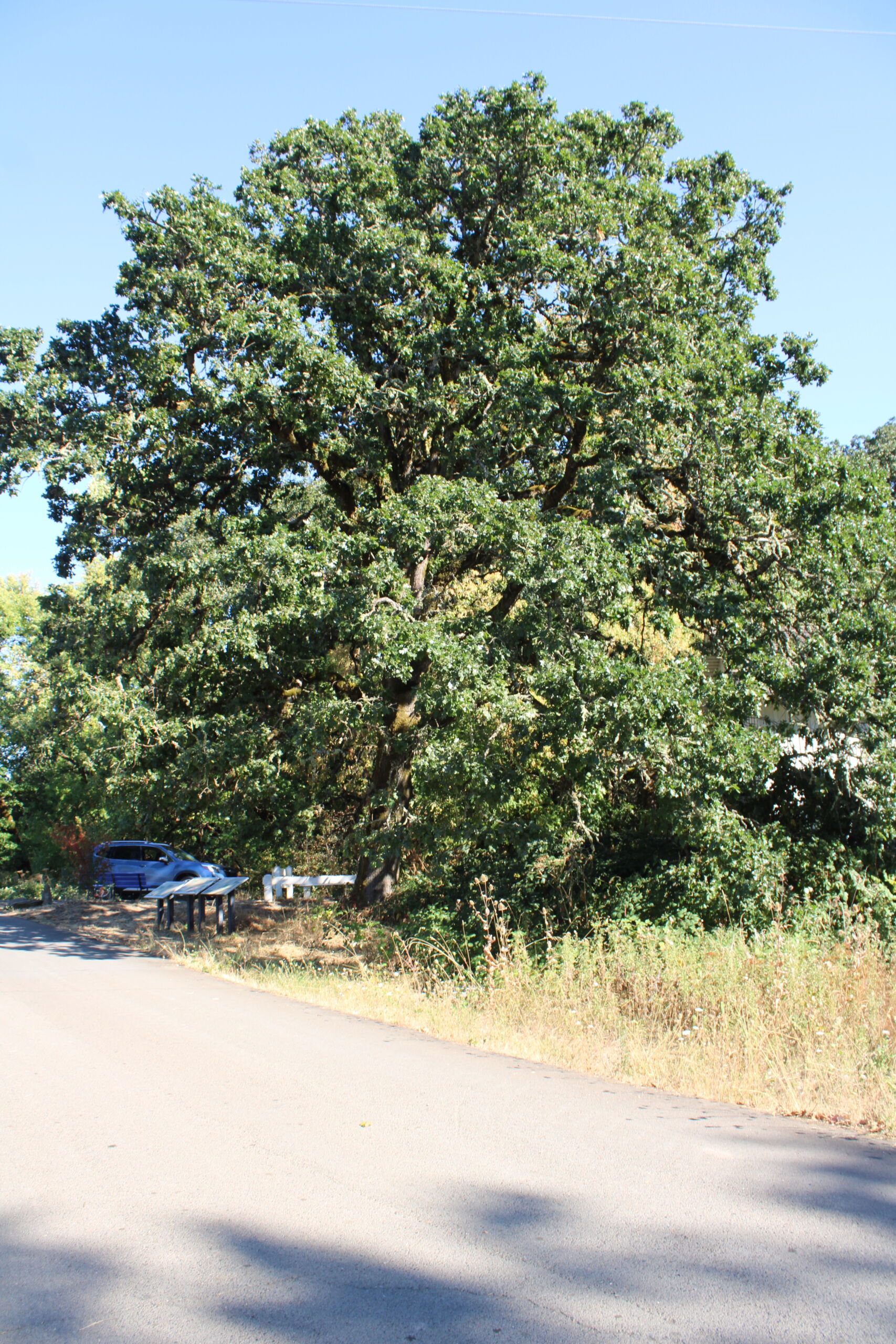
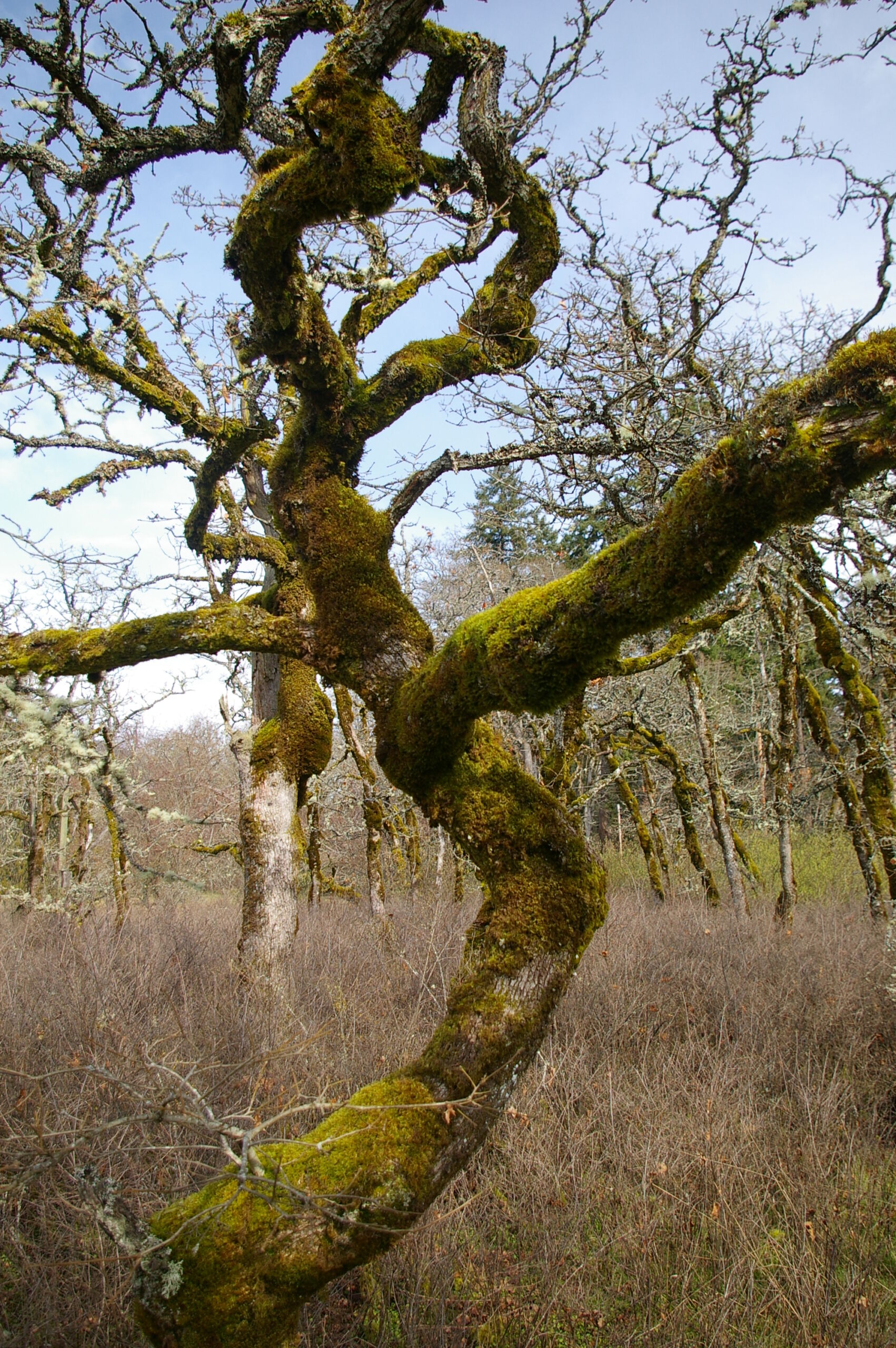
Garry oak, also called Oregon white oak or Oregon oak, is a native deciduous tree of the Pacific Northwest, in the beech family (Fagaceae), and it is the only native oak in British Columbia, Washington, and northern Oregon — a fact that makes its woodlands feel, when you stand in one, like something the landscape saved specially. It is named for Nicholas Garry, deputy governor of the Hudson’s Bay Company in the 1820s and 1830s, which is a more corporate origin story than most trees get. In the northern part of its range it is a tree, commonly 50 to 60 feet and occasionally to 90, with an open, rounded crown; in the southern part of its range, and on poor soils, it shrinks to a shrub 3 to 5 meters tall, often forming clonal thickets. Same species, two silhouettes, and the difference is climate and soil, not identity.
The leaves are deciduous, 5 to 15 centimeters long and 2 to 8 centimeters broad, with 3 to 7 deep lobes on each side — the classic white-oak leaf shape, glossy green in summer, turning brown rather than brilliant in fall, which the tree does without apology. The bark is deeply furrowed with age, the branches spread wide, and the acorns mature between August and November. It is a slow-growing tree that can live for centuries, and it anchors oak savanna and woodland plantings the way a stone anchors a wall: everything else arranges itself around it. Its associates in mixed forests include madrone, Douglas fir, tanbark oak, and yellow pines, and in the absence of fire, Douglas fir gradually replaces it — Garry oak woodlands are early-successional communities that depend on disturbance, fire above all, to keep from being overtaken.
Its range runs from southwestern British Columbia south along the Cascades and Coast Ranges to California, chiefly west of the Cascades: the Gulf Islands and southeastern Vancouver Island, the Puget Sound lowlands, the Willamette, Umpqua, and Rogue River valleys, the Columbia River Gorge, and the foothills of the Siskiyou and Klamath Mountains and the Sierra Nevada. It grows on dry prairies, foothills, and rocky bluffs, on slopes and valleys below about 1,500 meters where annual rainfall exceeds 30 inches, and it tolerates a remarkable spread of substrates, from the rocky, thin soils of ridges to the deep loams and clays of valley bottoms, and even serpentine soils where it grows as a shrub.
The butterfly connection is a western oak story. The Propertius duskywing — a skipper of western oak woodlands — uses oaks as hosts, particularly coast live oak and Garry oak, with golden chinkapin at higher elevations. Its caterpillars feed on oak leaves while sheltering in nests of leaves tied together with silk, the rolled-leaf house that skipper caterpillars build. A Garry oak with caterpillars in it is not a tree with a problem; it is a tree doing its job, and the duskywing is part of the reason these woodlands matter beyond their timber and their shade.
How to grow
Plant Garry oak where it has room to become a grand, spreading shade tree for generations — 30 feet clear of foundations, septic lines, and overhead wires, in full sun, in well-drained ground of almost any kind. It shrugs off heavy clay, rock, and seasonal wet-then-dry cycles, but do not over-amend the planting hole: oaks partner with native soil fungi and resent rich, constantly moist beds. Young plants tolerate some shade from nearby plants, but open light builds the broad, characteristic crown, and a Garry oak planted in deep shade grows tall and thin and disappointed.
Grow it from acorns, which is the honest way with oaks: collect acorns in fall, sow fresh seed outdoors in fall, or stratify to hold for spring sowing. Seedlings should be moved to their permanent location while young, after one or two years, because oaks resent root disturbance and a Garry oak moved late sulks for years. Water deeply but infrequently through establishment, then stop fussing: a mature Garry oak is drought-tolerant and prefers dry soil in summer, and summer watering can cause root rot, which makes irrigated lawns poor sites for this tree. That last point is worth repeating, because it runs against every lawn-tree instinct: the tree that wants a dry summer should not be planted in the middle of a lawn that gets watered all summer.
Prune, if you must, in July or August, when the tree is not actively growing and dry weather is less likely to support the pathogens that attack wounds — the same summer-pruning window used for other oaks. Otherwise, leave it alone: this is a tree measured in centuries, and the best management is usually to give it space, keep the Douglas fir from overtaking it, and let fire — or careful, professional fire mimicry — do the work fire has always done in its woodlands.
And plainly: Garry oak is not a Florida tree. Its ecology is summer-dry, winter-wet, and cool, and Florida’s hot, humid, summer-rainy climate is the opposite prescription. Do not plant it in Florida expecting a Pacific Northwest oak; plant a Florida oak, and let Garry oak keep its own coast.
Water & feeding
Water a young Garry oak regularly through its first few years, deeply and infrequently so roots chase water downward, and then taper off hard. Mature trees need no supplemental water in their native summer-dry climate, and in wetter climates they need drainage more than they need drink. Do not fertilize: Garry oak grows in soils from rich valley loam to serpentine rock, and it does not need feeding to perform. Fertilizer in a native oak planting mostly feeds the grass and the weeds competing with the tree, and a fertilized oak in a lawn is an oak being asked to live in a garden bed, which it never asked for.
The feeding that matters for this tree is fungal, not chemical: its roots partner with mycorrhizal fungi that extend its reach for water and nutrients, and that partnership is why over-amending and over-watering hurt. Keep the soil biology intact — no deep tilling around the root zone, no piling mulch against the trunk, no lawn chemicals poured over the roots — and the tree feeds itself for centuries. That is the deal oaks offer, and it is a good one: you give them space and restraint, and they give you shade for your grandchildren.
Common problems
The main problem is not a pest but a succession: without fire or clearing, Douglas fir overtakes Garry oak woodland, shading the oaks out over decades. In a landscape planting, the equivalent is letting faster trees crowd it — give it light, and it keeps its crown. Oak root rot follows summer irrigation, as noted, and it is prevented by site choice rather than cured by spray. Sudden oak death, the Phytophthora disease of West Coast forests, affects related oaks and tanoak; Garry oak’s own susceptibility is part of a regional forest-health story, and the practical response is the same as for other oaks: do not move firewood or soil from infected areas, and buy nursery stock from reputable sources.
Insects — oak moths, gall wasps, aphids — visit Garry oak the way they visit every oak, and a healthy tree tolerates them. Galls are unsightly and almost never fatal; caterpillars, including the Propertius duskywing’s, are the point of the tree as much as the acorns are. Do not spray a host oak because it has caterpillars on it: the caterpillars are the reason the tree is in a butterfly project, and a sprayed oak is a silent oak.
Harvest
There is no garden harvest from Garry oak in the vegetable sense, and there should not be: its acorns feed wildlife — jays, squirrels, deer, woodpeckers — and its wood, where harvested from managed woodlands, is a hardwood of the white oak group. For a gardener, the harvest is shade, structure, and time: a tree planted this year will be a landmark in fifty and a veteran in two hundred, if it is given the room and the dry summers it needs. Collect acorns in fall for propagation, not for the table, unless you know the traditional processing that makes acorns edible — leaching out the tannins is a real skill, and this guide does not pretend it is a weekend project. The honest harvest of a Garry oak is the woodland itself, and the duskywings in it.
Browse all plant & pest guides
Saving seeds
Stop. Read this first, because Garry oak breaks the most basic seed-saving rule you know: never, ever dry-store these seeds. Garry oak acorns are recalcitrant, which is the botanist’s polite way of saying they die if they dry out. A packet of acorns left on a shelf through winter is not stored seed, it is compost. Everything in this section flows from that one fact: collect fresh, keep them moist and cool, and get them into soil as soon as you can. If you remember nothing else, remember that.
Collect in fall, when the acorns separate freely from their caps and drop from the tree — the season runs roughly late August into November, with mid-October a typical peak in nursery practice. This is a masting species, meaning heavy acorn crops arrive only periodically, with lean years between, so a mast year is your window and you should not strip any single tree bare; wildlife depends on the same crop. Collect from local trees wherever possible, since Garry oak populations are adapted to their own local conditions, and a seedling from a distant climate may be badly matched to yours. Choose acorns that are green to brown with unblemished shells, and discard any that are discolored, sticky, or pierced by the tiny holes of insect larvae. The float test is your friend: soak the acorns and skim off the floaters, which are usually empty or damaged, keeping the sinkers.
Sow as soon as possible after collection. The simplest honest method is direct sowing: press acorns 1–2 inches deep into deep pots of well-drained potting mix — deep, because Garry oak throws a taproot almost immediately and resents any interference with it — or into a prepared outdoor seed bed, and keep the soil moist and aerated. Protect outdoor sowings from mice and squirrels with hardware cloth, because to a squirrel an acorn bed is a buffet with a sign on it. If you cannot sow right away, hold the acorns moist and cool, not dry: surface-dried acorns in a plastic bag in the refrigerator are the nursery practice, and sources disagree on how long that buys you, from about a month in one protocol to three months or more in another, with mold risk climbing the longer you wait. Treat a month as the safe planning horizon and sow sooner whenever you can. Some growers give acorns a moist, cool stratification period of around two months, checking weekly for mold and sowing immediately any that sprout a root during storage. Whatever route you take, acorn viability lasts a single season — there is no saving this year’s acorns for a planting two years from now.
Seedlings need handling with the same taproot respect. Plant them into their permanent positions while young, because Garry oak becomes intolerant of root disturbance fast, and nursery stock left in a bed for more than a couple of growing seasons transplants badly. Seed sown where the tree will grow often produces the best trees of all. One more honesty note: seedlings from open-pollinated acorns vary, and oaks hybridize with nearby related white oaks, so an acorn collected near other white oak species may not grow into a textbook Garry oak. If purity matters — for a restoration planting, say — collect from stands well away from other white oaks. And a practical warning for the curious: acorns are bitter with tannins and are not a snack straight off the tree; traditional preparation leached them in water over days to weeks. This is a tree to grow for the centuries, not for the pantry, and a handful of fresh acorns planted in a mast year is how those centuries start.
Varieties and relatives
Garry oak, Oregon white oak (Quercus garryana) — this guide’s species, in the broad sense covering all three varieties below. This guide claims garryana only.
Quercus garryana var. garryana — the tree form: to 20 meters, occasionally 30, from British Columbia south along the Cascades to the California Coast Ranges. The classic Garry oak silhouette.
Quercus garryana var. breweri — the shrub form of the Siskiyou Mountains: to 5 meters, with leaves velvety underneath, forming clonal thickets on poor soils and drier sites.
Quercus garryana var. semota — the shrub form of the Sierra Nevada and Coast Ranges as far south as Los Angeles County: to 5 meters, with leaves not velvety underneath.
Other oaks are different species and are NOT covered here: white oak (Quercus alba) has its own guide, coast live oak (Quercus agrifolia) has its own guide, canyon live oak (Quercus chrysolepis) has its own guide, and the site’s Oak guide is Quercus virginiana. Do not wire any of those names to this guide, and do not wire Garry oak to any of them.