
💜 Gentian
What it looks like
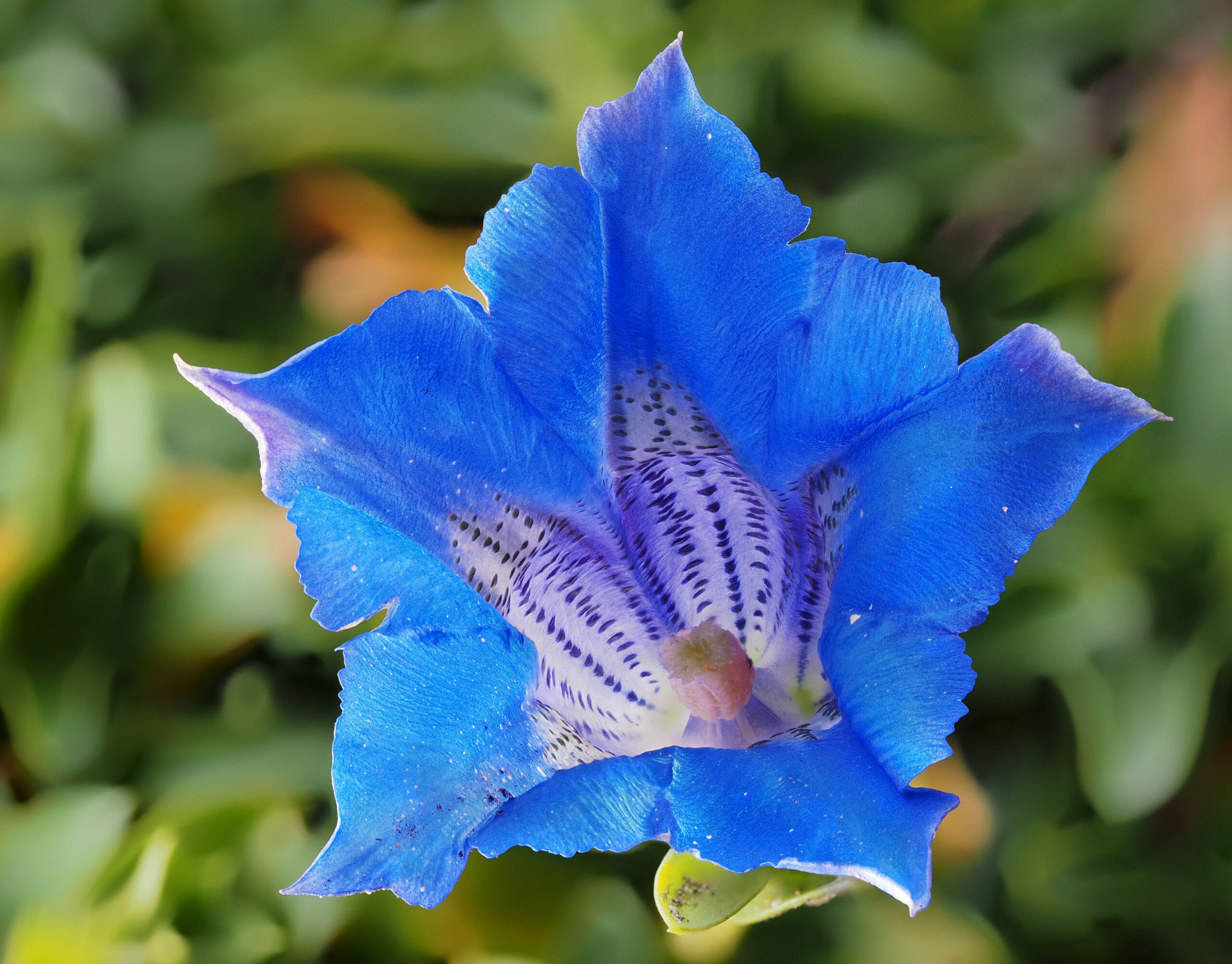
Gentian is a genus of hundreds of species in the gentian family (Gentianaceae), and if you have ever seen one in flower, you have never forgotten the color. The flowers are trumpets, bells, or bottles in a blue so saturated it looks artificial — deep cobalt, sky blue, violet-blue — with white, yellow, and pink species as the exceptions that prove the rule. The genus is named for Gentius, a king of Illyria who, according to the old story, discovered the medicinal virtues of the yellow gentian, which is the kind of naming story that may be legend but is too good to discard. Gentians grow as annuals, biennials, and perennials, from stemless alpine cushions a few inches tall to upright meadow plants several feet high, and they are found across the temperate Northern Hemisphere, in mountains, meadows, bogs, and tundra — anywhere cool, moist, and open enough for a plant that does not compete well.
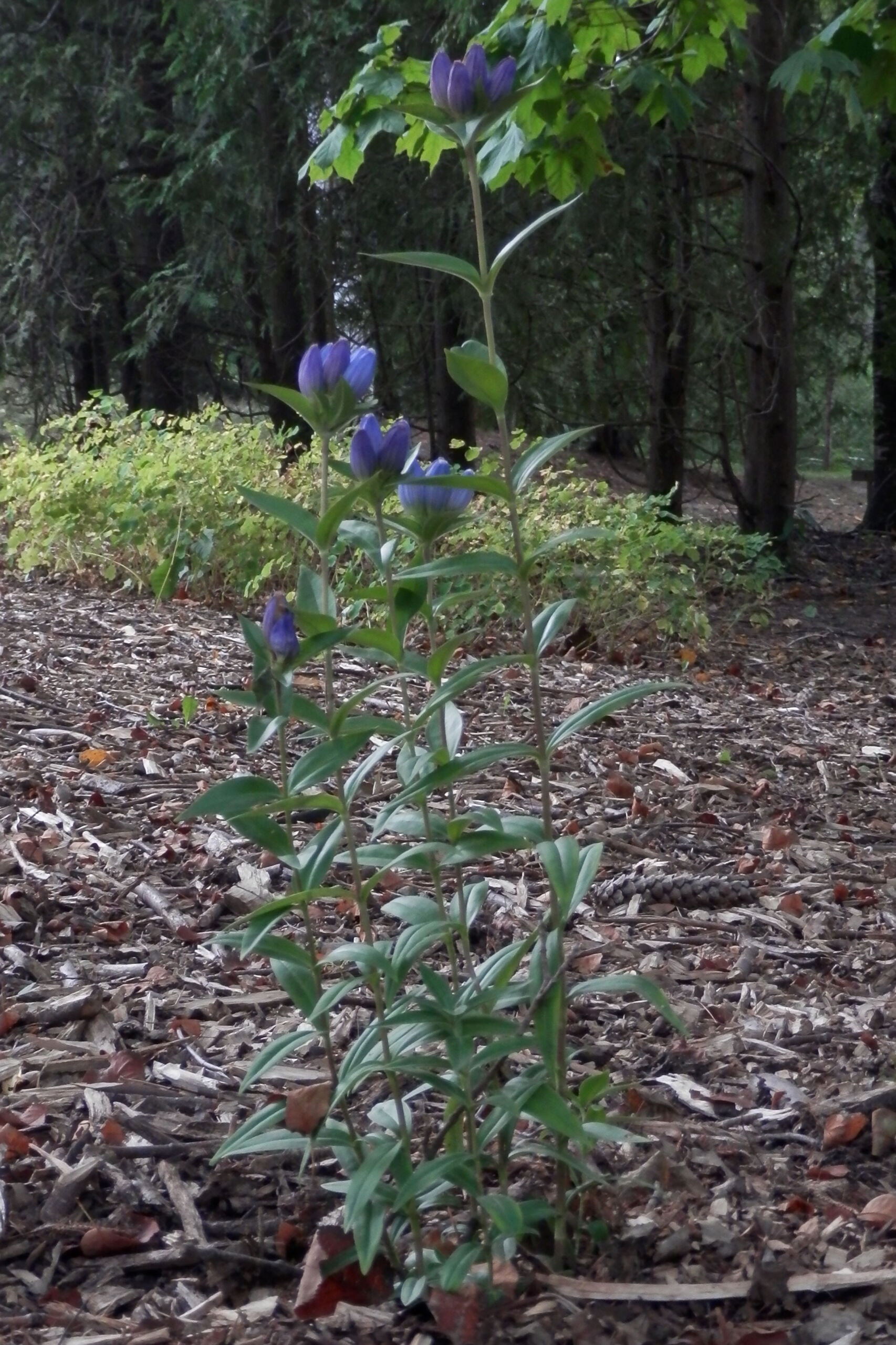
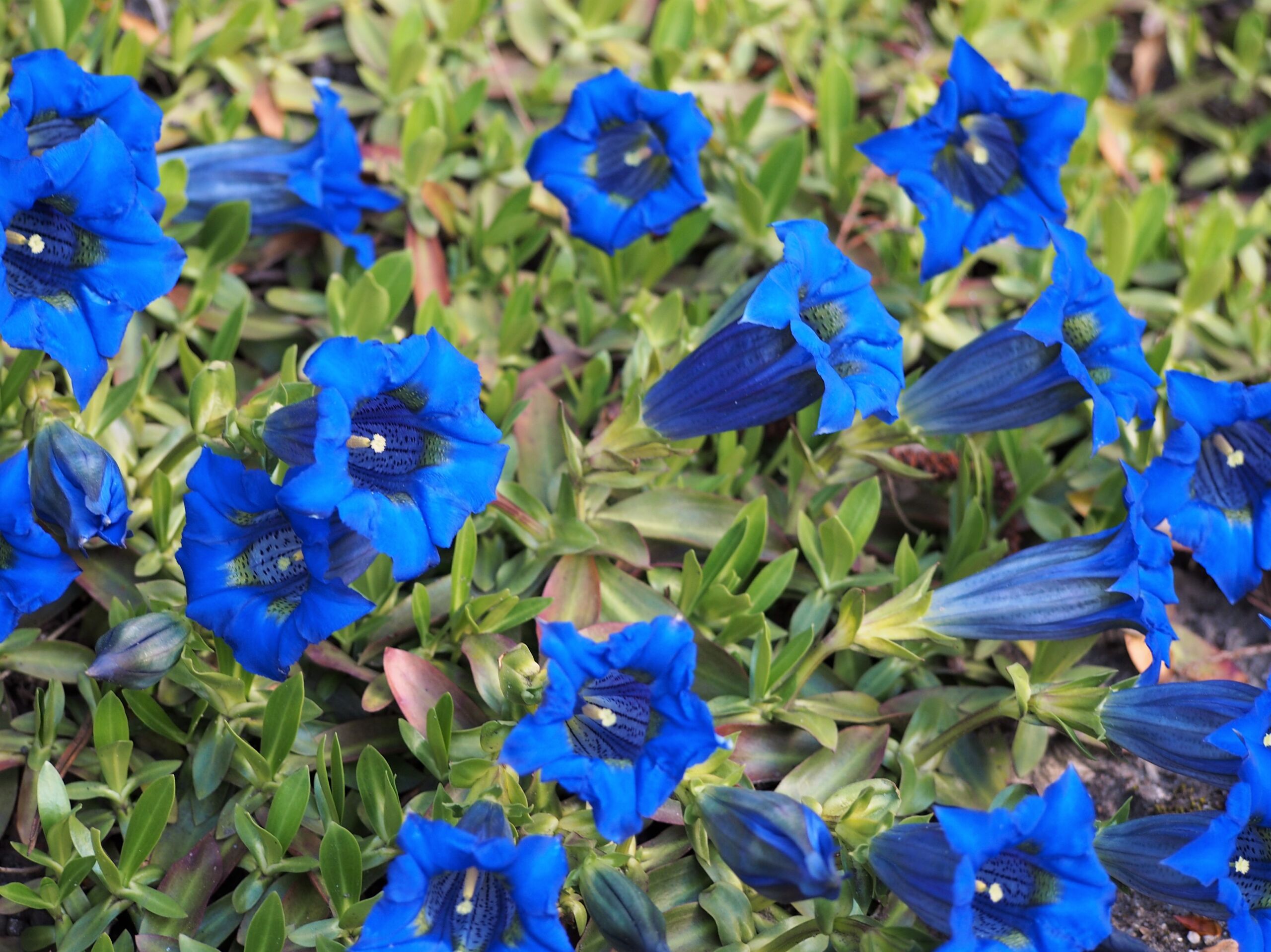
The most charming quirk in the genus belongs to the bottle gentians, like the closed bottle gentian (Gentiana andrewsii) of eastern North America: their flowers never open. They stay closed, bottle-shaped, and only the strongest bumblebees can force their way inside to pollinate them — which means a bottle gentian in flower is a plant that has chosen its pollinator and locked the door against everyone else. The stemless gentian (Gentiana acaulis) of the European mountains does the opposite, opening huge trumpets flat against the ground, as if the mountain itself were blooming. Between those two extremes sits the whole genus: fringed gentians with petals cut like lace, yellow gentians tall as a person, and alpine dwarfs that flower for a week and vanish back into the turf.
The butterfly connection is genus-level, and this guide is honest about that in the way the source is honest about it. The mariposa copper — a copper of western mountains and moist meadows — feeds as an adult on flower nectar from a list of genera, and the Montana field guide’s account names Gentiana among them, alongside yarrow, pearly everlasting, ox-eye daisy, burnet, stonecrop, groundsel, spiraea, and aster. No gentian species is named in that record, and this guide names none for it: the mariposa copper’s gentian is Gentiana species generally, which is exactly what a genus guide covers. The copper’s caterpillars, for completeness, feed on blueberries and related heaths and on bog rosemary and knotweed — the gentian is a nectar plant for the adult, not a host for the caterpillar, and confusing those two roles is how butterfly gardening advice goes wrong.
How to grow
Growing gentians is an exercise in matching the species to the site, because the genus contains plants of alpine scree, wet meadow, and woodland edge, and no single recipe covers them all. The shared requirements are: cool conditions, moisture that never becomes stagnation, and soil that drains sharply while holding organic matter. Most gentians want full sun in cool climates and part shade where summers are warm, acid to neutral soil, and a site where they are not crowded out by vigorous neighbors — gentians are poor competitors, and a gentian planted in the middle of a lush perennial border will be shaded and starved by its more ambitious neighbors within a season or two.
Alpine species like the stemless gentian need the alpine gardener’s toolkit: gritty, free-draining soil, a rock garden or raised bed, sun, and cold winters — they are the plants that make rock gardens worth building, and they fail in hot, humid lowlands no matter how much you love them. Meadow species like the bottle gentian want moist, humus-rich soil, part sun, and a meadow or rain-garden setting where their feet stay damp and their heads stay sunny. Sow seed fresh where possible, because gentian seed often needs a cold period and loses viability in storage; many species are slow from seed, taking a year or more to reach flowering size, which is why nursery plants are worth buying. Divide perennials sparingly and in spring, and disturb established plants as little as possible — gentians resent moving the way cats resent baths, thoroughly and with consequences.
In Florida, the honest advice is restraint. Gentians are northern and mountain plants, and Florida’s heat, humidity, and lack of winter chill defeat most of them. A few southeastern species, like soapwort gentian, grow in the Southeast, but even they are plants of moist, cool microclimates, not of a Keystone Heights summer bed. If you are in north Florida and determined to try, give a gentian morning sun, afternoon shade, constantly moist but drained soil, and a raised bed where water never stands — and treat success as an experiment, not an expectation. For most Florida gardeners, the gentian to grow is the one in a photograph, admired from a cool climate, while the garden itself grows the flowers that love the heat.
Water & feeding
Water gentians consistently and never let them dry out — a dried-out gentian rarely recovers, and the alpine species in particular collapse quickly in a dry pot. At the same time, the soil must drain: moist but never waterlogged is the mantra, and the difference between those two states is the difference between a thriving gentian and a rotted one. In a rock garden, that means gritty mix and a raised bed; in a meadow planting, it means humus-rich soil that holds moisture without ponding; in a container, it means a pot with drainage holes and a saucer that is emptied, not left full.
Feed lightly or not at all. Gentians evolved in lean mountain and meadow soils, and heavy fertilizer produces soft growth that flops and rots. A top-dressing of compost or leaf mold in spring is plenty, and a weak liquid feed once during the growing season is more than enough for container plants. Do not feed in fall, when the plant should be hardening for winter, and do not lime the soil unless you know your species wants it — most gentians prefer acid to neutral ground, and lime is a blunt instrument in a genus full of fine preferences.
Common problems
The first problem is climate mismatch, and it is not fixable with sprays: a gentian planted where summers are too hot and winters too warm will decline no matter how well you water it. The second is slugs and snails, which love the soft, low foliage of alpine gentians and can eat a stemless gentian down to the crown in a wet spring — hand-pick at night, or protect rock garden plants with grit mulch, which slugs dislike crossing. Crown rot follows wet winter soil, especially for alpine species in heavy ground; the prevention is drainage at planting time, not fungicide after the fact.
Aphids cluster on flower buds in spring and are handled with water or soap. The deeper problem is competition: gentians lose to vigorous neighbors, so weed ruthlessly around them and keep grasses out of a gentian patch. And there is the patience problem — gentian seed is slow, seedlings are slow, and a plant that takes two years to flower is a plant many gardeners give up on in year one. The gardeners who persist are rewarded with a blue that no other flower quite matches, which is the genus’s whole argument for itself.
Harvest
Harvest gentian as a flower show, not as a crop — except for one famous exception. The roots of the great yellow gentian (Gentiana lutea) have been used for centuries in bitters, aperitifs, and herbal medicine, and the bitter compounds in gentian root are the reason your cocktail has a bitter edge and your herbal tonic tastes like medicine. Do not dig wild gentian roots: many species are protected or declining, and root harvest kills the plant. If you want gentian bitters, buy them from a reputable maker who sources cultivated root. For the garden, the harvest is simpler: cut a few trumpet flowers for a vase in season, leave the rest for the bees that can force the bottles open, and let the seed ripen where the plant self-sows. A gentian patch left to seed is a patch that slowly spreads, which is the slowest and most satisfying kind of harvest there is.
Browse all plant & pest guides
Saving seeds
This is a genus-level method, stated openly, because “gentian” is not one plant but a genus of hundreds of species — alpine dwarfs and tall meadow plants, spring trumpets and closed bottle flowers — and no single recipe fits every one of them. What unites them for seed purposes is a shared personality: slow, fussy, and worth it. Gentian seed is famously slow and often difficult to germinate, seedlings grow at a glacial pace, and the plants reward patience with a blue so intense it looks edited. If you want fast and easy, this is the wrong genus.
Collect after flowering, when the seed capsules have ripened and dried on the plant. Seeds are tiny, so work over a bowl: snip dry capsules, crush gently, and separate seed from chaff. Dry the seed thoroughly before storage — in humid air, that means indoors in a ventilated spot, not in a sealed container while still damp — then keep it in a labeled envelope in a cool, dry place. One freshness caveat belongs here because sources genuinely disagree: many gentians store dry for a season without trouble, but at least one well-documented case, the bottle gentian, suggests its seed may lose viability if dried out, germinating best when fresh and stratified promptly. The safe rule for the genus is to sow fresh seed whenever you can and not to assume a packet will wait years for you; if you must store it, keep it cool and dry and sow it the next season.
The key that unlocks most gentian seed is cold, moist stratification — a fake winter. Mix the seed with damp (not wet) sand or vermiculite, seal it in a loosely closed plastic bag, and refrigerate it: not the freezer, which is too harsh, and not the crisper drawer next to ripening fruit, whose ethylene can inhibit germination. How long? Sources disagree: some give four to six weeks, many give eight to twelve, and a few alpine species want longer still. Plan on eight to twelve weeks as your default. After chilling, sow on the surface of a moist, acidic, well-drained seed mix and press the seed in without burying it — gentian seed needs light to germinate. Keep the tray bright but cool, roughly 60–70°F, and consistently moist, misting rather than watering with a stream that would wash dust-sized seed to one side. Germination is spotty and uneven, typically over four to eight weeks, and a tray that looks half-empty may still be working; do not discard it early. Seedlings grow slowly; keep them cool, bright, and steadily moist, pot them on only when sturdy, and expect a year or more before some species flower.
Vegetative routes exist but come with warnings. Division is possible in early spring or fall, but gentians resent root disturbance — several species carry deep or fleshy root systems that sulk after division — so divide only mature, vigorous clumps, make sure each piece has a growing point and healthy roots, and replant immediately into moist, acidic soil. Stem cuttings work for a few species in summer, but they are the exception, not the genus rule. As for true-to-type: seed from a species plant grown on its own will usually come reasonably true, while seed from hybrids and named cultivars will vary, and different gentian species grown close together can cross, so a mixed collection sown together may surprise you. Florida gardeners, note the mismatch plainly: most gentians are cool northern and mountain plants, and summer heat is their enemy. Sow fresh, chill long, keep them cool, and let the slow blue trumpets take their time.
Species in this group
Stemless gentian (Gentiana acaulis) — the alpine trumpet: stemless, ground-hugging, with huge blue trumpets in spring, for rock gardens and cold climates. Photographed in this guide.
Closed bottle gentian (Gentiana andrewsii) — the eastern North American bottle gentian, with flowers that never open and only strong bumblebees admitted. A moist-meadow plant, photographed in this guide.
Great yellow gentian (Gentiana lutea) — the tall yellow species of European mountains, whose roots flavor bitters. A different plant from the blue gentians in every way except the genus name, and the source of the Gentius naming story.
Soapwort gentian (Gentiana saponaria) — a southeastern United States species, the closest thing this genus offers to Florida-adjacent interest, for moist, partly shaded sites in the Southeast. No Florida success is promised here; it is a southeastern plant, not a Florida guarantee.
No single gentian species is covered by a separate species guide in this project, and no species name should be wired to this genus guide as if it were that species. The mariposa copper’s genus-level gentian nectar record belongs here, at genus level, exactly as the source states it.