
🌸 Gerardia
What it looks like
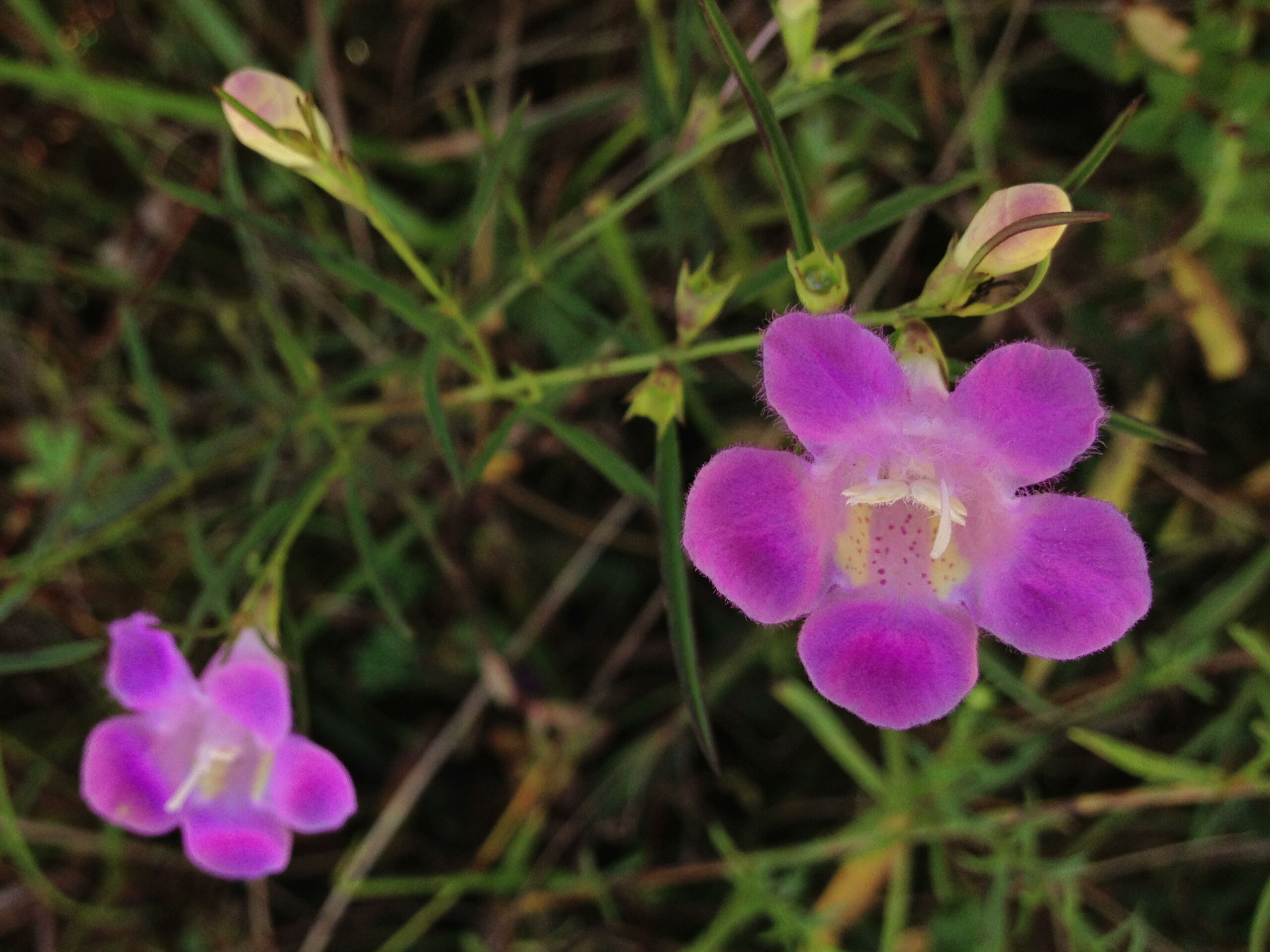
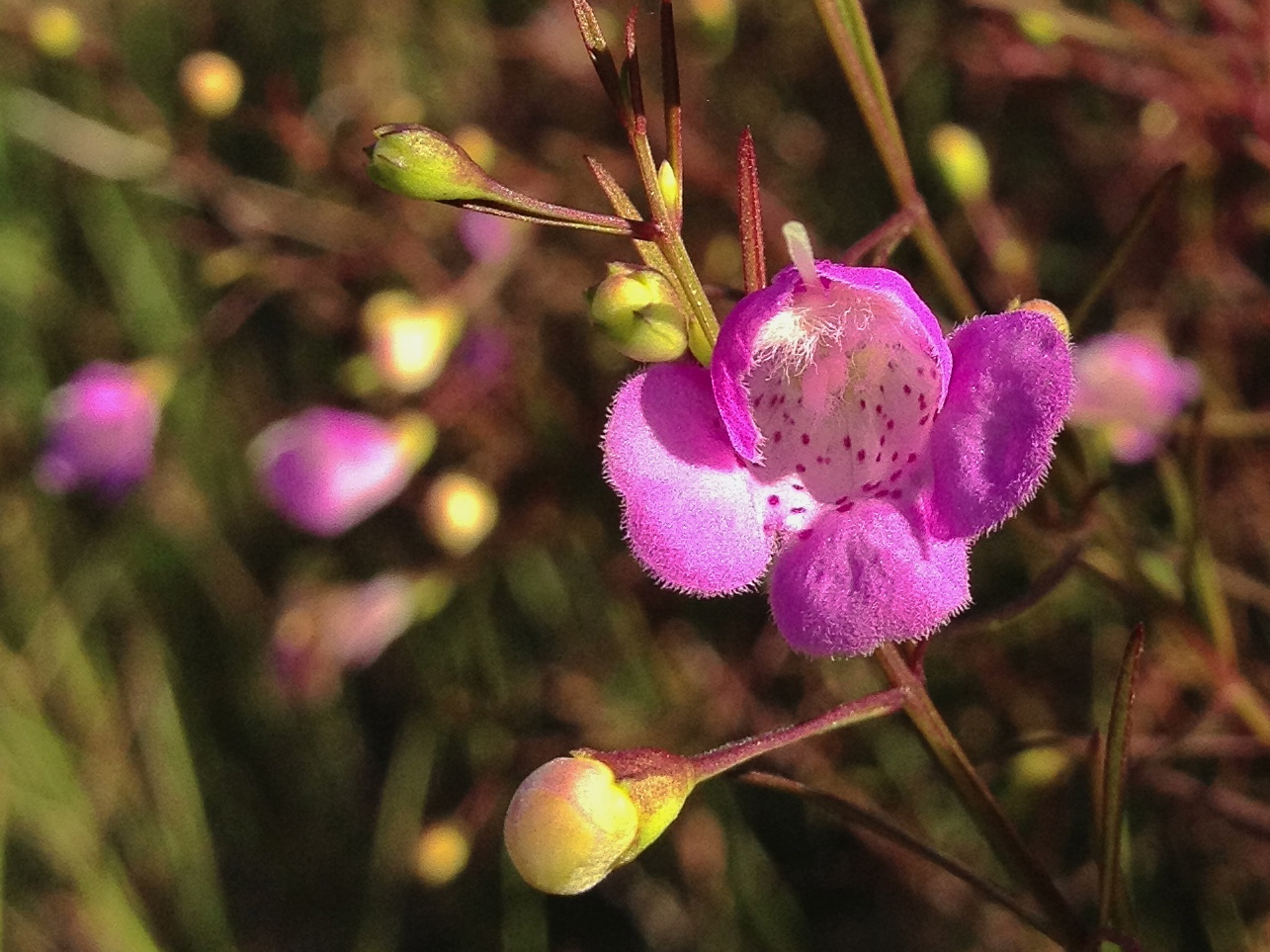
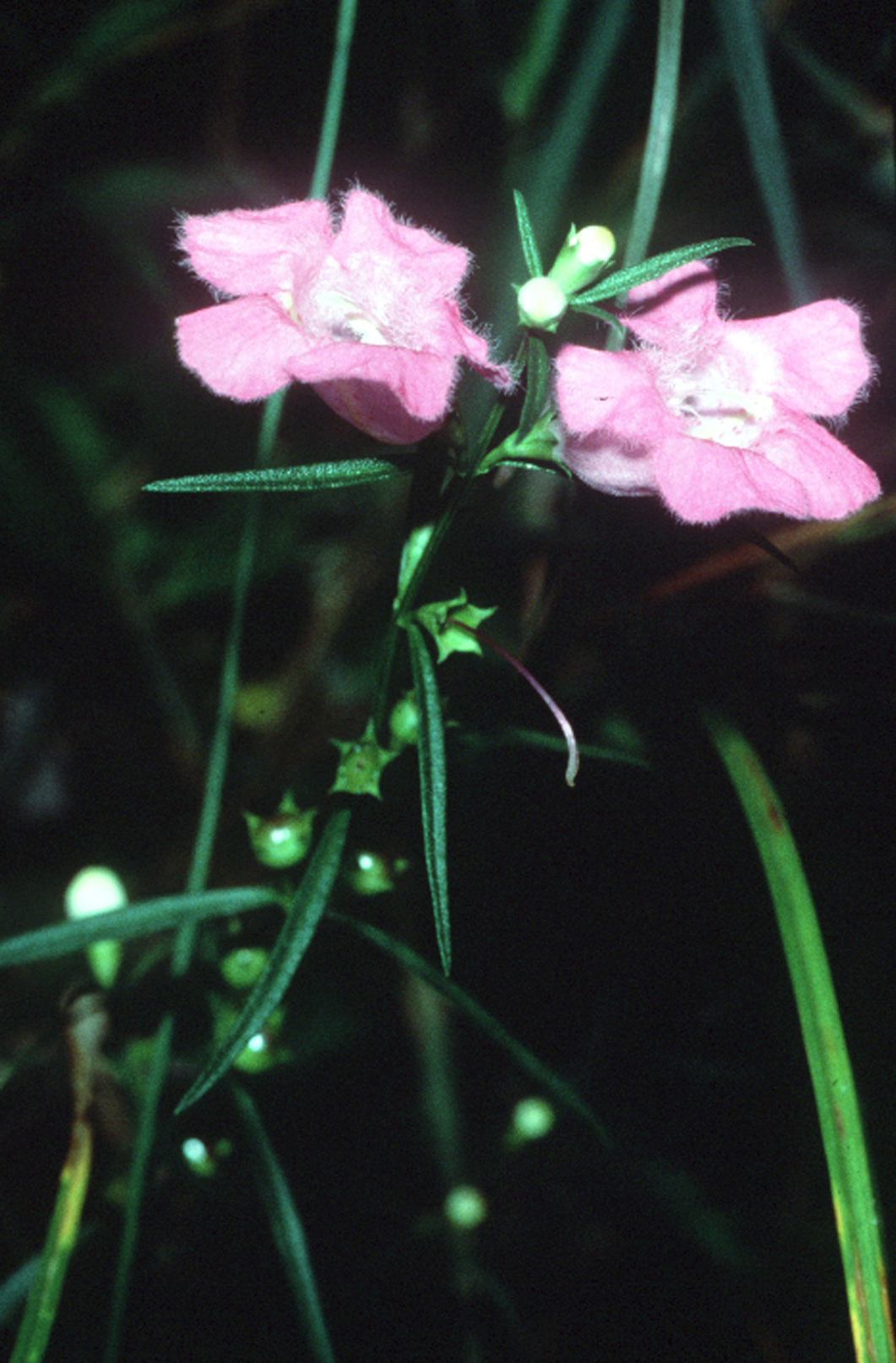
First, the name, because the name is the whole story of this guide. Gerardia is the older name for the plants now called Agalinis, the false foxgloves — a genus of about 60 to 70 species of annuals and herbaceous perennials in North, Central, and South America. The genus Agalinis was named by Constantine Samuel Rafinesque and published in 1836, and it has priority over Gerardia, the name used by Bentham in 1846 for the same group; modern checklists list Gerardia as a synonym of Agalinis. The family moved too: these plants were long placed in the figwort family (Scrophulariaceae), and molecular work on chloroplast DNA moved them into the broomrape family (Orobanchaceae). So a plant your grandmother’s wildflower book calls Gerardia purpurea is the plant your field guide calls Agalinis purpurea, and both books are describing the same pink flower. This guide is filed under Gerardia because that is the name the butterfly guide uses — and the butterfly guide’s word is the link’s anchor — with the current name beside it in the title so no reader is misled.
As a group, the gerardias are slender, wiry-branched plants with narrow leaves, carrying pink to purplish flowers, occasionally white, that resemble foxglove flowers the way a cousin resembles a cousin: same family look, smaller and wilder. The genus name Agalinis comes from Greek words meaning remarkable flax, because the flowers somewhat resemble flax flowers. Most species are annuals, some are perennials, and nearly all of them share the trait that makes them fascinating and difficult: they are hemiparasites. A false foxglove photosynthesizes like a normal plant, but it also taps into the roots of neighboring plants — grasses especially — and steals water and nutrients. It is not a full parasite, and it does not kill its host, but it is not fully independent either, which is why it grows where grasses grow and why it sulks in a bare, weeded bed with nothing to lean on.
The butterfly connection is the common buckeye’s. The common buckeye’s caterpillars feed on plants of the snapdragon family — snapdragon, toadflax, Gerardia, and false foxglove, as the guide lists them — along with plantains and the acanthus family, and in Florida the list includes false foxglove (Agalinis fasciculata) specifically. Read that list with modern taxonomy in mind and you will see the doubling: “Gerardia” and “false foxglove” in the older sense overlap, because Gerardia IS the false foxglove group under its old name. The guide lists both because its sources span both namings, and this genus guide exists to catch the Gerardia form: the group as a whole, not one species. The single species Agalinis fasciculata has its own growing guide — the False Foxglove guide — and this guide does not duplicate it. Think of it this way: the False Foxglove guide is one species’ biography, and this guide is the family history that explains why that species has two names.
How to grow
Growing gerardias is less like growing a garden flower and more like hosting a wildflower that has opinions about its neighbors. Start with the habitat, not the seed packet: sunny areas in wet woodlands, thickets, meadows, coastal shores, and disturbed areas are where these plants live, and the common thread is open light plus neighboring plants — especially grasses — whose roots they can tap. Sow seed in fall, scattered over a meadow or grassy patch rather than in a clean, tilled row, and let winter stratify it. Do not weed the grasses out from around your gerardias: the grasses are not competitors to be removed, they are the host plants the gerardia needs, and a gerardia patch with no grasses is a gerardia patch that starves politely and dies.
Give them sun — full sun to light shade — and soil that matches the species: the purple false foxglove likes moist meadows and open ground, the slender false foxglove ranges across sunny woodland edges and thickets, and the seaside gerardia wants salt marsh edges, which tells you how wide the genus’s tastes run. Most species want acid to neutral soil and good drainage; none of them wants a rich, fertilized, irrigated bed, because rich beds favor the vigorous competitors that shade a wiry annual out. Space is not measured in inches here: scatter seed, let the plants find their own density, and accept a meadow look rather than a border look. A gerardia in a formal border is a fish in a fountain — alive, but missing the point.
In Florida, the relevant species is the one with its own guide: fascicled false foxglove (Agalinis fasciculata), which the buckeye guide names for Florida, and which grows in the state’s open, sunny, grassy places. The wider Gerardia group extends across the eastern United States, and many of its species will grow in north Florida meadows if given sun, grasses, and a light hand. The practical Florida advice is the same as everywhere else: do not plant gerardia as a bedding plant, plant it as a meadow component, and let the buckeyes find it the way they find it in the wild — by wandering into a weedy, sunny patch and laying a single green egg on a leaf bud.
Water & feeding
Water a gerardia patch the way you water a meadow: rain, mostly, with supplemental water only in genuine drought, and never a sprinkler routine that keeps the ground soggy. The species vary — some live in wet meadows, some in dry thickets, and the seaside species lives where the tide nearly reaches it — so “moist but drained” is the genus-level rule, with the species’ habitat as the fine print. Do not fertilize: fertilizer feeds the grasses and forbs around the gerardia faster than it feeds the gerardia, and a fertilized meadow is a meadow where the wiry annual gets shaded out by everything else. The hemiparasite’s feeding strategy makes fertilizer doubly pointless — it is already taking what it needs from its neighbors’ roots, and pouring nitrogen on top just supercharges the neighbors.
The one feeding-related task that matters is protecting the host connection. Do not till a gerardia patch, do not mulch it deeply, and do not “clean it up” in fall by cutting everything to the ground and raking it bare: the roots the gerardia taps are in that soil, and the seed it drops needs to land on ground where grasses will grow next spring. Leave the patch standing over winter, cut it high in early spring if you must cut it at all, and let the annuals reseed into the same ground their parents parasitized. It is a strange kind of gardening — gardening by restraint — but it is the kind this genus rewards.
Common problems
The first problem is the one every hemiparasite faces in a garden: a gardener who weeds too well. A gerardia bed kept clean of grasses is a gerardia bed with no hosts, and the plants will germinate, grow weakly, and vanish without flowering. The fix is to stop weeding the grasses, which feels wrong and is right. The second problem is shade: trees closing over a meadow, shrubs filling in a thicket edge, a border planting that grows up around a wiry annual — all of them end a gerardia patch the same way, by taking its light. The third is impatience: annual gerardias are not instant color, and a patch sown in fall may look like nothing but grass until late summer, when the pink flowers suddenly appear as if they had been there all along. They had — they were just busy underground, attached to grass roots, doing the quiet work.
Pests are minor: the buckeye caterpillars themselves eat the leaves, and that is the point, not a problem — a gerardia patch with buckeye caterpillars on it is a patch succeeding at the one thing this project cares about. Do not spray a host patch because it has caterpillars on it. Deer browse the flowers occasionally, and drought thins a patch in a dry year, but a healthy, self-seeding population absorbs both and comes back from seed. The real threat to wild gerardias is habitat loss — meadows mowed to lawns, thickets cleared, marsh edges filled — and the garden response to that is to keep a meadow corner messy, sunny, and grassy, and to let the false foxgloves do what they have done for centuries without anyone’s help.
Harvest
Harvest gerardia as flowers and seed, not as anything else. The pink-purple blooms cut well for a wildflower bouquet, though they wilt faster than a florist flower — pick them in the cool of the morning and get them into water quickly. For seed, let the capsules ripen and dry on the plant, then shake them into a paper bag in fall; sow immediately or hold dry over winter and scatter in spring, always into grass, always where the next generation can find hosts. There is no edible or medicinal harvest claimed here, and the hemiparasitic habit is reason enough not to invent one: a plant that borrows its chemistry from its neighbors is not a plant to dose yourself with on the basis of a garden guide. The harvest that matters is the buckeye: a patch in flower in late summer, with a common buckeye working the blooms and a caterpillar somewhere on a leaf bud, is a gerardia patch that has paid for itself.
Browse all plant & pest guides
Stewardship note
This is not a seed-saving how-to, and that is deliberate. Gerardia — the false foxgloves, now properly Agalinis — is a hemiparasite. It is a green plant that photosynthesizes like any respectable wildflower, but it also taps into the roots of neighboring plants with little sucker organs called haustoria, sipping water and nutrients from hosts that are usually grasses, bluestems among them. It is a facultative parasite, meaning it can technically complete its life cycle without a host, but in practice it does far better with one, which is why a gerardia patch is really a community: the flower, plus the grasses under it, plus the soil they share.
That is why the usual seed-saving playbook fails here. This is a group guide covering dozens of species, some of them rare, and their seed does not want a paper envelope and a sunny windowsill — it wants to fall where it grew, into ground already threaded with host roots, and wait for its moment. Digging plants, stripping wild patches of seed, or trying to raise a lone specimen in a pot is a good way to end up with nothing and a poorer meadow. The stewardship move is almost embarrassingly simple: leave the patch alone. Let the seed capsules ripen and drop where they stand, keep the host grasses intact rather than mowing them to lawn height, and hold off the mower until seed has had a chance to set. If you already have gerardia, the best thing you can do for next year’s flowers is benign neglect of the patch in late summer and fall.
If you want gerardia where you do not have it, build the neighborhood first. Establish native grasses and let a meadow edge be a meadow edge, rather than a flower bed, and give seed — whether it arrives on the wind, on a bird’s foot, or from a responsibly propagated native nursery plant — the host community it needs. Protect the patch you have, and it will do its own sowing, in its own time, which is exactly how a plant that steals lunch from its neighbors prefers to operate.
Species in this group
Purple false foxglove, purple gerardia (Agalinis purpurea, formerly Gerardia purpurea) — the classic purple gerardia of eastern meadows, photographed in this guide. One of the “other plants called Gerardia” in every wildflower book, and the species most people picture when they hear the old name.
Slender false foxglove, common gerardia (Agalinis tenuifolia, formerly Gerardia tenuifolia) — the slender-leaved species of sunny woodlands, thickets, meadows, and coastal shores across the eastern United States and Canada, photographed in this guide.
Fascicled false foxglove (Agalinis fasciculata) — NOT covered by this guide: it has its own species guide, the False Foxglove guide, and the buckeye guide names it specifically for Florida. This genus guide covers the Gerardia group; fasciculata belongs to its own guide, and the two must not be merged.
Seaside gerardia (Agalinis maritima) — the salt-marsh species, smaller-flowered, with fleshy linear leaves, for coastal gardeners who have a marsh edge rather than a meadow.
Earleaf false foxglove, earleaf gerardia (Agalinis auriculata) — the species with wide, toothed, auriculate leaves, a different look from the slender-leaved species, and a reminder that “gerardia” covers more shapes than one mental picture holds.