
🌻 Sunflowers
What it looks like
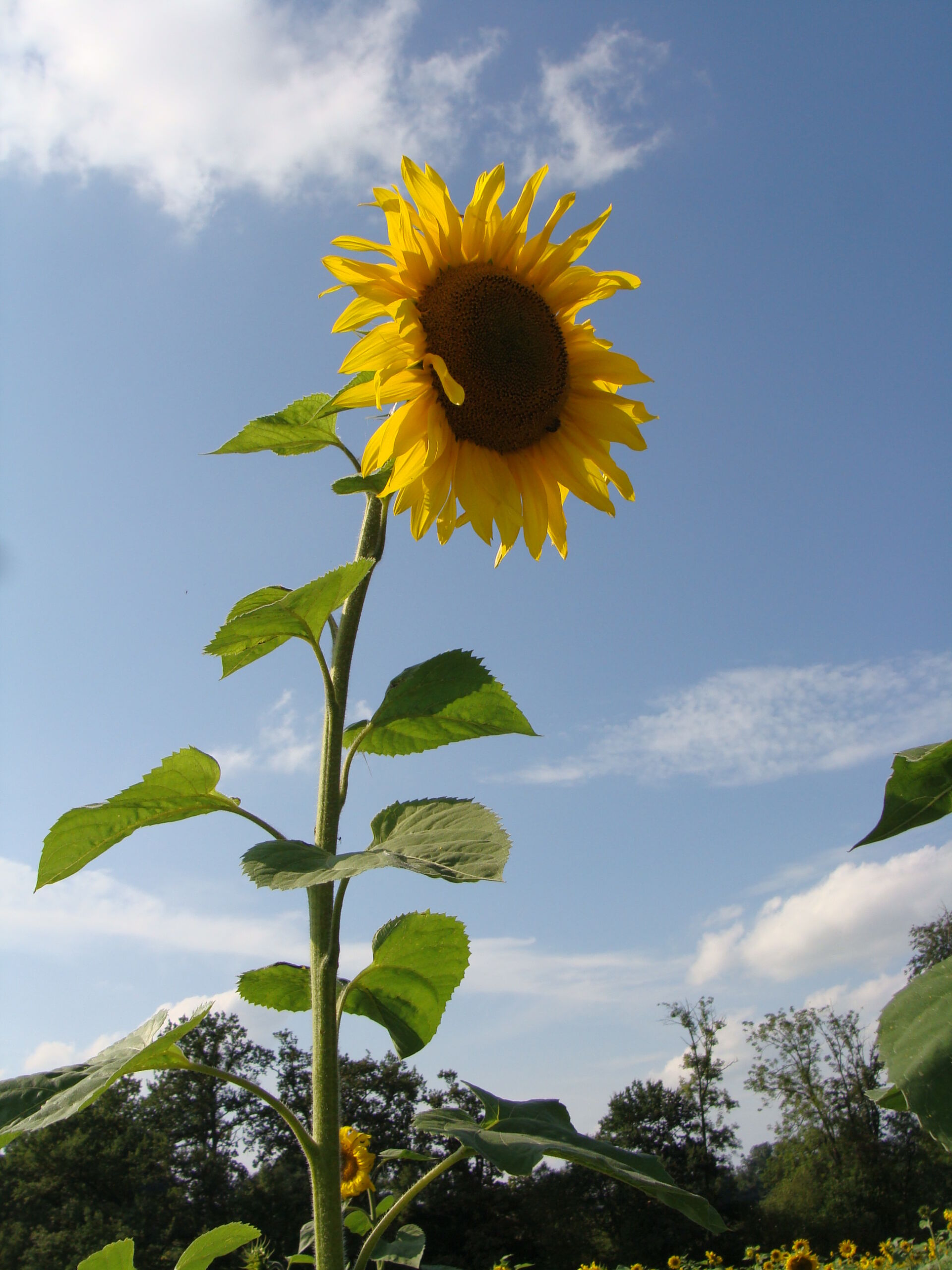
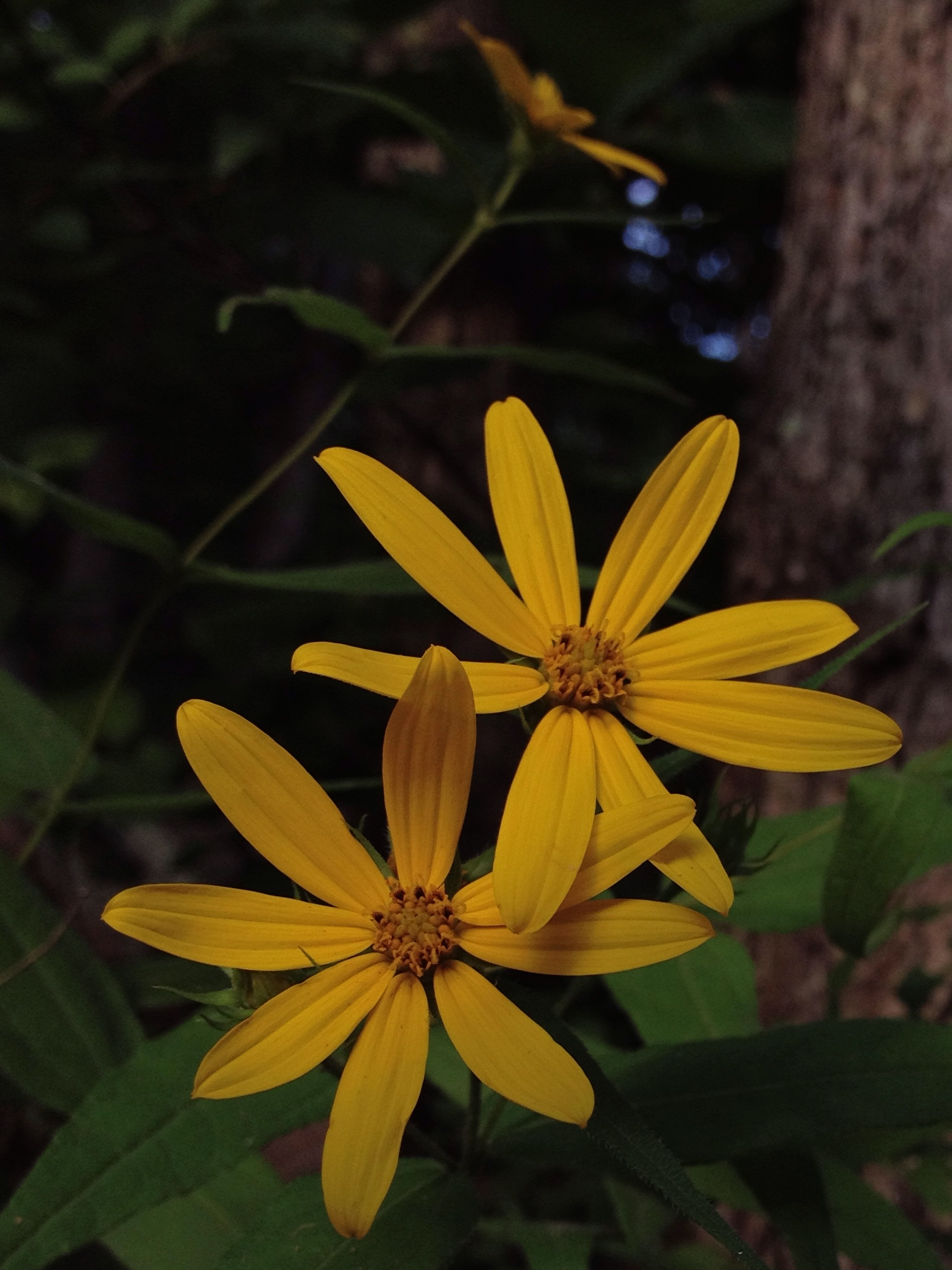
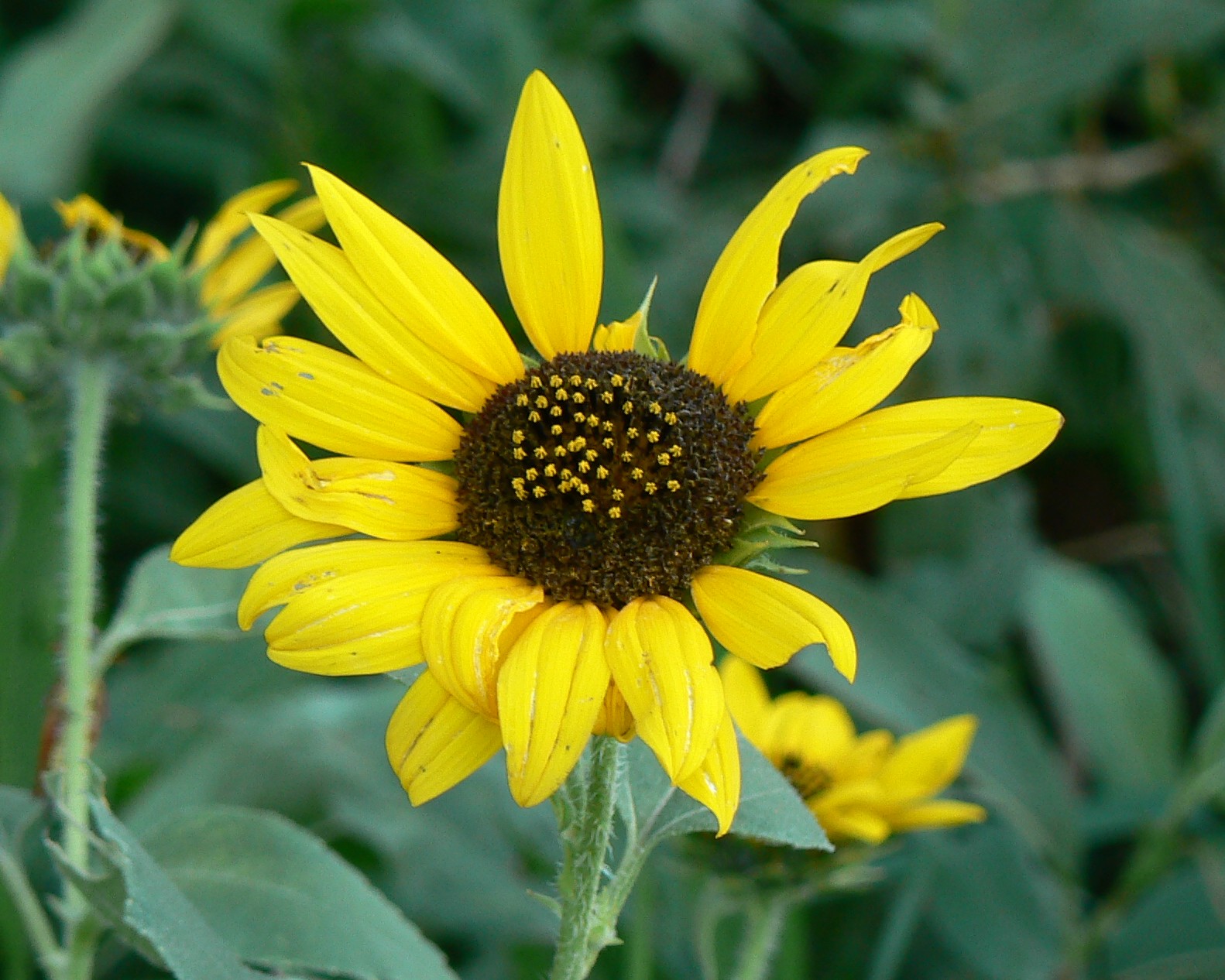
A sunflower is the most recognizable flower on the continent, and the genus behind it is bigger and wilder than the garden annual suggests. Helianthus holds roughly seventy species, nearly all native to North America, ranging from the towering annual of the plains to rhizomatous woodland perennials, wetland giants, and desert dwarfs. What they share is the composite head: a disk of tiny fertile florets ringed by yellow ray florets that look like petals but are not — each “petal” is a single flower, and the whole head is a crowded city of flowers pretending to be one bloom.
The leaves vary wildly by species — opposite or alternate, rough or smooth, heart-shaped or lanceolate — but the habit is familiar: upright stems, coarse foliage, and heads that track the sun when young. The young heads really do turn: heliotropism, driven by uneven growth on the shaded side of the stem, keeps the developing head facing the sun through the day. Mature heads mostly stop and face east, which warms them first in the morning and brings in the pollinators early. The genus name says it plainly: helios, sun, plus anthos, flower.
The butterfly context is the Gorgone Checkerspot guide, whose Host plants section names “various sunflowers (Helianthus species, including woodland sunflower Helianthus divaricatus in the south and prairie sunflower Helianthus petiolaris in Illinois, and giant sunflower Helianthus giganteus in central Georgia).” This genus guide claims only the genus-level form: “sunflowers (Helianthus species).” The three named species — woodland sunflower, prairie sunflower, and giant sunflower — each have their own species guides in this series, and none is covered here beyond being named as members of the genus. Giant ragweed, Iva, and Viguiera, the other hosts in that list, are different plants and none is covered here.
One plain-text disambiguation, because the sunflower name causes real confusion and this genus guide must not swallow the species around it. This guide covers Helianthus as a genus. The site’s Sunflower guide is Helianthus annuus only — the common annual, verified live by its hero Latin — so it does not cover the genus, and this guide does not cover the annual as a species. Jerusalem artichoke (Helianthus tuberosus) is a Helianthus species with its own growing guide, and it is not covered here. Dune sunflower (Helianthus debilis) and swamp sunflower (Helianthus angustifolius) appear as Academy native profiles, not growing guides, and neither is covered here. Buy and plant by Latin name, and let this guide be the genus, not a substitute for any one sunflower.
How to grow
Growing sunflowers as a genus means matching the species to the site, because the genus contains a plant for nearly every sunny situation — and a wrong match is the only common failure. The annuals (common sunflower and prairie sunflower) want full sun, ordinary to poor soil, and a direct sowing after frost: they grow fast, bloom in one season, and die, leaving seeds for birds. The woodland perennials (woodland sunflower and its kin) tolerate light shade and dry woodland edges, spread by rhizomes into colonies, and come back every year. The wetland species (giant sunflower and its kin) want moist ground and room to reach their full height. The shared rules are simple: sun first, drainage second, and space for the plant’s ambitions.
Sow annuals where they will grow, because sunflowers resent transplanting — their taproots go down fast and resent disturbance. Sow perennials from nursery plants in spring or fall, and give rhizomatous species room or a root barrier, because a happy woodland sunflower colony is a plant with plans for the whole bed. Water until established, then water like the species wants: annuals in rich soil grow enormous with regular water, woodland species prefer it drier, wetland species want it wetter. Deadhead annuals to prolong bloom or leave the heads for birds — goldfinches will strip a sunflower head with the focus of accountants, and that is a feature, not a loss.
Florida note, stated plainly rather than hopefully. Most Helianthus species are temperate plants of prairies, woodlands, and wetlands, and the famous annual sunflower struggles through a Florida summer of heat, humidity, and disease pressure. Florida’s own sunflowers — dune sunflower and swamp sunflower, both Academy-profiled natives — are the right sunflowers for a Florida garden, and this genus guide says so rather than pretending a Kansas prairie plant belongs in Keystone Heights. The Gorgone Checkerspot does not range into Florida either; its sunflower hosts are a central-continent story, and this guide is for reading that story correctly.
For the garden, the honest translation is a sunflower for every sunny job: annuals for the children’s row and the birdseed harvest, woodland species for the dry shade edge where nothing else blooms yellow, wetland species for the rain garden’s back row. Plant a mix and you get bloom from midsummer into fall, caterpillars on the leaves, bees on the disks, and goldfinches on the seeds — the whole food web, arranged in yellow.
Water & feeding
Water sunflowers by species, not by genus. Annuals are thirsty when growing fast and will reward regular water with height that has to be seen to be believed — but they also tolerate drought once established, and a dry-grown annual is shorter, sturdier, and less likely to need staking. Woodland perennials prefer drier soil and resent wet feet. Wetland species want consistent moisture and will sulk in a dry bed. The shared mistake is treating the genus as one plant: it is seventy plants wearing the same flower, and the watering can should follow the species tag, not the genus name.
Feeding: modest. Sunflowers grow in ordinary soil and do not need heavy fertilizer; too much nitrogen produces enormous, weak stems that fall over in the first storm. A little compost at planting is plenty for perennials, and annuals in decent soil need nothing at all. The soil science here is the sunflower’s famous appetite in reverse: sunflowers are used in phytoremediation because they pull metals and contaminants from soil — which is also why you should not eat seeds from a sunflower grown to clean up a site. A plant that cleans soil is a plant that stores what it cleaned, and the seeds are the storage.
Common problems
- Wrong species, wrong site. The commonest failure in the genus. A wetland sunflower in a dry bed sulks; a woodland sunflower in full baking sun scorches; an annual in shade stretches and flops. Match the species to the site.
- Flopping. Rich soil, too much nitrogen, or too much water makes tall, weak stems. Grow annuals leaner for sturdier plants, and stake the giants before the storm, not after.
- Rhizome running. The perennial woodland species spread by rhizomes and will colonize a bed. Divide clumps every few years, or plant where a colony is welcome.
- Caterpillars on the leaves. Checkerspot and other caterpillars eat sunflower leaves, and that is the point of a host planting. Do not spray a host patch: the caterpillars are the crop.
- Seed theft by birds. Goldfinches and other birds strip heads as they ripen. If you want the seeds, bag a few heads; leave the rest for the birds, who are doing you the favor of noticing your garden.
- Genus-species confusion. A genus guide does not cover a species, and a species guide does not cover the genus. The site’s Sunflower guide is annuus only; the woodland, prairie, and giant sunflower guides are their species only; this guide is the genus.
Harvest
The sunflower harvest is the most satisfying in the garden: a head the size of a dinner plate, heavy with seeds, cut when the back of the head turns yellow-brown and the seeds loosen with a rub. Dry the heads, rub out the seeds, roast them with salt, and you have the snack that built a genus’s fame. The perennial harvest is different and quieter: divisions in spring, stems for the compost, and a colony that comes back every year without asking. The simplest harvest is a late-summer afternoon with no agenda: goldfinches hanging upside down on a nodding head, bees working the last disks, a checkerspot flickering over the leaves, and the knowledge that one genus fed them all.
Saving seeds
This is a genus-level method, and it is stated as such: the sunflowers in this guide — annuals, perennials, and everything in between — all make their seed the same way, inside a disk head that dries down at the end of the season, but the details that matter for seed saving (whether the plant comes back on its own, and whether its seedlings will look like the parent) depend on which sunflower you actually grew. Save seed from the healthiest, truest-looking plants, not the runts or the oddballs.
Let the head ripen on the plant. The back of the head turns yellow-brown, the petals shrivel and drop, and the seeds loosen when you rub them with a thumb. That is the plant telling you it is done filling them. Cut the head with a short stub of stem, and if the birds have already found it — and they will, because a sunflower head is a bird feeder that grew itself — slip a mesh bag or cheesecloth over the ripening head before they strip it bare. Never use a plastic bag for this: it traps humidity and turns a ripening head into a mold farm, which in Florida is less a risk than a promise.
Finish drying indoors, somewhere warm, dry, and airy, heads spread out or hung up so air reaches every side. A head holds a surprising amount of water, so give it at least a week or two, longer in a humid house, and do not jar anything until a seed snaps rather than bends. Then rub the seeds out over a tray, winnow away the chaff by pouring them slowly in front of a fan, and keep only the plump, full ones. One trick first-time savers miss: sunflower seed can carry weevil eggs laid in the head, which hatch in storage and eat your seed from the inside — once the seed is thoroughly dry, a stint in the freezer kills them before they get the chance.
That home should be an airtight jar or sealed envelope with a desiccant packet, labeled with the plant and the year, kept cool and dark. Florida humidity is the enemy here: seed that feels dry on a dry January day can pull moisture straight out of August air, so dry thoroughly, seal tightly, and store cool. On viability, sources honestly disagree — some say use sunflower seed within a year or two, others report several good years from well-stored seed — so treat it as best in its first couple of seasons and sow a little thick if it is older.
Now the crossing problem, which is the real story of sunflower seed saving. Sunflowers are insect-pollinated outcrossers, and bees will happily carry pollen from one sunflower to another, including wild ones and the neighbor’s patch. If you grew one open-pollinated kind with no other sunflowers flowering nearby, your saved seed will mostly come true; if several kinds flowered together, expect surprises. On isolation distance, sources disagree wildly — recommendations run from around a thousand feet to a quarter mile to a full mile — which tells you that true purity in a neighborhood full of sunflowers is more aspiration than guarantee. The practical options are to grow one kind for seed, to bag and hand-pollinate individual heads, or to embrace the chaos. And the F1 warning: seed saved from a hybrid cultivar will not reliably repeat the parent — it segregates back toward its grandparents, so it is a lottery ticket, not a photocopy. Open-pollinated and species sunflowers are the ones worth saving; hybrids are worth enjoying and then replacing.
Species
Notable Helianthus species in this series and beyond: common sunflower (Helianthus annuus) — the famous annual, with its own growing guide; woodland sunflower (Helianthus divaricatus) — the shade-tolerant rhizomatous perennial of the south, with its own species guide; prairie sunflower (Helianthus petiolaris) — the smaller, delicate annual of Illinois and the plains, with its own species guide; giant sunflower (Helianthus giganteus) — the tall wetland species of central Georgia, with its own species guide; Jerusalem artichoke (Helianthus tuberosus) — the tuberous species, with its own growing guide; dune sunflower (Helianthus debilis) and swamp sunflower (Helianthus angustifolius) — Florida natives, Academy profiles only, not covered here. Other Helianthus species are different plants, and none is covered here beyond this list. No named garden varieties of the wild genus were verified, and none is claimed here. This guide covers Helianthus spp. as a genus.