
🌻 Prairie Sunflower
What it looks like
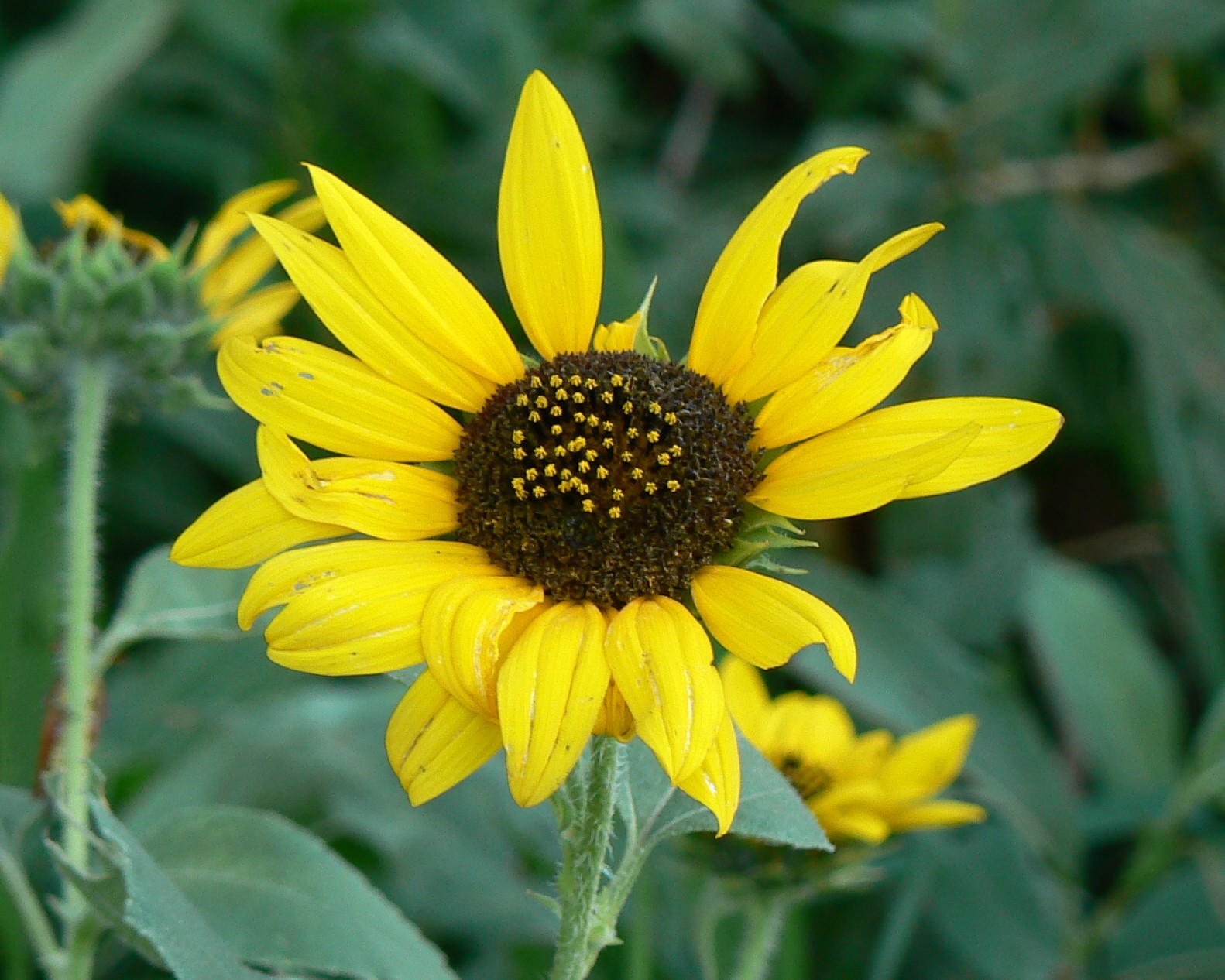
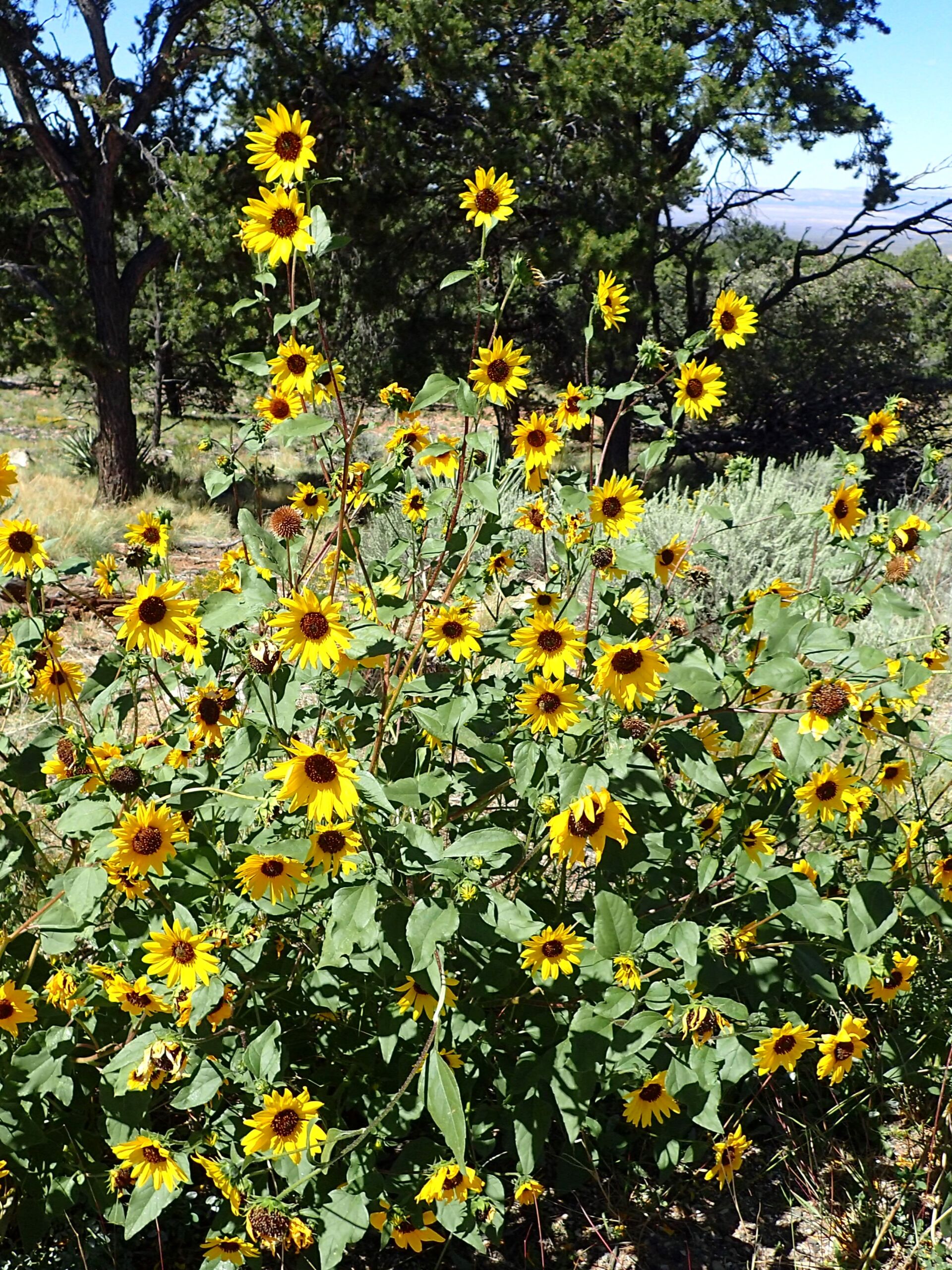
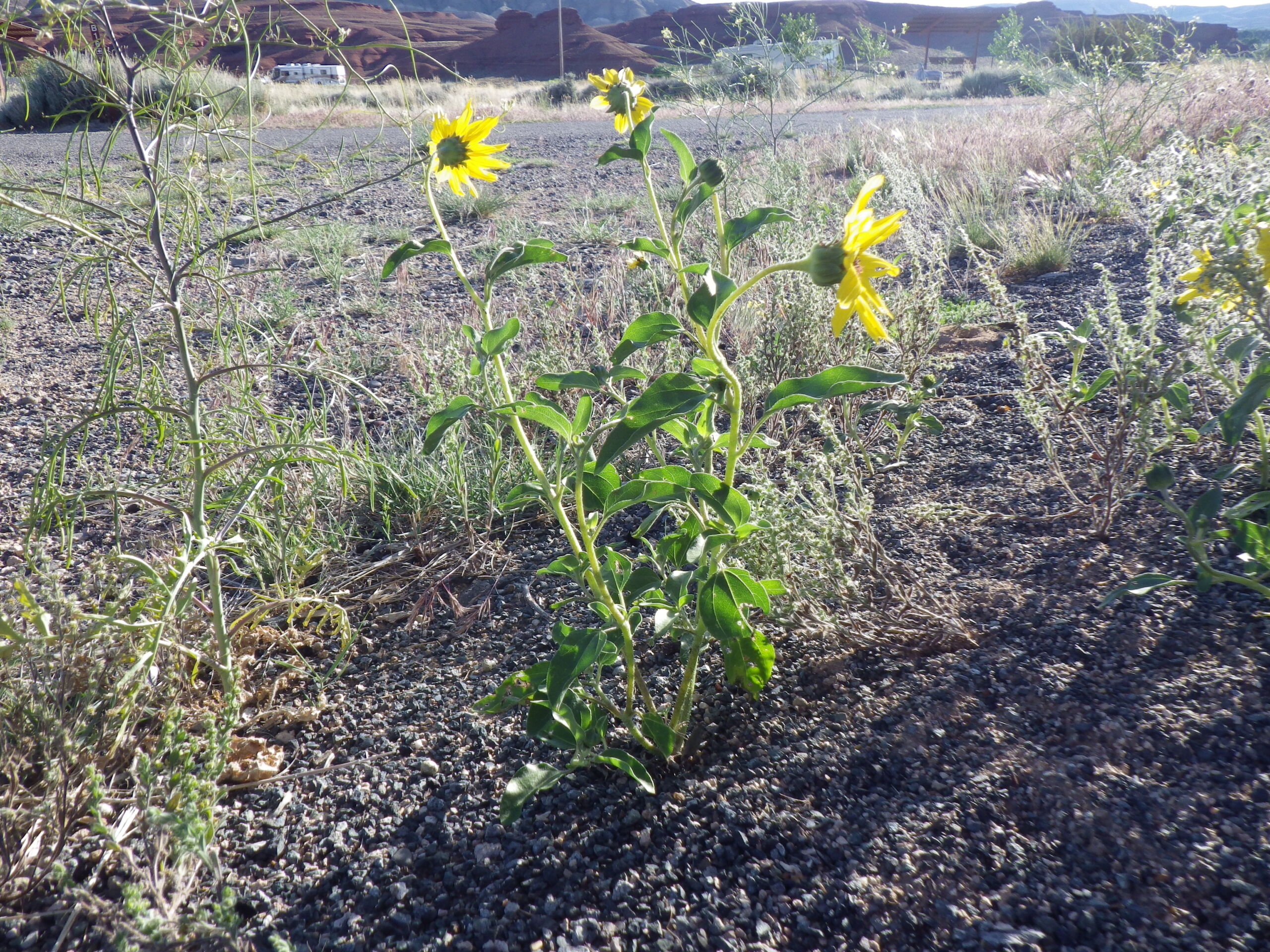
Prairie sunflower looks like common sunflower’s smaller, tougher cousin — because that is almost exactly what it is. It is an annual, usually two to four feet tall, with a slender, branching stem and the same yellow-rayed, dark-disked heads as the garden annual, but everything is scaled down and toughened up: smaller heads, more delicate stature, and leaves held out on long petioles — the leaf stalks that give the species its name, petiolaris meaning “with a petiole,” as if the botanist who named it had run out of poetry and settled for anatomy. The involucral bracts behind the head are lance-shaped and pointed, another small difference that separates it from annuus at a glance once you know to look.
It grows where the garden annual would struggle: sandy soils, dry plains, roadsides, and disturbed open ground across the Great Plains and westward, from the central United States into the West. It is a plant of open, sunny, poor ground — the kind of ground that defeats fussier flowers and rewards a fast annual that can germinate, bloom, seed, and die in a single hot season. A patch of prairie sunflower in August, wiry stems and small yellow heads over sand, is the prairie doing what it does best: making beauty out of almost nothing.
The butterfly context is the Gorgone Checkerspot guide, whose Host plants section names “prairie sunflower Helianthus petiolaris in Illinois” among the sunflowers its caterpillars eat. This guide covers Helianthus petiolaris only. Woodland sunflower, giant sunflower, and the genus-level sunflowers have their own guides in this series, and none is covered here. Giant ragweed, Iva, and Viguiera, the other hosts in that list, are different plants and none is covered here.
One plain-text disambiguation, because the sunflower names are a thicket. This guide covers Helianthus petiolaris only, also called prairie sunflower and plains sunflower. Common sunflower (Helianthus annuus) is a different, larger annual species with its own growing guide, and it is not covered here — petiolaris is very similar to annuus but generally smaller and more delicate, with lanceolate involucral bracts, and the two hybridize where they meet, which is why a plant that looks halfway between them may genuinely be halfway between them. Woodland sunflower (Helianthus divaricatus) and giant sunflower (Helianthus giganteus) are different, perennial species with their own guides, and neither is covered here. The site’s Sunflowers genus guide covers Helianthus as a genus, and it is not this species guide. Buy and plant by Latin name.
How to grow
Prairie sunflower is one of the easiest annuals for poor, sunny ground, because its whole strategy is speed on a shoestring. Sow seed directly where it will grow, after the last frost, in full sun in sandy, well-drained soil — it resents transplanting, like most sunflowers, because its taproot goes down fast and resents disturbance. Thin seedlings to a foot or eighteen inches apart, water until established, and then leave it alone. In good sun and poor soil it will bloom in a single season, set seed, and reseed itself, which is the whole system: a patch that reseeds itself is a perennial planting made of annual plants.
It tolerates drought and poor soil once established, and it is notably unbothered by heat — a plains annual that laughs at August. Do not pamper it: rich soil and heavy water make taller, lusher plants that flop and invite disease, while lean soil and sun make a tighter, sturdier plant with more flowers per stem. If you want a longer season, sow a second batch a few weeks after the first; if you want birds, leave the heads standing, because goldfinches will strip a prairie sunflower head with the focus of accountants.
Florida note, stated plainly rather than hopefully. Prairie sunflower is a temperate plains annual of sandy, open ground, and it is not a Florida garden plant — it wants a temperate season and a dry, sunny site, not a subtropical summer of humidity and disease pressure. A Florida gardener who wants a native sunflower should look to dune sunflower, the site’s Academy-profiled Florida native, instead. The Gorgone Checkerspot’s Illinois prairie-sunflower record is a central-continent story, not a Florida planting list, and this guide says so rather than pretending otherwise.
For the garden, the honest translation is a fast yellow annual for the poor corner. Sow it where the soil is sandy and nothing else thrives, along a sunny fence, or in a meadow strip you do not irrigate, let it bloom small and yellow all summer, and let the checkerspots, bees, and goldfinches do what they do. It is not a specimen plant and does not try to be; it is a prairie plant, and its beauty is the patch, not the individual.
Water & feeding
Water prairie sunflower like a plains annual: enough to germinate and establish, then very little. It prefers sandy, well-drained soil and tolerates drought once its taproot is down. Overwatering, especially in heavy soil that stays wet, is the fastest way to kill it — wet feet rot the root, while dry feet merely make it tougher. In a rainy climate, plant it on a slope or in gritty soil and it will be happier than in a rich, irrigated border.
Feeding: none. Prairie sunflower grows in sandy plains and roadsides, and no fertilizer program at all is the right scale of feeding for it. The soil science here is the annual bargain: the plant spends nothing on winter survival, because it does not survive winter — it spends everything on one season of growth, bloom, and seed, and the seeds are the plant’s winter, sleeping in the sand until spring. A plant that lives fast and dies young does not need feeding; it needs sun, sand, and a season.
Common problems
- Wet soil. The commonest failure. A plains annual in heavy, wet soil rots. Plant it sandy and sunny, or do not plant it.
- Hybrid confusion. Petiolaris hybridizes with annuus where they meet. A plant that looks halfway between them may genuinely be a hybrid — buy seed from a reputable native source, not from a roadside patch.
- Wrong sunflower, wrong tag. Common sunflower (Helianthus annuus) is the larger lookalike. Petiolaris is smaller and more delicate, with long petioles and lanceolate bracts. Check the Latin name.
- Flopping. Rich soil or too much water makes tall, weak stems. Grow it lean and sunny for a sturdier plant.
- Spraying the host patch. Checkerspot caterpillars eat the leaves. Spraying a sunflower patch for insects empties it of the very thing this guide exists to feed.
Harvest
Prairie sunflower’s harvest is seed and self-sowing: leave the heads standing for goldfinches, or cut a few heads when the seeds loosen and dry them for roasting — smaller seeds than the garden annual’s, but the same sunny flavor. Let most plants reseed, and the patch comes back next year without asking. The simplest harvest is a late-summer afternoon with no agenda: wiry stems and small yellow heads over sand, bees working the disks, a checkerspot flickering over the leaves, and the knowledge that the poorest corner of the garden is also one of the brightest.
Saving seeds
Prairie sunflower is an annual, so seed is not just one option — it is the whole story. There is no perennial crown to divide and no tuber to store; the plant lives one season, makes seed, and hands the future to you. That makes saving seed beautifully simple, with one catch worth knowing up front: this species hybridizes in the wild with the common annual sunflower, Helianthus annuus, so seed saved where the two grow and flower together may carry a little of the neighbor’s genetics. If purity matters to you, save from plants grown away from other sunflowers, or accept that your prairie sunflowers may come back slightly less prairie and slightly more something else — which, in a wildflower patch, is often a feature.
Let the heads ripen fully on the plant. The petals drop, the back of the head turns brown and dry, and the small seeds loosen with a rub. Cut the heads with a stub of stem and finish drying them indoors somewhere warm, dry, and airy, spread out so air reaches all sides, for at least a week. A sunflower head hides more moisture than it looks like it should, and Florida humidity will happily turn a half-dried head moldy, so do not rush this step and do not seal anything until a seed snaps instead of bending. Then rub the seeds out, winnow away the chaff by pouring them slowly in front of a fan, and keep the plump, dark, full ones — the thin ones are blanks.
Store the good seed in a labeled, airtight container with a desiccant packet, cool and dark. In Florida, that airtight part is doing real work: seed left in a paper envelope in a shed will pull moisture out of the air all summer and lose vigor long before spring. Well-dried, well-stored seed is generally best used within its first couple of seasons; sources disagree on exactly how many years sunflower seed stays good, so sow a little thick if your seed is older and let germination be the judge. One more Florida-friendly trick: once the seed is thoroughly dry, a stint in the freezer before storage kills any sunflower weevil eggs hiding in the heads, which otherwise hatch in the jar and eat your seed collection from the inside out.
To sow, plant in mid-spring in place once the soil is warm, or start a few seeds per pot indoors in early spring and plant out after frost. Fall sowing outdoors also works where winters are cold enough to stratify the seed naturally, which is the plant’s own preferred method — drop seed in autumn, let winter wake it, and watch it come up on its own schedule. Sow shallowly, keep the soil moist until seedlings appear, and thin to the strongest. And leave a few heads standing through winter if you can stand the untidiness: the birds will thank you, and the self-sown seedlings that appear in spring are prairie sunflower saving its own seed without any help from you at all.
Species
Prairie sunflower (Helianthus petiolaris, also called plains sunflower) is the species this guide covers. Common sunflower (Helianthus annuus) is a different, larger annual species with its own growing guide, and it is not covered here. Woodland sunflower (Helianthus divaricatus) and giant sunflower (Helianthus giganteus) are different, perennial species with their own guides, and neither is covered here. The site’s Sunflowers genus guide covers Helianthus as a genus, and it is not this species guide. No named garden varieties of the wild species were verified, and none is claimed here. This guide covers Helianthus petiolaris only.