
🌻 Telegraph Weed
What it looks like
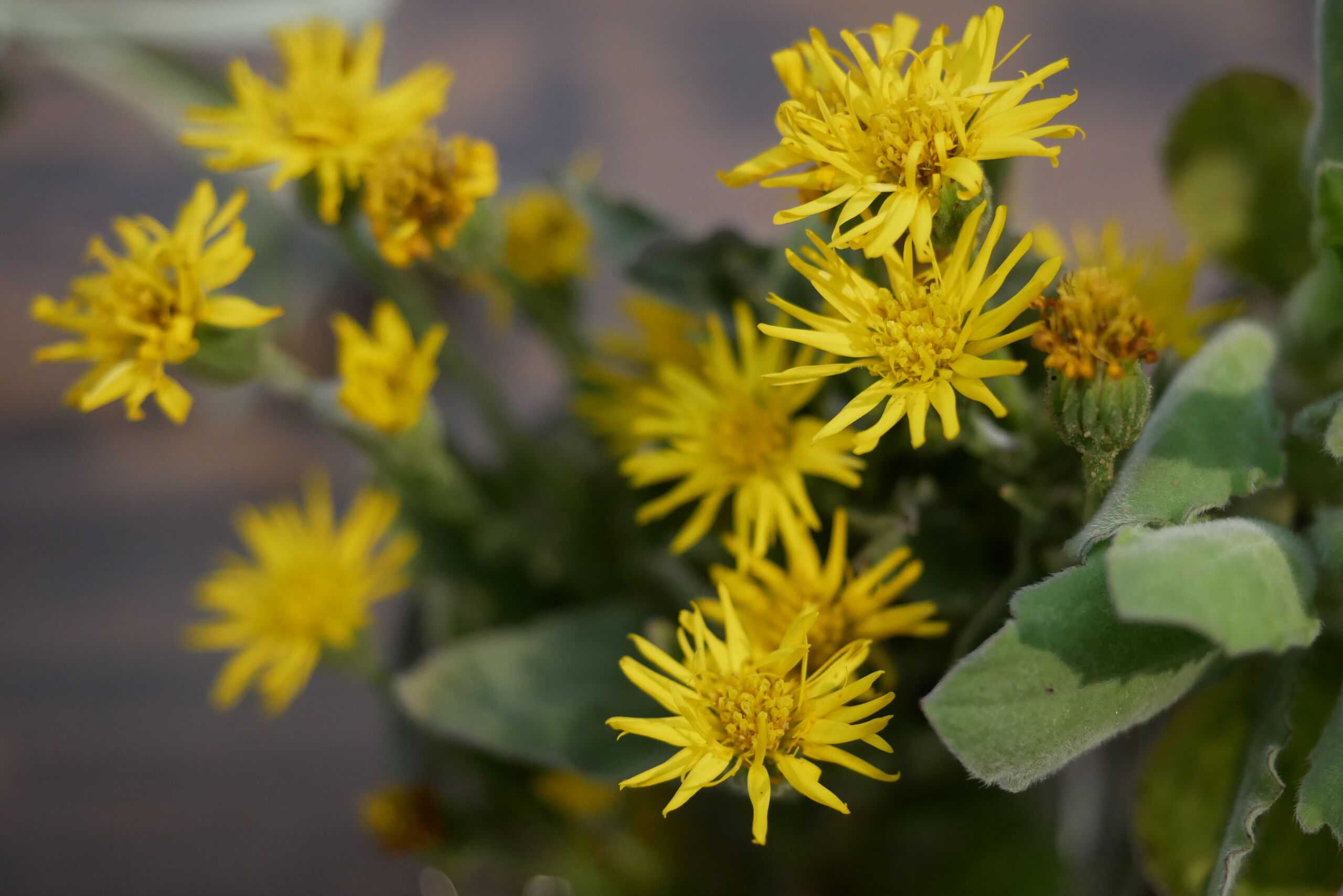
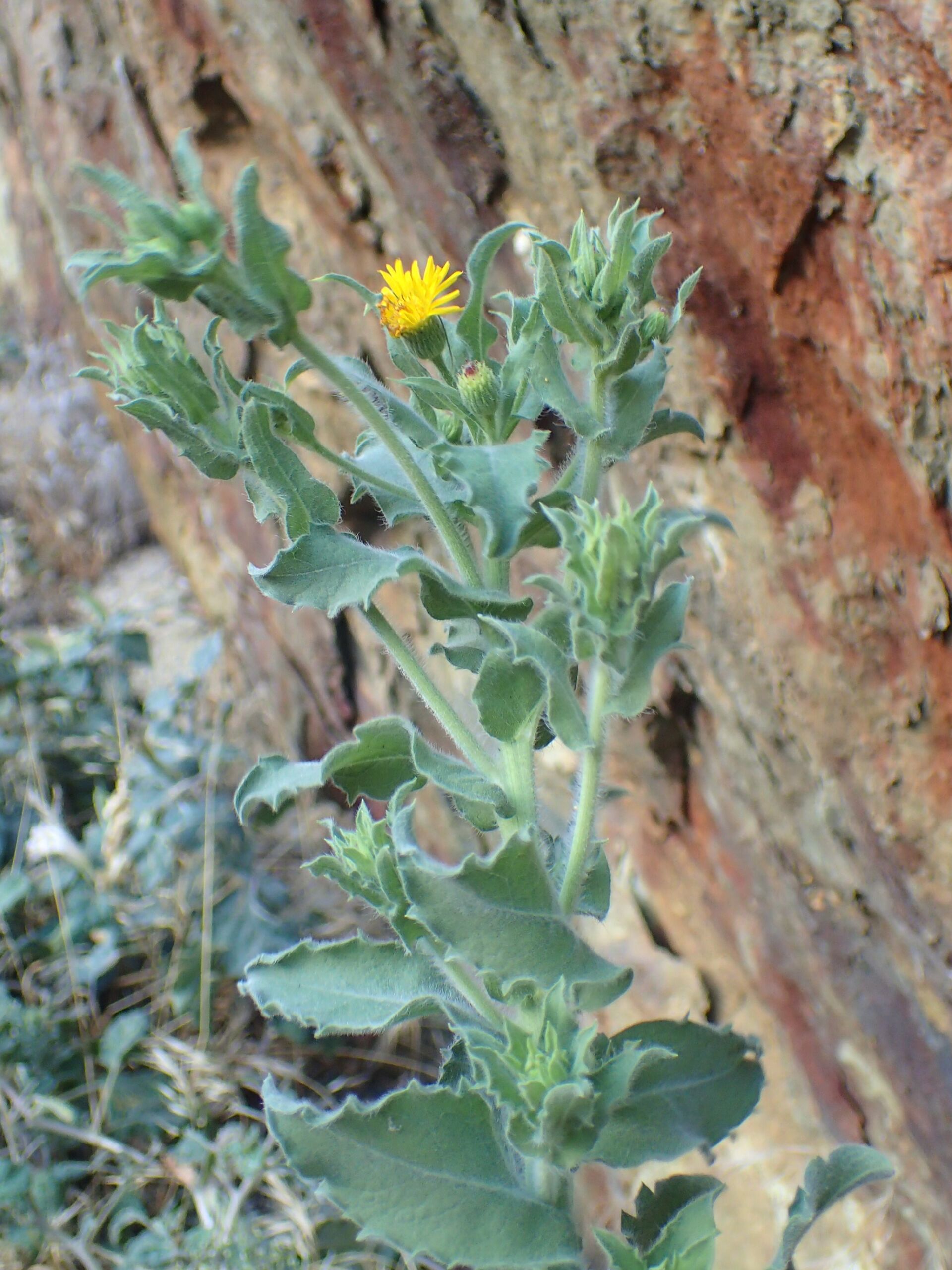
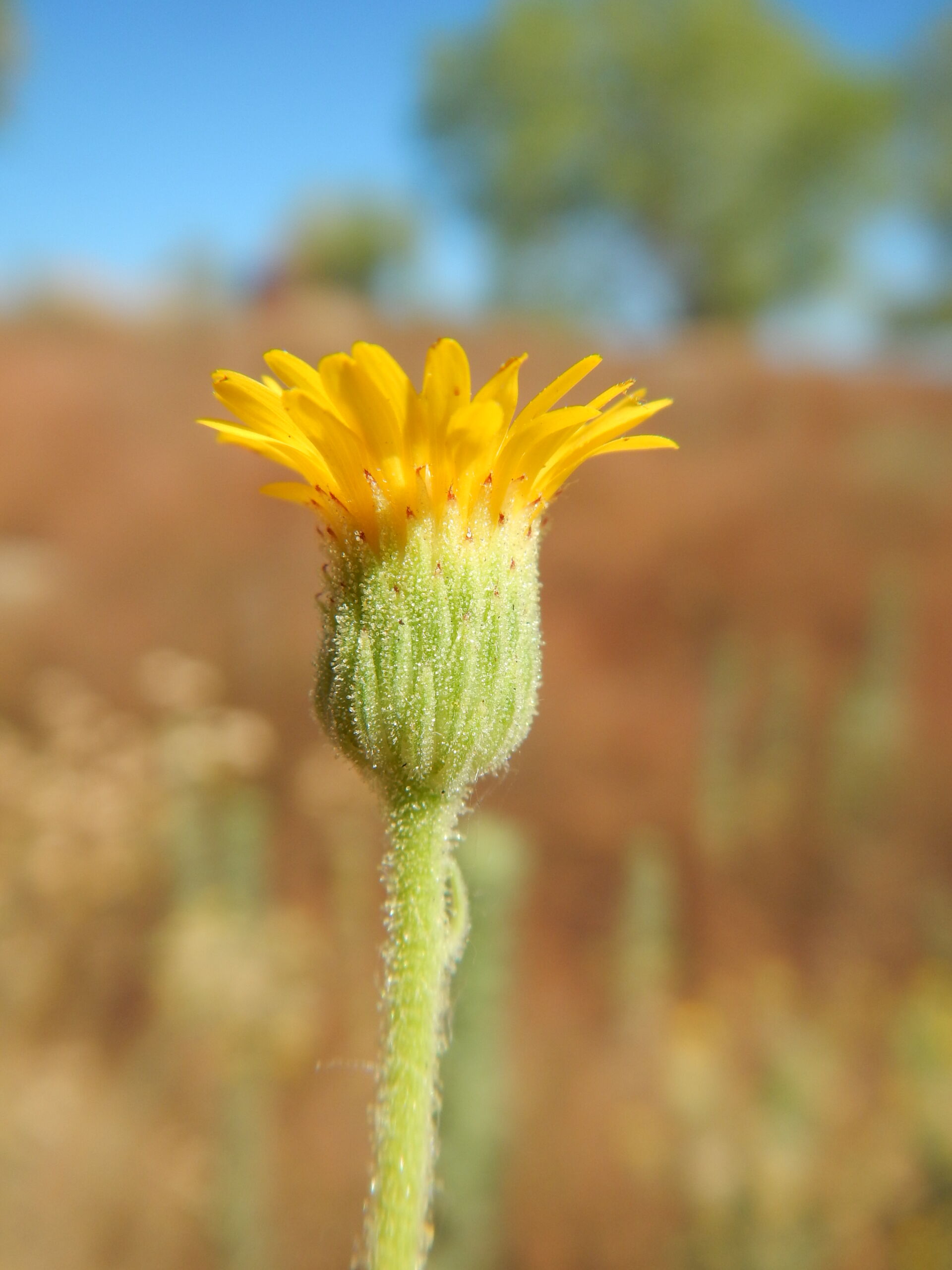
Telegraph weed is a plant that looks like its name. It is an annual or short-lived perennial, usually two to four feet tall and sometimes more, with a single erect, branching stem that rises straight up from a rosette like a pole — the telegraph pole of its common name, back when telegraph poles lined every California road and this weed lined the ground beneath them. The whole plant is sticky and glandular-hairy, with a camphor-like scent when brushed, and the leaves are gray-green, toothed, and clasping. Touch it and your fingers come away tacky; walk past it on a hot day and you smell it before you see it.
The flowers are sunflower-yellow and generous for a weed: heads about an inch across, with yellow ray florets around a yellow disk, opening over a long season from spring into fall. A patch of telegraph weed in bloom along a coastal road is a drift of yellow that goes on for months, and it does it in poor, dry, open ground where fussier flowers would quit. It grows in coastal and foothill country in California, with outliers into neighboring states and Mexico — open country, roadsides, trailsides, and disturbed ground, anywhere the soil has been opened and the sun is strong.
The butterfly context is the Gabb’s Checkerspot guide, whose Host plants section names “Corethrogyne filaginifolia, Heterotheca grandiflora, and Haplopappus squarrosus — all sunflower-family plants,” and whose host list elsewhere gives the common name “telegraph weed” for grandiflora. Gabb’s Checkerspot is a very rare California endemic, and its rarity is tied to its hosts’: where the open country goes, the hosts go, and the butterfly follows them out. This guide covers Heterotheca grandiflora only. California aster (Corethrogyne filaginifolia) and saw-toothed goldenbush (Haplopappus squarrosus) are different plants with their own guides, and neither is covered here.
One plain-text disambiguation, because the golden-aster names are a thicket. This guide covers Heterotheca grandiflora only, also called telegraph weed and telegraph plant. Other Heterotheca species — including the golden asters and camphorweeds of the genus — are different plants, and none is covered here. The genus name Heterotheca means “different case,” for the two different kinds of seed the plant makes in a single head — a neat botanical detail that also describes the genus’s habit of confusing everyone who tries to sort it. Buy and plant by Latin name, and let this guide be the telegraph weed, not a substitute for the genus.
How to grow
Telegraph weed is a plant for open, sunny, poor ground — and it is almost embarrassingly easy in the right climate, which is warm coastal California. Sow seed directly where it will grow, in fall or early spring, in full sun in well-drained, even poor soil, and thin to eighteen inches to two feet apart. Water until established, then water sparingly: it is a plant of dry open country, and it tolerates drought once its roots are down. It will bloom in its first year from a fall or spring sowing, set seed freely, and reseed itself, which is the whole system and the whole warning in one sentence.
It asks for almost nothing beyond sun and open ground, and it will punish pampering: rich soil and heavy water make tall, rank growth that flops and invites mildew, while lean soil and sun make a tighter, sturdier plant with more flowers. If you want a tidy plant, pinch the tip when it is a foot tall; it will branch and bloom lower and bushier. If you want a butterfly patch, do not pinch and do not spray: the checkerspot caterpillars eat the leaves, and a host patch sprayed for insects is a host patch emptied of the very thing this guide exists to feed.
Florida note, stated plainly rather than hopefully. Telegraph weed is a California coastal and foothill plant, and it is not a Florida garden plant — it wants a Mediterranean climate of wet winters and dry summers, not a subtropical summer of humidity and rain. A Florida gardener who wants a yellow sunflower-family weed for a butterfly corner should look to the site’s Florida-native goldenasters and camphorweed relatives instead, and leave telegraph weed to the California open country it belongs to. The Gabb’s Checkerspot is a California-only butterfly, and its telegraph-weed record is a California story, not a Florida planting list.
For the garden, the honest translation is a tall yellow weed for the dry, sunny, unwatered corner in warm California — not a border star and not a plant for a small, tidy garden. Let a patch stand in a sunny, open, unsprayed corner, let it bloom yellow for months, let the checkerspots and bees do what they do, and pull extras before they seed if the patch outgrows its corner, because a plant that seeds itself freely in open country has ambitions.
Water & feeding
Water telegraph weed like a dry-country plant: enough to establish, then little. It prefers well-drained soil and tolerates drought once established; in its native coastal and foothill country it grows through the dry season on winter rain alone. In a garden, water through dry spells in its first season and then back off — a telegraph weed watered like a summer vegetable grows rank and flops, while one watered like a roadside plant stays upright and blooms for months.
Feeding: none. Telegraph weed grows in poor, disturbed ground, and no fertilizer program at all is the right scale of feeding for it. The soil science here is the sticky story: the glandular hairs that make the plant tacky exude resins and camphor-like compounds — the plant’s chemical defense, the reason most herbivores leave it alone and the reason the caterpillars that can eat it, like the Gabb’s checkerspot, are specialists. The stickiness is the defense, the scent is the advertisement, and the patch is the treaty between them.
Common problems
- Self-seeding enthusiasm. Numerous heads per plant and a patch that reseeds itself freely. Pull extras before they seed if the patch outgrows its corner.
- Flopping. Rich soil or too much water makes tall, rank stems. Grow it lean and sunny, and pinch at a foot tall for a bushier plant.
- Wrong Heterotheca, wrong tag. Other golden asters and camphorweeds share the genus. Check the Latin name: grandiflora, not villosa or subaxillaris.
- Spraying the host patch. Checkerspot caterpillars eat the leaves. Spraying a telegraph weed patch for insects empties it of the very thing this guide exists to feed.
- Stickiness. The glandular hairs leave resin on fingers, clothes, and tools. Wear gloves if you mind, and wash tools after pruning — the resin gums up shears.
- Outside its climate. A Mediterranean-climate plant that sulks in humid summers and dies in hard winters. Outside warm coastal California, grow it as a curiosity annual, not a perennial promise.
Harvest
Telegraph weed’s harvest is not a crop but a season: months of yellow flowers for pollinators, stems for autumn arrangements — the small yellow heads make a cheerful wildflower filler — and seeds for the birds if you leave the heads standing. The simplest harvest is a California afternoon with no agenda: a tall, sticky weed in bloom along an open trail, bees working the yellow heads, a checkerspot flickering over the leaves, and the knowledge that the open country still has room for a rare butterfly and its tall yellow weed.
Saving seeds — with a leash on
Read this first, because it changes everything else in the section: telegraph weed reproduces only by seed, and it is very, very good at it. Each flower head produces many small achenes, 2–5 mm long, each topped with a ring of fine hairs that catch the wind, float on water, and hitch rides on clothing, shoes, and animal fur. In its native range — the Southwest and northern Mexico — that is simply how a pioneer wildflower colonizes bare, sandy ground. Outside that range it has become a genuine problem: it is a restricted invasive plant in parts of Australia, where it forms dense infestations on coastal dunes and threatens native vegetation, and it has spread as a weed in Hawaii and elsewhere. Florida is outside its native range. So here is the rule for this plant: save seed only if you are growing it where it belongs or where it is already established, never scatter it into wild or coastal ground, never share it casually, and if you grow it in a garden outside its native range, deadheading before seed matures is the responsible default. This section tells you how the seed works so you can manage it — not so you can help it travel.
With that leash firmly attached, here is the method. Telegraph weed blooms for months, and its seed heads ripen in succession rather than all at once, so collect in summer and fall as individual heads dry and fluff out. Wear gloves: the plant is famously sticky, its glandular hairs exude aromatic, camphor-scented chemicals that deter herbivores — and, researchers note, can inhibit the germination of other seedlings nearby, a trick called allelopathy — and the scent lingers on skin for hours. Snip dry heads into a paper bag, let them dry fully for a week or two in a dry, airy spot, then rub the heads to release the seed and shake out the chaff. The seed is light and wind-borne by design, so do this indoors, away from open windows and fans, unless you want to explain to your neighbors why sticky daisies are colonizing their flower beds.
Dry the seed thoroughly before storage — Florida humidity will turn a carelessly sealed jar into a mold farm — and store in an airtight container with a desiccant packet, cool and dark, labeled with species and date. Telegraph weed seed is not a long-hoarded treasure; like many Asteraceae seeds it is best sown the following season, when it germinates readily with warmth and moisture and no special pretreatment. In fact, germination is so willing that the usual seed-saving worry is inverted: you do not need to coax this seed to life, you need to make sure it only comes to life where you intend. Sow thinly, in pots or a contained bed, and thin ruthlessly.
Seedlings will not be identical to the parent — this is an open-pollinated wildflower, not a cultivar — but variation here is modest and the species character (tall, sticky, yellow-headed, fragrant) comes through reliably. There are no named garden varieties to keep true, so crossing is not a practical concern; containment is. Clean your shoes and tools after handling seeding plants, bag and trash (do not compost) any seed heads you remove for control, and check the ground around your plants for volunteers the following season. Telegraph weed earns its place as a pollinator plant and a tough native in its own country. Everywhere else, the kindest thing you can do for it is to keep it on a short leash.
Species
Telegraph weed (Heterotheca grandiflora, also called telegraph plant) is the species this guide covers. California aster (Corethrogyne filaginifolia) and saw-toothed goldenbush (Haplopappus squarrosus) are different plants in the same Gabb’s Checkerspot host list, and neither is covered here. Other Heterotheca species are different plants, and none is covered here. No named garden varieties of the wild species were verified, and none is claimed here. This guide covers Heterotheca grandiflora only.