
🦋 Joe-Pye Weeds
What it looks like
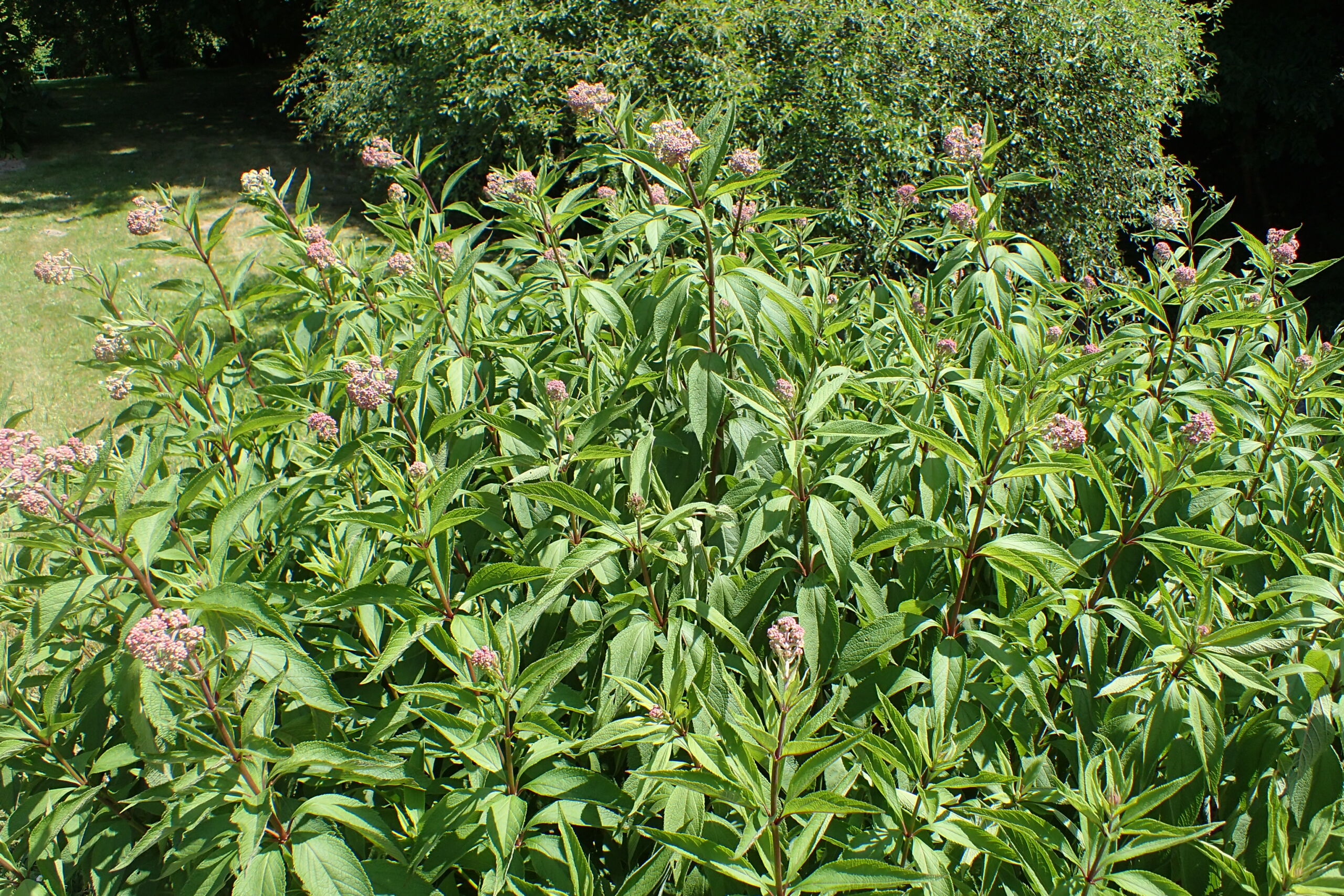
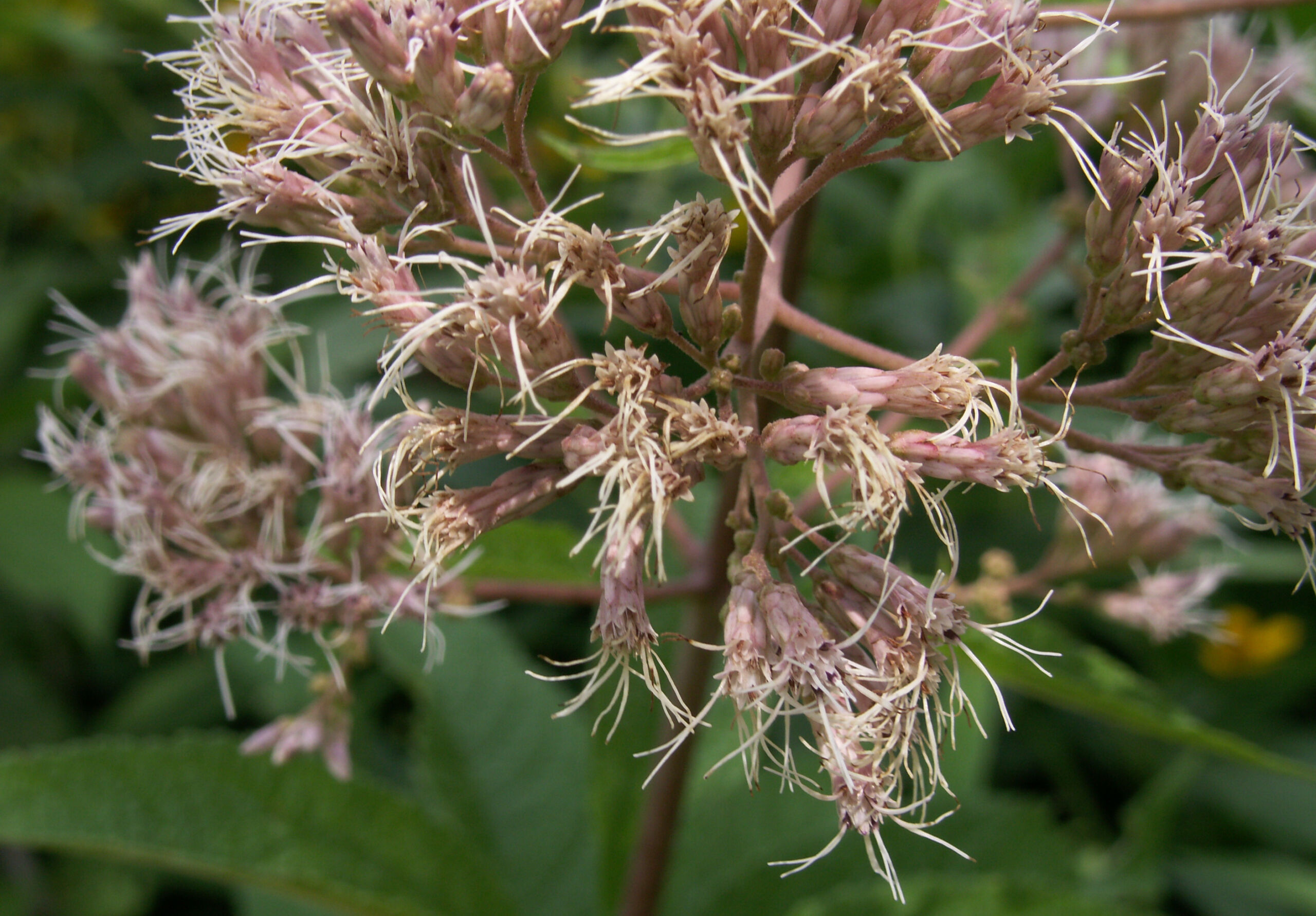
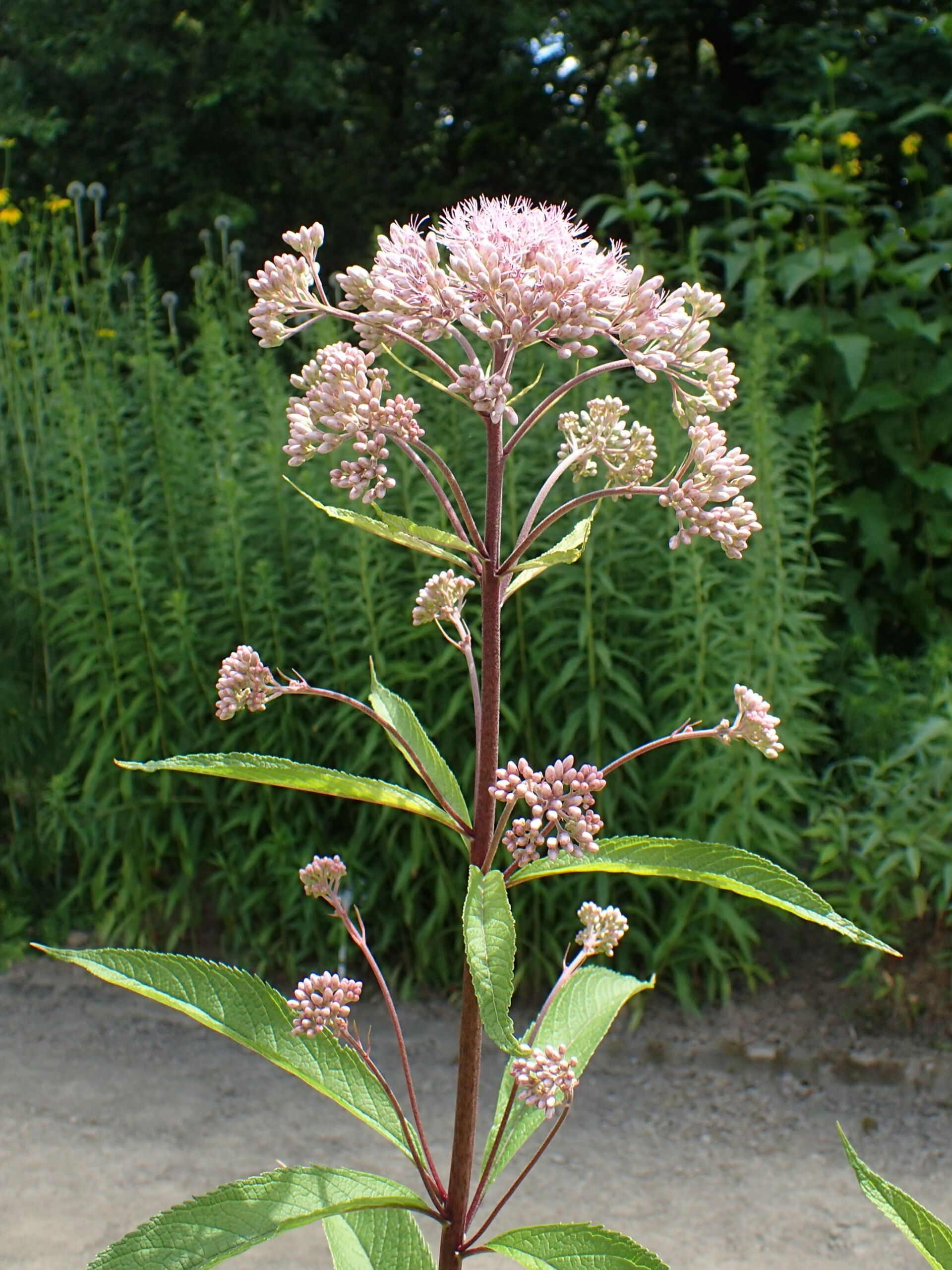
Joe-Pye weeds are not weeds at all but stately native perennials of eastern and central North America, 4 to 10 feet tall depending on species, topped in mid to late summer with huge domed clusters of mauve-pink flowers that smell faintly of vanilla when crushed. The field mark that settles the genus at a glance is the leaf arrangement: leaves in whorls of three to seven around the stem, like spokes, where their old boneset cousins in Eupatorium carry leaves in opposite pairs. That whorl is the whole taxonomy story in miniature — molecular evidence in the early 2000s moved the whorled-leaved Joe-Pyes out of Eupatorium into their own resurrected genus, Eutrochium, leaving the paired-leaved bonesets behind — and it is also the easiest way to tell a Joe-Pye from a boneset in the field without a key.
The butterfly connection is a nectar story, and it is a generalist one. The eastern tiger swallowtail nectars on a wide range of flowers including milkweed, thistles, bee balm, phlox, lilac, ironweed, and Joe-Pye weed, with no species named — which is exactly why this guide is a genus guide. Across its eastern range, a tiger swallowtail working a Joe-Pye patch could be working sweet Joe-Pye, hollow Joe-Pye, or spotted Joe-Pye depending on the meadow, and the butterfly does not file a species report. A bare Joe-Pye weed nectar mention, with no Latin and no species qualifier, belongs to the genus, not to any one of its species.
One plain-text disambiguation, because the site already has a Joe-Pye guide and this guide must not swallow it. The existing Joe Pye Weed guide, page 7354, is Eutrochium purpureum only — sweet Joe-Pye weed, the green-stemmed, vanilla-scented, most shade- and drought-tolerant of the group. This guide claims the genus Eutrochium spp., all five species together, and it does not replace or duplicate the purpureum species guide. Likewise, the hollow Joe-Pye weed native profile is Eutrochium fistulosum only, and the Little Joe and Gateway guides are cultivars, not the genus. Buy and plant by Latin name: if the tag says only Eutrochium purpureum, you are holding one species; if it says Eutrochium spp. or names fistulosum, maculatum, dubium, or steelei, you are in this guide’s territory.
Florida note: Say this plainly: most Joe-Pye weeds are eastern temperate plants, and only the southern edge of the group’s range touches Florida — published ranges carry sweet Joe-Pye as far south as Florida, and hollow Joe-Pye has a Florida native profile, but these are northern-Florida, moist-soil plants, not statewide garden staples. In Keystone Heights, a Joe-Pye belongs only where the soil stays moist — a rain garden, a pond edge, a damp swale — and even there it wants the moisture the group is famous for. A Joe-Pye in a hot, dry bed is a plant you are punishing for your drainage.
How to grow
Grow Joe-Pye weeds at the back of the border, in a rain garden, or beside a pond — anywhere the soil stays moist. They tolerate clay and wet feet far better than most perennials, and they sulk in dry soil, so do not plant one in a hot, dry bed and expect miracles. Set nursery plants in spring or fall, mulch well, and mark the spot: Joe-Pyes emerge late in spring, and more than one gardener has dug up a perfectly healthy crown thinking it died. Pinch stems in early June if you want shorter, bushier plants, and stake the tallest forms — hollow Joe-Pye can reach 10 feet — before a summer storm does the staking for you.
Propagation follows the perennial pattern: division of established clumps in spring or fall, and seed sown outdoors in fall or winter-sown in vented containers, because like many eastern natives the seed expects a cold period before it wakes up. Buying nursery stock is the sane option, and it is worth saying that nursery stock labelled only Joe-Pye weed, with no Latin name, is a lottery ticket across five species of very different heights — ask for the species, and match it to your moisture and your space. Sweet Joe-Pye tolerates average soils and part shade better than its cousins; spotted Joe-Pye is the most consistently wet-loving; hollow Joe-Pye is the giant of the group and wants the wettest ground of all.
For wildlife, the rule is to leave the seed heads standing. Joe-Pye flowers feed butterflies, bees, and other pollinators through late summer, and the seed heads that follow feed birds into autumn and winter. A Joe-Pye patch in a moist, unsprayed corner is a small, honest piece of meadow habitat: no lawn, no spray, just tall stems, whorled leaves, and a domed flower head that a swallowtail can land on without aerobatics.
Water & feeding
Water is the whole story with Joe-Pye weeds, and the story is: keep the soil consistently moist, especially in the first year and through dry spells. Mulch helps enormously, holding moisture and cooling the roots in summer, and it doubles as the organic matter the plants feed on as it breaks down. In a genuinely moist site with normal rainfall, an established Joe-Pye largely waters itself; in a dry spell it wants deep watering, and a Joe-Pye that dries out stops flowering and thins out from the base.
Feeding is moderate across the genus: compost at planting and a spring topdressing of compost in poor soil is the right scale. Heavy fertilizer produces soft, floppy growth on plants that are already tall, which is the opposite of what a back-of-border giant needs. The soil science here is the meadow story: moist, humus-rich soil with a living community of microbes and fungi cycles nutrients steadily through the growing season, and a Joe-Pye’s deep crown stores energy through winter and sends up new growth through it. Planting a Joe-Pye in a moist bed is therefore not just growing a flower — it is keeping a small piece of wet-meadow chemistry alive, and the vanilla scent is the receipt.
Common problems
- Dry soil. The deal-breaker. Joe-Pyes sulk, wilt, and thin out in dry beds. Site them moist, mulch deeply, and water in dry spells — or pick a different plant.
- Late emergence. Joe-Pyes emerge late in spring. Mark the spot and do not dig there in April out of impatience.
- Flopping. Tall forms in rich soil or shade flop. Pinch in early June, site in sun, and stake the giants before storms.
- Wrong species, wrong height. A tag that says only Joe-Pye weed could be a 4-foot sweet Joe-Pye or a 10-foot hollow Joe-Pye. Check the Latin name before you plant it against a fence.
- Powdery mildew. Crowded, dry-stressed plants mildew. Space for air, keep soil moist, and accept some late-season leaf spot as the price of a tall meadow plant.
- Self-seeding. Joe-Pyes self-seed where they are happy. Deadhead if you do not want volunteers, or let a patch naturalize where it belongs.
Harvest
Joe-Pye weeds have no vegetable harvest, and this guide does not invent one. The traditional harvest is the plant itself as medicine — the story told is that the name honours a Native healer called Joe Pye who used the plant for fevers and urinary complaints, which is why the old names gravel root and kidney root still circulate — but this guide does not recommend medicinal use, and it does not dose anything. The garden harvest is the flower: cut stems for large, long-lasting arrangements in late summer, leave most heads standing for birds, and cut the whole patch back in late winter before new growth emerges. A Joe-Pye’s crop is butterflies, bees, and birds, measured in visits, not in baskets.
Browse all plant & pest guides
Saving seeds
This section uses the genus-level method for Eutrochium, and it says so plainly, because the genus holds five accepted species — sweet Joe-Pye (E. purpureum), spotted Joe-Pye (E. maculatum), hollow Joe-Pye (E. fistulosum), coastal plain Joe-Pye (E. dubium), and Appalachian Joe-Pye (E. steelei) — and no single species protocol covers them all. What the genus shares is the important part: fluffy, wind-borne seed that needs a cold winter before it will wake up. Save seed from true species plants if you want predictable offspring, and keep notes on which species your seed came from, because the species differ in height, habitat, and flower timing even though their seed behaves the same way.
Collect in late September into October, when the flower heads have turned tan and the feathery pappus is fully extended. The seed ripens from the center of the head outward and is wind-dispersed soon after maturity, so do not wait for the whole head to look finished — cut heads that are mostly tan into a paper bag and let them finish drying indoors for a week. Rub the dried heads between your palms over a tray to free the tiny, dark achenes, and winnow away the chaff with a gentle breeze. The seed is small and light, so work over white paper and out of the wind, or your harvest will leave without you.
Dry the seed thoroughly before storage — in Florida humidity, spread it thin on paper until it feels completely dry, then keep it in a labeled envelope or an airtight jar with a desiccant packet, cool and dark. Seed stored damp in a sealed jar is a mold farm, and Joe-Pye seed is small enough that a moldy batch is a total loss, not a partial one. Label every packet with the species, the source plant, and the year, because in two years you will not remember which envelope is the spotted one and which is the sweet one.
Here is the honest disagreement: sources do not agree on how much cold the seed needs, giving anything from about 60 days to three months or even 90–120 days of cold-moist stratification. The practical answer is to let nature do the measuring — sow fresh seed outdoors in fall and let winter chill it — or, for indoor starts, mix the seed with damp vermiculite in a sealed bag and refrigerate it for two to three months, checking that the mix stays moist, never soggy. Sow on the surface or barely cover the seed, because it needs light to germinate, keep the tray bright and warm at roughly 65–80°F, and expect sprouts in about two to four weeks after chilling, sometimes stretching to six. Germination is often low even when you do everything right, so sow thickly and do not discard a flat early.
Division is the faithful route if you want an exact copy of a particular plant — lift and split the clump in spring or fall — while seed is for meadows, drifts, and new colonies. The plants self-seed freely where they are happy, so deadhead if you would rather they did not wander. And in Florida, the same honesty note applies across the genus: these are cool-climate natives that want moist soil and summers that are not a furnace. In north Florida, give them the moistest, partly shaded spot you have; in central and south Florida, treat them as a short-lived experiment. Good seed cannot fix a climate mismatch.
Species
Joe-Pye weeds are a small genus of five species, and this section names them in plain text, because the bare common name covers all five and this guide will not pretend otherwise. Eutrochium purpureum, sweet Joe-Pye weed, is the green-stemmed, vanilla-scented species with its own growing guide, and the most tolerant of average soils and shade. Eutrochium fistulosum, hollow Joe-Pye weed, is the giant, with hollow stems and the wettest tastes. Eutrochium maculatum, spotted Joe-Pye weed, has purple-spotted stems and flatter flower heads, and is the furthest-ranging of the group. Eutrochium dubium, coastal plain Joe-Pye weed, is the smaller eastern coastal species, and the source of the compact Little Joe cultivar. Eutrochium steelei, Appalachian Joe-Pye weed, grows only in the southern Appalachian Mountains. Older nursery tags may still read Eupatorium or Eupatoriadelphus for any of these — all three names, in older literature, mean the same plants this guide covers as Eutrochium.