
🌼 Kookoolau
What it looks like
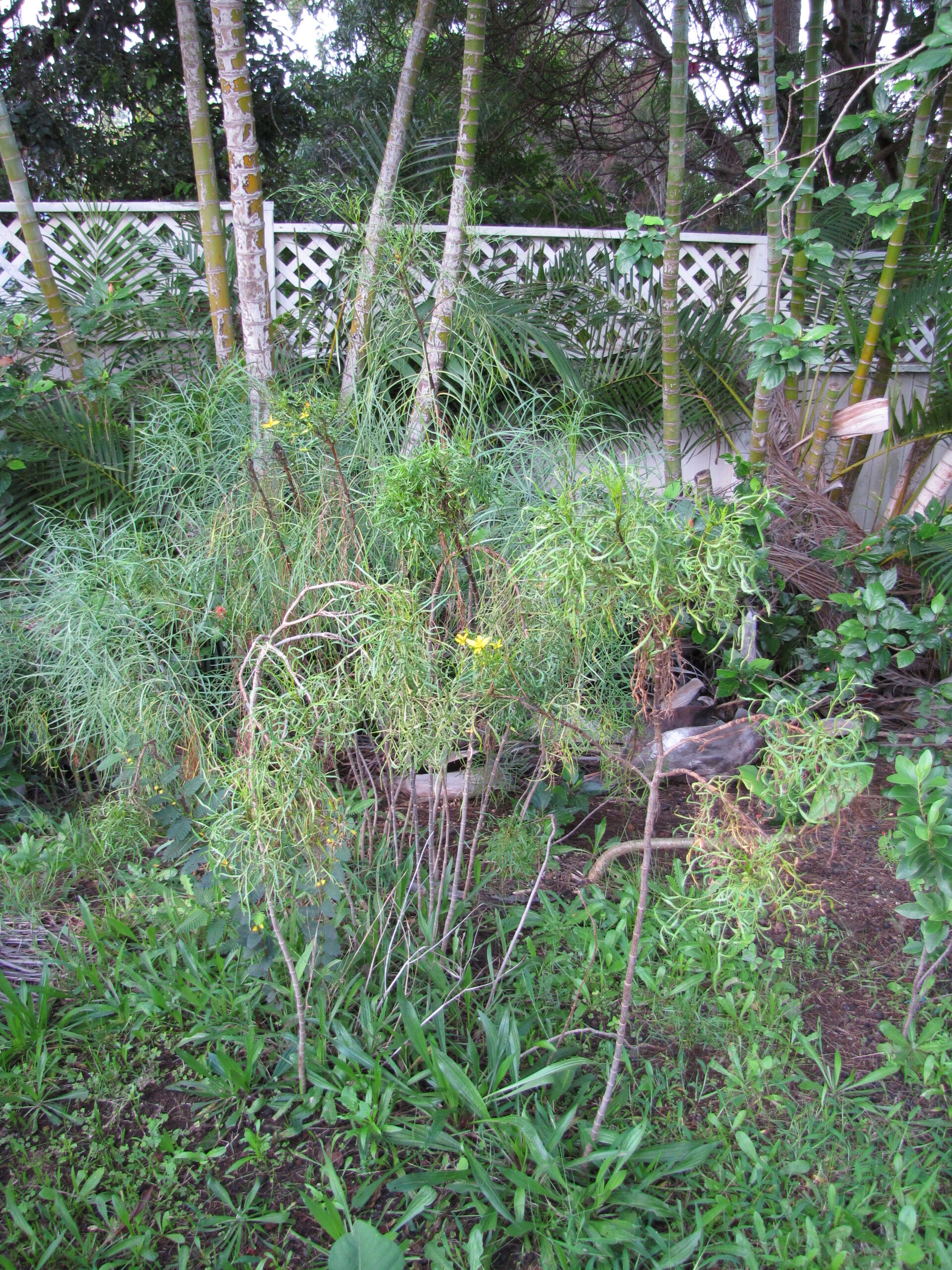
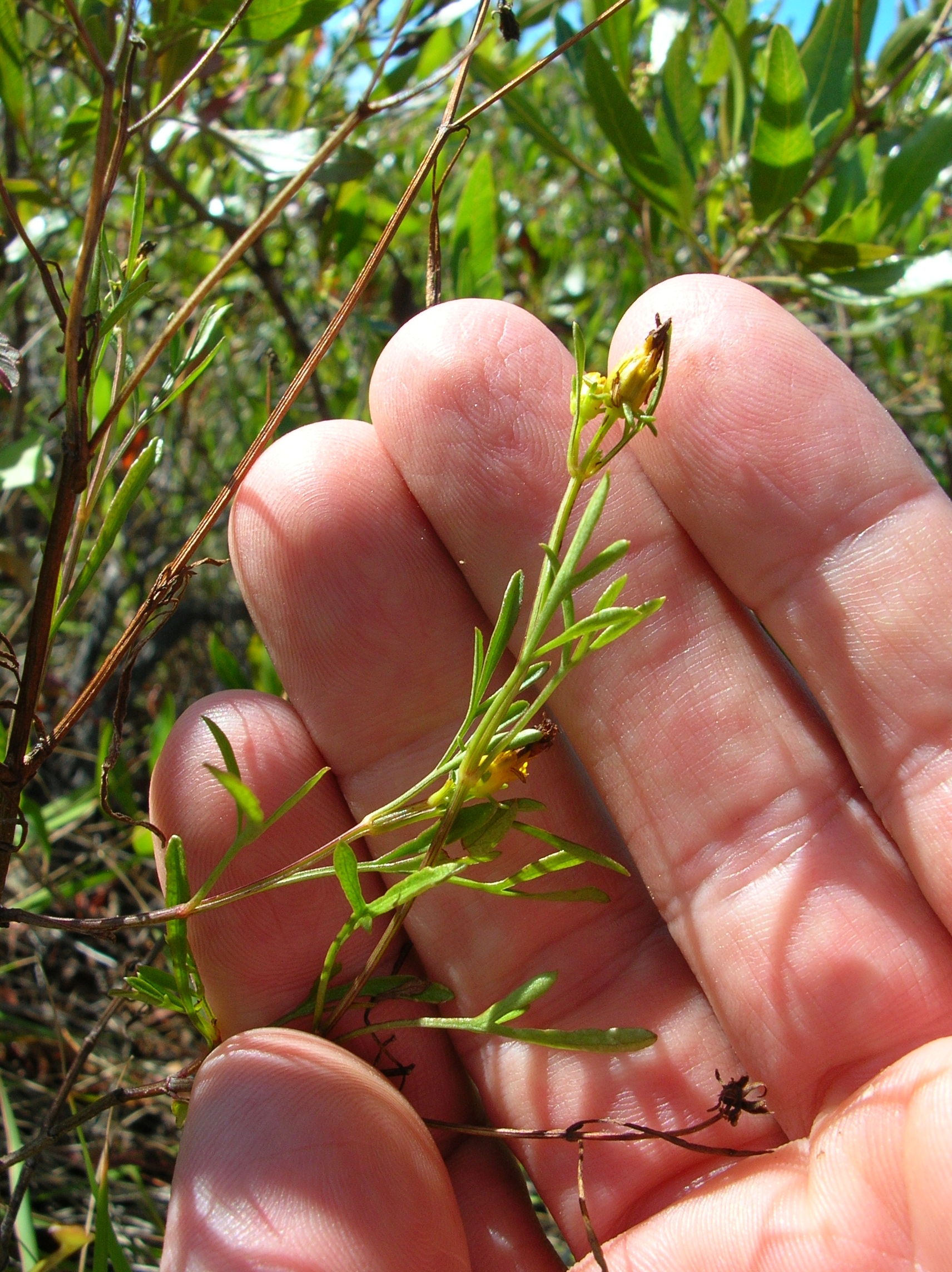
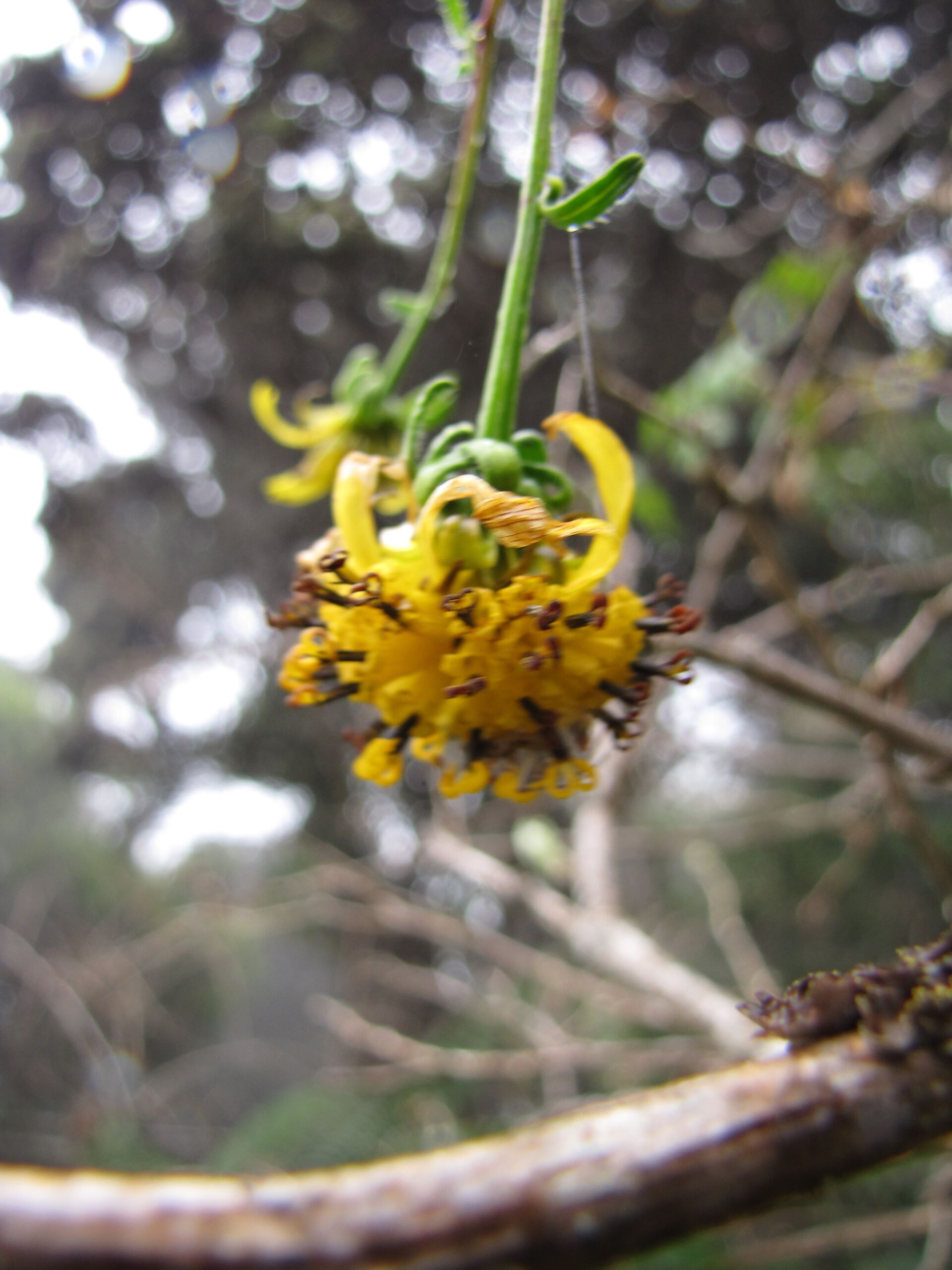
Kookoolau — spelled ko’oko’olau in Hawaiian with the glottal stops, and kookoolau in the butterfly guide’s plain spelling — is not one plant but the Hawaiian name for the endemic Hawaiian species of Bidens, the beggarticks, in the aster family, Asteraceae. Nineteen endemic species of Bidens radiated in Hawaii from a single ancestor, more morphological and ecological diversity than the genus shows anywhere else, ranging from small shrubs 3 to 4 feet tall with dark green serrated leaves and many bright yellow flowers, to sprawling herbs and cliff plants. The flowers are the Bidens signature: yellow daisy heads, often larger in the Hawaiian species than in mainland beggarticks, and the fruit is the beggartick’s calling card — achenes with barbed bristles that catch on fur, feathers, and socks, which is how a plant that cannot walk colonises islands.
The butterfly connection is a nectar story from a Hawaiian forest. The Hawaiian blue butterfly’s nectar list includes iliahi, Hawaiian sandalwood, flowers, kookoolau and other native flowers, plus sap of koa trees — small, accessible flowers for a small butterfly, in a forest where the nectar plants are natives, not garden imports. Kookoolau’s yellow daisies are exactly that kind of flower: flat, open, shallow, and full of nectar a short proboscis can reach. The mention carries no Latin and no single species, which is why this guide is a group guide for the Hawaiian endemic Bidens, not a species guide for any one of them.
One plain-text disambiguation, because the Bidens names are a trap and this guide must not swallow its neighbours. The site already has a Bidens genus guide, page 20807, covering Bidens spp. broadly as garden and mainland plants — trailing annuals like Bidens ferulifolia, roadside weeds like Bidens pilosa, and wetland wildflowers like Bidens tripartita. This guide claims only the Hawaiian endemic ko’oko’olau group: the nineteen endemic species and their subspecies, from Bidens hawaiensis on Hawaii Island to Bidens menziesii on Maui and Bidens forbesii on Kauai. It does not cover Bidens pilosa, the shepherd’s needle of the mainland guide, and it does not cover Bidens alba, the Spanish needles of the Florida native profiles — different species that share a genus and a beggartick habit, not the Hawaiian name. If a plant is called kookoolau in Hawaii, it is an endemic Bidens; if it is called shepherd’s needle or Spanish needles in Florida, it is not, whatever the genus on the tag.
Florida note: Say this plainly: kookoolau is not a Florida plant. It is a Hawaiian endemic radiation, island by island, and it has no Florida track record as a garden plant in the sources used here. If you garden in Florida, this guide is for understanding the Hawaiian blue butterfly’s nectar, for recognising the ko’oko’olau tea tradition when you meet it, and for appreciating an island radiation from a distance — not for planting in a Keystone Heights yard. Do not substitute Bidens pilosa or Bidens alba for kookoolau: they are mainland weeds with the same genus, not the Hawaiian endemics, and planting them in the name of Hawaii would be exactly backwards.
How to grow
Grow kookoolau where kookoolau belongs: in Hawaii, in restoration and native-plant gardens, matched to species and island. The endemic species span dry forest and shrubland, mesic forest, wet forest, wet cliffs, and coastal bluffs, from sea level to over 3,000 feet, and no single recipe covers them all — Bidens hawaiensis grows in open shrubland and mesic forest on Hawaii Island from 165 to 6,400 feet, Bidens campylotheca subspecies grow in wet ohia forest and on wet cliffs on Maui, and Bidens forbesii grows on coastal bluffs and cliffs to mesic forest on Kauai. The shared pattern is full sun to light shade, well-drained soil, and a site that matches the species’ home: dry-forest species want drainage and sun, wet-forest species want moisture and shelter, and all of them want freedom from invasive weeds, which are the main threat to wild populations.
Propagation follows the Bidens pattern: seed sown fresh, with the barbed achenes handled carefully — they stick to everything, including the sower — and cuttings for selected forms. Many endemic species are short-lived perennials, lasting one to two years as individuals but renewing from fallen seed, so a kookoolau planting is a population, not a specimen: let some heads go to seed, let seedlings come up, and thin rather than replant. Buying nursery stock is the only sane option, and it is worth saying that nursery stock for endemic Hawaiian Bidens is restoration material, not garden-centre stock — buy from Hawaiian native-plant nurseries, by species and island, and do not buy a mainland Bidens and call it kookoolau.
For wildlife, the rule is to think in forest, not in specimens. Kookoolau flowers feed native bees, butterflies including the Hawaiian blue, and other pollinators, and the plants themselves are part of the native forest understorey that supports Hawaiian birds and insects. A kookoolau in a Hawaiian restoration planting is a small, honest piece of island habitat: no lawn, no spray, just a yellow daisy, its barbed seeds, and the pollinators that evolved with it. A kookoolau in a mainland garden is a plant out of context, and context is the whole story for an endemic.
Water & feeding
Water follows the species, not the genus: dry-forest kookoolau wants drainage and modest water, wet-forest kookoolau wants consistent moisture, and all of them want drainage that never leaves the roots standing in water. Mulch helps, holding moisture and cooling the roots, and it doubles as the organic matter the plants feed on as they break down. In a Hawaiian native garden with normal rainfall, an established kookoolau largely waters itself; in a dry spell it wants deep watering, and a kookoolau that dries out stops flowering and thins from the base.
Feeding is light: compost at planting and a mulch of leaf litter is the right scale. Heavy fertilizer produces soft, leggy growth on plants that are already short-lived, which is the opposite of what a restoration planting needs. The soil science here is the island story: volcanic soils, young and mineral-rich but often poor in organic matter, with a living community of microbes and fungi that cycles nutrients quickly in warm conditions. A kookoolau in a mulched, leaf-littered bed is not just a daisy — it is a small piece of island soil chemistry, and the yellow flowers are the receipt.
Common problems
- Wrong Bidens. A tag that says only Bidens could be a mainland weed or a garden annual. Kookoolau means an endemic Hawaiian Bidens, by species and island — check both before you plant.
- Rarity. Many endemic Bidens are rare, endangered, or of low viability in the wild, with only a handful of populations. Do not collect wild seed or plants; buy restoration nursery stock and support habitat protection.
- Invasive weeds. The main threat to wild kookoolau is invasive weeds and brushfires, not gardeners. Keep restoration plantings weeded and do not let invasive grasses overtop them.
- Short life. Many kookoolau are short-lived perennials, one to two years as individuals. Plan for renewal from seed, not for permanence from a single plant.
- Wrong habitat. A wet-forest species in a dry bed, or a dry-forest species in a wet bed, fails. Match species to site, island to island, and do not guess.
- Seed stickiness. Barbed achenes stick to clothes, fur, and skin. Handle seed heads with gloves and expect to pick beggarticks off your socks — it is the plant’s dispersal strategy, and it works.
Harvest
The kookoolau harvest is a tea harvest with a tradition behind it. Published accounts report that kookoolau has been used traditionally by Native Hawaiians for medicinal purposes, including for coughs, colds, fever, and bronchitis, brewed as a tea from the leaves — and this guide reports that tradition without recommending it as medicine and without dosing anything. The garden harvest is the flower: cut stems for arrangements, where the yellow daisies last well, and leave most heads standing for pollinators and for seed. A kookoolau’s crop is flowers, pollinators, and a living link to Hawaiian plant knowledge, measured in blooms and in populations, not in baskets.
Browse all plant & pest guides
Saving seeds
Kookoolau is a Bidens — a Hawaiian cousin of the beggarticks — and it saves seed the way Bidens do: generously, and with barbs. The little yellow-centered flowers give way to narrow, dark achenes tipped with two to four barbed awns, the classic hitchhiker design. Those barbs are your collection cue and your handling warning in one: they cling to fabric, fur, and fingertips, so wear gloves and bring a paper bag, not a bare hand, when you go to collect.
Wait until the flower heads have dried and the seed is dark and hard, then snip whole heads into the bag before the wind and the birds take them. Let the heads finish drying indoors for a few days, then rub them between your palms over a tray to free the seed and pick out the chaff. The barbs will try to stay attached to everything they touch — a pair of tweezers and a little patience beat shaking the tray and hoping. Dry the cleaned seed thoroughly before storage, spread thin on paper until it feels completely dry, then keep it in a labeled envelope or an airtight jar with a desiccant packet, cool and dark. In Florida humidity, seed stored even slightly damp in a closed jar will mold, and a moldy packet is a total loss.
Sow on the surface or barely cover the seed — it wants light — on a moist, well-draining mix, and keep it warm, roughly 65–80°F. Expect sprouts in about two weeks, sometimes stretching to three, and transplant the seedlings out when they are 4–6 inches tall. Kookoolau grows fast once it is going, so give each seedling real room — mature plants can reach several feet across — and protect young plants from slugs and snails, which love tender Bidens seedlings the way gardeners love the flowers.
Seed is the better route here, and it is worth saying why. Cuttings root readily, but seed-grown plants develop a stronger root system, and that matters for a plant that can reach six feet and fall over in a gust when its roots are shallow. If you want an exact copy of a particular plant, a cutting will do it; if you want sturdy plants, grow from seed. One honest caveat: the Hawaiian Bidens species hybridize freely with one another, so if several kinds grow near each other, saved seed may not match the parent exactly. Save from plants growing on their own, or accept a little surprise in the offspring — the flowers are charming either way.
In Florida, this is one of the rare cases where the climate is on your side. Kookoolau is a warm-climate plant that wants full sun and hates frost, so a Florida garden suits it far better than a northern one. Give it sun, decent drainage, and room to sprawl, and it will behave like it owns the place — which, given how readily it self-seeds where it is happy, is almost true. Deadhead after bloom if you would rather it did not wander, or let it drift and thin the extras in spring.
Species
Kookoolau is a group of nineteen endemic Hawaiian Bidens species, and this section names the notable ones in plain text, because the bare Hawaiian name covers the group and this guide will not pretend otherwise. Bidens hawaiensis is the Hawaii Island endemic of open shrubland and mesic forest. Bidens menziesii, with subspecies menziesii and others, is the Maui kookoolau of the photographs here. Bidens campylotheca, the viper beggarticks, listed as Vulnerable by the IUCN, is the wet-forest species of Maui and other islands, with subspecies campylotheca, pentamera, and waihoiensis. Bidens micrantha, with subspecies including ctenophylla, is the Hawaii Island dry-forest species of low viability in published assessments. Bidens forbesii is the Kauai species of coastal bluffs to mesic forest. Bidens sandvicensis, Bidens amplectans, Bidens torta, Bidens waianensis, and Bidens hillebrandiana are further endemic members of the group. Gardeners and restoration planters should buy by species and island, and treat a tag that says only Bidens as an unanswered question, not as a kookoolau identification.