
🌸 Malpighia
What it looks like
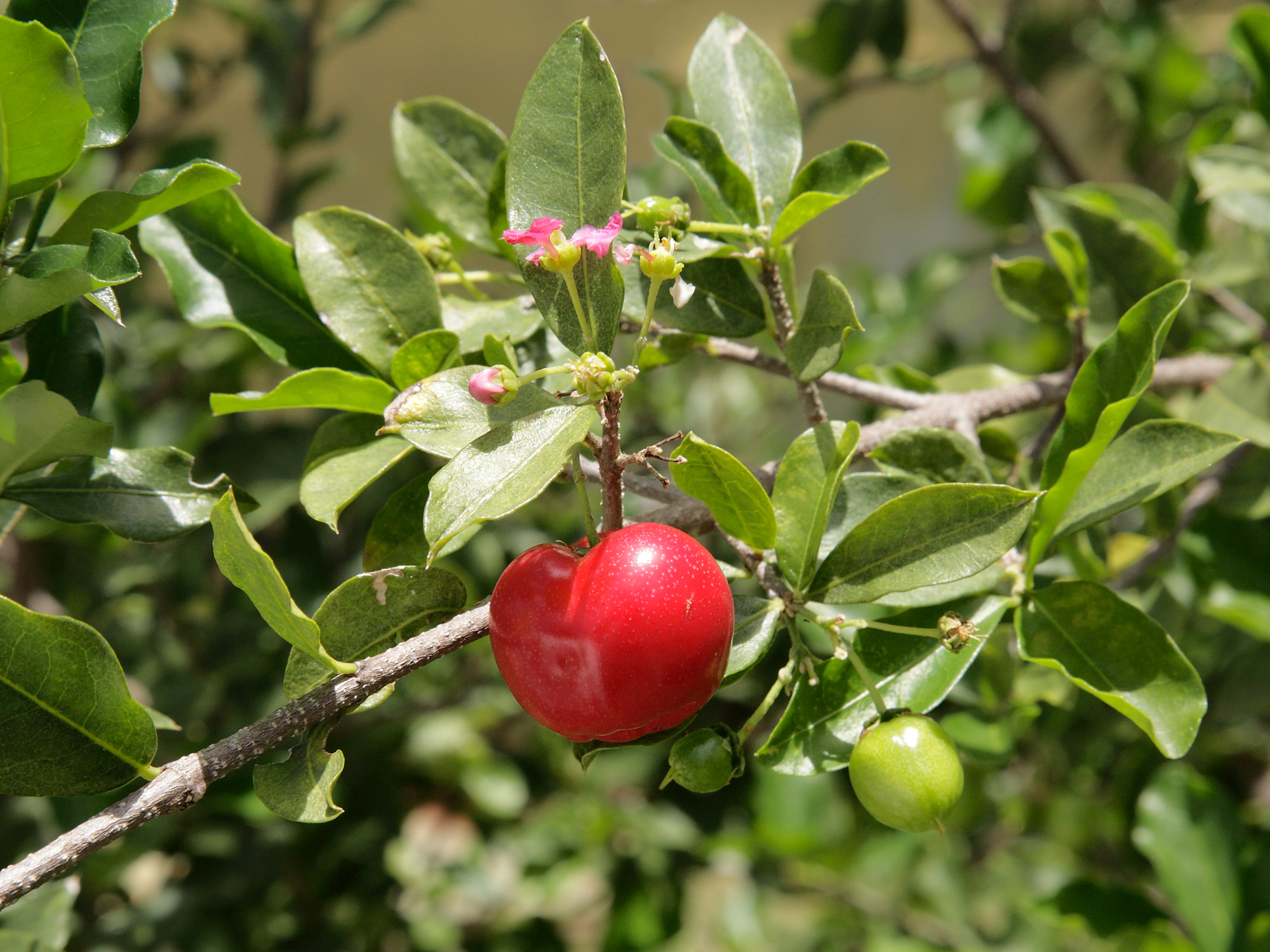
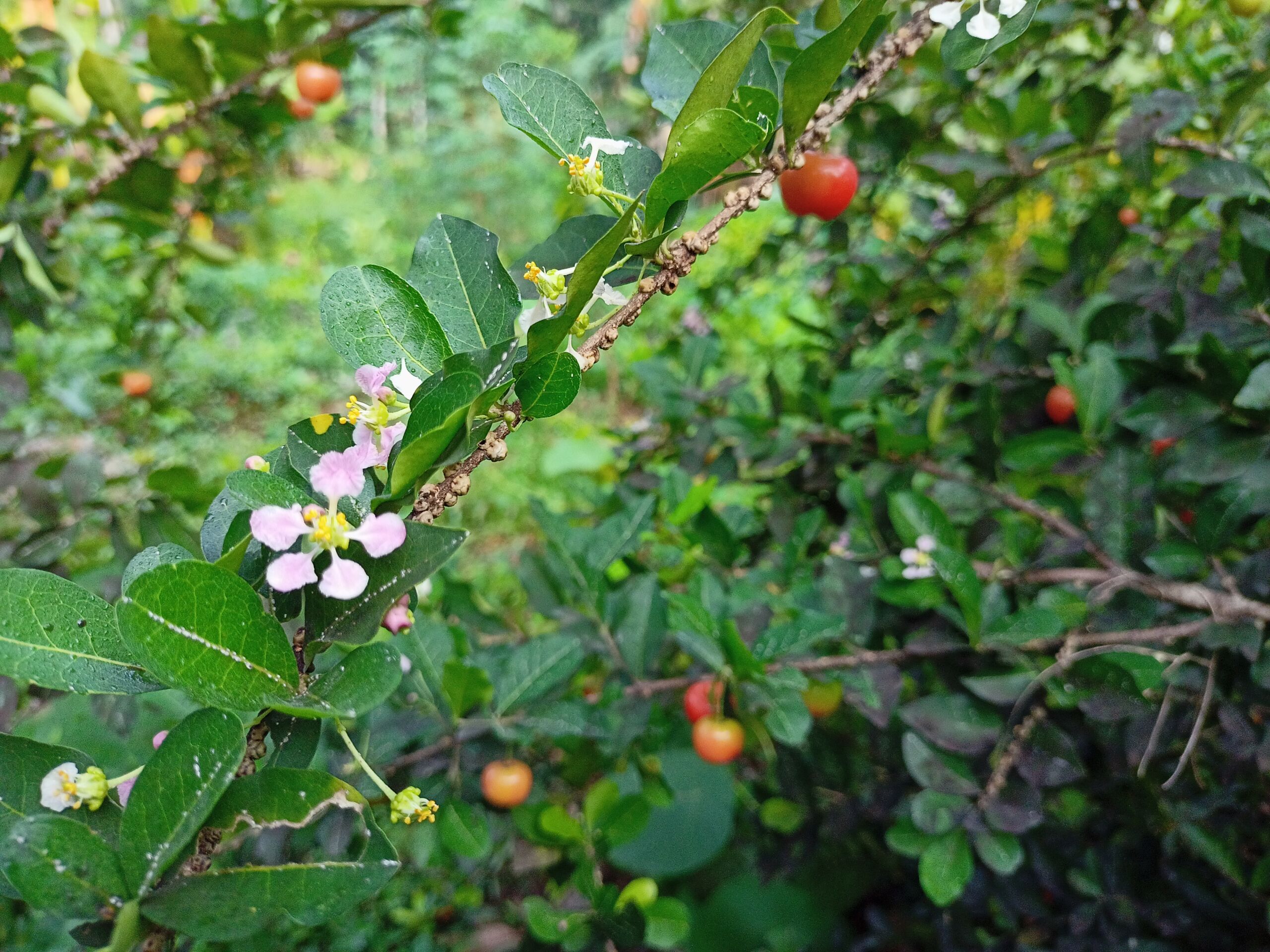
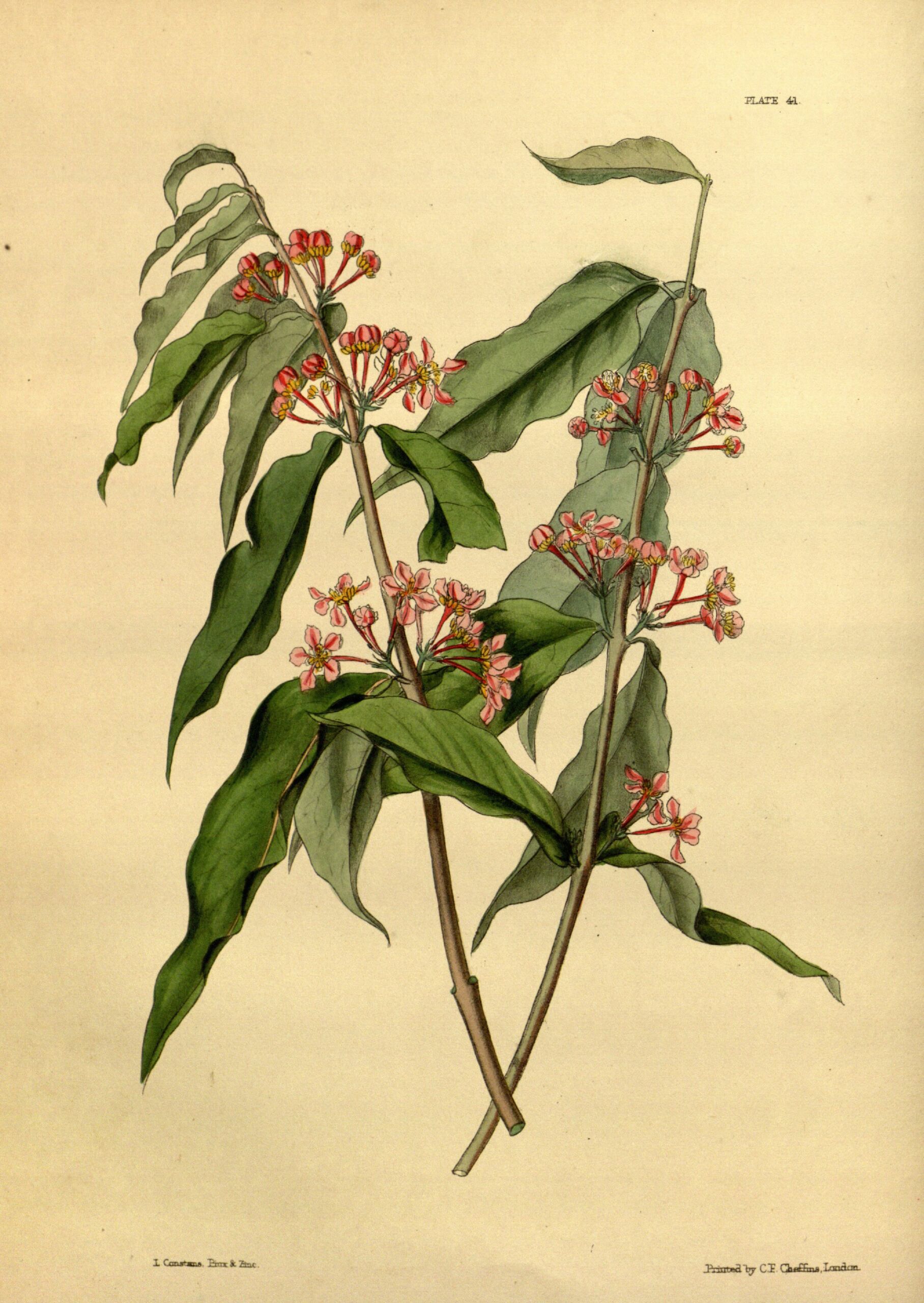
Malpighia is a genus of shrubs and small trees in the family Malpighiaceae, native to the tropical and subtropical Americas, from the Caribbean and Mexico south through Central and South America. The plants are evergreen or nearly so, with glossy, opposite leaves, and they are best known for two things: flowers with five fringed, clawed pink petals that look like they were cut with pinking shears, and small, red, cherry-like fruit that is not a cherry at all — it is a drupe with three seeds inside, and it is famous for vitamin C.
The best-known member is acerola, the Barbados cherry, Malpighia emarginata — the species this site’s Barbados Cherry guide covers in full, including its named varieties. Acerola fruit is one of the richest natural sources of vitamin C known, which is why it is grown commercially for juice and supplements as well as eaten fresh, tart and bright, straight off the shrub. Other members of the genus are grown as ornamentals: miniature holly (Malpighia coccigera) is a small, dense, spiny-leaved shrub used for hedges and bonsai, and Malpighia glabra is a close relative of acerola that has been tangled up with it in nursery labels for generations — the two names have been applied to the same plants so often that older references treat them as one, and modern floras separate them. If a label says glabra and the fruit tastes like acerola, do not be surprised: the taxonomy is still catching up with the nursery trade.
These are tropical plants, and this guide does not pretend otherwise. Malpighia hates frost — the Barbados Cherry guide says so in its first line, “it hates frost” — and outside frost-free zones it is a greenhouse or container plant, not a landscape shrub. In southern Florida, acerola is a genuine landscape plant, fruiting nearly year-round in frost-free zones; further north it is a pot that comes inside for winter, or a plant to admire in a botanical garden. The genus as a whole is not a Florida native clan, and the butterfly that names it is not a Florida resident either, which is part of the story below.
How to grow
Start with sun and warmth. Malpighia wants full sun — at least six hours of direct light — and warmth year-round. In frost-free zones (acerola zones 10 to 11), plant it in the landscape in a sunny, sheltered spot, protected from cold wind. Anywhere frost occurs, grow it in a large container that can be moved under cover before the first cold snap, or treat it as a greenhouse plant. A single light frost can defoliate it; a hard freeze can kill it outright. This is not a plant to gamble with in zone 9 and hope for a mild winter.
Soil should be well-drained and slightly acidic to neutral — the Barbados Cherry guide gives pH 5.5 to 6.5 for acerola, which is a good target for the genus. It tolerates a range of soils provided drainage is good, but it does not tolerate waterlogged roots. In heavy soil, plant on a slight mound and mix in compost and grit; in a container, use a free-draining potting mix with added perlite. Space acerola shrubs 8 to 10 feet apart in the landscape; smaller ornamental species like miniature holly can be spaced tighter as a hedge, and pruned to shape.
Plant in spring, after all danger of frost, from a nursery plant — Malpighia is not a plant to start from seed if you want fruit in a hurry, since seedlings vary and take years to prove themselves. Named acerola varieties fruit in 1 to 2 years from a nursery plant, and can fruit nearly year-round in frost-free zones, which is a generous return for a shrub. Prune lightly after a fruiting flush to shape the plant and remove dead or crossing wood; heavy pruning costs you the next flush of flowers, and flowers are fruit in waiting. Propagation is by cuttings or air-layering for named varieties, which keeps the variety true; seed-grown plants are a lottery, and the prize is not always acerola.
Water & feeding
Water to establish, then water steadily but never soggily. Newly planted Malpighia needs regular watering through its first year; established acerola is moderately drought-tolerant but fruits best with consistent moisture — a dry spell during flowering drops flowers and a dry spell during fruiting shrivels fruit. A deep soak once or twice a week in dry weather, with mulch to hold the moisture, is the right rhythm; daily sprinkling that keeps only the surface wet is not.
Feeding is regular but light. A balanced fertiliser or compost in spring and again in midsummer suits a fruiting shrub, and a mulch of compost each spring does double duty as food and moisture conservation. Do not over-feed with nitrogen, which pushes leafy growth at the expense of flowers and fruit. In a container, feed more often and more lightly, since watering washes nutrients out of the pot, and watch for yellowing leaves that signal hunger or pH drift rather than disease.
Maintenance is mostly frost watch and light pruning. In marginal zones, the single most important job is moving containers under cover before frost, or covering landscape plants with frost cloth on cold nights — and understanding that frost cloth is a delaying tactic, not a guarantee. Leave the plant’s winter growth alone until spring, then prune out anything that is clearly dead once new growth shows where the living wood is.
Common problems
- Frost damage. The big one. Blackened, limp leaves after a cold night mean frost, not disease. Prune out dead wood in spring once new growth shows, and protect earlier next time — or move the plant to a container.
- Flower drop. Usually dry soil during flowering, or a cold snap. Keep moisture steady through bloom and do not let the plant dry out while it is flowering.
- Root rot. Waterlogged soil, especially in a container without drainage. Lift, improve drainage, replant only firm roots, and never let the pot sit in a saucer of water.
- Scale and aphids. Sap-suckers love soft tropical growth. Wash off with a strong jet of water, encourage ladybirds, and use horticultural oil only as a last resort — and never on a plant in hot sun.
- Wrong plant, wrong label. Acerola and glabra labels are tangled in the trade. If fruit quality matters to you, buy a named variety from a reputable nursery, not a seedling labelled with a Latin name alone.
Harvest & wildlife
The harvest is the fruit, and it is a race: acerola fruit ripens fast, softens fast, and is best picked fully red and eaten or juiced the same day. A single shrub in a frost-free garden can fruit nearly year-round, in flushes, which means a small, steady harvest rather than one big glut — pick what is ripe, leave what is not, and come back in a few days. The fruit is tart, bright, and extraordinarily rich in vitamin C, which is why most of the commercial crop goes to juice and supplements rather than the fresh market. Eat it fresh, freeze the juice, or cook it into sauces; just do not expect it to keep like a cherry, because it will not.
The butterfly connection is a wild-flower story, not a garden one. The Strophius Hairstreak’s Host plants section reads, in full, that the caterpillars feed on flowers of Malpighia species in its home range — and its home range is Central and South America, with the United States record a rare stray in Texas. This is a butterfly to know about, not a resident to plant for, and no garden planting of acerola in Florida will summon it: its caterpillars eat Malpighia flowers in the tropics, and its Texas appearances are accidents of wandering, not responses to backyard habitat. What a Florida gardener does get from Malpighia is fruit, flowers for bees and hummingbirds, and a handsome tropical shrub — which is plenty, without inventing a butterfly it cannot deliver.
Browse all plant & pest guides
Saving seeds
Malpighia, the acerola clan, saves its seed the way a tropical fruit does: fresh, fast, and without much patience for storage.
The fruit ripens quickly — days, not weeks — turning red and soft, and it should be eaten or processed the day it ripens, since it spoils fast. Eat the fruit, keep the seed, and sow it promptly. Acerola seed does not store well; it dries out and dies, so do not save it for a project next month. Clean the pulp off the seed, sow it about half an inch deep in moist, free-draining mix, and keep it warm and damp. Germination usually comes in a few weeks.
Seedlings are variable and slow to fruit, which is the honest trade. A seedling acerola takes years to bear, and the fruit it makes may be smaller, tarter, or less productive than its parent. Named selections like Florida Sweet do not come true from seed, full stop. If you want that exact fruit, cuttings and grafting are the sure routes. Semi-hardwood cuttings taken in warm weather root readily, and a cutting is a clone of its parent, fruit and all.
Seed is genuinely good for two things: rootstock to graft onto, and the experiment of growing a tree from a fruit you loved. Isolation barely matters for seed you plan to use as rootstock, since any seedling grafts fine. It matters more if you are chasing a seedling that resembles its parent, because bees cross-pollinate acerolas freely.
Florida is acerola country, at least in the south. The shrubs thrive in the heat, fruit heavily, and feed hummingbirds and hairstreaks while they do it. In Central Florida they are a sheltered-spot plant, and in North Florida they are a container plant. Grow the seedling, graft it if you want certainty, and enjoy the fruit if it turns out good.
Species in this group
Acerola / Barbados cherry — Malpighia emarginata — The fruit species, covered in full by this site’s Barbados Cherry guide including its named varieties (Florida Sweet, Manoa Sweet, B-17, and the varieties index). Frost-free zones only; fruit nearly year-round where it is happy.
Malpighia glabra — A close relative of acerola, long tangled with it in nursery labels; pictured in this guide. Treat glabra and emarginata labels with friendly suspicion unless the plant comes from a reputable source as a named variety.
Miniature holly — Malpighia coccigera — A small, dense, spiny-leaved ornamental shrub, grown for hedges and bonsai rather than fruit. Same fringed pink flowers, much smaller ambitions.
Not this plant — Cherries (Prunus) are unrelated stone fruit with a similar common-name problem; a Barbados cherry is not a cherry, and a Malpighia is not a Prunus. If a plant labelled Barbados cherry produces a single-stoned cherry with a long stem, it is not this genus.