
✨ Mystique Winter Jasmine
What it looks like
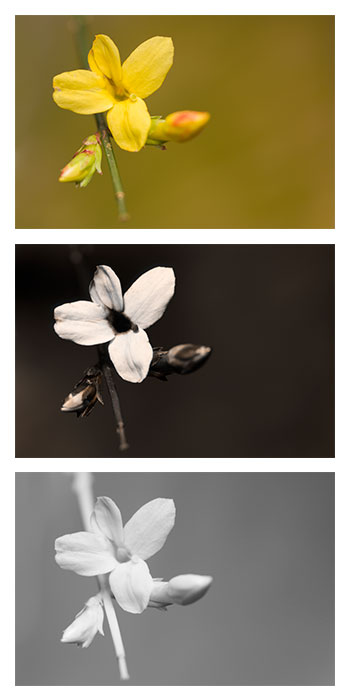
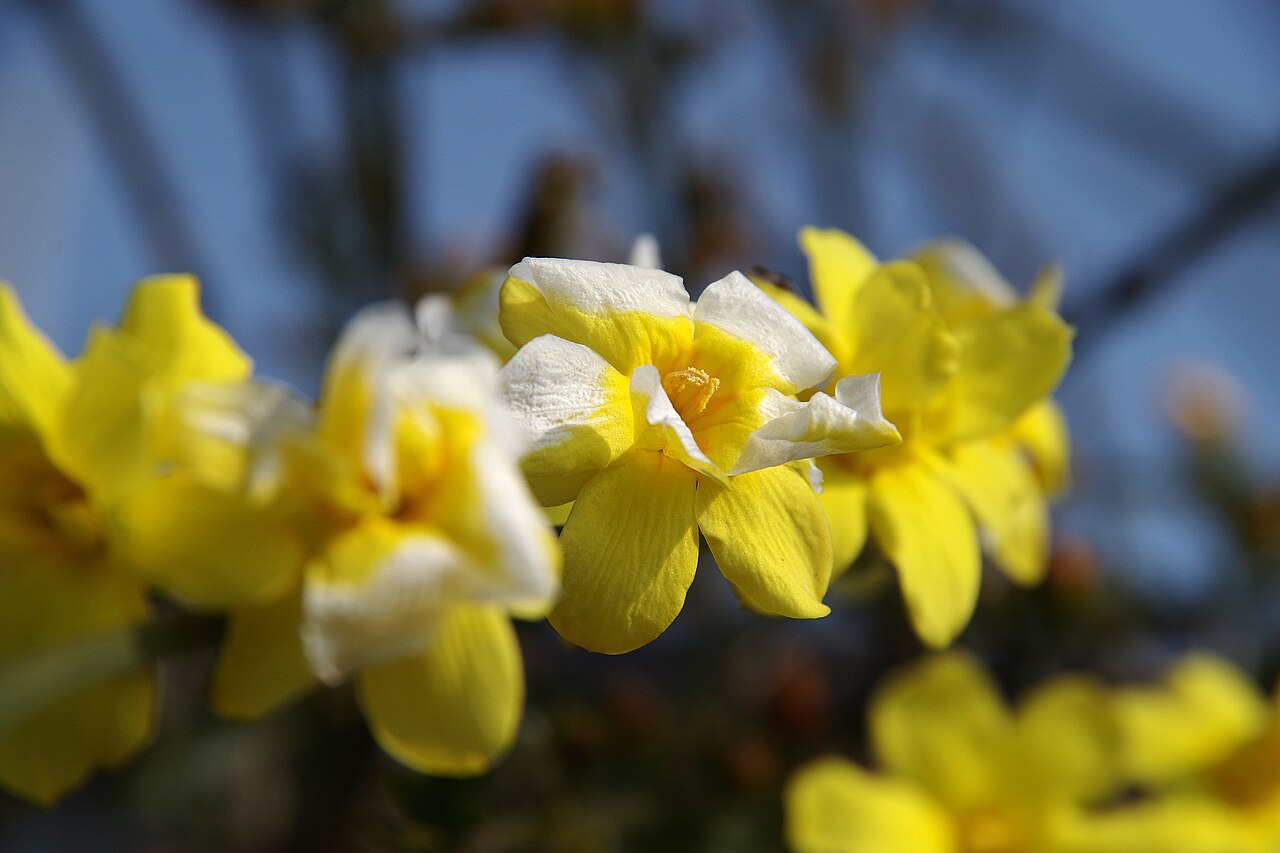
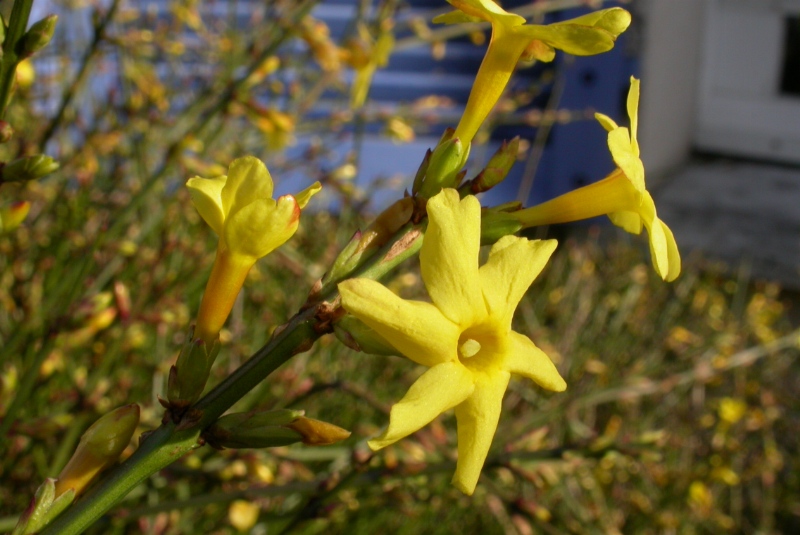
Photos show the species, Winter Jasmine, since no cultivar-specific photo has been verified for this variety — the species photos above are already hosted on this site and attributed as on the species guide.
Why this variety
Mystique is winter jasmine with the foliage dressed up. The species is loved for one trick — bright yellow stars opening on leafless stems in late winter, weeks before anything else wakes — and Mystique keeps that trick exactly, with bright yellow, slightly wavy-petalled flowers in winter and spring. What it adds is leaves edged in silver-white, so the plant earns its place all year, not just in the bare-stem season.
It is also sold under the synonym ‘Argenteum’, which is worth knowing when you are shopping: same plant, silver-edged leaves, yellow winter flowers. Winter jasmine breeding is famously thin — the species is a workhorse shrub used for erosion control and groundcover, not a breeder’s darling — so a genuinely distinct, documented cultivar like Mystique is a find, not a marketing rename.
How to grow
Plant in spring or fall in well-drained soil of almost any type, in sun to part shade. Winter jasmine is an arching, deciduous shrub that behaves like a vine when tied to a trellis, wall, or fence, or sprawls as groundcover on a slope. It is not a twiner and its flowers have no fragrance — set expectations accordingly — but it is tough, fast, and almost pest-free.
Prune after flowering, cutting back a third of the oldest stems to the base each year to keep it vigorous and to let light into the centre. Tie long green stems to their support while they are flexible, and mulch well. In Florida, winter jasmine flowers in the cool season and grows through the warm season; in the warmest parts of the state its winter show is shorter and less dramatic than in North Florida, but the silver-edged foliage still carries it.
For the general picture, start with the Winter Jasmine growing guide, then use this guide for the details that make Mystique different. And a plain-language note on the hero stats above, because vines and shrubs are not vegetables: “Spacing” here means mature planting distance, and “Days to harvest” means time to first bloom — the moment the plant starts paying you back in flowers, not a picking date.
And a plain-language note on the hero stats above, because vines and shrubs are not vegetables: “Spacing” here means mature planting distance, and “Days to harvest” means time to first bloom — the moment the plant starts paying you back in flowers, not a picking date.
Water & feeding
Water to establish, then only during real dry spells — winter jasmine is drought-tolerant once established and resents wet feet more than dry ones. Feed lightly in spring if growth is poor; a rich diet is not required and can push soft, sprawling growth. Mulch to suppress weeds under the arching stems, which root where they touch soil.
Common problems
- Almost nothing, honestly — winter jasmine is famous for shrugging off pests and poor soil. Its main fault is enthusiasm: unpruned stems wander.
- Powdery mildew in still, humid air — thin the oldest stems after flowering to let air through.
- Flowers with no fragrance — that is not a defect, it is the species. Winter jasmine trades perfume for timing, blooming when almost nothing else will.
- Stems rooting wherever they touch soil — useful for groundcover, a nuisance near paths. Lift and redirect stray stems in spring.
Harvest
The harvest is timing: yellow flowers in late winter, cut stems for a vase when the garden has almost nothing else to offer. Cut flowering stems in the morning and bring them indoors — they open well in water. Prune after flowering, never before it, or you will have removed the very stems carrying the winter show.
Browse all plant & pest guides
Saving seeds
Mystique is winter jasmine with the foliage dressed up. The species is loved for one trick — bright yellow stars opening on leafless stems in late winter, weeks before anything else wakes — and Mystique keeps that trick exactly, with bright yellow, slightly wavy-petalled flowers in winter and spring. What it adds is leaves edged in silver-white, so the plant earns its place all year, not just in the bare-stem season. It is also sold under the synonym ‘Argenteum’, which is worth knowing when you are shopping: same plant, silver-edged leaves, yellow winter flowers. As a named cultivar it is kept true by cuttings, not by seed — seedlings would not hold the silver-edged leaves. Plant in spring or fall in well-drained soil of almost any type, in sun to part shade, and prune after flowering. The full method is in the Propagation section of the Winter Jasmine guide.