
🎀 Sun Parasol Giant Pink Mandevilla
What it looks like
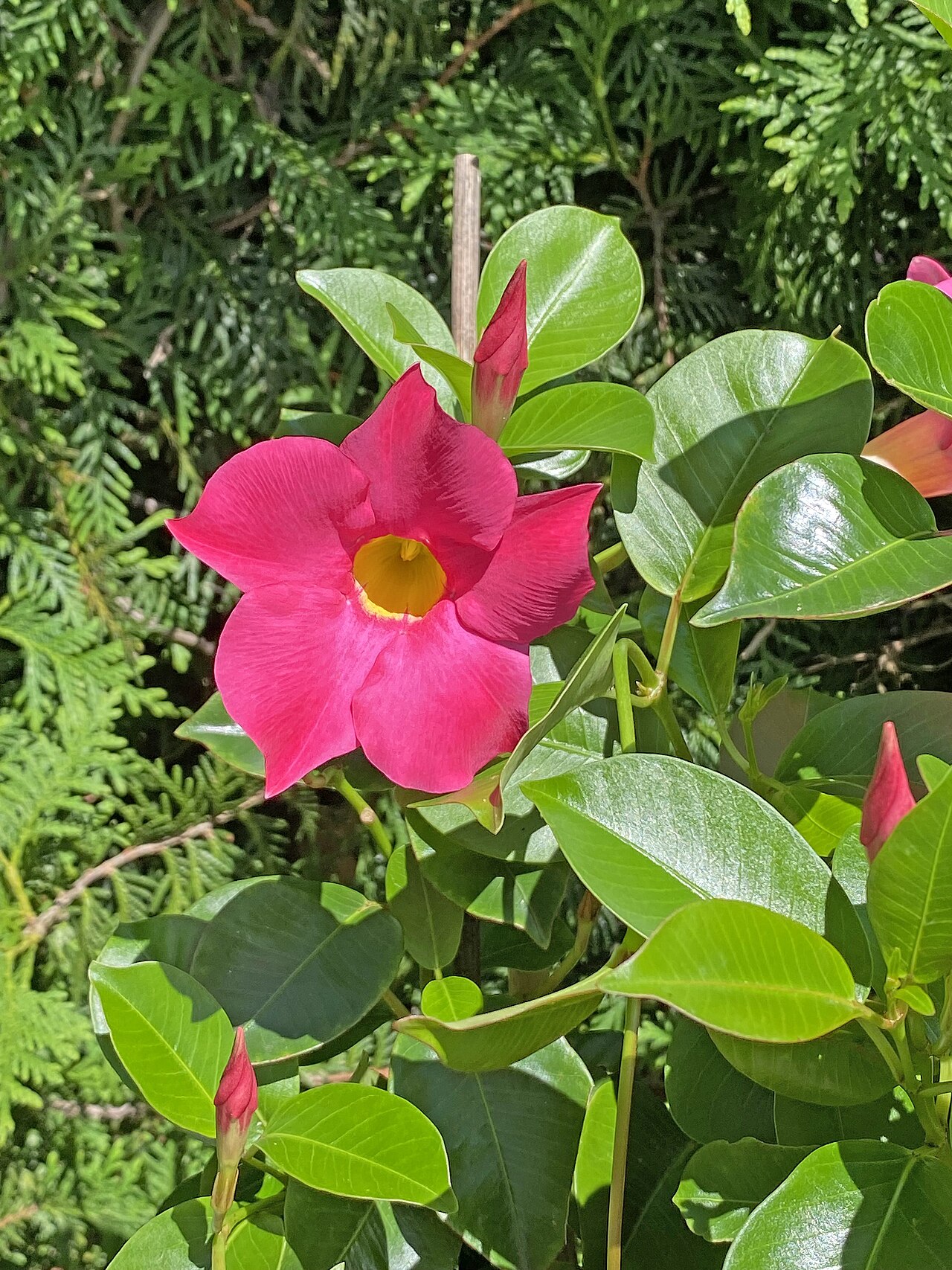
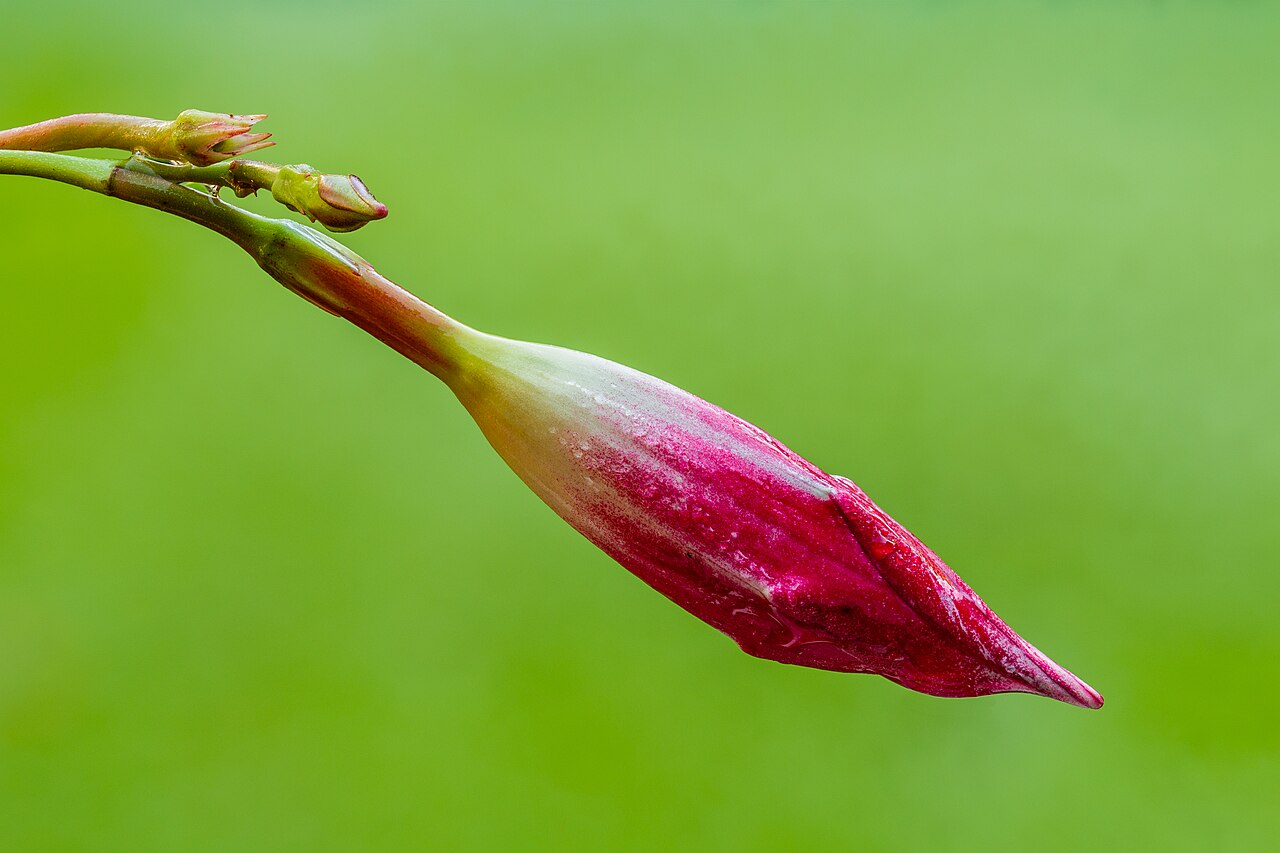

Photos show the species, Mandevilla, since no cultivar-specific photo has been verified for this variety — the species photos above are already hosted on this site and attributed as on the species guide.
Why this variety
Giant Pink is the Sun Parasol series at full scale: extra-large, bright-pink trumpet flowers with harvest-gold throats, on a vigorous twining vine that can reach 10 feet on a good support. Where Pretty Pink is compact and tidy, Giant Pink is exuberant — the mandevilla for an arbor, a garden wall, or a big pot that needs to be seen from across the garden.
Size is not just showmanship. A larger flower is a larger landing pad and a larger nectar reward, and hummingbirds notice: Giant Pink is one of the most visited mandevillas in a mixed planting. It shares the Sun Parasol family’s heat tolerance, steady flowering, and disease resistance, so the extra size does not come with extra fuss — just a bigger support and a bigger pot.
How to grow
Plant outdoors in mid- to late spring, once nights are reliably warm, in a large pot with drainage holes or in sandy, well-drained, fertile soil, and give it a strong trellis, arbor, or fence from day one — this is a vigorous vine, and a flimsy support will be overwhelmed by midsummer. In Florida it thrives statewide in heat, perennial where frost-free.
Tie new growth to its support regularly while stems are flexible, and prune lightly after flushes to keep it to its support and encourage branching. Work worm castings into the planting hole or potting mix, and feed generously through the season: a vine making giant flowers is making a lot of flower, and flower-making is hungry work.
For the general picture, start with the Mandevilla growing guide, then use this guide for the details that make Sun Parasol Giant Pink different. And a plain-language note on the hero stats above, because vines and shrubs are not vegetables: “Spacing” here means mature planting distance, and “Days to harvest” means time to first bloom — the moment the plant starts paying you back in flowers, not a picking date.
And a plain-language note on the hero stats above, because vines and shrubs are not vegetables: “Spacing” here means mature planting distance, and “Days to harvest” means time to first bloom — the moment the plant starts paying you back in flowers, not a picking date.
Water & feeding
Water when the top inch of soil is dry, keeping soil moist but never waterlogged, and water containers more often than in-ground plants — a big vine in a pot drinks fast in Florida heat. Feed every two to three weeks in the growing season, bring containers in before nights drop below about 50°F, and reduce water in winter while the plant rests.
Common problems
- Spider mites in hot, dry air — stippled, dull leaves are the tell. Hose foliage, raise humidity around containers, and use miticide only as a last resort.
- Leaf yellowing from overwatering — mandevilla wants moist soil, not wet feet. A pot without drainage holes is a slow drowning.
- Cold damage below about 50°F — growth stalls, leaves drop. Bring containers in before the first cold night, not after it.
- Sap toxicity — all parts are toxic if eaten, and sap irritates skin. Gloves on, and site it away from grazing pets and toddlers.
Harvest
The harvest is giant pink trumpets for cutting and for the arbor show. Cut stems in the morning — the big trumpets make a vase arrangement on their own — and deadhead to keep new flowers coming. At season’s end in cooler zones, cut back, bring indoors to a bright spot, and rest it with reduced water until spring.
Browse all plant & pest guides
Saving seeds
Giant Pink is the Sun Parasol series at full scale: extra-large, bright-pink trumpet flowers with harvest-gold throats, on a vigorous twining vine that can reach 10 feet on a good support. Where Pretty Pink is compact and tidy, Giant Pink is exuberant — the mandevilla for an arbor, a garden wall, or a big pot that needs to be seen from across the garden. Size is not just showmanship. A larger flower is a larger landing pad and a larger nectar reward, and hummingbirds notice: Giant Pink is one of the most visited mandevillas in a mixed planting. As a named mandevilla it is kept true by cuttings, not by seed — plant outdoors in mid- to late spring, once nights are reliably warm, in a large pot with drainage holes or in sandy, well-drained, fertile soil, and give it a strong trellis, arbor, or fence from day one: this is a vigorous vine, and a flimsy support will be overwhelmed by midsummer. In Florida it thrives statewide in heat, perennial where frost-free. Tie new growth to its support regularly while stems are flexible, and prune lightly after flushes to keep it to its support and encourage branching. Work worm castings into the planting hole or potting mix, and feed generously through the season: a vine making giant flowers is making a lot of flower, and flower-making is hungry work. The full method is in the Saving seeds section of the Mandevilla guide.