
🌿 Lanceleaf Frogfruit
What it looks like
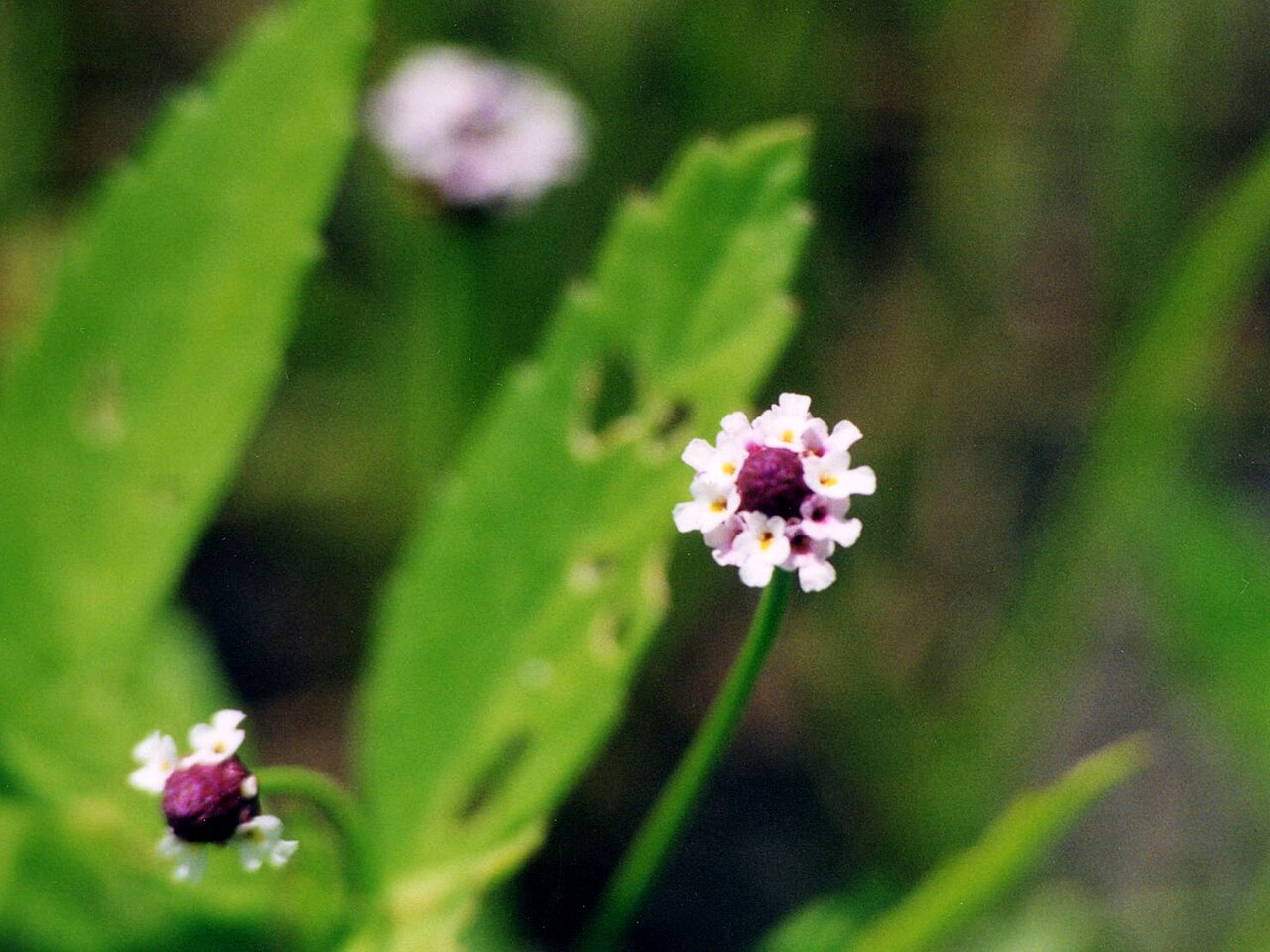
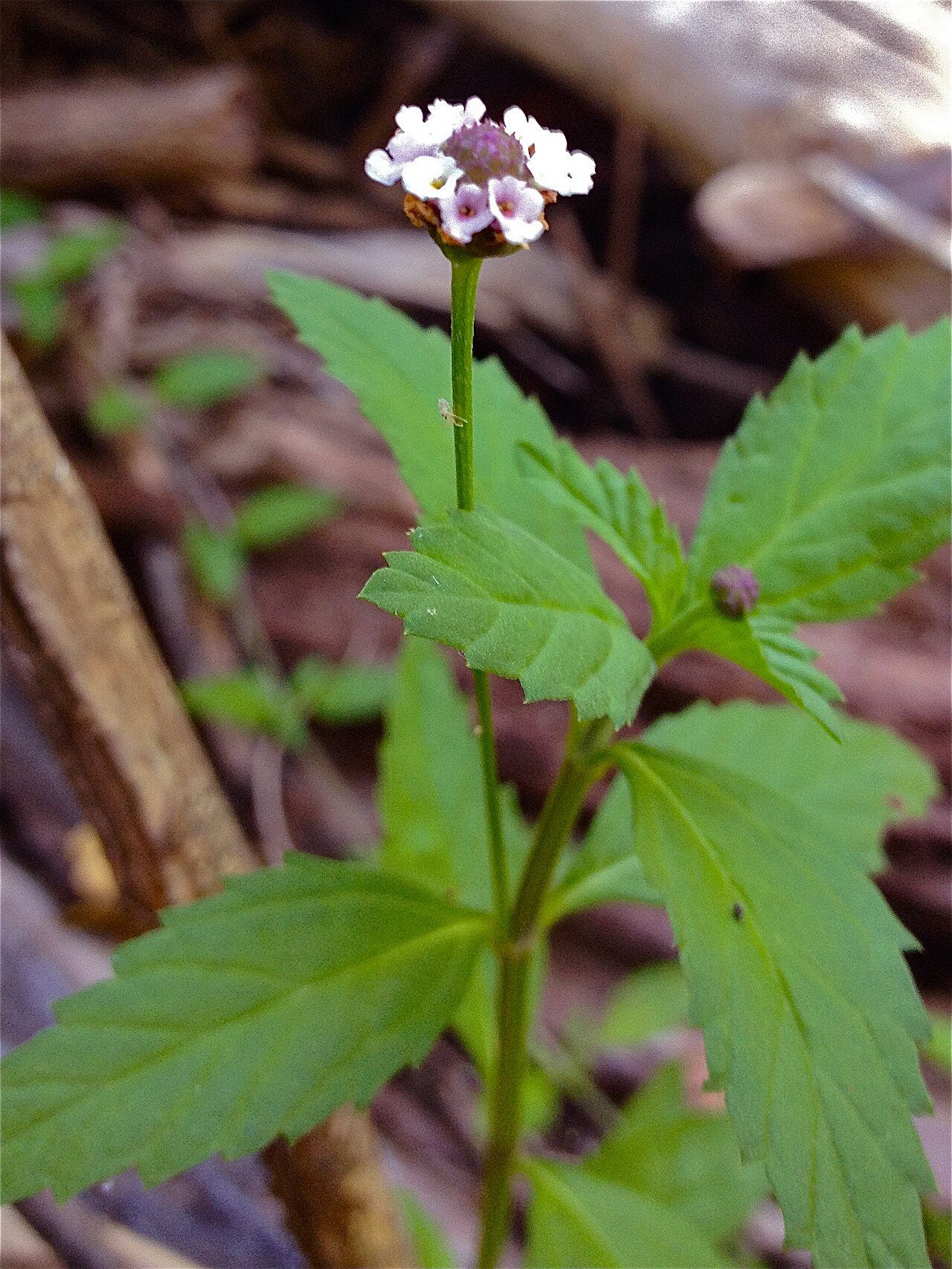
Lanceleaf frogfruit is the frogfruit for wet feet. It is a low, mat-forming perennial in the verbena family, 3 to 6 inches tall and spreading 2 to 3 feet, with narrow, lance-shaped leaves that give it its name and tiny white flower heads that bloom almost year-round in warm climates, from May through November across most of its range. The flower heads are the frogfruit signature: dense little cylinders of small white to pale lavender flowers that elongate as they bloom, like tiny matchsticks with a purple tip.
The way to tell it from its famous cousin is the leaves. Turkey tangle frogfruit (Phyla nodiflora) has teardrop- to wedge-shaped leaves toothed only near the tip; lanceleaf frogfruit has longer, narrower leaves toothed over more than half their length. The two were once both placed in Lippia, and older books still call this plant Lippia lanceolata, but modern taxonomy puts both in Phyla, and the leaf shape is the field mark that separates them. If your frogfruit has long, narrow, saw-toothed leaves and lives in a ditch, you are looking at lanceleaf.
Why this variety
Choose lanceleaf frogfruit when the site is wet. Turkey tangle is the frogfruit for lawns, banks, and dryish ground; lanceleaf is the one for the low spot where grass drowns, the rain garden that actually holds water, and the pond edge that floods in summer. It tolerates flooding, grows in moist to wet soils, and is native to wet meadows, ditches, and pond edges across the northern and central peninsula of Florida, as well as across the southern half of North America. In a garden with a wet corner, it is not a compromise plant; it is the plant that belongs there.
It is also a butterfly host, and a specific one: lanceleaf frogfruit is a host plant for the Phaon Crescent butterfly, whose caterpillars feed on its foliage, and its flowers feed native bees, hoverflies, and skippers through a long bloom season. A wet-spot groundcover that also feeds butterflies is doing two jobs at once, which is the whole point of a native lawn alternative.
How to grow
Plant plugs in spring in full sun to part shade in moist to wet soil, spacing 8 to 12 inches apart for quick coverage. It spreads by creeping stems that root at the nodes, so a flat of plugs covers a low area surprisingly fast, and once established it knits into a dense mat that holds soil on a bank or pond edge. Use it as a no-mow groundcover for wet or seasonally flooded areas where turf fails, in rain gardens, along pond edges, and in low spots in the lawn. Pair it with other wet natives, and let it fill between stepping stones in a damp path, where it tolerates light foot traffic.
Florida note: lanceleaf frogfruit is a Florida native of wet places, and it is genuinely useful in the parts of a Florida yard that stay soggy after summer storms. It is not the statewide lawn plant that turkey tangle is; it is the specialist for the wet corner, the ditch edge, and the rain garden. Plant turkey tangle for the lawn and lanceleaf for the swale, and both will be in the sites they evolved for.
Water & feeding
Water until established, then let the site do the work: lanceleaf frogfruit wants moist to wet soil and tolerates seasonal flooding, so in a rain garden or pond edge it needs almost no supplemental watering once rooted. In a drier bed it will need regular water and will thin out, which is the plant telling you it is in the wrong spot. Skip fertilizer entirely; it grows in poor, wet soils without help, and feeding it just encourages rank growth that flops.
Common problems
Too dry: the most common failure. If lanceleaf thins and fades, it is usually because the site dried out, not because it needs feeding. Move it to a wetter spot or water more.
Too much shade: it tolerates part shade but blooms best and mats densest in sun. Deep shade makes it leggy and sparse.
Spreading beyond its bed: it spreads by runners and by seed, so edge it yearly in a small formal bed, or let it roam in a rain garden where roaming is the point.
Winter scruffiness: in the far north of its range it can look rough in winter. In Florida it stays green and blooming through most of the year, with a short rest in the coldest weeks.
Harvest
There is no food harvest, and the plant is not grown for one. The harvest is coverage and bloom: a wet corner that holds soil, flowers almost year-round, and feeds Phaon Crescent caterpillars and pollinators, all from a plant you mostly leave alone. If you want more plants, the propagation is the harvest: stem cuttings root eagerly in wet soil or water, and divisions from the spreading mat establish faster than seed.
Propagation
Here is the honest truth about lanceleaf frogfruit: seed is the slow way, and this plant does not make you take the slow way. It roots so eagerly from cuttings and divisions that propagating it feels less like gardening and more like accepting a gift the plant keeps offering.
Stem cuttings are the easiest route. In late spring or early summer, when the plant is growing hard, snip a healthy stem four to six inches long, cutting just below a leaf node. Strip the leaves off the bottom half, and tuck the cutting into moist, well-draining potting mix — or simply stand it in a jar of water on a bright windowsill. Keep the mix damp but not waterlogged, and give it bright, indirect light. Roots usually appear within a few weeks, and in Florida’s humidity they often appear faster, since the air itself does half the misting for you. Once the cutting resists a gentle tug, it has roots, and you can pot it up or plant it out. A dab of rooting hormone on the cut end can speed things along, but with frogfruit it is genuinely optional — this is a plant that roots at the nodes all by itself wherever a stem touches wet soil.
Division is even faster. Dig up a section of the spreading mat in early spring or fall, when the plant is not in full flower, and pull or cut it into pieces, each with roots and a few growing tips. Replant each piece at the same depth it was growing, water it in well, and keep it moist until it takes hold. A division is a mature plant from day one, which is why it beats seed by a whole season — and why one established patch can carpet a wet corner in a single year.
Seed is the backup, not the plan. If you want to try it, collect seed from mature flower heads once they have turned brown and dry, and store it in a cool, dry place until spring. Some growers soak the seed in water for a day before sowing, and sow it about a quarter inch deep in seed-starting mix after the last frost. Germination is slower and less reliable than cuttings, and the seedlings take their time catching up to a division. Save seed if you enjoy the experiment, but do not depend on it.
One note on temperament: frogfruit spreads by design, rooting as it goes, which is exactly what you want in a groundcover and exactly what you do not want escaping into a neighbour’s lawn or a natural wetland edge. Plant it where its wandering is welcome, and edge or mow the boundary now and then to keep the mat where you put it. And remember that this is a Florida native doing a native’s job — a living mulch for wet spots, a nectar stop for tiny pollinators, and a plant that asks for almost nothing except moisture and room to roam.