
☕ Wild Coffee
What it looks like
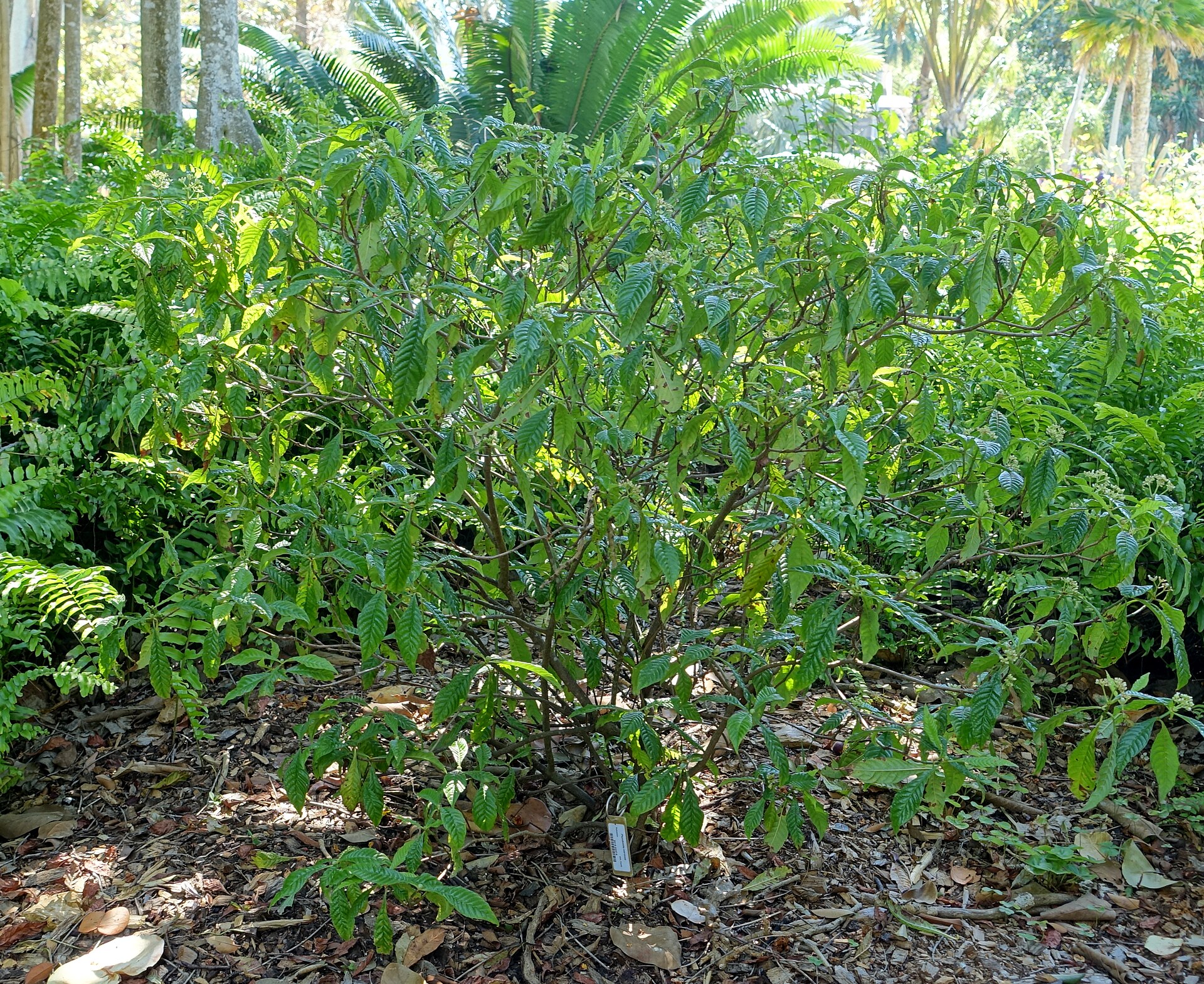
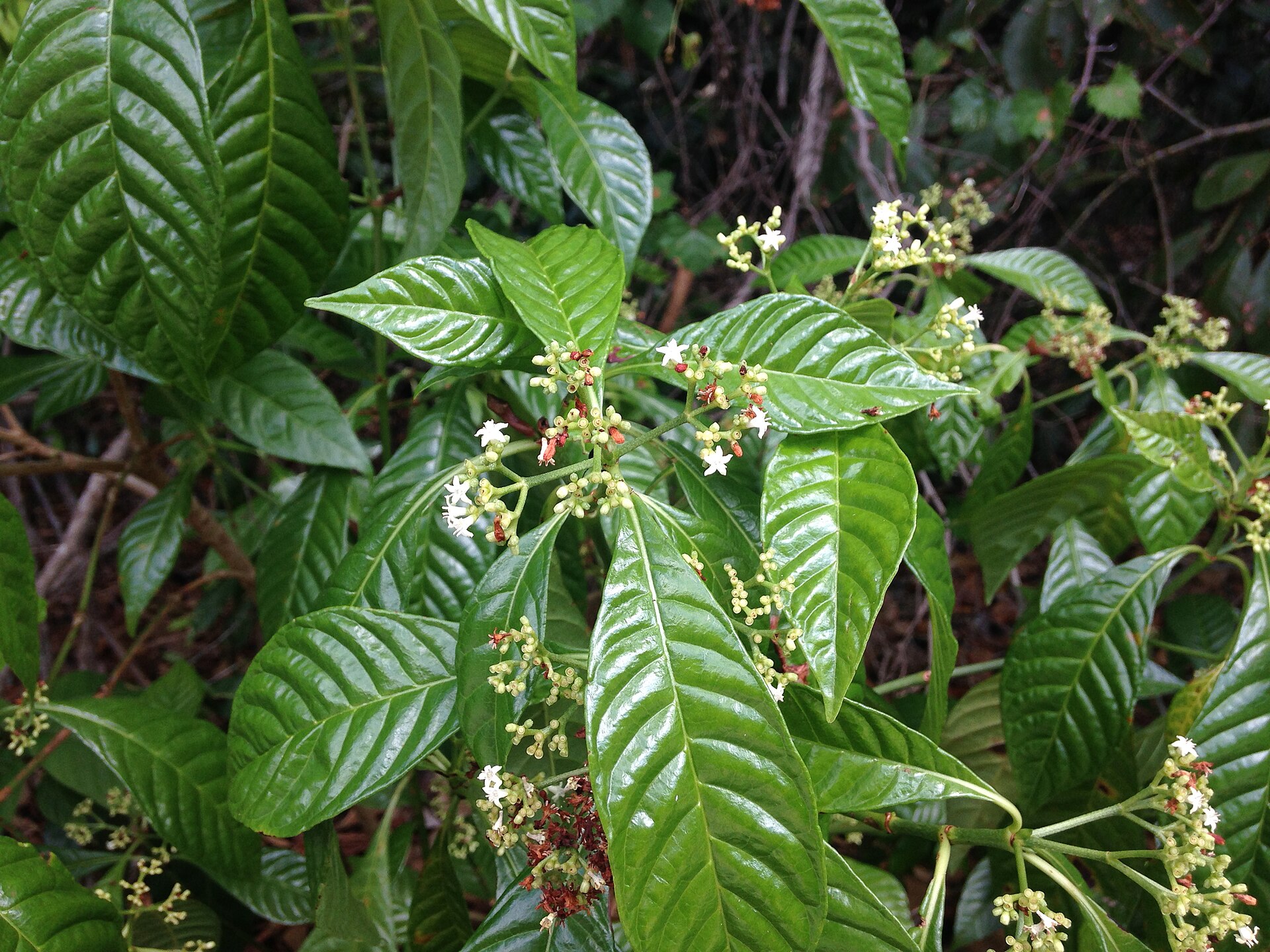
Wild coffee is an evergreen shrub with glossy, deeply veined leaves that look pressed with a ruler: the veins are so pronounced you can feel them, and the leaves stay dark green all year. In spring and summer it carries clusters of small white flowers, and by fall those become showy red, coffee-bean-shaped fruits that hang on the plant like ornaments.
It grows as a dense, rounded shrub, typically 4 to 8 feet tall and wide in a garden, and it can be clipped into a hedge or left loose under trees. Despite the name, it is not the coffee plant at all: its fruits contain no caffeine, and they are not a substitute for coffee, no matter how much the name invites the joke.
Why this variety
Choose wild coffee for the hardest spot in a Florida garden: dry shade under oaks, the north side of a house, or a spot where sun-loving shrubs yellow and quit. It evolved as a hammock understory plant, so shade is not a compromise for it, it is home.
It is also a bird plant with a long season of interest. The white flowers feed pollinators, the red fruits feed birds through fall, and the glossy evergreen leaves keep the garden from looking empty in winter. Few native shrubs do all three in shade.
How to grow
Plant in part to full shade in well-drained soil, in fall or spring. Dig a hole twice the pot width, set it at pot depth, water deeply, and mulch with leaves or pine bark. In north and central Florida, plant it in a sheltered spot, near a wall or under a canopy, where cold air drains away rather than pooling.
Prune lightly after fruiting if it outgrows its space, or clip it into a hedge in spring. It tolerates pruning well, and a plant that freezes back in a hard winter often regrows from the base in spring, so wait before declaring it dead.
Water & feeding
Water deeply once or twice a week while it establishes, then water in dry spells. Wild coffee handles moderately dry to moist conditions once rooted, but it looks best with even moisture and a mulch layer. In sand, mulch is not optional decoration, it is the moisture plan.
Feed with compost in spring. Heavy fertilizer in shade grows soft, leggy stems that flop, and wild coffee does not need pushing: its charm is dense, glossy, slow-and-steady growth.
Common problems
Freeze damage: this is the plant’s real limit. Older UF/IFAS guidance calls it very cold-tender and advises protection north of zone 10b, while newer guidance lists zones 9a to 11 with regrowth after freezes. In north Florida, treat it as a gamble with a sheltered microclimate, not a sure thing.
Yellowing in full sun: wild coffee yellows and scorches in hot sun. Move it to shade or give it a taller neighbor; it will not toughen up if you leave it.
Leggy in deep shade: very deep shade grows a sparse plant. A little filtered light, even dappled morning sun, keeps it dense.
Berries and people: the red fruits are for birds. Do not eat them, and do not brew them as coffee; they are not coffee, and they are not food.
Harvest
There is no human harvest, and that needs saying plainly because the name invites it. The harvest is ornamental and ecological: white flowers, red fruits, glossy winter leaves, and birds working the shrub in fall.
If you want to enjoy the fruits, enjoy them on the plant, where they last for weeks and feed the birds that will return next year. Cut branches for arrangements will hold their leaves well, but the fruits are better left for the wildlife that depends on them.
Browse all plant & pest guides
Saving seeds
Wild coffee seed is slow but easy. Let the berries ripen fully — the darkest red fruit on the healthiest shrub — and clean the pulp off the seed, because pulp inhibits germination. Sow fresh in moist mix, barely covered, and keep it warm and damp. Germination usually comes in a few weeks to a few months, and it is slow and uneven, so do not throw the pot out after a month of nothing.
Sow fresh if you can; wild coffee seed does not store well, and dried seed may never germinate. Save from the shrub with the best fruit — the fullest berries, the densest growth — and dry the seed thoroughly before storing; it keeps a year at most, and viability drops fast if it is stored warm or damp.
Seedlings will vary, and the named forms come only from cuttings. Cuttings root readily in warm, moist mix, and every cutting is a clone of the parent. Seed is for the species itself and for the patient gardener. A seedling will be a wild coffee, but it will not be a named cultivar, and it may take a few years to flower.
Wild coffee is a Florida native for shade and moist soil, a butterfly host and a bird plant, happiest under a live oak where the ground stays damp. Plant it where the shade is deep, and let it be the dense, berry-covered native it wants to be.