
🌳 Jamaican Caper
What it looks like
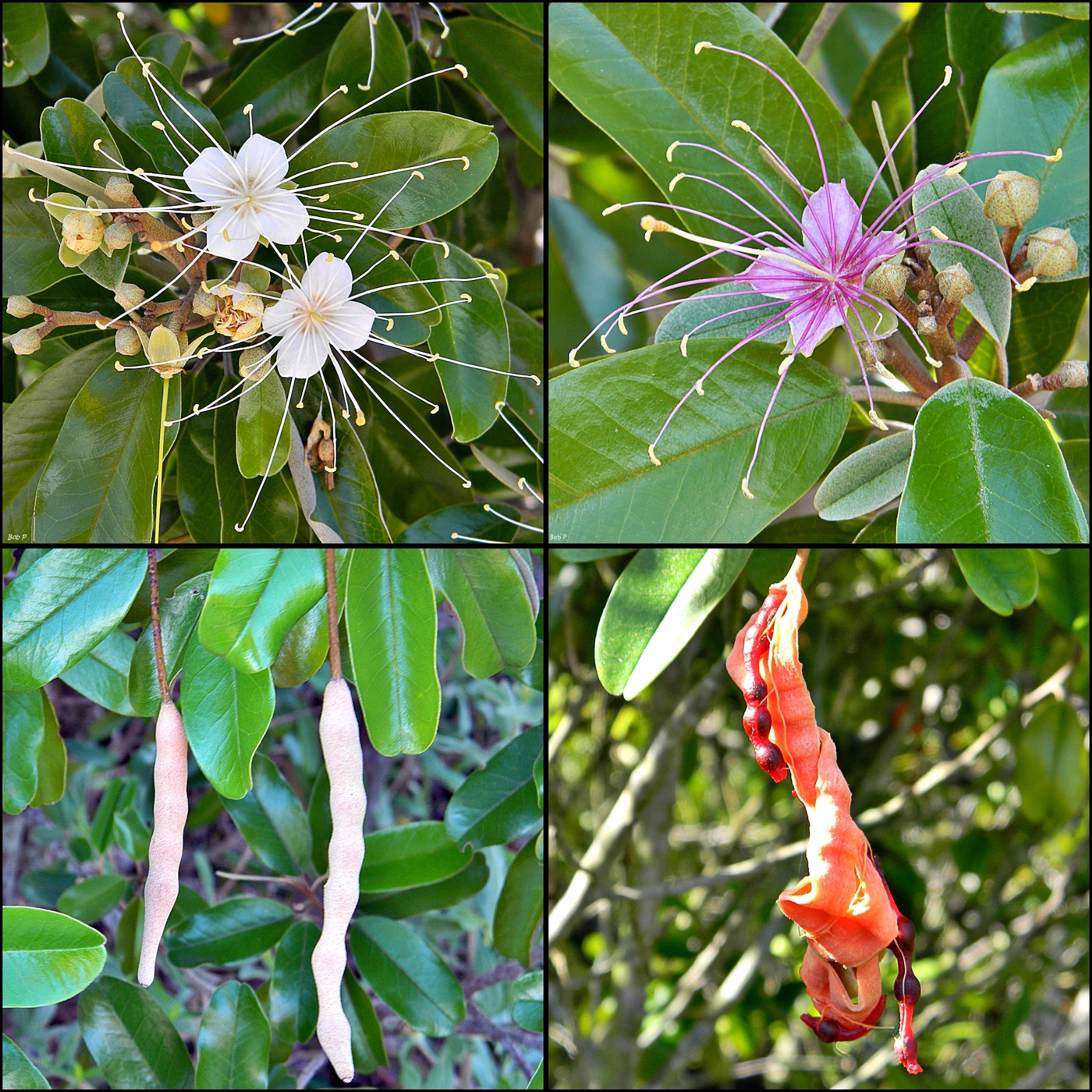
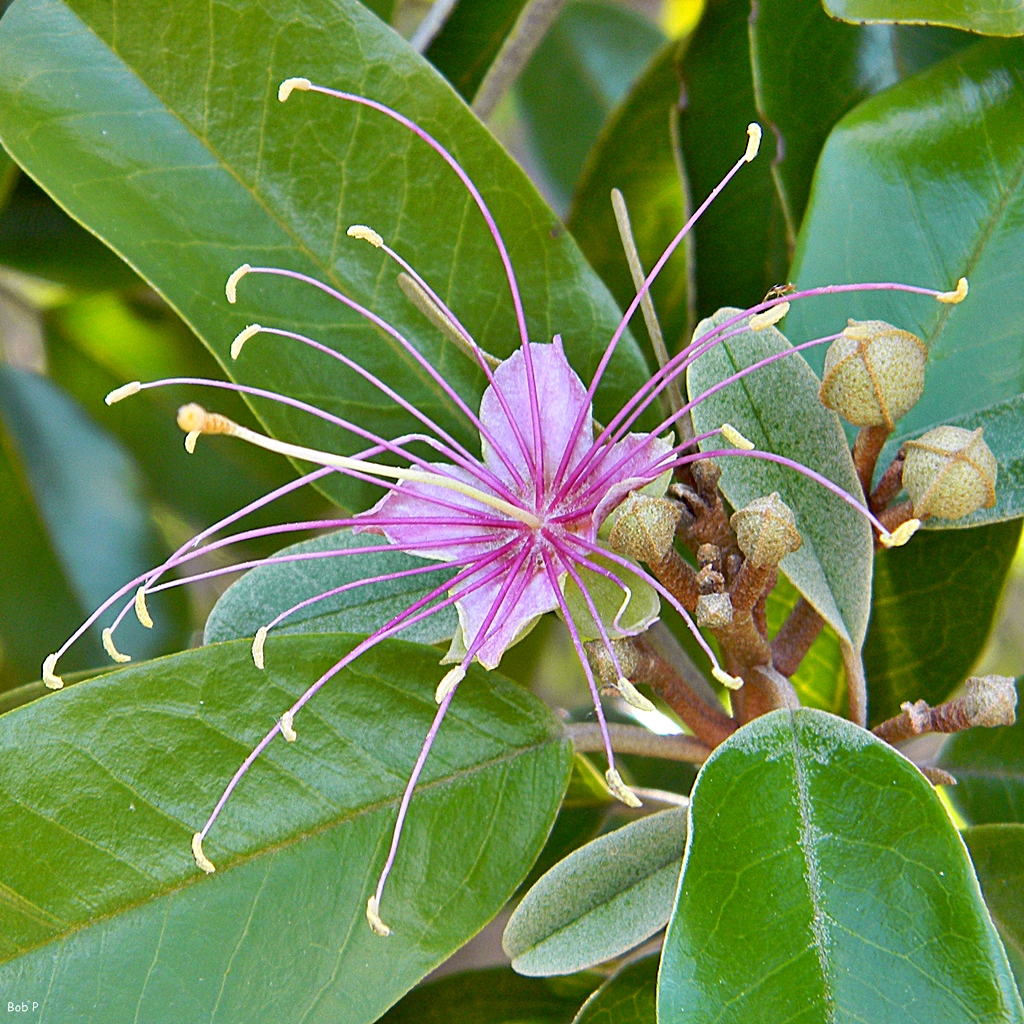
Jamaican caper is a small evergreen tree or large shrub with a dense, compact crown and glossy, dark green leaves. Its flowers are the show: white when they first open, they blush pink and then lavender within hours, so a single branch can carry three colors at once, followed by long, slender pods.
In a garden it typically reaches 10 to 20 feet, but it takes pruning well and can be kept as a hedge or a small tree. It is a coastal hammock plant by nature, so it is at home in the heat, salt, and limestone that defeat many other small trees.
Why this variety
Choose Jamaican caper when you want a small native tree that is not a palm and not a live oak, and that flowers for months. It works as a specimen, a screen, or a street tree under wires, and it does it in the toughest coastal conditions.
It is also a documented host plant for the Florida white butterfly, and its flowers feed pollinators through the warm months. A small tree that feeds butterflies and shades a patio is doing two jobs at once, and Jamaican caper does both without irrigation once it is rooted.
How to grow
Plant in sun to part shade in well-drained soil, in fall or spring. Dig a hole twice the pot width, water deeply, mulch, and stake only if the site is windy. Give it room for its crown; a small tree planted 3 feet from a wall will spend its life being cut back.
Prune after flowering to shape it, or limb it up over time into a single-trunk small tree. It tolerates hedging, but a hedge will flower less than a free-growing tree, so decide which job you want it to do.
Water & feeding
Water deeply once or twice a week while it establishes, then back off. Jamaican caper is notably drought tolerant once rooted and tolerates salt spray, which is why it thrives in coastal gardens that fry other trees.
Feed with compost in spring if the soil is poor sand. In limestone soil, do not try to acidify it: this is a rockland plant, and it prefers the soil it evolved in.
Common problems
Freeze damage: Jamaican caper is a south and coastal central Florida plant. A hard freeze will damage it, so in central Florida plant it in a sheltered spot and do not count on it in the coldest pockets.
Too large for a small space: it is a small tree, not a shrub. If you need a 4-foot plant, plant a shrub instead of shearing a tree for its whole life.
Pods and litter: the long pods drop in season. Rake them if they fall on a walkway, or let them be in a naturalized bed.
Name confusion: nursery labels may still say Capparis cynophallophora. It is the same plant as Quadrella jamaicensis in current UF/IFAS usage; buy by the common name plus the old name if the label is older.
Harvest
There is no edible harvest, and Jamaican caper is not the culinary caper plant, despite the family relationship. Its buds are not pickled capers, and its pods are not food.
The harvest is shade, flowers that change color through the day, and a small tree that survives salt and drought where other trees quit. That is a harvest a coastal gardener will appreciate every August.
Browse all plant & pest guides
Saving seeds
Jamaican caper seed is a race against the birds. The tan pods split open to reveal shiny red-brown seeds set in brilliant coral, and the birds know it — collect from open pods on the tree, because seed left on the ground is gone, and prying unopened pods gives you mostly immature seed. Ripe seeds are about a quarter inch across, round and black, and they should be planted or treated at once: they are thin-walled, they do not like drying out, and they do not wait for you.
A 24-hour soak in water is the standard treatment and works well; both manual and chemical scarification have also been shown to help, but untreated seed can germinate at up to 80%, so do not overthink it. Germination begins in about 15 days and wraps up by day 30. Start seed in deep trays — 3 to 5 inches — of well-drained potting soil, because this plant grows a long taproot early and resents being over-potted or overwatered. Keep the trays sunny with good air movement, water sparingly, and transplant while the seedlings are still young, before that taproot fills the pot.
Patience is part of the deal: this is a slow-growing tree, and its first year is a quiet one. The seedling’s first leaves are long, narrow, and purple-tinged, and the familiar dark green adult leaves do not appear until about a year after germination — do not panic, that is normal, not a nutrient deficiency. Once established, the seedlings are tough as nails: drought-tolerant, salt-tolerant, and happy in the sandy or calcareous soils Florida hands out. Supplemental water is only needed while they are settling in.
Two good reasons to grow it from seed rather than buy a pot: it is a Florida native, so seed from local trees keeps local genetics in the landscape, and it is the larval host for the Florida white butterfly — the flowers feed pollinators by day, opening white and blushing pink by evening, and the foliage shelters small wildlife year-round. A seed-grown caper is a slow investment, but it pays in decades.