
🔴 Coral Bean
What it looks like
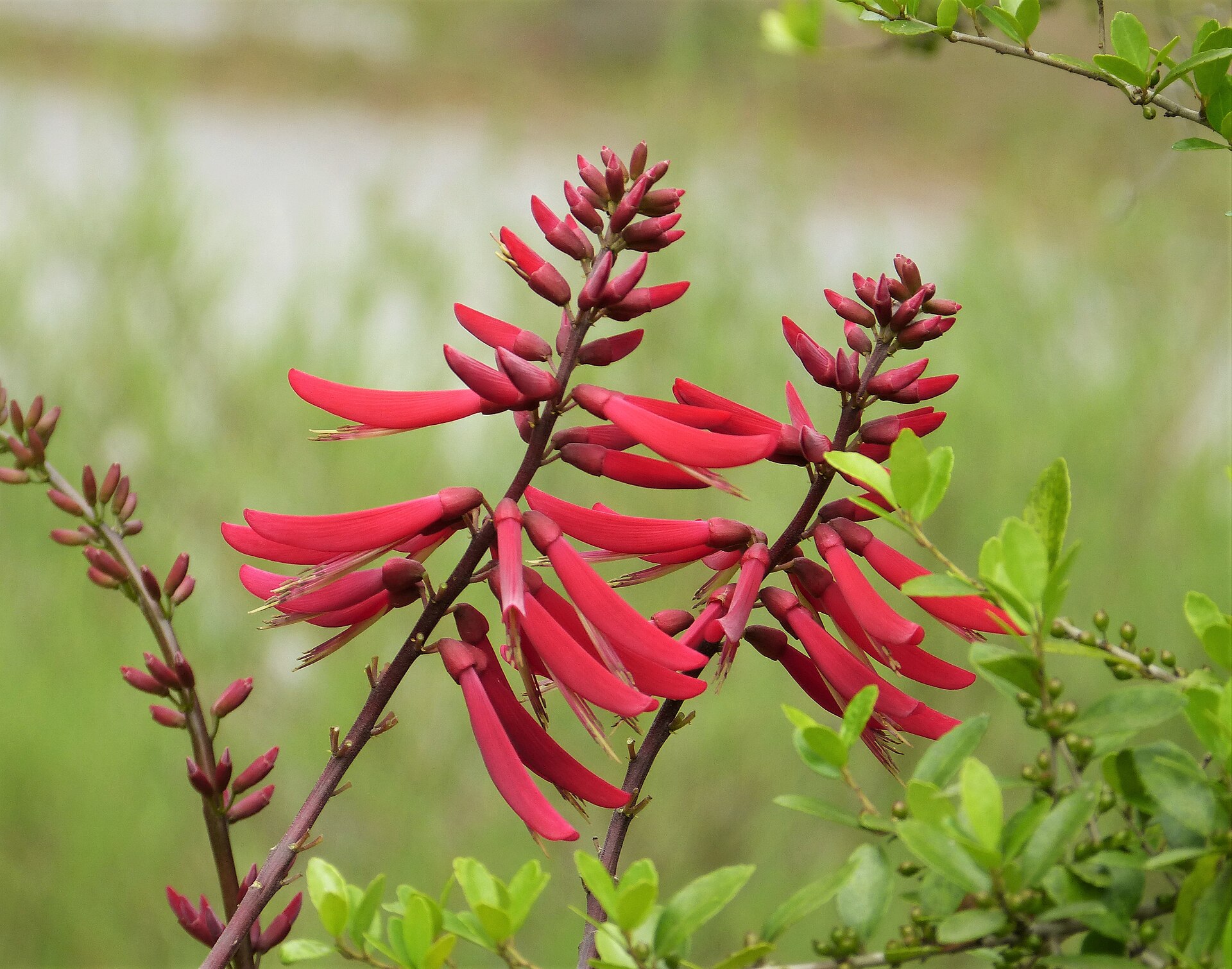
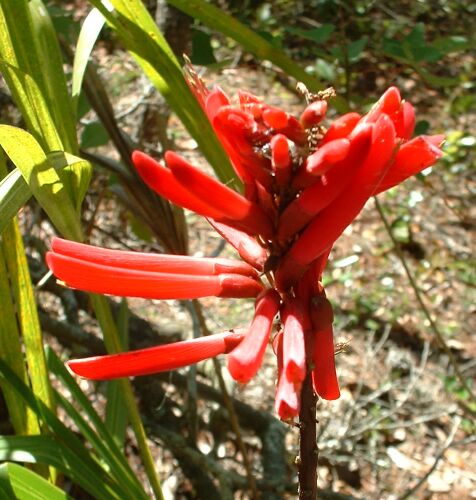
Coral bean is a shrub or small tree with soft, herbaceous stems in the north of its range and woodier stems in the south, and with distinctive three-part leaves that sometimes carry small prickles. In spring, before or with the leaves, it throws tall spikes of brilliant scarlet, tubular flowers that hummingbirds visit relentlessly.
After flowering it makes long pods that split open to reveal shiny red seeds with a black spot, the coral beans of the common name. Those seeds are beautiful and poisonous, which is the most important thing to know about this plant, and they should never be eaten or used as beads by children.
Why this variety
Choose coral bean for a hummingbird garden that needs a spring jolt of red. Few native plants flower as boldly, and the tubular flowers are shaped for hummingbirds, which will defend a coral bean in flower as if it were their own property.
It is also a plant with a natural rhythm that suits Florida: it dies back to the roots in a freeze in north Florida and regrows vigorously in spring, flowering on the new growth. A plant that treats a freeze as a haircut rather than a tragedy is a plant you can rely on.
How to grow
Plant in full sun in well-drained soil, in fall or spring. Dig a hole twice the pot width, water deeply, mulch, and give it room to spread. In north Florida, mulch heavily in fall to protect the roots, and do not be alarmed if it disappears in winter.
Cut back dead stems in spring after new growth shows, rather than in fall, so you do not remove stems that are still protecting the crown. If it gets leggy, cut it back harder in spring and it will regrow bushier.
Water & feeding
Water deeply once a week while it establishes, then water in dry spells. Coral bean is drought tolerant once rooted and hates wet feet, so drainage matters more than frequent watering.
Feed with compost in spring. As a legume it fixes nitrogen, so heavy fertilizer is unnecessary and can push soft growth that is more frost-tender.
Common problems
Poisonous seeds: the red seeds are toxic if eaten. Do not eat them, do not let children play with them, and do not use them for jewelry or crafts. Remove pods if small children play nearby.
Winter dieback: in north Florida, coral bean dies back to the ground in a freeze. This is normal. Wait until spring growth shows before cutting, and mulch the crown in fall.
Prickles: some plants carry small prickles on stems and leaves. Wear gloves when you prune.
Slow to flower when young: a first-year plant may flower lightly. Give it sun and a second year, and the show will come.
Harvest
There is no edible harvest, and the seeds must never be eaten. The harvest is the spring hummingbird show and the summer pods, which are ornamental only and should be left on the plant or removed and discarded where children cannot reach them.
Cut flowering stems for a vase in spring if you like, but leave most of them for the hummingbirds. A coral bean in full flower, with hummingbirds working it, is the garden at its best.
Saving seeds
First, the warning, in the plainest language this guide can manage: coral bean seeds are poisonous, and they are poisonous in a package designed by evolution to attract attention. Those glossy scarlet beans with their black spot are not beads, not candy, and not a craft project for children, no matter how tempting they look spilling out of a split pod. Wear gloves when you handle pods and seeds, wash your hands afterward, store saved seed in a clearly labeled container that says toxic, and keep it far away from children, pets, and anything edible. The red color is a warning flag, not an invitation, and the birds that can eat some Erythrina seeds without harm are not a safety certificate for people.
With that settled, coral bean is a rewarding plant to save seed from, because the plant tells you exactly when it is ready. After the spring hummingbird show, long pods form and slowly darken. Collect them in late summer or fall, when the pods have dried, darkened, and begun to split open, revealing the red seeds inside. Seeds often stay attached inside the pod by a short thread for months, so you do not have to race the first split pod. Snip pods into a paper bag, let them finish drying indoors for a week or so, then shell out the seeds and discard any that are shriveled, moldy, or insect-damaged.
Cleaning is simple, because there is no wet pulp to ferment away: dry pods, dry seeds, done. What matters is storage, and Florida humidity is the quiet saboteur here. Dry the seeds thoroughly, then store them in a labeled, airtight container with a desiccant packet, kept cool and dark. A jar on a sunny windowsill or a paper envelope in a damp shed will cost you germination; a cool, dark cupboard gives you seed worth sowing. Label the jar with the plant name, the year, and the word toxic, in letters large enough that future-you, half asleep in spring, cannot mistake it for anything else.
Before sowing, you have to outwit the seed coat. Coral bean seeds wear a hard coat that keeps water out, which is how they survive months in a pod and in the soil, and it is also why unsown seed can sit and sulk. Nick the coat lightly with a file or sandpaper, taking care not to gouge the seed inside, then soak the scarified seeds in warm water overnight until they swell. Sow in spring, once warm weather has properly arrived, in a warm, moist, well-drained, sandy mix, and keep the mix lightly moist rather than soggy. With that pretreatment, germination usually comes in weeks; without it, expect a much longer wait, measured in months, as the coat slowly gives way on its own schedule.
Do seedlings grow true? In the broad sense, yes: seed from Erythrina herbacea grows into coral bean, not into some other shrub. Individual seedlings vary a little in vigor and form, and plants grown from seed take several years to reach flowering size, so do not expect hummingbird trumpets in the first season. If several kinds of Erythrina are flowering in the same garden, crossing is possible, so a purist should save from a garden where coral bean is the only Erythrina on the dance floor. Cuttings are the alternative if you want an exact copy of one plant.