
🌴 Saw Palmetto
What it looks like
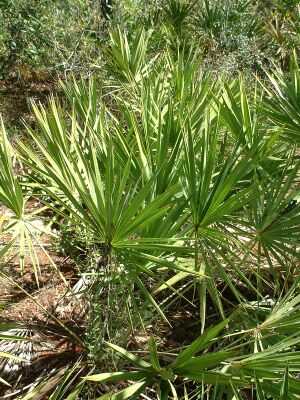
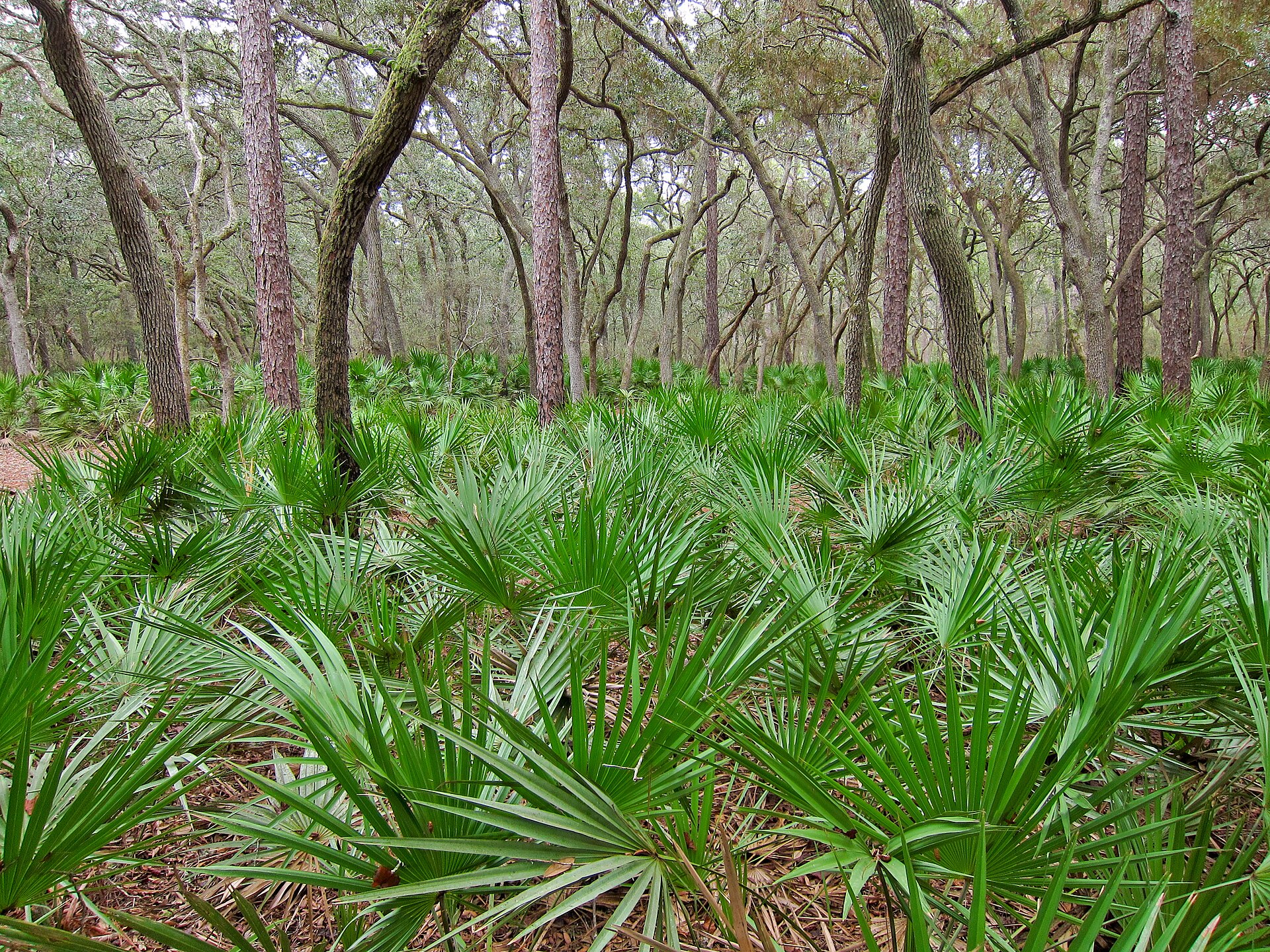
Saw palmetto is a low, sprawling palm with fan-shaped leaves on stems edged with sharp, saw-like teeth, which is where the name comes from and why you should wear gloves around it. It grows as a dense groundcover or low shrub, typically 3 to 6 feet tall, though old plants can be larger, and it spreads by underground stems to form thickets.
In spring it carries long, creamy-white flower spikes that smell faintly of honey and draw pollinators in droves, and by fall those become dark blue-black berries that bears, birds, and other wildlife eat. Its leaves stay green all year, which makes it a backbone groundcover for a native landscape.
Why this variety
Choose saw palmetto when you want a native groundcover that is truly tough: it handles sun, shade, drought, fire, salt, and poor sand, and it comes back after a burn or a freeze as if nothing happened. Few plants in Florida are as indestructible, and none of them look as much like Florida.
It is also a wildlife plant of the first rank. Its flowers feed pollinators, its berries feed wildlife through fall, and its thickets shelter birds and small animals. A saw palmetto thicket is a habitat, not just a groundcover, and a garden with one is a garden that works.
How to grow
Plant in sun to part shade in sandy, well-drained soil, in fall or spring. Dig a hole twice the pot width, water deeply, mulch, and give it room to spread. It is slow to establish in its first year, so water it through dry spells and do not judge it until its second year.
Prune only to remove dead leaves, and wear gloves and long sleeves: the saw teeth on the leaf stems are sharp and will scratch. Do not try to shape it into a formal hedge; its charm is its wild, sprawling habit.
Water & feeding
Water deeply once a week while it establishes, then water only in extended drought. Once rooted, saw palmetto is extremely drought tolerant and handles sandy soil that drains fast.
Feed with compost in spring if the sand is very poor. It does not need fertilizer, and in rich soil it grows faster but no better.
Common problems
Sharp leaf stems: the saw teeth are real. Wear gloves, long sleeves, and eye protection when you work around it, and do not plant it where children play or where you brush past it daily.
Slow establishment: saw palmetto can be slow in its first year. Water it, mulch it, and be patient; it will catch up in year two.
Spreading habit: it spreads by underground stems and can take more room than you planned. Give it a large bed, or edge it firmly if it must stay in bounds.
Berries and people: the berries are wildlife food and are harvested commercially for supplements, but this guide does not recommend harvesting them for personal use. Leave them for wildlife.
Harvest
There is no garden harvest. The harvest is groundcover that never needs mowing, flowers that feed pollinators, berries that feed wildlife, and a plant that survives fire, freeze, and drought without complaint.
If you want to enjoy the berries, enjoy them on the plant, where they feed the animals that depend on them in fall. A saw palmetto thicket in berry season, with birds working it, is the harvest.
Browse all plant & pest guides
Saving seeds
Saw palmetto seed is a test of patience — one of the slowest seeds in the garden, and worth understanding before you start. Collect the berries in late summer or fall, when they have turned dark purple-black and are fully ripe. Mash the berries in a little water, let the pulp float off, and save the hard seeds that sink. Rinse them and let them dry for a day.
The seed coat is the obstacle. It is hard and waterproof, and seed sown without treatment may sit for months before it sprouts — or never sprout at all. Scarify it: nick the coat with a file or sandpaper, taking care not to damage the embryo inside, and then soak the seeds in warm water for 24 to 48 hours. Then sow about an inch deep in a warm, well-draining mix and keep it moist and warm, around 70 to 85°F — research found the optimum near 95°F, though 70 to 85°F works well for home growers. Germination is slow and uneven: it can take anywhere from two to six months, and some seed takes longer, so do not give up on a pot at three months. Seedlings grow slowly at first — saw palmetto is a slow-growing plant, and it can take five to ten years to reach maturity — but they are tough once established.
Save seed from a healthy plant with good form, and sow more than you need — germination is uneven, and a generous sowing is the practical approach. Saw palmetto seed stays viable for several years when it is dry, so you can hold seed over winter without worry. And a note on where the seed comes from: saw palmetto berries are a wildlife food and a regulated harvest in Florida, so save seed from plants on your own property, not from wild stands, and never strip a wild plant bare.
In Florida, saw palmetto is in its element: it is the low, fan-leaved palm that holds the landscape together, and it tolerates sun, shade, drought, salt, and neglect. Start seedlings in pots with a sandy mix and plant them out once they are sturdy, in a spot with room to spread. And give it time: a saw palmetto grown from seed is a plant for the long haul, not for next season.