
🌾 Fakahatchee Grass
What it looks like
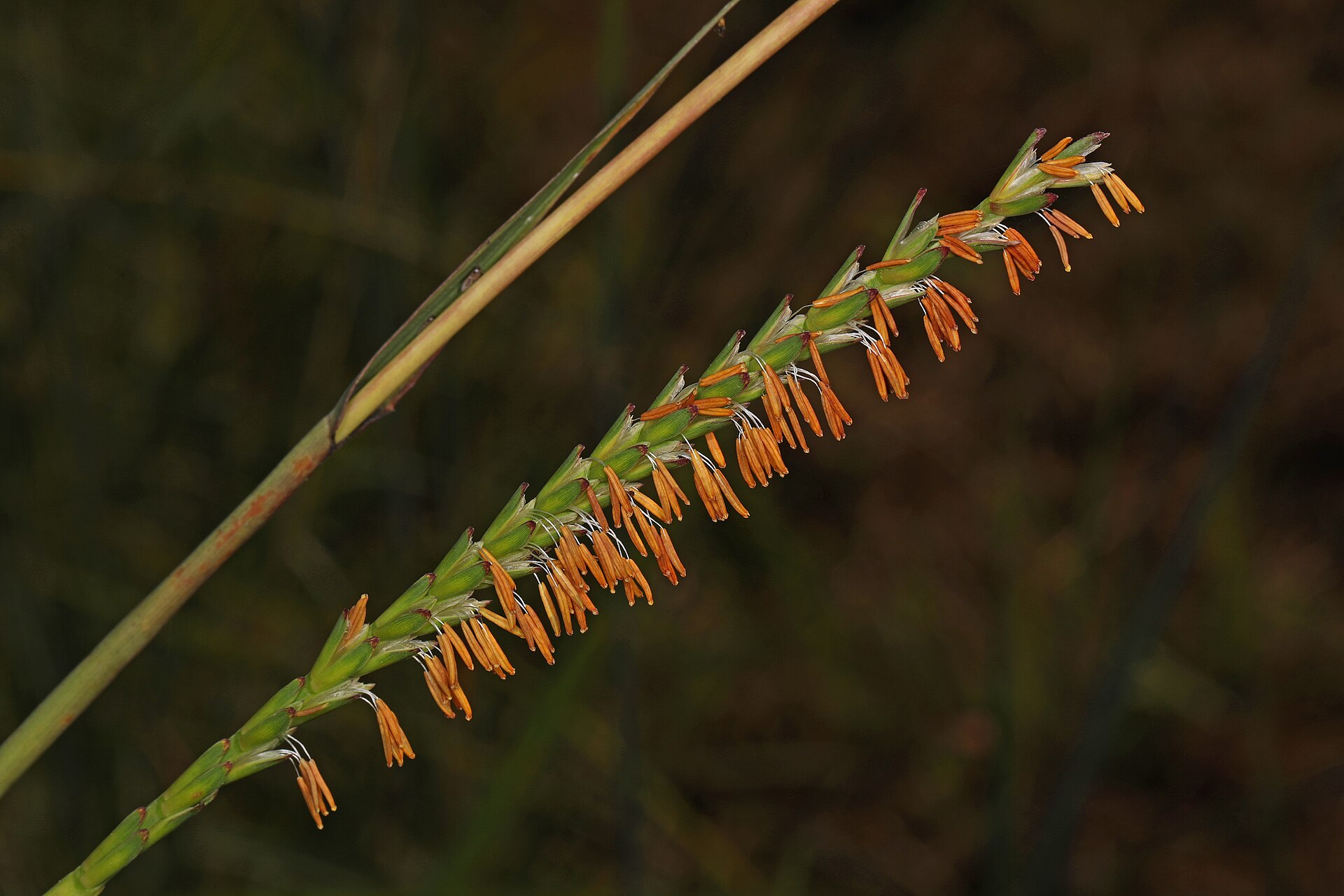
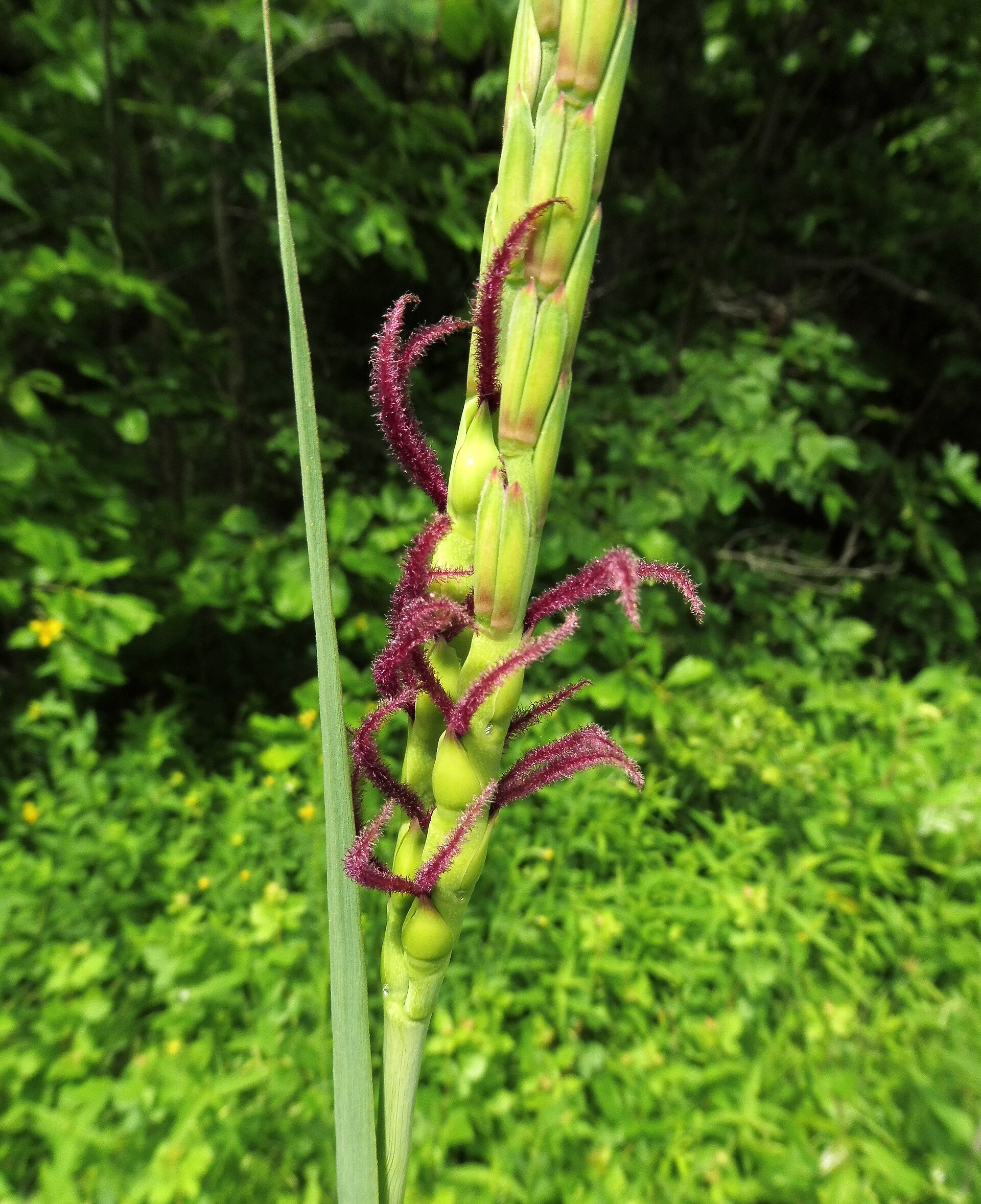
Fakahatchee grass, also called eastern gamagrass, is a large, clumping grass with broad, arching leaves and tall seed spikes that rise above the foliage in summer and fall. It grows as a bold clump, typically 5 to 6 feet tall and wide, with a coarse texture that reads as tropical even though it is a native grass of wet meadows and stream banks.
Its leaves are wide for a grass, almost bamboo-like, and they turn tan in winter before regrowing in spring. It does not run: it stays in a clump, which makes it a specimen or a backdrop rather than a groundcover, and it looks best where it has room to be big.
Why this variety
Choose Fakahatchee grass when you want a native grass with presence, not a wispy ornamental. It anchors a large bed, screens a view in summer, and gives birds seed in fall, all without the invasive habit of pampas grass or miscanthus.
It is also a wet-soil grass that tolerates moist ground and rain garden conditions, which makes it useful where muhly grass would sulk. A grass that likes a little extra water is a gift in a Florida garden with a low spot.
How to grow
Plant in full sun in moist to average soil, in fall or spring. Dig a hole twice the pot width, water deeply, mulch, and give it 5 to 6 feet of room. It grows fast in its first year if it gets water, and it will reach full size by its second year.
Cut it back to a few inches in late winter before new growth starts, and it will regrow cleanly. Do not cut it in fall: the tan winter foliage looks good, and the seed heads feed birds through winter.
Water & feeding
Water deeply once or twice a week while it establishes, and water in dry spells. Fakahatchee grass likes moisture and will grow lushest with even water, though it tolerates short dry spells once rooted.
Feed with compost in spring. In rich, moist soil it grows vigorously, and in poor sand it will be smaller and less lush, so compost is the difference between a good clump and a great one.
Common problems
Too large for a small bed: this is a 6-foot grass. If you plant it in a 3-foot bed, you will be cutting it back all summer. Give it room from the start.
Winter dormancy: it goes tan and dormant in winter. This is normal, not death. Wait until late winter to cut it back, and do not dig it up in February.
Dry soil: in very dry sand, Fakahatchee grass will be smaller and less lush. Give it the moistest spot you have, or water it in dry spells.
Self-seeding: it can seed into nearby beds. Pull seedlings where you do not want them, or cut the seed heads before they drop if you want a tidier garden.
Harvest
There is no edible harvest. The harvest is structure: a big, bold clump that anchors a bed, screens a view, and gives birds seed in fall, all with one annual cutback.
Cut seed stems for dried arrangements in fall if you like, but leave most of them for the birds. A Fakahatchee grass clump in full seed, with birds working it, is the garden at its most alive.
Saving seeds
Fakahatchee grass gives you a choice that most ornamental grasses do not bother to offer: seed or division, and the honest answer is that division is the faithful route and seed is the adventurous one. The clump you already own is a known quantity, its size, its arch, its vigor in your exact soil, and a spring division hands you that exact plant again. Seed hands you its children, which will be Fakahatchee grass in every way that matters and not quite your plant in any way you could predict. Decide which question you are asking before you reach for the seed heads.
Collect in fall, when the tall seed spikes have matured and the seed-bearing joints begin to break apart. Cut whole spikes into a paper bag, dry them fully indoors for a week or two, then rub and thresh them over a tray to free the seed and winnow away the chaff. A grass spike ripens unevenly, so keep the plumpest, heaviest seed and discard the light, papery remainder. Dry the cleaned seed thoroughly, and store it airtight with a desiccant packet in a cool, dark place until sowing time.
The seed coat is the gatekeeper. Fakahatchee grass seed carries natural dormancy behind a hard coat, and sowing it straight into warm soil and hoping is the slowest route to disappointment. The reliable method is cold, moist stratification: mix the seed with damp sand or vermiculite, refrigerate it for roughly six to ten weeks, a range the seed trade agrees on, and sow in spring once the soil is warm. Alternatively, sow in late fall and let a real winter do the work, which is elegant everywhere except Florida, where winter is more of a rumor than a season, so fridge stratification is the Florida gardener’s friend. Sow about half an inch to three-quarters of an inch deep in moist soil, keep the bed consistently moist for the first month or so after emergence, and expect germination over two to four weeks once dormancy breaks, with a full season needed before the new plants look like more than enthusiastic tufts.
Division, for completeness, is simple and spring-timed: lift the clump, split it with a sharp spade or saw, replant the divisions at the same depth with room to reach full size, and water them in well. Small divisions do better potted up and grown on in light shade until they are clearly growing away. If your plant was sold as dwarf Fakahatchee, check its identity before you save seed from it, because the dwarf plant in the trade is usually a different species, Florida gamagrass, rather than a compact form of this one, and its seed will not give you the big bold clump this guide describes. No sterile-cultivar caveat applies to standard Fakahatchee grass itself: it sets real, viable seed, which is why the self-seeding note in this guide exists at all, so pull volunteers where you do not want them, or cut the spikes before they drop if you want a tidier garden.
The Florida notes are mostly good news. This is a Florida native grass, at home in wet meadows and along sloughs, so there is no chill-zone apology to make and no warning about it escaping into wild places it does not belong. Leave most of the seed spikes standing through fall and winter for the birds, the cheapest bird feeder you will ever run, and save seed from only a spike or two. Its kinship with corn is a fun fact, not a garden crossing risk worth policing.