
🌾 Sand Cordgrass
What it looks like
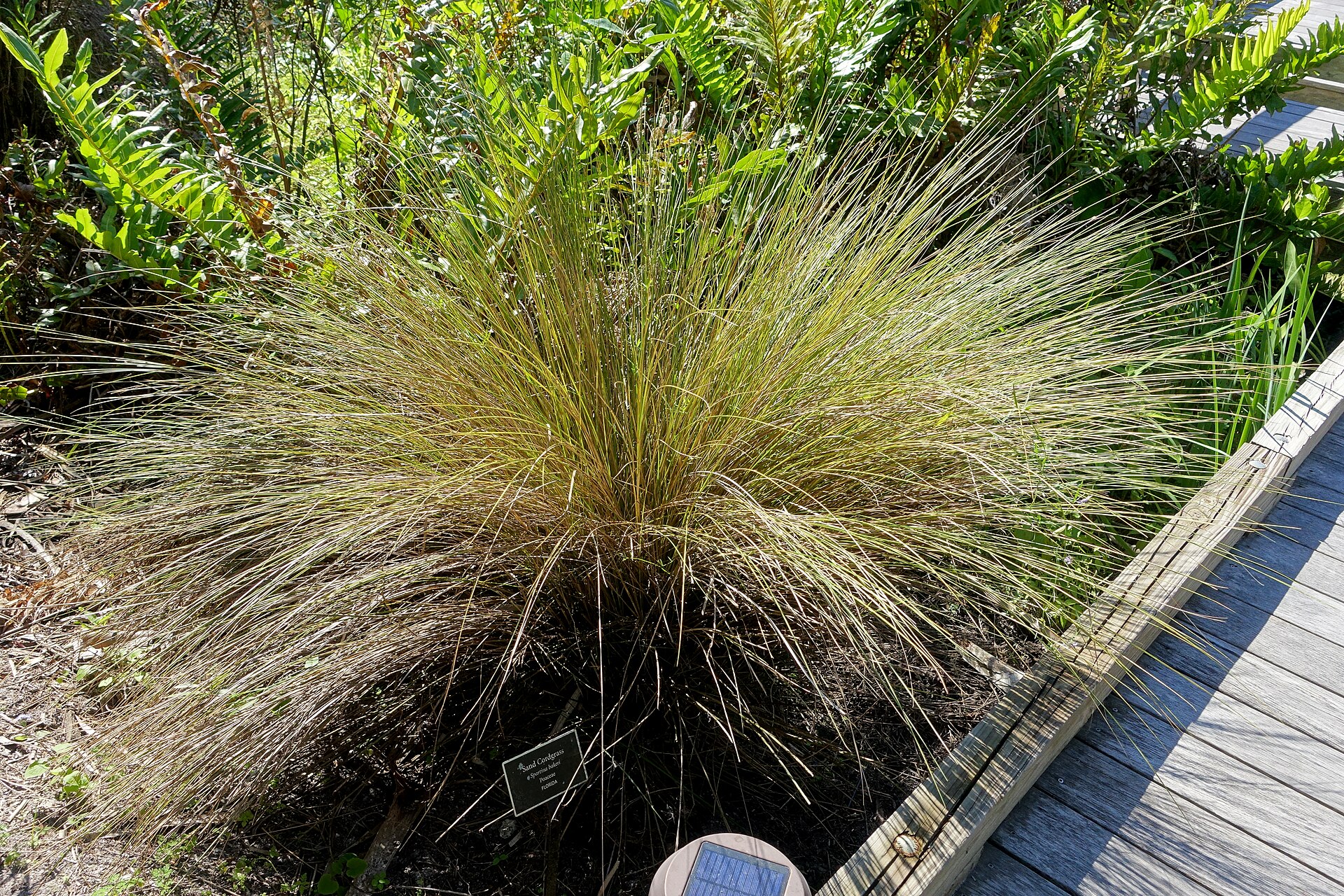
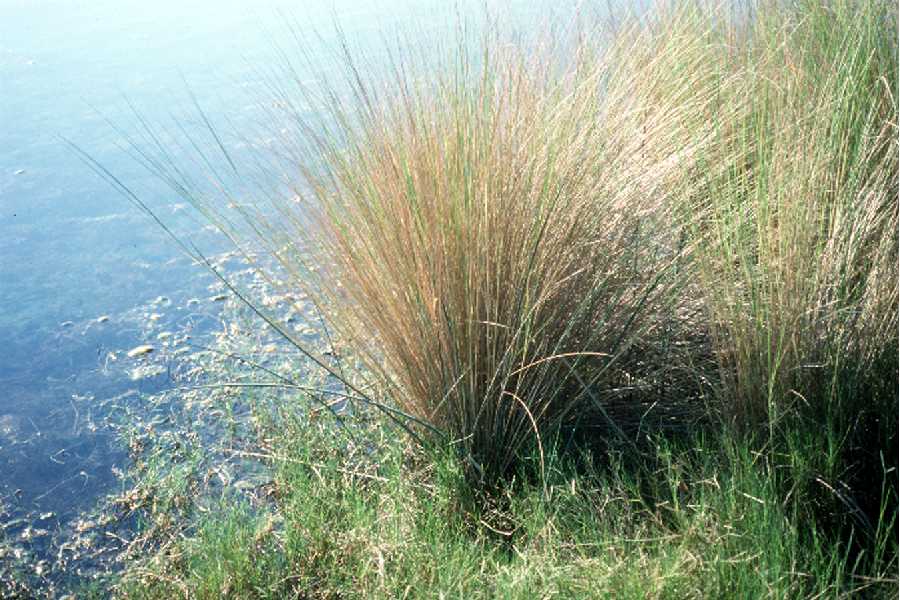
Sand cordgrass is a fine-textured, fountain-shaped grass with wiry, arching leaves that form a vase-shaped clump, typically 4 to 5 feet tall and 3 feet wide. In fall it carries airy seed plumes that catch the light, and in winter its foliage turns tan and gold before regrowing in spring.
It looks delicate, but it is tough: it grows in both wet and dry conditions, in sand, in swales, in rain gardens, and along waterfronts, and it tolerates salt and wind. A grass that is happy in a swale and happy on a dry slope is a grass you can plant almost anywhere in a Florida yard.
Why this variety
Choose sand cordgrass for the problem spots: the swale that floods, the rain garden that dries out between storms, the waterfront edge that gets salt spray, or the sandy slope that nothing else likes. It handles the swing between wet and dry better than almost any other native grass.
It is also a fine-textured alternative to the coarser ornamental grasses, giving you movement and plumes without the bulk of pampas grass or the invasive risk of miscanthus. In a mass planting, it reads like a field of fountain grass, and it does it as a native.
How to grow
Plant in full sun in sandy soil that ranges from wet to dry, in fall or spring. Dig a hole twice the pot width, water deeply, mulch, and space plants 3 to 4 feet apart for a mass planting. It establishes quickly and reaches full size by its second year.
Cut it back to a few inches in late winter before new growth starts. Do not cut it in fall: the winter plumes and tan foliage look good, and the seed heads feed birds.
Water & feeding
Water deeply once a week while it establishes, then water only in extended drought. Sand cordgrass tolerates both wet and dry soil once rooted, but it looks best with even moisture in its first year.
Feed with compost in spring. In poor sand, compost helps it establish, but once it is rooted it needs little feeding.
Common problems
Winter dormancy: it goes tan in winter. This is normal. Wait until late winter to cut it back.
Too dry in deep sand: even a tough grass needs water to establish. Water it through its first dry season, and do not judge it until year two.
Spreading in wet soil: in very wet soil, sand cordgrass can spread more than expected. Edge it if it must stay in bounds, or let it naturalize in a rain garden where spreading is welcome.
Confusion with smooth cordgrass: sand cordgrass (Spartina bakeri) is the upland and freshwater garden species; smooth cordgrass (Spartina alterniflora) is the salt-marsh species. Buy by the scientific name.
Harvest
There is no edible harvest. The harvest is movement: a fountain of fine leaves that sways in wind, plumes in fall, and gold in winter, all with one annual cutback.
Cut plumes for dried arrangements in fall if you like, but leave most of them for the birds and for winter interest. A mass of sand cordgrass in fall light is worth more in the garden than in a vase.
Browse all plant & pest guides
Saving seeds
Sand cordgrass seed is easy to save — the plant makes it in abundance, and it practically falls into your hand. After the flowers fade in fall, the seed heads dry and turn tan, and the seeds ripen inside them. When the heads are dry and papery, snip them into a paper bag and let them finish drying indoors. Rub the heads gently to free the small seeds, winnow away the chaff, and store the seed in a paper envelope in a cool, dry place. Sand cordgrass seed keeps for a few years when it is dry.
Sow in spring, when the weather is warm. Sand cordgrass seed germinates best around 70 to 80°F, so sow on the surface of a moist mix and press the seed in lightly — do not bury it, since the seed needs light to germinate. Keep it moist and warm, and expect sprouts in one to three weeks. Seedlings grow fast once they are up, and they can be planted out once they are sturdy. Sand cordgrass self-seeds freely in wet and dry spots alike, so a patch you plant once will often spread on its own.
The honesty part is short: division is the faster and more reliable route for most gardeners. Sand cordgrass spreads by rhizomes, and a clump dug up in spring and divided into pieces, each with some root attached, is a true copy of the plant you loved — and it establishes faster than a seedling. Seed is for the experiment, for a large planting, and for the gardener who wants a lot of plants cheaply.
Save seed from a healthy plant with good form and heavy flowering, and sow more than you need. In Florida, sand cordgrass is in its element: it is a native grass for wet spots, dry spots, swales, and everywhere in between, and it tolerates salt, drought, and neglect. Start seedlings in pots and plant them out once they are sturdy, and dry your seed thoroughly before storing it, because our humidity is the enemy of stored seed.