
🏮 Thompsonii Chinese Lantern
Why this variety
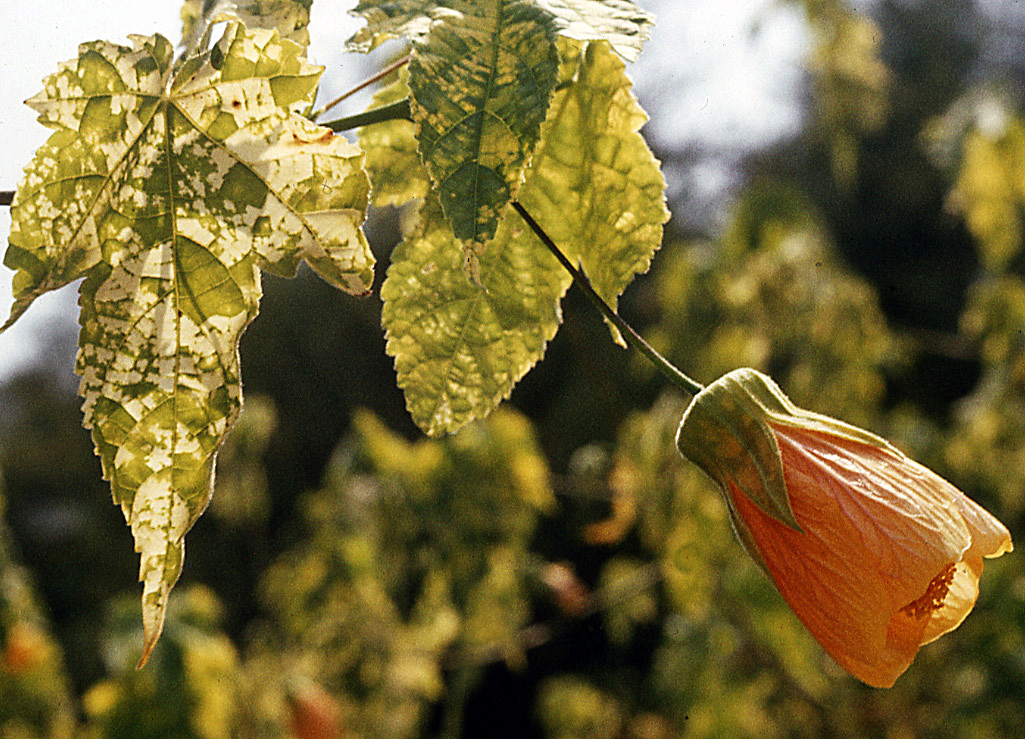
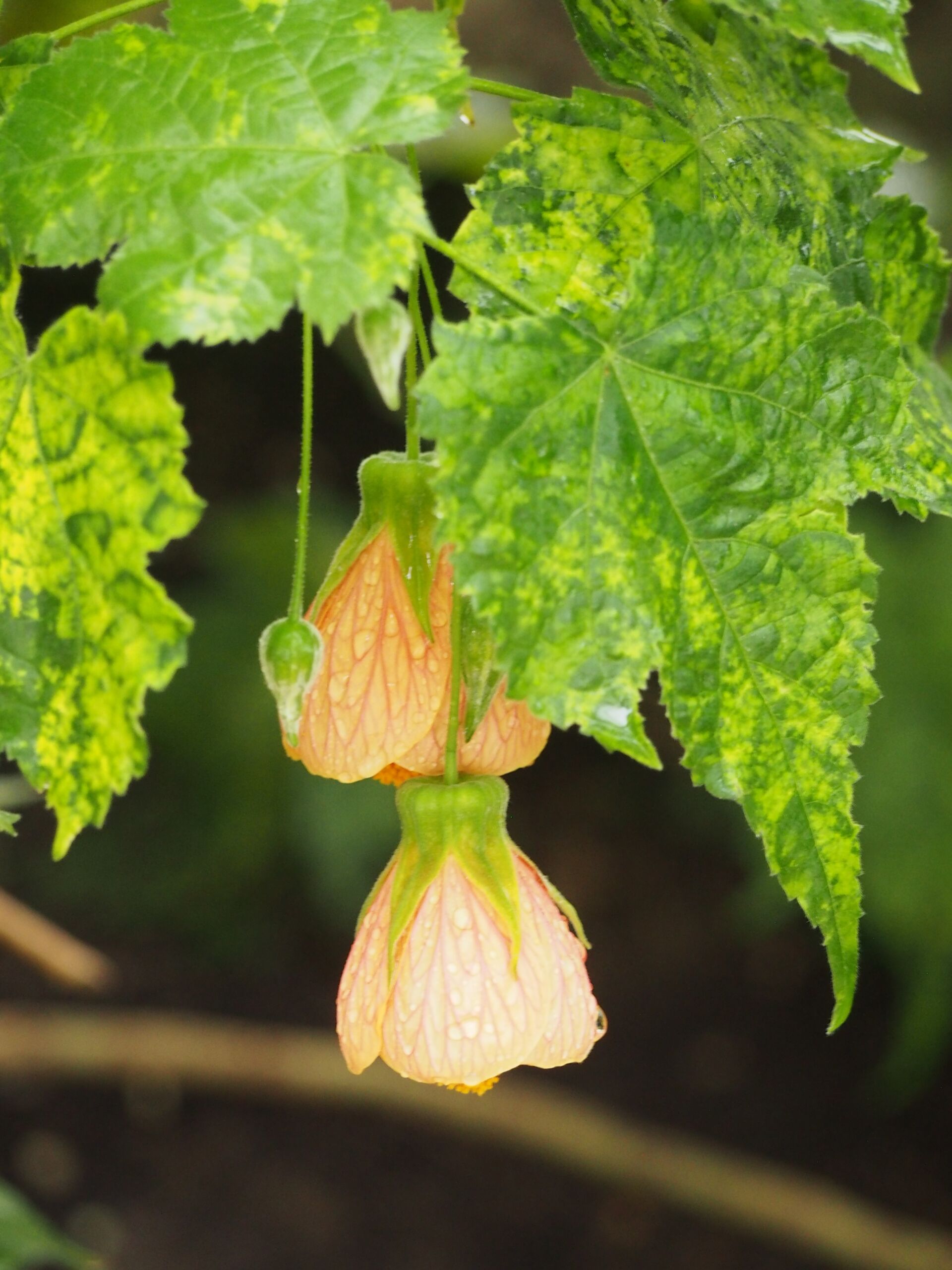
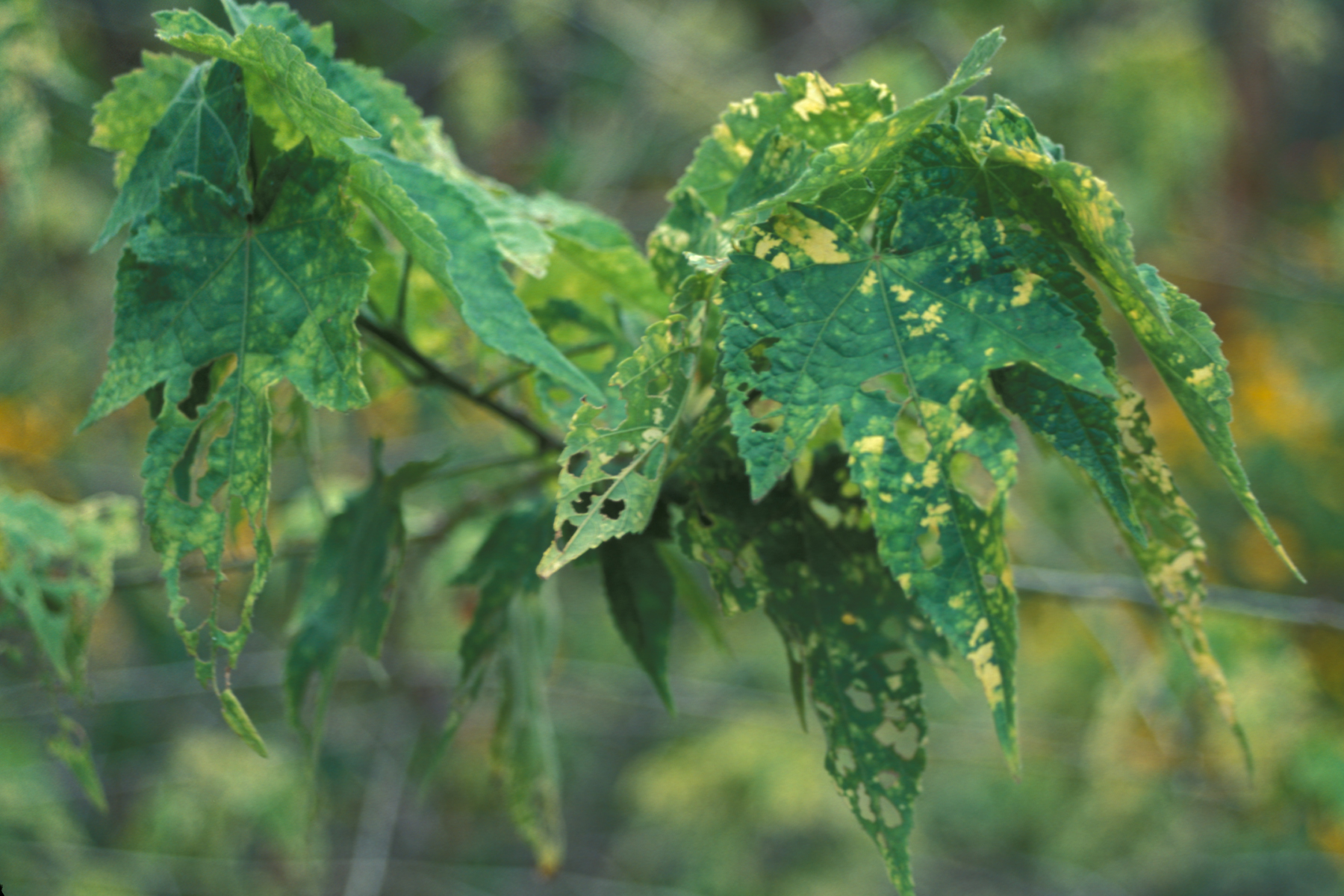
Thompsonii is the grand old variegated flowering maple, and it has been stealing the show since the Victorians put it in their conservatories. The leaves are the point: dark green, maple-shaped, 5–7 lobes, and splashed and speckled with soft yellow as if somebody flicked a paintbrush at them. Then, spring through fall, it hangs out salmon-orange to salmon-pink bells, veined in red, that hummingbirds and butterflies queue up for. It is a vigorous, upright, evergreen shrub, 6–10 feet tall and nearly as wide if you let it have its way, though it is usually seen a bit smaller in gardens and it takes happily to a pot.
Here is the honest part, and it matters: that yellow splash is not a pigment trick bred into the leaf. It is abutilon mosaic virus, doing what the University of Hawaiʻi bulletin calls a “beneficial plant disease” — the virus mottles the leaves and, unusually, barely bothers the plant otherwise. Growth, vigor, and flowering carry on more or less normally. So Thompsonii is a plant you grow with your eyes open: you are deliberately growing a virus-infected ornamental, and that is a trade the gardening world has made for over 150 years, ever since Harry James Veitch named it in 1868. It also holds the Royal Horticultural Society’s Award of Garden Merit, which is the gardening world’s way of saying the trade is worth it.
The name tag is a tangle, and this guide will not pretend otherwise. Nurseries list it under Abutilon pictum, under Abutilon striatum, and under Callianthe striata (the 2012 reclassification of the genus). If your plant tag says any of those with ‘Thompsonii’ on it, you have the same plant. What it is not is a maple: no Acer blood, no winged seeds, no autumn maple show. The leaves just look the part.
How to grow
Plant Thompsonii where it gets morning sun and afternoon shade — in Florida, that afternoon shade is not optional politeness, it is sunburn prevention. Variegated leaves scorch faster than green ones because the yellow patches carry less chlorophyll and less protection. A spot against a warm wall, under high shade, or on a patio in a large container all work. In zones 9–10 it lives outdoors year-round; in zone 8, tuck it against a sheltered wall and be ready to cover it on frost nights; anywhere colder, grow it in a pot and bring it into a bright, cool room for winter, watering sparingly until spring.
Give it rich, fertile, moist but well-drained soil — sandy loam with plenty of compost is ideal, and it tolerates loam and clay as long as water never stands around the roots. Plant at the same depth it sat in its pot, water it in deeply, and mulch 2–3 inches to hold moisture. Space plants 3–4 feet apart if you want a loose hedge or screen; give a specimen the full 6–8 feet of elbow room it will eventually want. It is fast-growing, so do not plant it sulking in a corner and expect it to stay small — plan for the shrub it intends to be.
Prune for shape, not for punishment. Thompsonii blooms on new growth, so a selective cut-back in late winter or early spring — taking out rangy stems just above a node or a strong shoot near the base — keeps it bushy and flowering hard. It also espaliers beautifully against a wall if you are the patient type. Take stem cuttings for propagation: cuttings keep the parent’s variegation, while seed will not grow true and may give you a plain green seedling, which rather defeats the purpose.
Water & feeding
Water freely in the growing season and sparingly in winter. The rule is simple: evenly moist, never soggy, never bone-dry. In a Florida summer that usually means deep watering whenever the top inch of soil feels dry, and more often for containers, which dry out fast on a hot patio. Drought stress shows up as wilting and dropped buds; waterlogging shows up as yellow leaves and root rot, and root rot is the one that actually kills abutilons. If your soil is heavy clay, plant high and mix in compost and coarse material so water moves.
Feed like you mean it during spring through fall: this is a heavy bloomer, and in a container it eats through its potting mix fast. A balanced liquid feed every two weeks in the growing season, or a slow-release granular feed in spring with a midsummer top-up, keeps the bells coming. Ease off fertilizer if you see “reversion” shoots — fast-growing, all-green branches that outrun the variegated ones. Snip those out at their base; left alone, they can take over the plant, and you will have bought a variegated shrub and grown a green one.
Common problems
Whiteflies are the pest to watch, and not just because they suck sap and leave sticky honeydew: they are the insect vector that spreads abutilon mosaic virus to other mallows. If you grow hibiscus, okra, or other Malvaceae nearby, keep whitefly numbers down with strong water sprays, yellow sticky traps, and by not letting plants get stressed and dusty. Aphids, spider mites, mealybugs, and scale show up too, especially on plants kept indoors or in still, warm air — the same water-spray-and-patience routine handles most of them, and a horticultural oil spray handles the stubborn ones.
The mosaic itself is not something to “cure” — it is the plant’s signature, and trying to spray it away is like trying to iron a tattoo out. What you manage is spread: do not take cuttings from a plant whose mottling has suddenly changed character, and do not compost prunings where they can harbor whiteflies next to susceptible plants. Beyond that, the classic abutilon complaints are cultural: leaf scorch from harsh afternoon sun, bud drop from drought or a sudden cold snap, and legginess from too little light. All three are fixed by moving the plant or fixing the water, not by reaching for a bottle.
Frost is the hard limit. Thompsonii is damaged below freezing, and a hard freeze can kill it outright outdoors. That is why the zone guidance is honest rather than heroic: zones 9–10 outdoors, zone 8 only with a warm wall and a frost blanket on standby, and a pot everywhere else. A plant that survives winter in a pot on a bright windowsill beats a plant that dies bravely in the ground every time.
Harvest
There is no harvest to schedule here, unless you count cutting stems for the vase — and honestly, a stem of Thompsonii in flower, with those splashed leaves and hanging bells, is one of the better things you can bring indoors. The flowers are edible, as abutilon bells generally are, with a mild, slightly sweet taste that looks far fancier than it tastes, which is exactly right for a garnish. Pick fresh bells in the morning, rinse gently, and use them the same day.
The real “harvest” is the show itself: bells from spring through fall, nearly year-round where winters stay frost-free, on a shrub that looks good even when it is not blooming because the foliage does the work. Deadhead spent bells if you are tidy-minded, though the plant will keep flowering without your help. In Florida, the payoff window runs longest in the southern part of the state; in the north, treat the first frost as the curtain call and move containers under cover.
Browse all plant & pest guides
Saving seeds
Thompsonii is the grand old variegated flowering maple, stealing the show since the Victorians put it in their conservatories: dark green, maple-shaped, 5–7-lobed leaves splashed and speckled with soft yellow as if somebody flicked a paintbrush at them, then, spring through fall, salmon-orange to salmon-pink bells, veined in red, that hummingbirds and butterflies queue up for. It is a vigorous, upright, evergreen shrub, 6–10 feet tall and nearly as wide. But it is a variegated form of Abutilon pictum — sold as Callianthe picta ‘Thompsonii’ — not a seed strain: seed saved from your own plant will give you flowering maples, but the yellow splash is a variegation that seed does not reliably repeat, and green seedlings are the usual result. To keep this exact plant, propagate it from cuttings instead of from seed. The full method is in the Saving seeds section of the Abutilon guide.