
🏮 Gold Dust Chinese Lantern
Why this variety
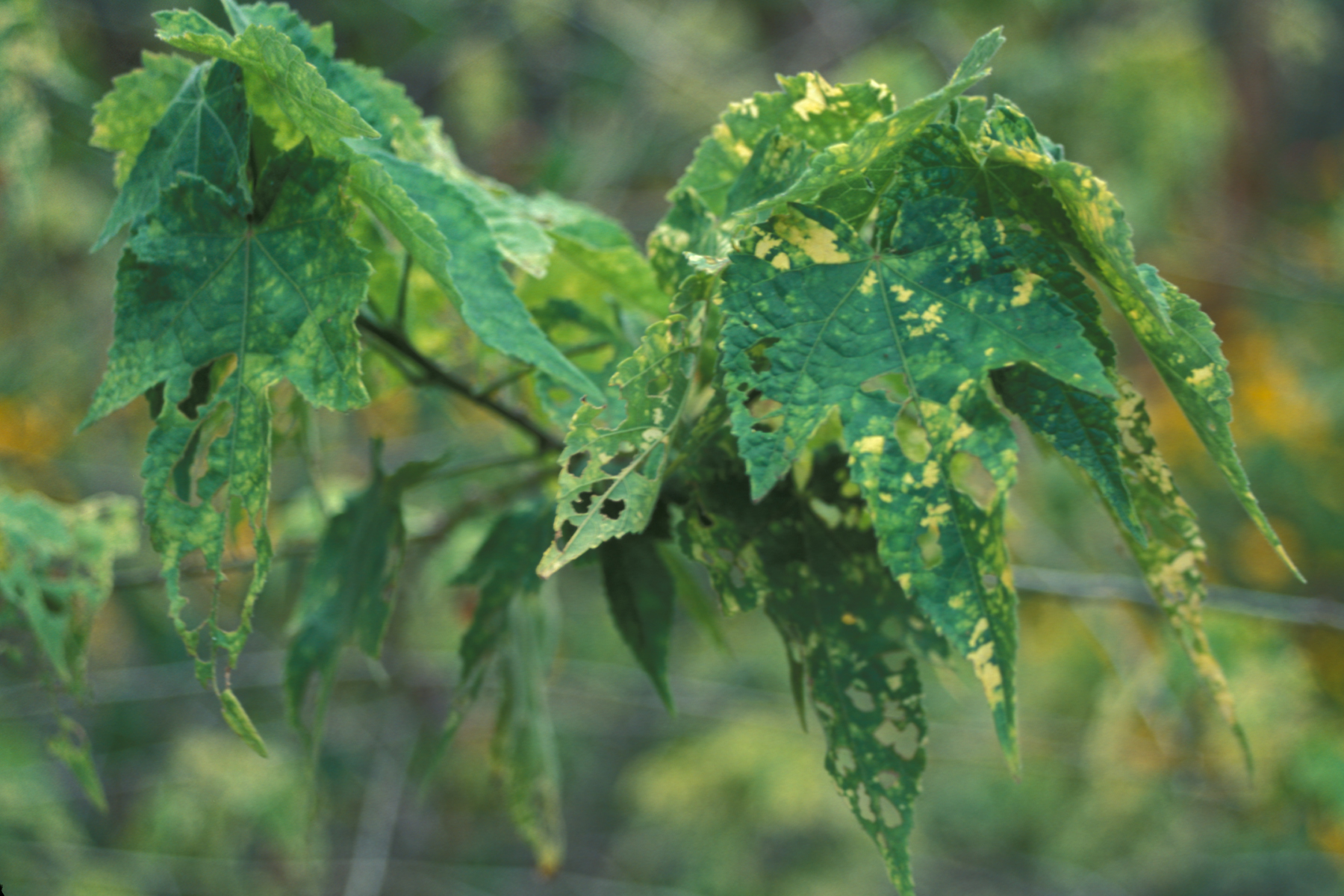
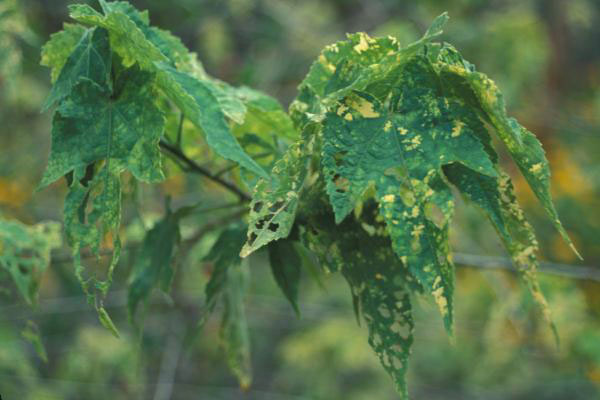
Gold Dust is the quieter sibling in the variegated abutilon family: light green leaves mottled and dusted with dark gold, and orange flowers that glow against the foliage like lanterns at dusk. Where Thompsonii splashes its yellow boldly across dark green, Gold Dust works in a softer palette — pale green, gold dust, orange bells — and the effect in a shady corner is less “look at me” and more “wait, what is that beautiful thing over there?” It grows as a shrub 4–8 feet tall, upright and branching, and it suits a container on a patio just as well as a shrub border.
Now the honest part, because this guide does not sell a mystery: Gold Dust’s gold dust is abutilon mosaic virus, the same story as Thompsonii’s splash. The University of Hawaiʻi bulletin (PD-39) is explicit — in Hawaiʻi, growers sell mosaic-infected Abutilon striatum plants as “variegated abutilon” or under the variety name ‘Gold Dust’, and the yellow patches are sharply delimited by the leaf veins, giving them an angular, mosaic look. The plant tolerates its passenger remarkably well: growth, vigor, and flowering carry on, which is why the trade has persisted. But you should know what you are growing, and you should keep whiteflies — the virus’s insect couriers — under control, especially if hibiscus or other mallows grow nearby.
Taxonomy, as with all these plants, is a moving target: Gold Dust is listed under Abutilon pictum and under Abutilon striatum (now Callianthe striata in the 2012 revision). Nursery tags disagree with each other; the plant does not care. And the “flowering maple” name is a leaf-shape compliment, not a family tree — no Acer in this plant at all.
How to grow
Give Gold Dust what all abutilons want: morning sun and afternoon shade, rich and moist but well-drained soil, and shelter from frost. In Florida, afternoon shade is the difference between gold-dusted leaves and scorched ones — variegated foliage burns faster than green foliage, so a spot under high shade, on the east side of a house, or in a large container you can shift with the seasons is ideal. Zones 9–10 outdoors year-round; anywhere colder, pot it up and overwinter it in a bright, cool room, watering sparingly.
Plant at pot depth, water in deeply, and mulch 2–3 inches to hold moisture. Space 3–4 feet apart in a border; a specimen wants 4–6 feet of room to fill out. Prune selectively in late winter or early spring, cutting rangy stems just above a node, to keep it bushy — it blooms on new growth, so a spring haircut is a flowering investment, not a punishment. Propagate by stem cuttings only: cuttings carry the variegation, while seed will not grow true and will likely give you a plain green plant.
Gold Dust is a good container plant, and containers solve two Florida problems at once: drainage (you control the mix) and frost (you can move the pot). Use a rich potting mix with good drainage, a pot with real drainage holes, and do not let it sit in a saucer of water — abutilons forgive a missed watering far sooner than they forgive wet feet.
Water & feeding
Keep the soil consistently moist but never waterlogged: water when the top inch feels dry, deeply enough that water runs from the drainage holes, then let it drain. In a Florida summer, containers may need water daily; in-ground plants need deep watering in dry spells. Drought shows as wilting and bud drop; overwatering shows as yellowing leaves and, at worst, root rot. If you are unsure which one you have, check the soil before you reach for the hose — most abutilon deaths are drownings, not droughts.
Feed through the growing season, because a plant that blooms spring through fall is working hard. A balanced liquid feed every two weeks, or slow-release granular feed in spring with a midsummer top-up, keeps the bells coming. Watch for reversion shoots — fast, all-green branches that outgrow the variegated ones — and cut them out at their base. Left alone, a reverted branch can take over the shrub, and you will have a perfectly healthy green abutilon where your Gold Dust used to be.
Common problems
Whiteflies lead the pest parade, and with Gold Dust they matter twice over: they suck sap and they spread the mosaic virus to other mallows. Knock them down with strong water sprays and sticky traps, and keep plants unstressed and well-watered so they are less attractive to begin with. Aphids, spider mites, mealybugs, and scale also visit, especially indoors or in still air — horticultural oil handles the stubborn cases.
The mosaic pattern itself is not a problem to fix; it is the cultivar. What you manage is everything around it: whitefly numbers, reversion shoots, sun scorch, and frost. Leaf scorch means too much afternoon sun — move the pot or add shade. Bud drop means drought, a cold snap, or a sudden move — stabilize water and wait. Leggy growth means too little light — shift toward morning sun. Frost damage means you gambled on the zone and lost — cut back damaged stems in spring and let it regrow from the base if the roots survived.
Harvest
Gold Dust’s harvest is ornamental: cut stems of gold-dusted leaves and orange bells for indoor arrangements, where they last well in water and look far more exotic than the effort involved. The bells are edible, like other abutilon flowers — mild and slightly sweet, best picked fresh in the morning and used the same day as a garnish. Do not expect a crop; expect a show, spring through fall, with the foliage carrying the quiet months.
Deadheading is optional — the plant keeps blooming without it — but a light tidy-up after each flush keeps the shrub shapely. In the southern part of the state the show runs nearly year-round; further north, the first frost ends the season, and container plants come under cover to wait out winter.
Browse all plant & pest guides
Saving seeds
Gold Dust is a variegated Abutilon pictum cultivar, and variegated abutilons are propagated by cuttings — seedlings won’t hold the gold-dusted leaves. The Saving seeds section of the Abutilon guide covers seed for the species generally.