
Black Cherry (Prunus serotina)
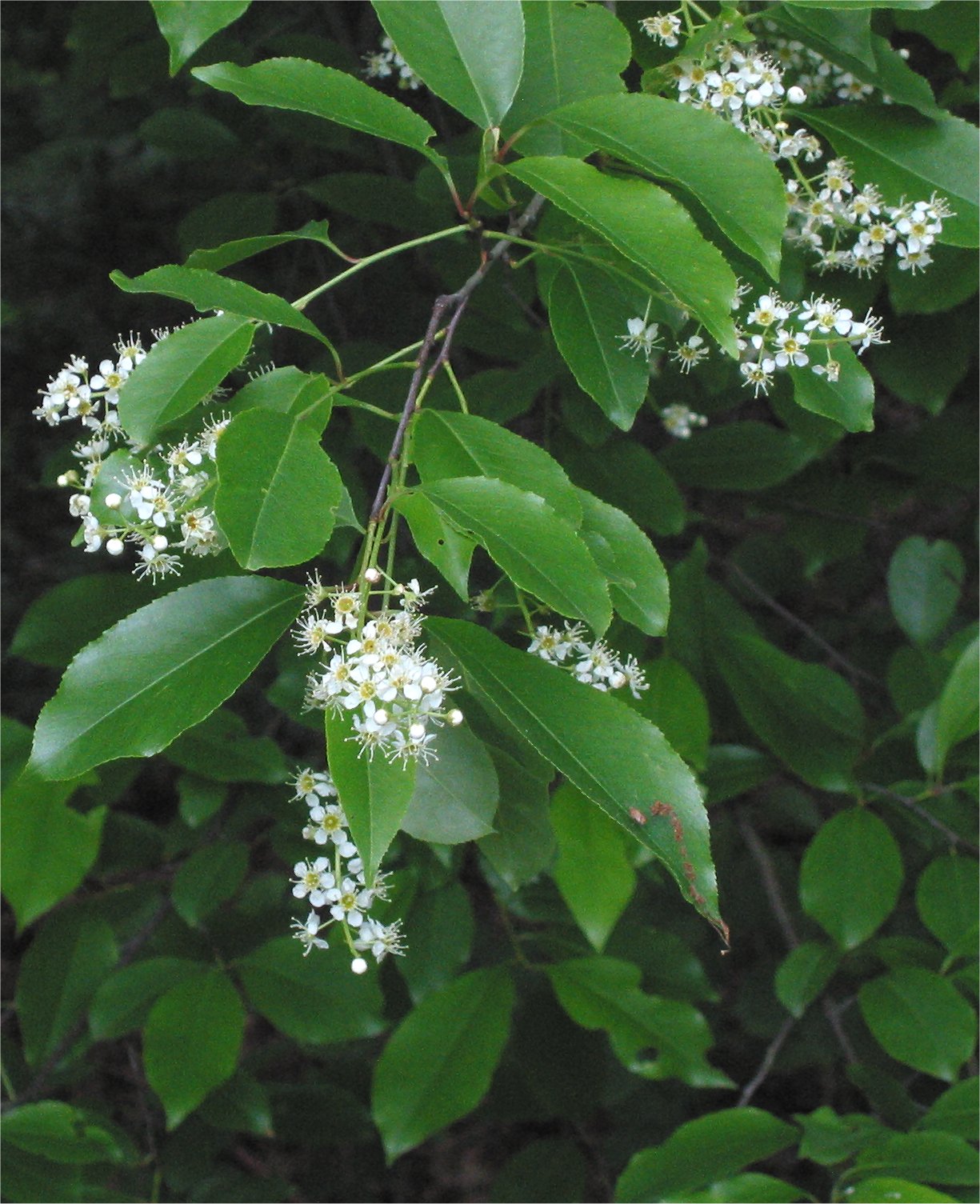

Quick Facts
- Type: tree
- Size: 40-60 ft tall
- Sun: full
- Water: moderate
- Soil: Well-drained soils
- USDA zones: 7-9
Spring bee flowers, summer bird cherries, and host to tiger swallowtail caterpillars.
Fast-growing North Florida native; the fruit is for wildlife – tart enough to pucker a person.
In the Landscape
A fast-growing native cherry with fragrant spring flower clusters and dark bark. Good for quick canopy and wildlife plantings on larger lots. Keep away from livestock areas — wilted leaves are toxic to grazing animals.
Care & Propagation
Plant in fall, 20-30 feet from structures. Adaptable and fast. Short-lived for a tree (often 30-50 years in landscapes) — plan successors. Tent caterpillars may defoliate it some springs; the tree almost always recovers.
Seeds need cold stratification; sow in fall. Fast-growing from seed; seedlings pop up readily under mature trees.
Wildlife Value
Fruits feed dozens of songbird species, turkeys, and mammals. A top-tier caterpillar host — over 400 butterfly and moth species use wild cherries, making it one of the most important bird-food trees in the East.
🌱 Fun fact: Black cherry wood is the prized cabinet wood of American furniture — rich red-brown and beautifully grained. Your fast-growing backyard cherry is standing furniture-grade timber.
← Browse all Florida native plants
🌴 In Florida
Fast-growing North Florida native; the fruit is for wildlife – tart enough to pucker a person.
🌿 Keep exploring
More Florida natives worth meeting:
🪱 Your Soil Needs This
Reading about healthy soil is great. Growing in it is better. Our small-batch, traceable worm castings are the shortcut your garden deserves.
Shop Worm Castings Subscribe & SaveEvery bag comes with a lot certificate. Know what's in your soil.