
Stokes' Aster (Stokesia laevis)
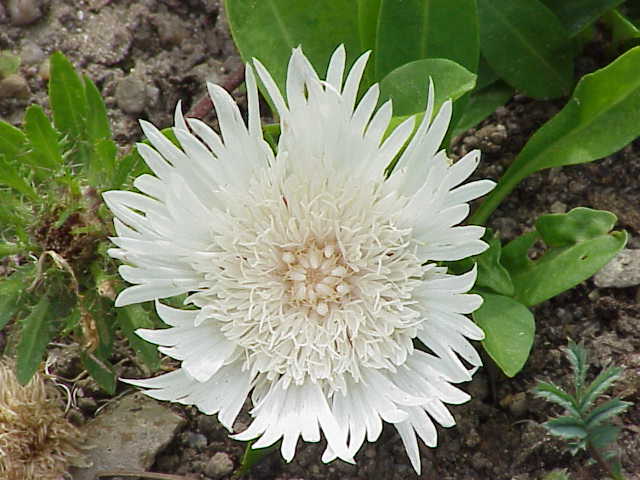

Also known as: Stokes aster
Quick Facts
- Type: wildflower
- Size: 12-24 in tall
- Sun: full
- Water: moderate
- Soil: Moist, sandy to loamy soils
- USDA zones: 8-10
Cornflower-blue blooms the size of silver dollars appear in early summer above tidy evergreen rosettes.
One of the best-behaved native perennials for beds and borders; divide every few years and it stays put.
In the Landscape
One of the best-behaved natives for formal-ish beds, borders, cottage gardens, and even large containers. Works well in mixed wildflower and butterfly plantings.
Care & Propagation
Plant in full sun to light shade in soil that stays evenly moist but drains; it dislikes standing water. Deadhead spent blooms to extend the show, and divide every few years — it can spread into generous clumps. Evergreen through mild winters.
Propagate by division in fall or early spring, or from seed sown in fall. Divisions establish quickly and bloom the same season.
Wildlife Value
Attracts a variety of bees, wasps, and butterflies with its big summer blooms; birds may pick at the seed heads.
🌱 Fun fact: Stokes' aster stands alone: it is the only species in its entire genus, making it a monotypic plant. The genus was named for Jonathan Stokes, an English botanist of the late 1700s.
← Browse all Florida native plants
🌴 In Florida
One of the best-behaved native perennials for beds and borders; divide every few years and it stays put.
🌿 Keep exploring
More Florida natives worth meeting:
- Alligator Flag (Thalia geniculata)
- American White Waterlily (Nymphaea odorata)
- Anisescented Goldenrod (Solidago odora)
🪱 Your Soil Needs This
Reading about healthy soil is great. Growing in it is better. Our small-batch, traceable worm castings are the shortcut your garden deserves.
Shop Worm Castings Subscribe & SaveEvery bag comes with a lot certificate. Know what's in your soil.