
Anisescented Goldenrod (Solidago odora)
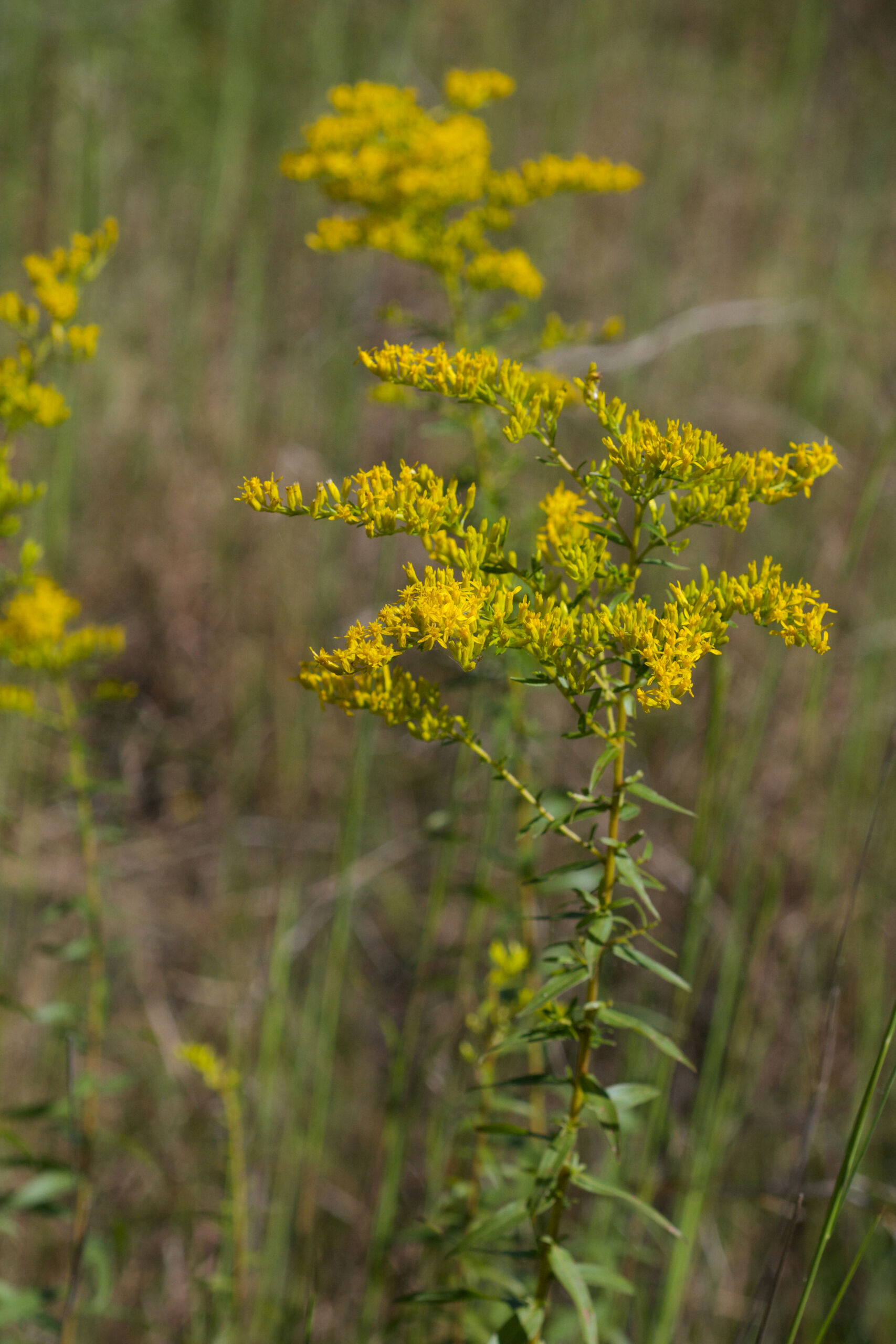

Also known as: sweet goldenrod
Quick Facts
- Type: wildflower
- Size: 2-4 ft tall
- Sun: full
- Water: low
- Soil: Sandy, well-drained soils
- USDA zones: 8-10
Airy sprays of yellow flowers smell faintly of anise, as do the crushed leaves.
A well-behaved clumping goldenrod that won't take over; makes a pleasant tea from the leaves.
In the Landscape
A well-mannered goldenrod for sunny borders, cottage-style native gardens, and meadow edges where you want fall color without a takeover. The fragrant foliage earns it a spot near paths and seating areas.
Care & Propagation
Plant in spring in well-drained sandy soil; it asks for nothing beyond full sun. Deadhead spent blooms to keep it tidy and limit reseeding. Unlike its running cousins, it forms neat clumps that stay where you put them.
Sow seed in fall or cold-stratify for a few weeks before spring sowing. Divide clumps in early spring every three to four years to keep them vigorous.
Wildlife Value
The airy yellow sprays feed native bees, butterflies, and beneficial wasps through the fall. Songbirds pick through the seed heads in winter.
🌱 Fun fact: Crush a leaf and sniff: the licorice-anise scent is unmistakable, and it is the reason for both the common name sweet goldenrod and the species name odora, meaning fragrant. The leaves have traditionally been brewed into a pleasant tea.
← Browse all Florida native plants
🌴 In Florida
A well-behaved clumping goldenrod that won't take over; makes a pleasant tea from the leaves.
🌿 Keep exploring
More Florida natives worth meeting:
- Alligator Flag (Thalia geniculata)
- American White Waterlily (Nymphaea odorata)
- Apalachicola Wild Indigo (Baptisia megacarpa)
🪱 Your Soil Needs This
Reading about healthy soil is great. Growing in it is better. Our small-batch, traceable worm castings are the shortcut your garden deserves.
Shop Worm Castings Subscribe & SaveEvery bag comes with a lot certificate. Know what's in your soil.