
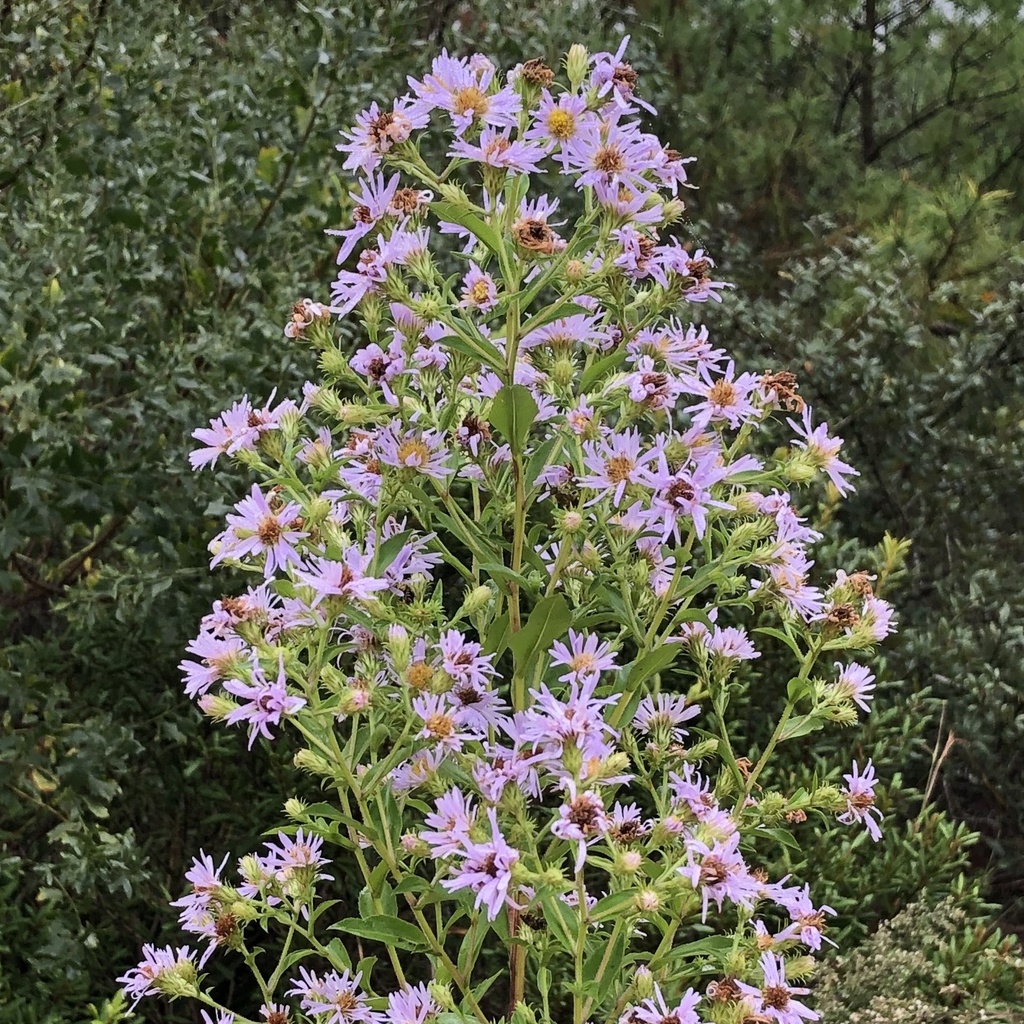
Elliott's Aster (Symphyotrichum elliottii)

Quick Facts
- Type: wildflower
- Size: 3-5 ft tall
- Sun: full
- Water: high
- Soil: Wet sandy soils; marshes and swales
- USDA zones: 8-10
Lavender-blue daisies with yellow centers bloom in profusion through fall.
A wetland aster that handles standing water; plant it where the hose never reaches and the ground stays damp.
In the Landscape
Made for rain gardens, pond and ditch edges, bioswales, and any low spot that stays damp; it even tolerates standing water. Plant in drifts for sheets of lavender-blue in fall.
Care & Propagation
Plant in spring in wet soil and keep it moist; this aster genuinely wants wet feet and sulks in dry beds. Cut stems to the ground in late winter. It spreads steadily by rhizomes into handsome colonies.
Divide clumps in early spring, which is the fastest way to get new plants. Sow seed in fall in a moist spot for natural stratification.
Wildlife Value
Fall daisies provide late nectar for native bees, butterflies, and migrating monarchs. Wetland plantings of it also support the broader food web of marsh edges.
🌱 Fun fact: It is named for Stephen Elliott, a pioneering South Carolina botanist of the early 1800s. Few garden asters tolerate actual standing water, which makes Elliott's aster a rare problem-solver for the soggiest corner of the yard.
← Browse all Florida native plants
🌴 In Florida
A wetland aster that handles standing water; plant it where the hose never reaches and the ground stays damp.
🌿 Keep exploring
More Florida natives worth meeting:
- Alligator Flag (Thalia geniculata)
- American White Waterlily (Nymphaea odorata)
- Anisescented Goldenrod (Solidago odora)
🪱 Your Soil Needs This
Reading about healthy soil is great. Growing in it is better. Our small-batch, traceable worm castings are the shortcut your garden deserves.
Shop Worm Castings Subscribe & SaveEvery bag comes with a lot certificate. Know what's in your soil.