
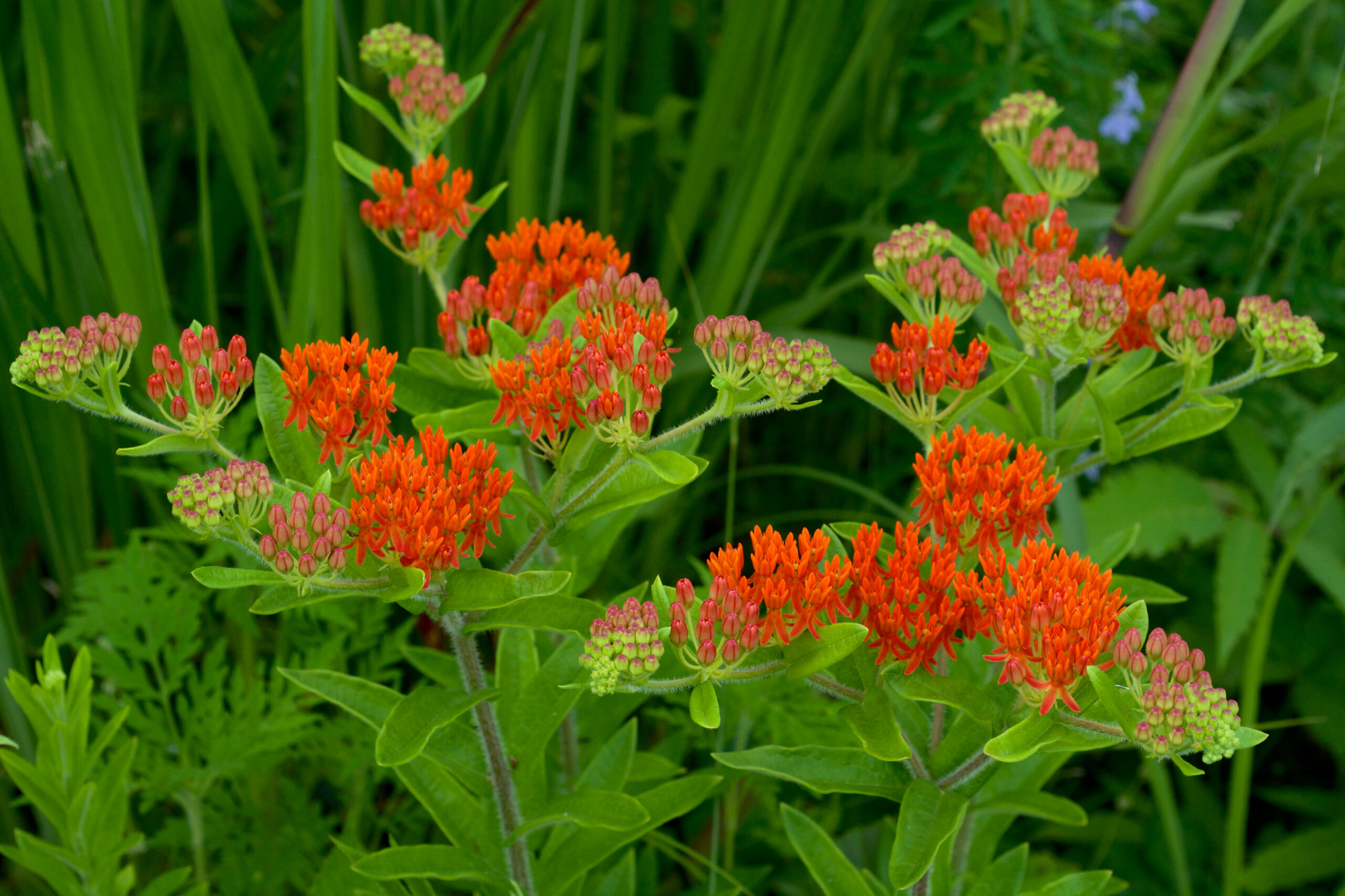
Butterfly Milkweed (Asclepias tuberosa)

Quick Facts
- Type: wildflower
- Size: 1-3 ft tall
- Sun: full
- Water: low
- Soil: Sandy, well-drained soils; deep taproot
- USDA zones: 8-10
Brilliant orange flower clusters in summer; the showiest and most drought-tough native milkweed.
Monarch host plant. Never buy tropical milkweed (Asclepias curassavica) instead; plant this once and never move it.
In the Landscape
A standout in dry wildflower meadows, butterfly gardens, sandy borders, and xeric native plantings. The brilliant orange flower clusters are visible from across the yard.
Care & Propagation
Plant in full sun in sandy, well-drained soil and leave it alone — it resents disturbance and needs no fertilizer. It's drought-tough once established. Cut stems back in late fall after the seed pods have ripened.
Sow seeds in fall or after 30–60 days of cold stratification in spring, in sunny, well-drained soil. Buy it as a plant once and put it in its forever spot — the deep taproot makes established plants nearly impossible to move.
Wildlife Value
A monarch butterfly host plant, and its nectar-rich flower clusters draw butterflies, bees, and beneficial insects all summer. Never plant tropical milkweed (Asclepias curassavica) instead — it can disrupt monarch migration timing.
🌱 Fun fact: It's the only milkweed without milky sap — its stems bleed clear, which is part of why gardeners call it "butterfly weed" rather than milkweed.
← Browse all Florida native plants
🌴 In Florida
Monarch host plant. Never buy tropical milkweed (Asclepias curassavica) instead; plant this once and never move it.
🌿 Keep exploring
More Florida natives worth meeting:
- Alligator Flag (Thalia geniculata)
- American White Waterlily (Nymphaea odorata)
- Anisescented Goldenrod (Solidago odora)
🪱 Your Soil Needs This
Reading about healthy soil is great. Growing in it is better. Our small-batch, traceable worm castings are the shortcut your garden deserves.
Shop Worm Castings Subscribe & SaveEvery bag comes with a lot certificate. Know what's in your soil.