
Fakahatchee Grass (Tripsacum dactyloides)
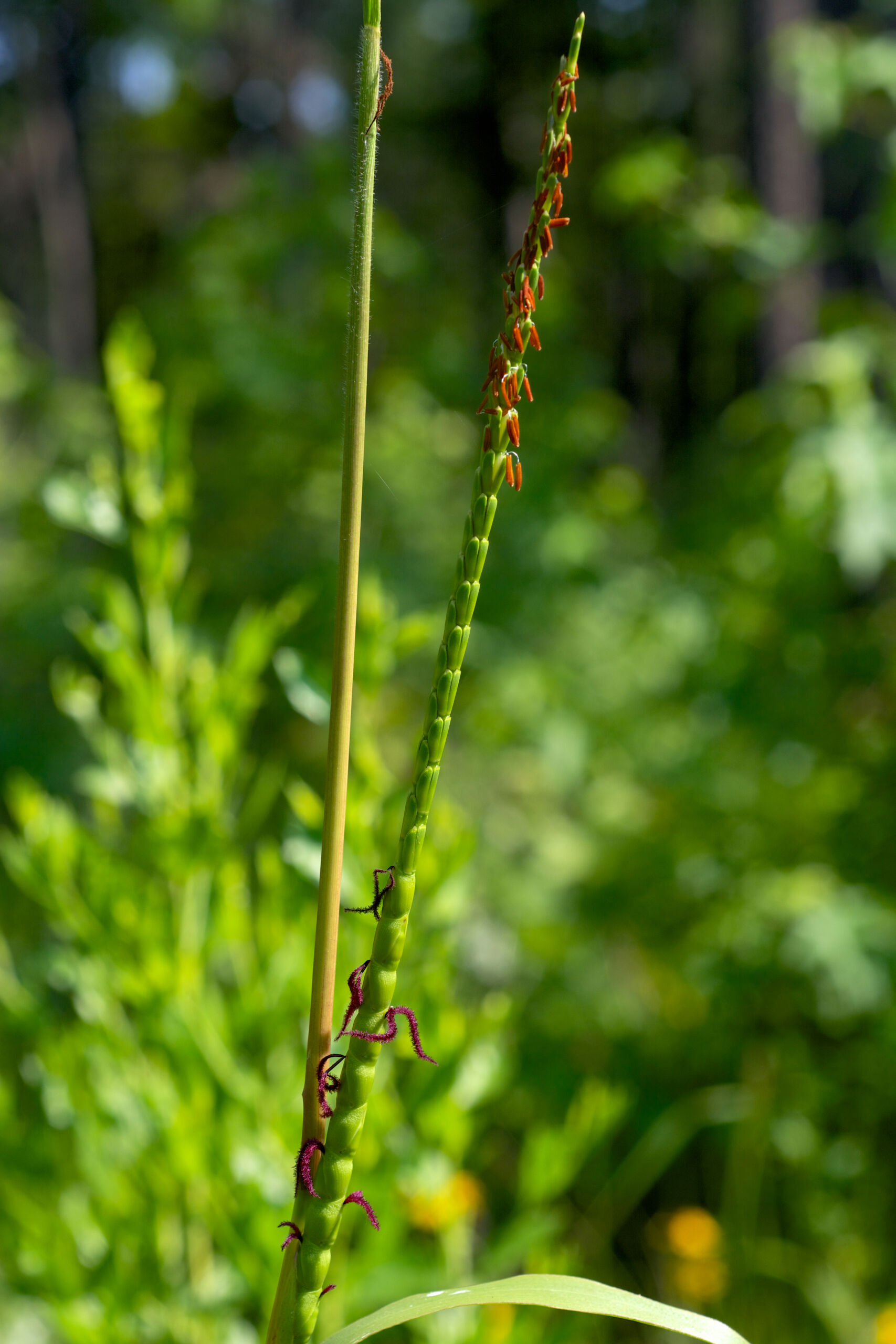

Also known as: eastern gamagrass
Quick Facts
- Type: grass
- Size: 4-6 ft tall
- Sun: full
- Water: moderate
- Soil: Moist sandy to loamy soils
- USDA zones: 8-11
A big bold clumping grass with wide leaves and interesting corn-like seed spikes in summer.
Makes a great evergreen screen; cut back in late winter. Named for the Fakahatchee Strand.
In the Landscape
A bold architectural clump for the back of a moist border, beside a pond, or as a specimen in a rain garden. Its size (up to 6 feet in flower) makes it a natural focal point.
Care & Propagation
Plant in spring in a spot that stays moist — it sulks in dry sand. Cut back to 6 inches in late winter. It appreciates a deep drink during long dry spells but needs no fertilizer.
Divide large clumps in late winter with a sharp spade — the crowns are tough, so don't be shy. Seed works too but needs consistent moisture to germinate.
Wildlife Value
A documented host plant for several skipper butterflies, including the byssus skipper. The big clumps shelter frogs, toads, and ground-nesting birds.
🌱 Fun fact: Fakahatchee grass is a close wild cousin of corn — same genus family tree. Its chunky seed spikes look like tiny ears of corn wearing a grass costume.
← Browse all Florida native plants
🌴 In Florida
Makes a great evergreen screen; cut back in late winter. Named for the Fakahatchee Strand.
🌿 Keep exploring
More Florida natives worth meeting:
- Broomsedge Bluestem (Andropogon virginicus)
- Bushy Bluestem (Andropogon glomeratus)
- Elliott's Lovegrass (Eragrostis elliottii)
🪱 Your Soil Needs This
Reading about healthy soil is great. Growing in it is better. Our small-batch, traceable worm castings are the shortcut your garden deserves.
Shop Worm Castings Subscribe & SaveEvery bag comes with a lot certificate. Know what's in your soil.