
Frogfruit (Phyla nodiflora)
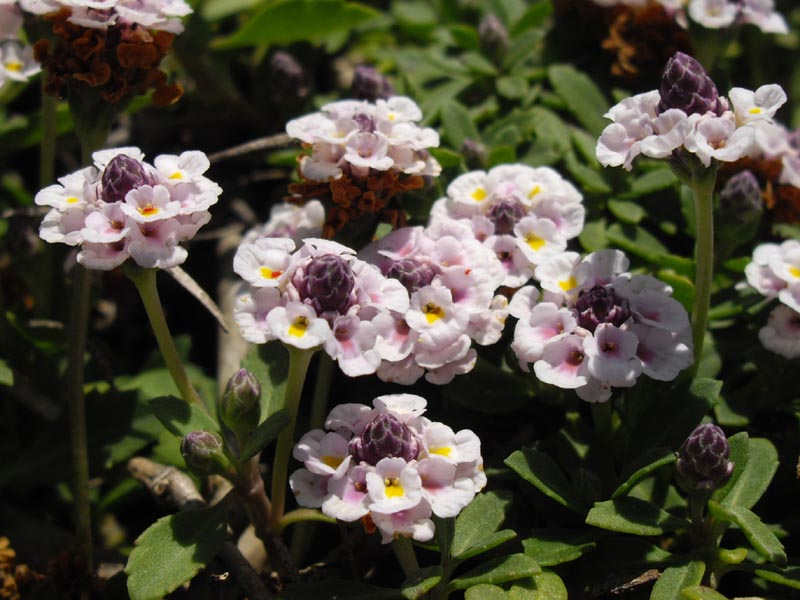
Also known as: turkey tangle fogfruit, matchhead, Lippia nodiflora
Quick Facts
- Type: wildflower
- Size: 3-6 inches tall, spreading 3-4 ft or more
- Sun: full-part
- Water: medium
- Soil: sandy to loamy; tolerates poor soils and salt spray
- USDA zones: 8-11
A tough, mat-forming groundcover with small toothed leaves and charming white-and-pink flower heads — and arguably the best native lawn alternative in Florida. Hosts the Common Buckeye, White Peacock, and Phaon Crescent butterflies.
Native statewide and one of the most recommended native groundcovers for Florida lawns — it stays green without irrigation or fertilizer, handles foot traffic, and blooms through the heat when everything else gives up.
In the Landscape
The classic Florida native lawn replacement: plant as a turf substitute in full sun to part shade, use it in butterfly garden edges, or let it fill between stepping stones. Space 8-12 inches apart. Pair with sunshine mimosa for a mixed native lawn effect.
Care & Propagation
Plant, water until established, then leave it alone — it tolerates drought, mowing, and foot traffic. Trim or mow 2-3 times a year if you want it tidy; skip fertilizer entirely. It may thin in deep shade and can look scruffy in winter in the far north of its range.
Propagate by seed in spring, but stem cuttings and division are faster — pieces root eagerly at the nodes. Plant plugs 6-12 inches apart; a flat of plugs covers a lawn area surprisingly fast. It also spreads on its own once established.
Wildlife Value
Frogfruit is a triple-duty butterfly host: caterpillars of the Common Buckeye (Junonia coenia), the White Peacock (Anartia jatrophae), and the Phaon Crescent (Phyciodes phaon) all feed on its foliage. Its little flower heads bloom nearly year-round in South Florida, feeding native bees, hoverflies, and skippers. Few single plants feed as many butterfly species.
🌱 Fun fact: The flower heads look like tiny pink-and-white matchheads — and the plant stays in near-continuous bloom in South Florida, making it one of the longest-blooming natives you can plant.
← Browse all Florida native plants
🌴 In Florida
Native statewide and one of the most recommended native groundcovers for Florida lawns — it stays green without irrigation or fertilizer, handles foot traffic, and blooms through the heat when everything else gives up.
🌿 Keep exploring
More Florida natives worth meeting:
- Alligator Flag (Thalia geniculata)
- American White Waterlily (Nymphaea odorata)
- Anisescented Goldenrod (Solidago odora)
🪱 Your Soil Needs This
Reading about healthy soil is great. Growing in it is better. Our small-batch, traceable worm castings are the shortcut your garden deserves.
Shop Worm Castings Subscribe & SaveEvery bag comes with a lot certificate. Know what's in your soil.