
Common spiderwort (Tradescantia ohiensis)
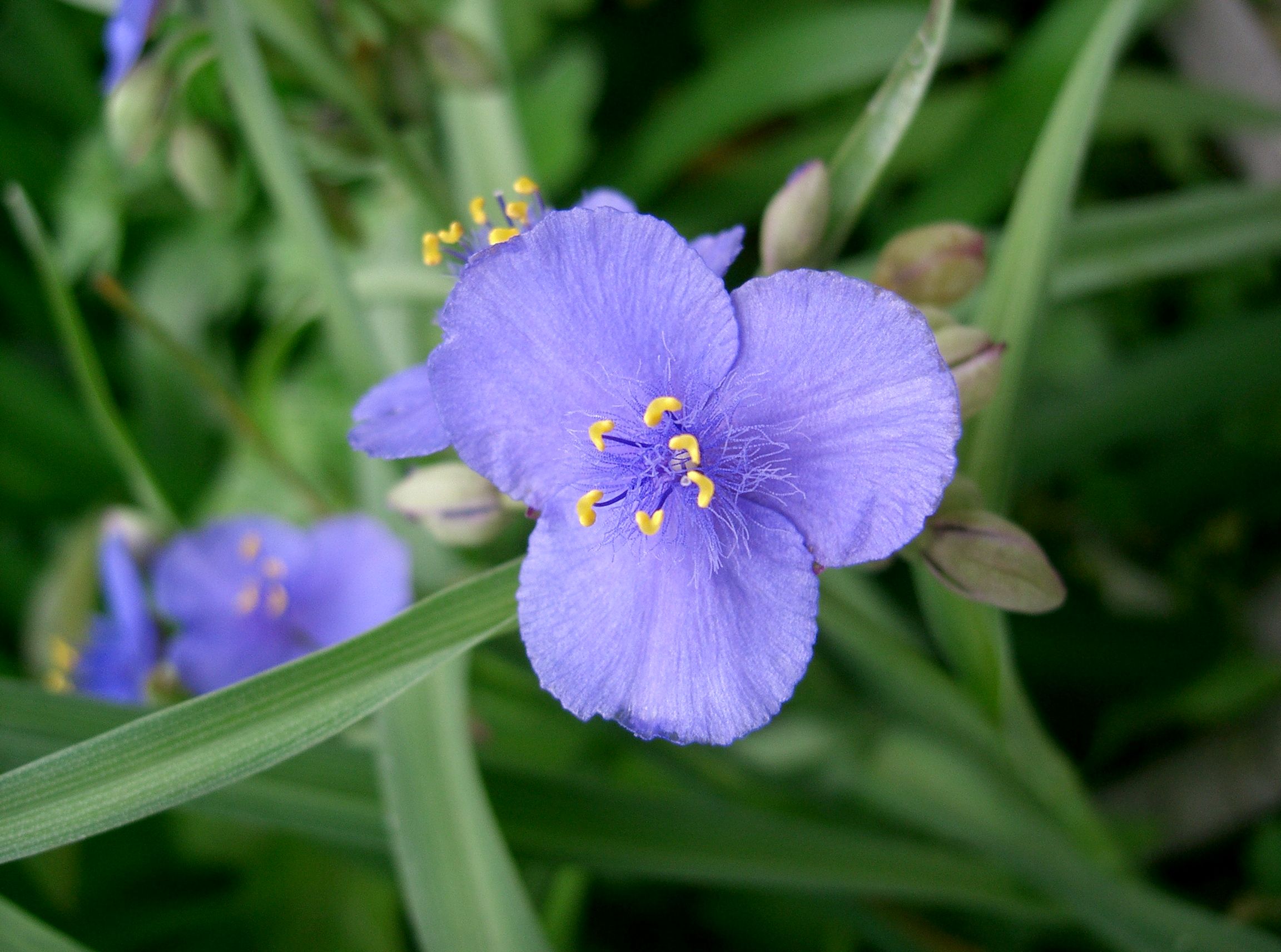
Also known as: Ohio spiderwort, bluejacket
Quick Facts
- Type: wildflower
- Size: 1-3 ft tall, 1-2 ft wide
- Sun: full-part
- Water: medium
- Soil: sandy to clay, adaptable; tolerates poor soils
- USDA zones: 5-10
An easy, clump-forming wildflower with grass-like leaves and three-petaled blue to violet flowers that open in the morning and melt by afternoon. Tough, adaptable, and a steady pollinator plant.
Native to the northern and central peninsula in open woods, roadsides, and disturbed ground; one of the easiest native wildflowers to grow, with a long bloom season from spring into summer.
In the Landscape
Use in wildflower borders, cottage gardens, meadow edges, and naturalized beds. Space 12-18 inches apart. Pair with coneflowers, black-eyed Susans, and bee balm for a classic pollinator border. Accepts mowing in meadow settings after bloom.
Care & Propagation
Plant in spring or fall and water until established; after that it's nearly indestructible. Cut back spent foliage in midsummer to encourage fresh growth and a second flush of blooms. Divide congested clumps every 2-3 years.
Propagate by seed sown in fall or spring, or by dividing clumps in early spring or fall. Division is the easiest route — dig, split, replant. It self-seeds readily and can colonize open ground on its own.
Wildlife Value
Spiderwort has no documented butterfly larval-host role, but its flowers are excellent bee plants — bumblebees in particular work the morning blooms, and the flowers' pollen is a valuable resource. It also provides cover for small insects and other invertebrates in its clumps.
🌱 Fun fact: Spiderwort flowers are famous in biology classrooms: their stamens' purple hairs let you watch cytoplasmic streaming under a microscope, and the flowers are also sensitive to radiation — petal color changes from blue to pink after exposure, which is why they're used as a living pollution monitor.
← Browse all Florida native plants
🌴 In Florida
Native to the northern and central peninsula in open woods, roadsides, and disturbed ground; one of the easiest native wildflowers to grow, with a long bloom season from spring into summer.
🌿 Keep exploring
More Florida natives worth meeting:
- Alligator Flag (Thalia geniculata)
- American White Waterlily (Nymphaea odorata)
- Anisescented Goldenrod (Solidago odora)
🍽️ Also see the edible-plant profile for this same species: Spiderwort (Tradescantia ohiensis) — how to eat it and harvest notes.
🪱 Your Soil Needs This
Reading about healthy soil is great. Growing in it is better. Our small-batch, traceable worm castings are the shortcut your garden deserves.
Shop Worm Castings Subscribe & SaveEvery bag comes with a lot certificate. Know what's in your soil.