
Apalachicola Wild Indigo (Baptisia megacarpa)
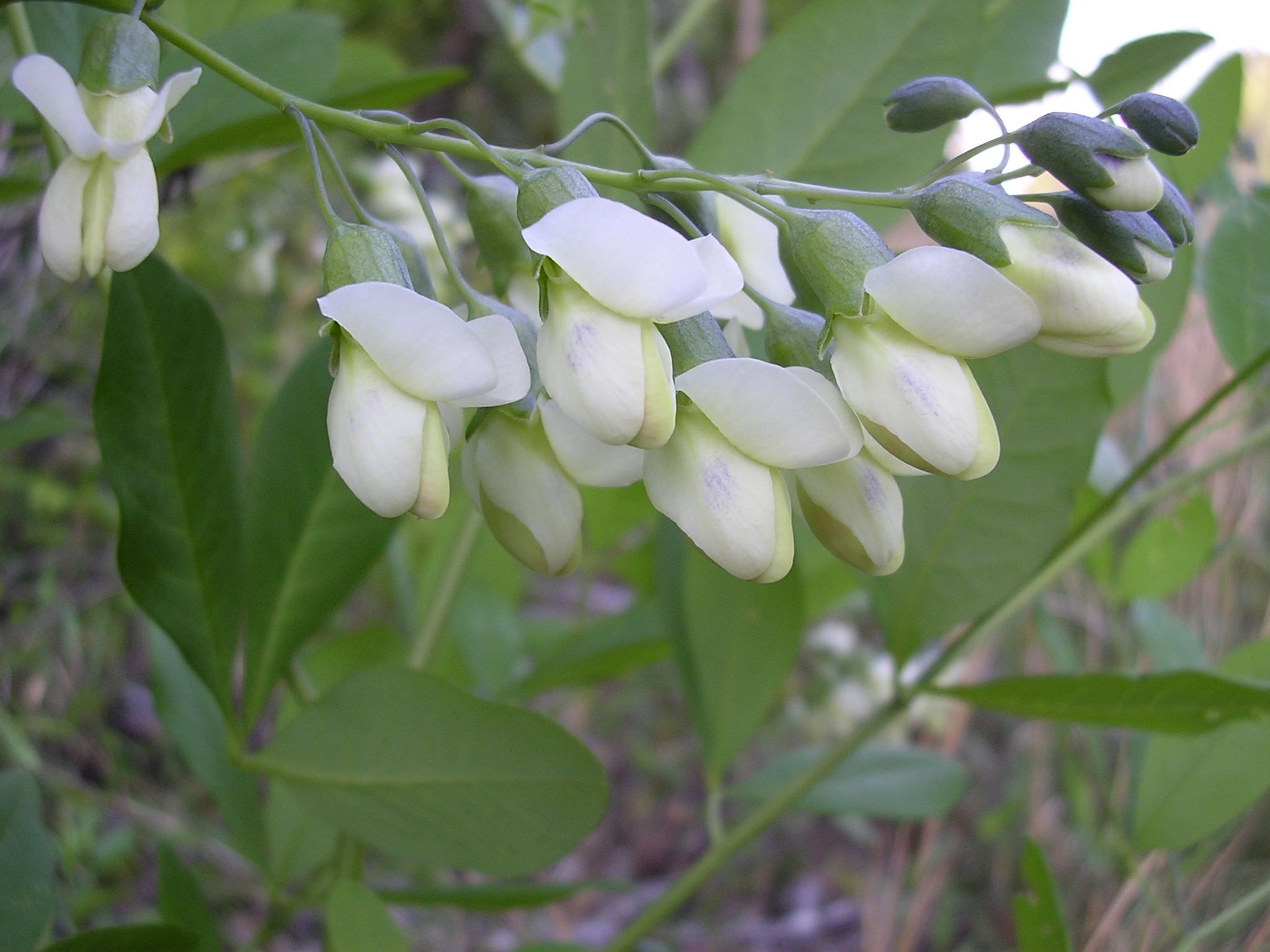

Also known as: Bigpod wild indigo, Large-fruited false indigo
Quick Facts
- Type: wildflower
- Size: 3-4 ft tall
- Sun: full
- Water: moderate
- Soil: Moist, well-drained sandy soils of floodplain ridges; tolerates both flooding and drought.
- USDA zones: 8-9
A rare panhandle native with arching stems, creamy pendant flower clusters, and oversized seed pods.
Found wild only in the Apalachicola-Chattahoochee floodplain region of the panhandle and adjacent Alabama and Georgia. A genuinely rare plant — nursery stock is usually cutting-grown to guarantee the true species.
In the Landscape
A conversation-piece specimen for moist sunny beds and rain gardens; give it room to arch to its full spread.
Care & Propagation
Plant in sun with decent drainage and otherwise leave it be; like all baptisias it dislikes root disturbance.
Cuttings root reliably; seed-grown plants are sometimes hybrids, so buy from reputable native nurseries.
Wildlife Value
Bees are the primary pollinators; the big seed pods feed seed-eating wildlife into fall.
🌱 Fun fact: Its seed pods are the giveaway — megacarpa means big fruit, and the inflated pods rattle in the autumn wind.
← Browse all Florida native plants
🌴 In Florida
Found wild only in the Apalachicola-Chattahoochee floodplain region of the panhandle and adjacent Alabama and Georgia. A genuinely rare plant — nursery stock is usually cutting-grown to guarantee the true species.
🌿 Keep exploring
More Florida natives worth meeting:
- Alligator Flag (Thalia geniculata)
- American White Waterlily (Nymphaea odorata)
- Anisescented Goldenrod (Solidago odora)
🪱 Your Soil Needs This
Reading about healthy soil is great. Growing in it is better. Our small-batch, traceable worm castings are the shortcut your garden deserves.
Shop Worm Castings Subscribe & SaveEvery bag comes with a lot certificate. Know what's in your soil.