
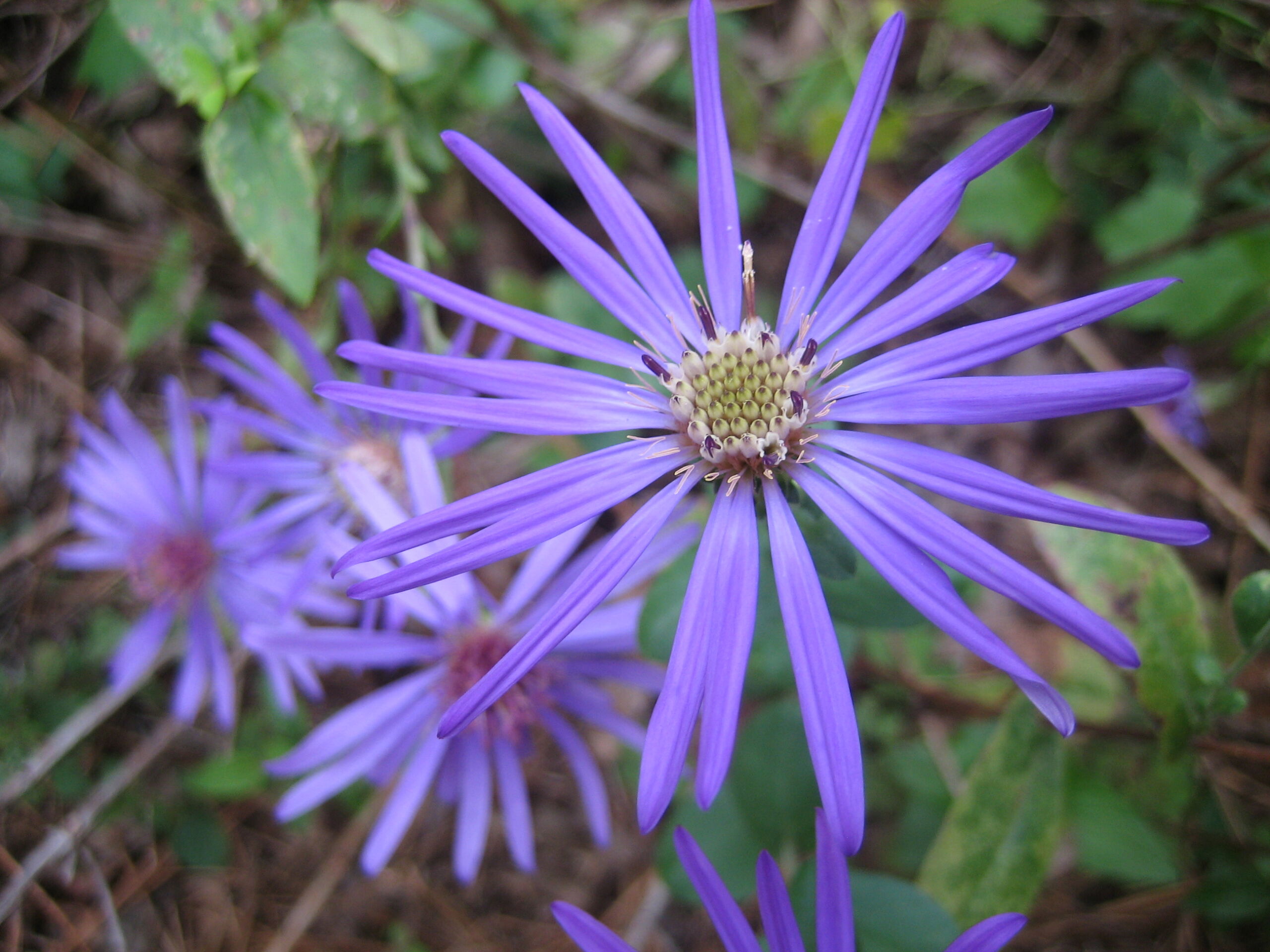
Georgia Aster (Symphyotrichum georgianum)

Quick Facts
- Type: wildflower
- Size: 1-3 ft tall, spreading
- Sun: full
- Water: low
- Soil: Dry, well-drained acidic sandy or clay soils; intolerant of wet feet.
- USDA zones: 8-9
Big violet daisies on a rare plant that exists in exactly one Florida county.
In Florida it occurs ONLY in Leon County and is a state-listed threatened species. If you garden anywhere else in the state, growing nursery-propagated plants helps conserve it ex situ.
In the Landscape
Dry perennial borders and native meadow gardens in North Florida; a conservation showpiece for the informed gardener.
Care & Propagation
Buy nursery-grown plants only — never dig from the wild. Plant in well-drained soil and leave it alone; it dislikes pampering.
Nursery-propagated by seed or division. Never collect from wild populations — it is state-listed and protected.
Wildlife Value
October-November blooms are a magnet for native bees and butterflies when few other flowers remain.
🌱 Fun fact: Its flower heads reach two inches across — giants among the asters — yet the whole Florida population fits inside a single county.
← Browse all Florida native plants
🌿 Keep exploring
More Florida natives worth meeting:
- Alligator Flag (Thalia geniculata)
- American White Waterlily (Nymphaea odorata)
- Anisescented Goldenrod (Solidago odora)
🪱 Your Soil Needs This
Reading about healthy soil is great. Growing in it is better. Our small-batch, traceable worm castings are the shortcut your garden deserves.
Shop Worm Castings Subscribe & SaveEvery bag comes with a lot certificate. Know what's in your soil.