
🍁 Japanese Maple
What it looks like
How to grow
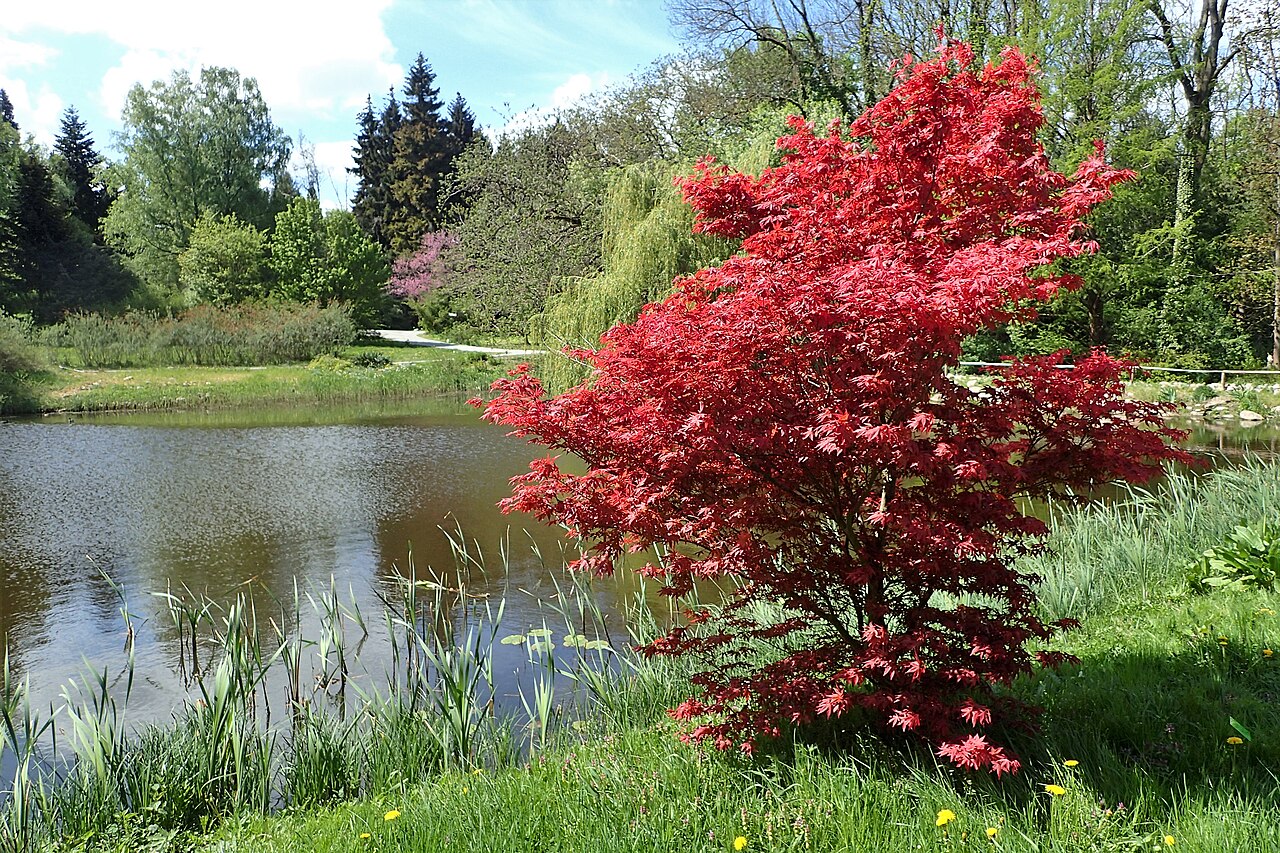
Plant in spring or fall in rich, well-drained, slightly acidic soil, with the root flare visible at the surface — planted too deep is the most common way to kill one. Morning sun with afternoon shade gives the best leaf color and the least scorch; in zones 7–8, shade is not optional for dissectum (laceleaf) types. There are hundreds of cultivars, from upright blood-red ‘Bloodgood’ to weeping green dissectums, so buy the mature size, not the pot size — a tree labeled 25 feet will not stay a cute patio accent.
Water & feeding
Water deeply and regularly the first two years; established trees prefer consistent moisture and hate both drought and soggy feet. A 3-inch mulch ring (kept off the trunk) does more for a Japanese maple than any fertilizer.
Common problems
Harvest
Prune in summer or late fall when fully leafed or fully dormant — never in late winter/early spring, when maples bleed sap heavily. Remove crossing branches and dead wood only; never top a Japanese maple.
Browse all plant & pest guides
Saving seeds
Say this part out loud before anything else, because it saves the most heartbreak: seed does not make another tree like the parent. Every named Japanese maple — every ‘Bloodgood’, ‘Dissectum’, ‘Coral Bark’, and the rest — is a grafted plant, cloned onto a seedling rootstock precisely because seed shuffles the deck. A seedling from a red laceleaf parent might come up green, upright, or plain, and it will not be the cultivar you started with. Seed is for species trees, rootstocks, and glorious experiments. If you want another tree exactly like the one you love, buy a grafted one or learn to graft. There is no seed shortcut around that fact, and anyone who tells you otherwise is selling something.
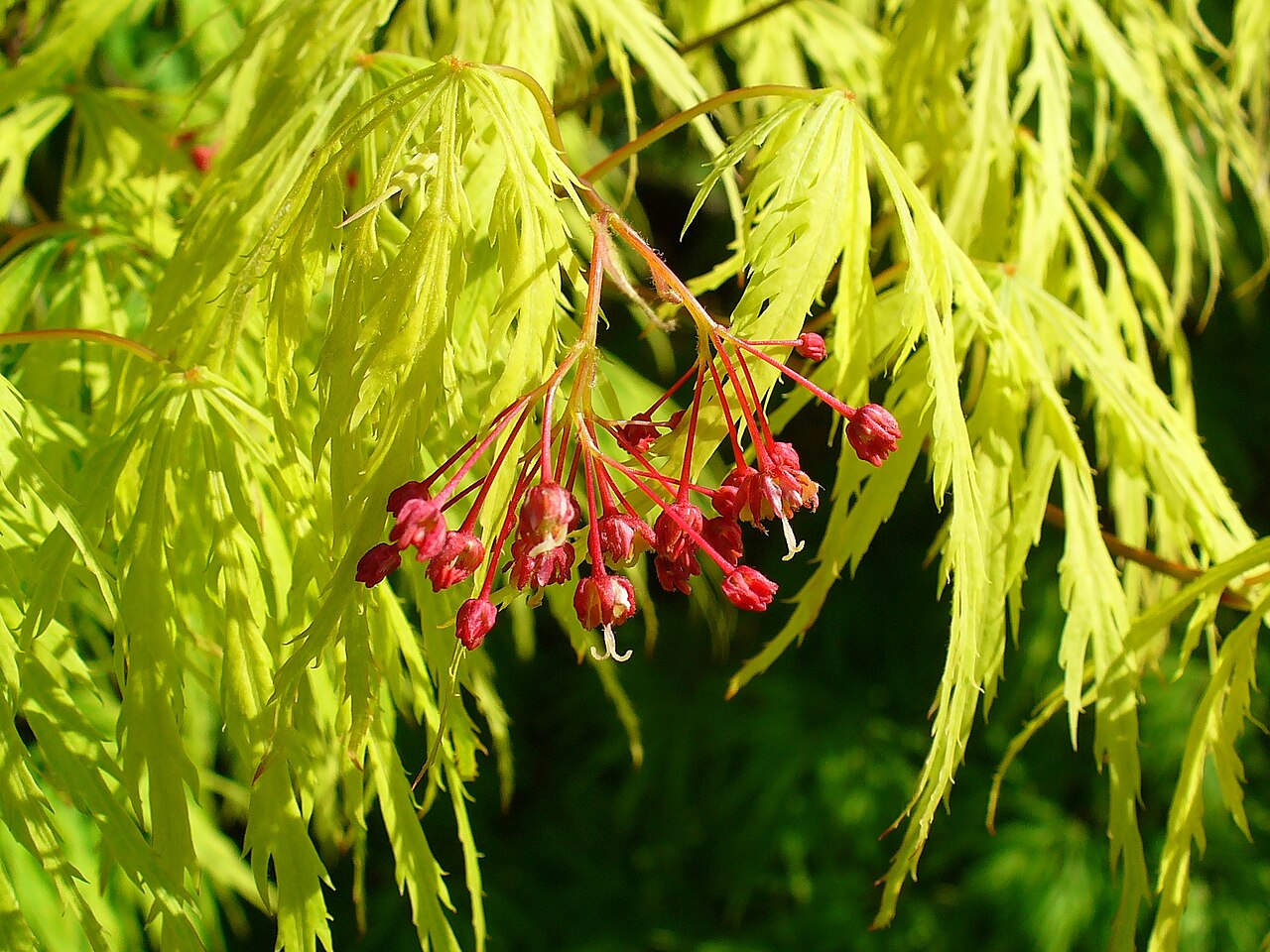
With that settled, the actual seed saving is straightforward and rather lovely. Collect the paired winged samaras — the little helicopter seeds — in fall, when they have turned brown and dry on the tree and drop with a shake. Pick them from a healthy tree, and choose seed from the tree whose form you admire, knowing the offspring will be its children, not its clones. Strip off the wings, which are just packaging, and you are left with the small seed itself. There is no pulp to clean and no messy processing — one of the cleaner seed harvests in the garden.
Sow fresh seed right away if you can. Fall-sown seed, in pots of moist, well-drained mix left outdoors or in a cold frame, gets its chilling naturally over winter and usually sprouts in spring. That is the easy road, and it is the one most old-school growers still use. For stored seed, the fridge road: mix the seed with damp vermiculite or a damp paper towel inside a sealed bag and refrigerate it. Sources disagree on the exact length, so here is the honest range — roughly 90 to 120 days of cold-moist stratification, with some references stretching shorter or longer. Check the bag now and then; the medium should stay moist, never soggy, and any seed that sprouts in the bag can be potted up immediately.
Dry any seed you are storing rather than sowing, and store it in a labeled envelope or an airtight jar with a desiccant packet, cool and dark. In Florida humidity, the desiccant is doing real work — damp seed in a sealed jar grows mold, not maples. Use stored seed within a year for the best results, and sow it a little thickly, since not every seed will wake up.
Sow shallow, about a quarter to a half inch deep, in a fine, moist mix, and keep the pots in bright shade rather than direct sun. Expect germination over several weeks in spring, unevenly — some seedlings pop up promptly, others take their time, and a few may wait until the following year, so do not discard a flat early. Prick seedlings out once they have a couple of true leaves, grow them on in pots for a season or two, and plant out the keepers once they are sturdy. A seed-grown maple commonly takes several years to show its mature character, and its fall color and leaf form may surprise you — that surprise is the entire point of growing from seed. Just go into it with honest expectations: you are raising children, not photocopies.
Varieties
Every named variety of Japanese Maple with its own growing guide:
- Bloodgood Japanese Maple — The purple-red Japanese maple everyone knows: deep burgundy leaves all season, turning scarlet in fall — for north Florida only.