
🌸 Flowering Cherry
What it looks like
How to grow
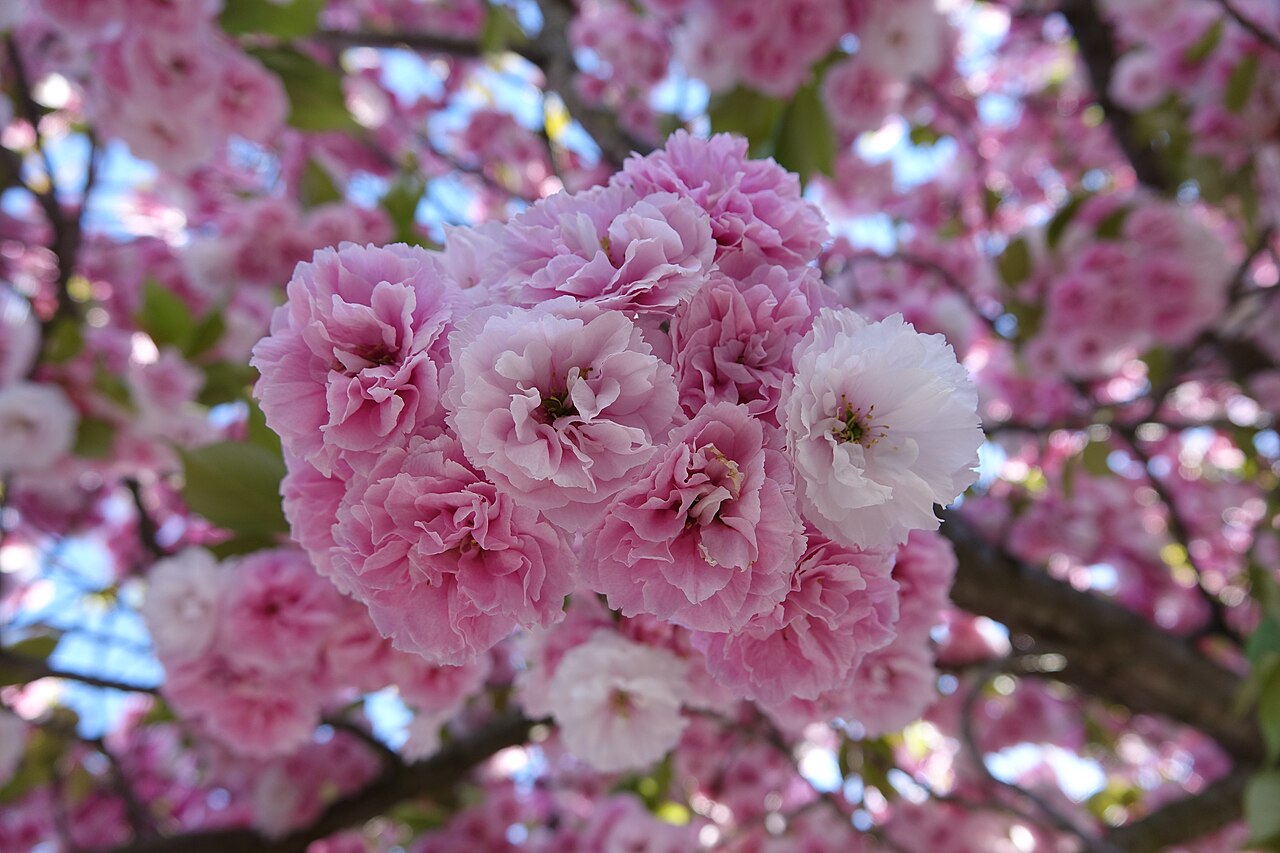
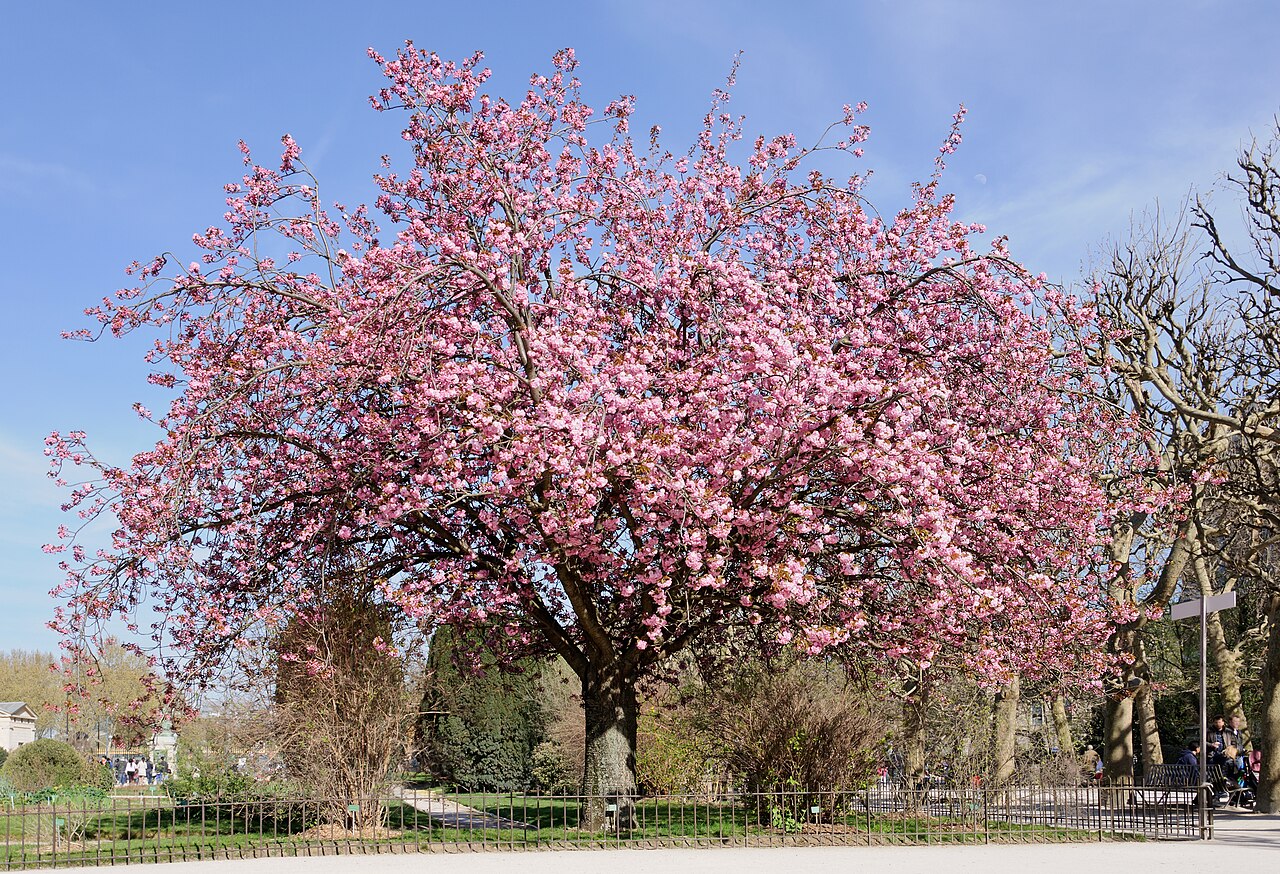
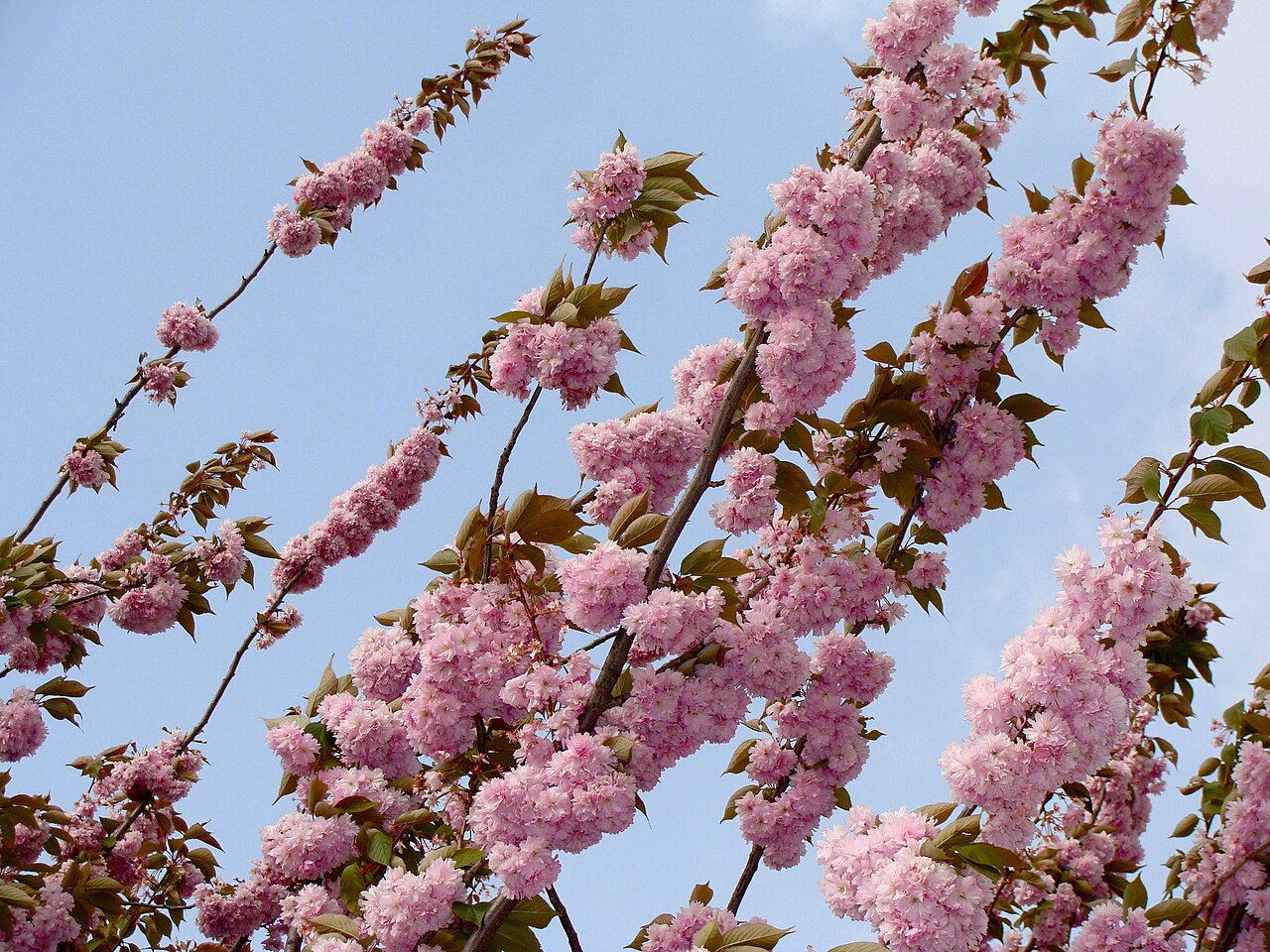
Plant in spring or fall in moist, well-drained soil in full sun — flowering cherries are grown for bloom, not fruit, so do not expect a pie harvest from ‘Kwanzan’ or ‘Yoshino’. ‘Yoshino’ gives clouds of pale pink-white single flowers; ‘Kwanzan’ gives deeper pink doubles a week later. They are relatively short-lived trees (15–25 years is typical), so enjoy the show and plan for a successor rather than expecting an oak’s lifespan.
Water & feeding
Water deeply the first two years and during dry spells; cherries hate both drought and waterlogged soil. Mulch to keep roots cool and moist, and keep string trimmers away from the thin bark.
Common problems
- Bacterial canker and fungal cankers — the main life-shorteners; avoid wounding bark
- Aphids, tent caterpillars, and Japanese beetles in season
- Short lifespan and storm breakage — site with room and accept the trade for the bloom
Harvest
Prune right after flowering (never in fall or winter, when canker fungi enter wounds) to remove dead, crossing, or inward-growing branches. Keep the open vase shape the tree wants.
Saving seeds
First, the honest headline: seed is the scenic route to a flowering cherry, not the shortcut. This is a group guide covering Prunus serrulata and P. × yedoensis, so the method below is the genus-level Prunus method, and it fits both. Named cultivars do not come true from seed. A seedling from ‘Kwanzan’ or a Yoshino-type tree is a genetic reshuffle, not a clone: flower form, colour, vigour and ultimate size can all wander away from the parent. If you need that exact pink cloud, you need a grafted tree. If you want the experiment — a tree that is yours alone, with a story — seed is a wonderful, slow-burning project.
Do not count on a harvest. Many ornamental flowering cherries set little or no fruit, and double-flowered forms are often too busy being beautiful to bother with seed at all. If yours does set small, dark cherries, let them ripen fully on the tree in summer, then pick, squeeze out the pits and wash off every trace of pulp. Pulp left on the pit is a mould invitation, and in Florida humidity mould RSVPs fast. One safety note before you go further: cherry pits are not food. They contain cyanogenic compounds, so keep pits and seed packets out of reach of children and pets, and label them clearly.
Fresh is best. Sow as soon as the pits are ripe, in a pot or cold frame, and let winter do the work — or fake winter in the fridge. Cherry seed is dormant by design: the embryo will not wake until it has had a long, cold, moist spell that says “winter happened.” Put cleaned pits in barely damp sand, vermiculite or a folded paper towel inside a labelled bag or jar, and refrigerate at roughly 0–5°C. Sources disagree on the dose — some say two to three months, others three to four — so plan on a good three months and check weekly for mould or early sprouting. That disagreement is worth knowing, because a short-changed chill is the usual reason a batch sulks. Germination itself can be slow and uneven, and some pits wait until a second spring before emerging, so do not compost the pot in a fit of spring impatience.
When pits crack or sprout a white root, sow about 1 cm deep in free-draining, moist seed mix, keep them evenly damp but never waterlogged, and grow them on in a pot or cold frame for their first winter, planting out the following late spring or early summer. Expect several years — often five or more — before a seedling flowers, and accept that the bloom may surprise you. That is the trade: grafting buys certainty, seed buys suspense.
In Florida, the fridge is not a fancy extra, it is the plan. Winters here are too short and warm to give cherry seed a reliable chill outdoors, and the tree itself is a zones 5–8 plant, so this is a north-Florida project at best. Dry seed only briefly for handling; for storage, keep pits cool in barely damp medium and stratify promptly rather than banking them dry on a shelf for years. Treat cherry seed as a this-season project, not a seed-bank heirloom.