
🪲 Asian Citrus Psyllid
How to identify
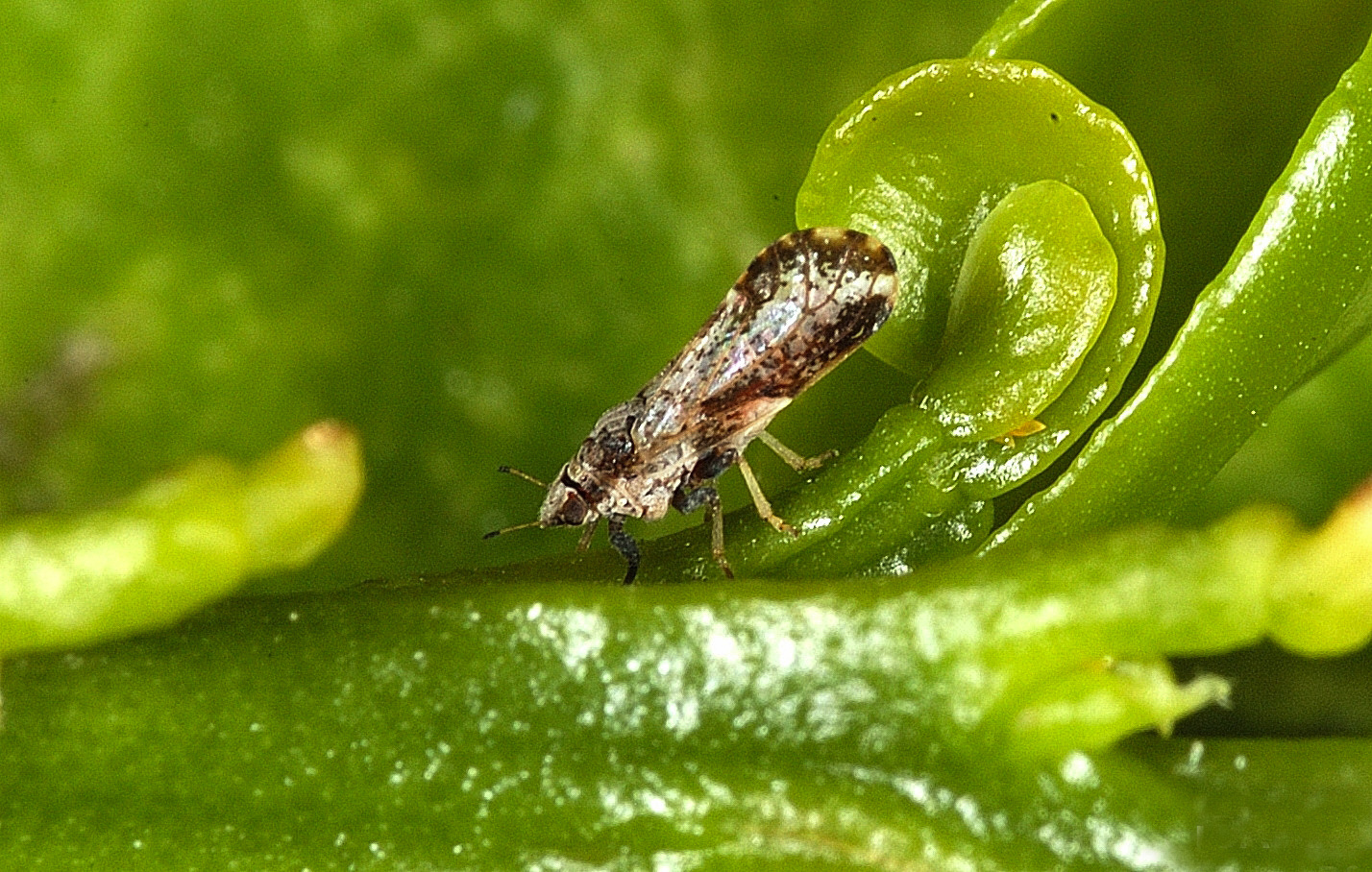
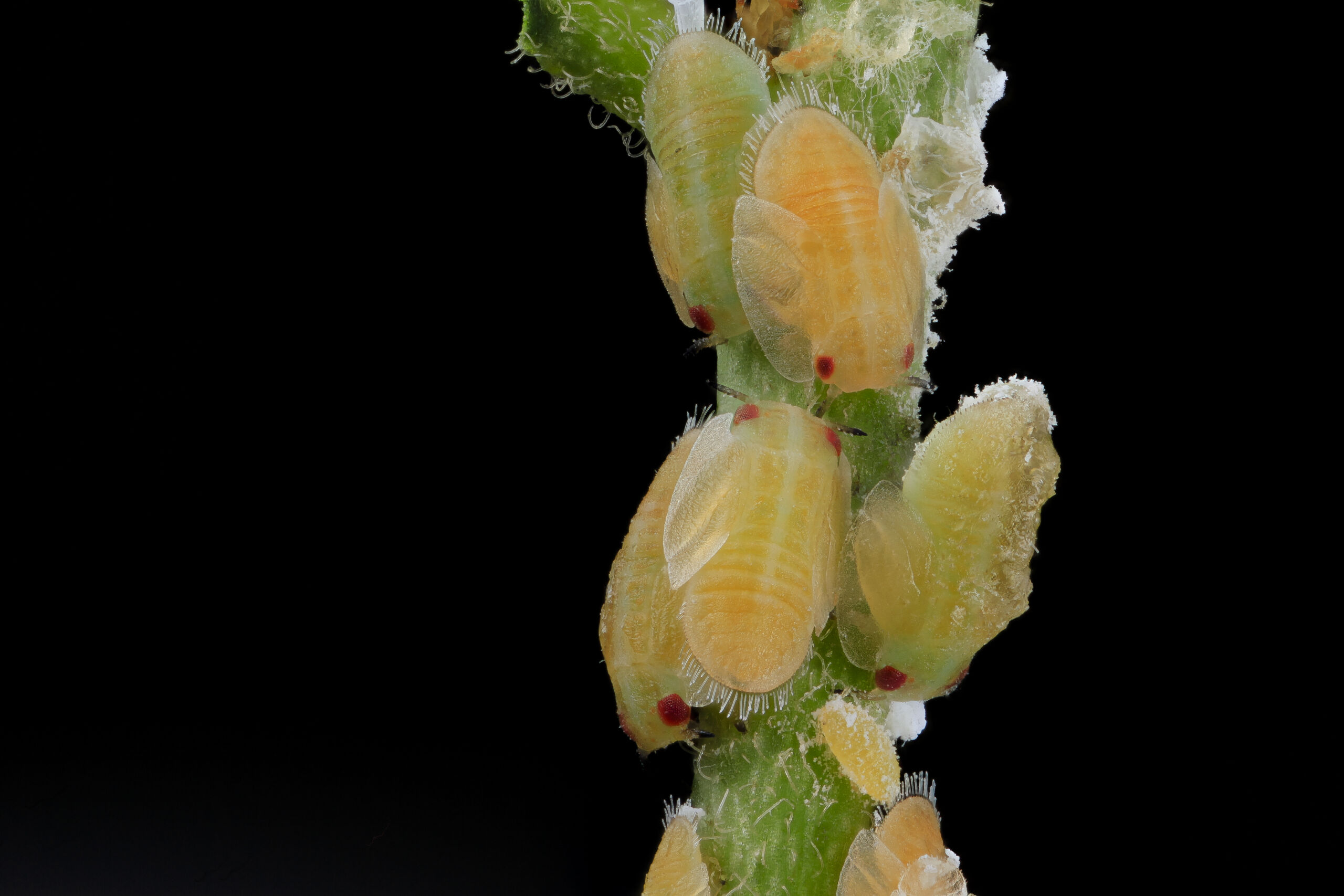
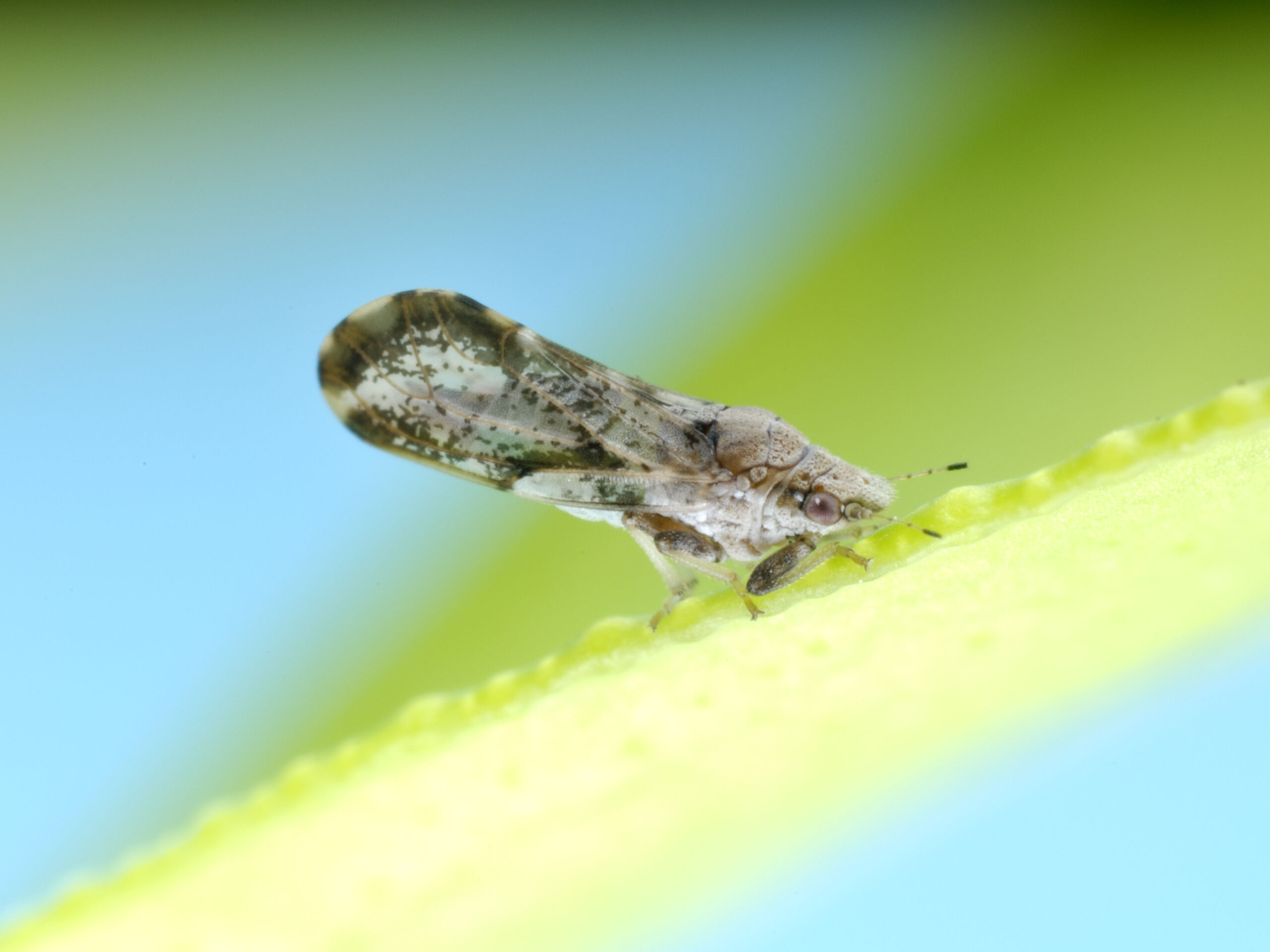
Adults are small (about 1/8 inch), mottled brown, aphid-sized insects that feed with their rear end tilted up at a 30- to 45-degree angle — that odd head-down stance is the field ID. Disturb them and they leap or fly a short distance. Nymphs are tiny, yellowish, flat, and slow-moving, found only on tender new flush, often with white waxy tubules trailing behind them. Look for them on the newest growth, not on mature leaves.
Damage signs
Feeding on new flush makes young leaves twist and curl, and heavy feeding can kill the flush outright. You’ll also find sticky honeydew on new growth, which can grow black sooty mold. But the real damage isn’t the feeding — psyllids spread citrus greening (huanglongbing), a bacterial disease with no cure. A greening tree shows blotchy, mottled yellowing on leaves, misshapen bitter fruit, and a slow decline that ends in death. If you suspect greening, don’t move the tree or its cuttings — call your county Extension office first.
Plants it attacks
Citrus of every kind — oranges, lemons, grapefruit, mandarins — plus orange jasmine and other citrus relatives
Non-chemical controls
- Scout new flush every week during growth flushes: that’s when psyllids arrive, feed, and lay eggs, and catching them early matters more than anything else.
- Hang yellow sticky traps in the canopy to monitor adults — traps won’t control an outbreak alone, but they tell you the moment psyllids show up.
- Prune off heavily infested flush and bag it for the trash, not the compost — you’re removing eggs and nymphs before they spread.
- Cover young trees with fine insect screen to physically exclude psyllids while the tree is small enough to protect.
- Protect the tiny parasitoid wasp Tamarixia radiata, which lays eggs in psyllid nymphs — skip broad-spectrum sprays so the wasps and ladybugs can do their work.
- Start clean: buy only certified disease-free nursery trees, and never bring home citrus cuttings or budwood from unknown sources.
Still not sure this is your culprit? What’s Eating My Plant? narrows the suspects from what you actually see on the plant.