
🥥 Coconut
What it looks like
How to grow
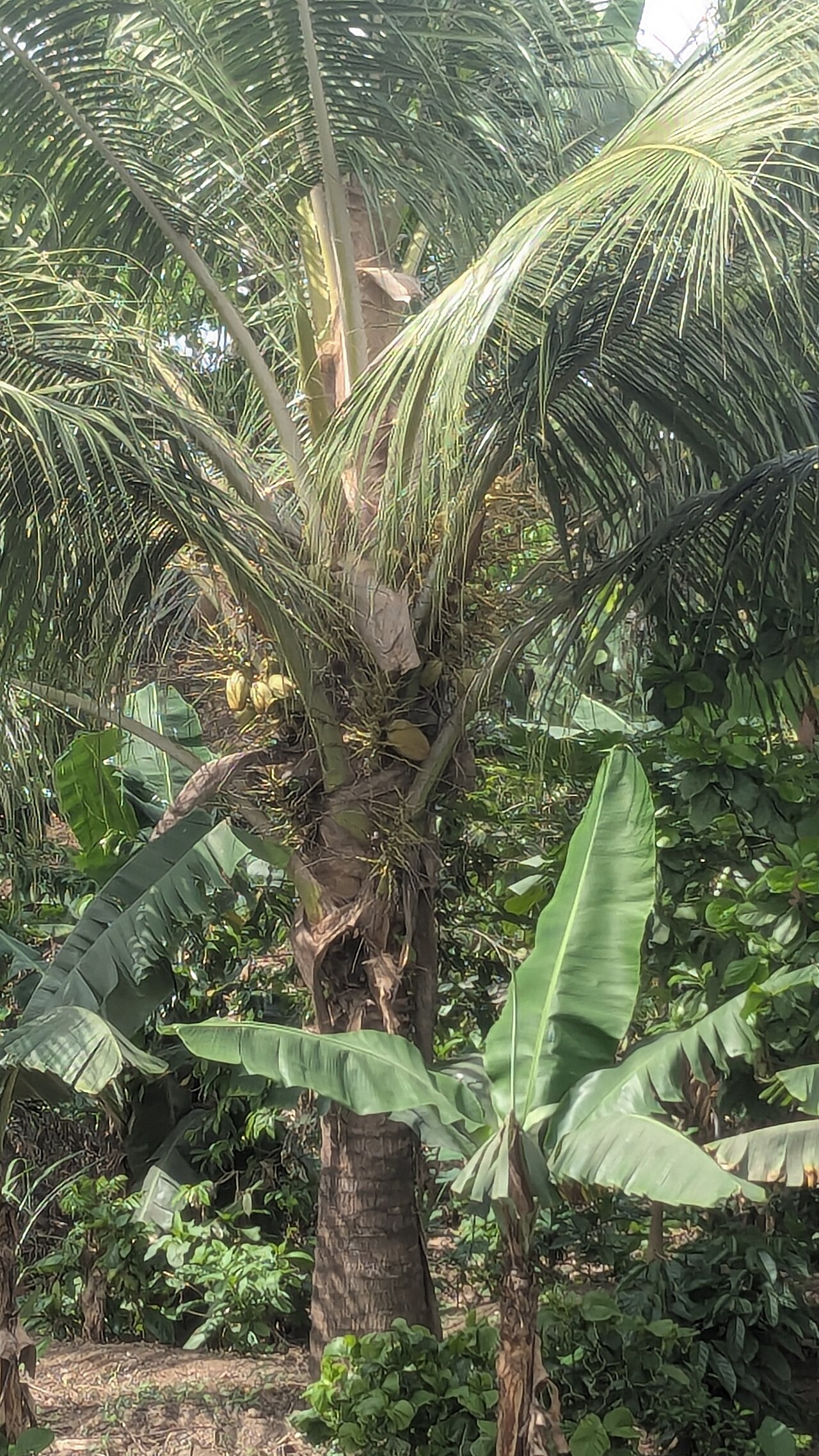
Coconut palms are the definitive tropical fruit tree — and the least negotiable about climate. They need year-round warmth, full sun, and no frost whatsoever, which in the United States means south Florida, Hawaii, and the warmest pockets of the Gulf Coast, plus container growing nowhere practical (a mature palm is 50 feet tall). Plant a nursery-grown palm in spring in sandy, well-drained soil, in the sunniest spot available, and give it room: fronds span 15 feet and falling nuts are a genuine hazard, so never plant over paths, patios, or parking. Choose a variety suited to your area — dwarf types (‘Malayan Dwarf’) fruit younger and lower, tall types live longer and tolerate more wind. Coconuts are self-fertile, so one palm fruits. In Florida, check local rules on lethal yellowing-resistant varieties before buying.
Water & feeding
Water deeply and regularly during establishment; mature palms tolerate drought and salt spray but fruit better with steady moisture. Mulch with palm fronds or wood chips. Feed with a palm fertilizer several times a year — coconuts are heavy potassium feeders, and potassium deficiency shows as yellowing older fronds.
Common problems
- Any frost — a single hard freeze can kill a coconut palm; this is a zones 10–11 plant, full stop
- Lethal yellowing disease in Florida and the Caribbean — plant resistant varieties
- Falling nuts and fronds — site away from people, roofs, and cars
- Potassium and magnesium deficiencies — yellowing fronds mean feed with a palm-specific fertilizer
Harvest
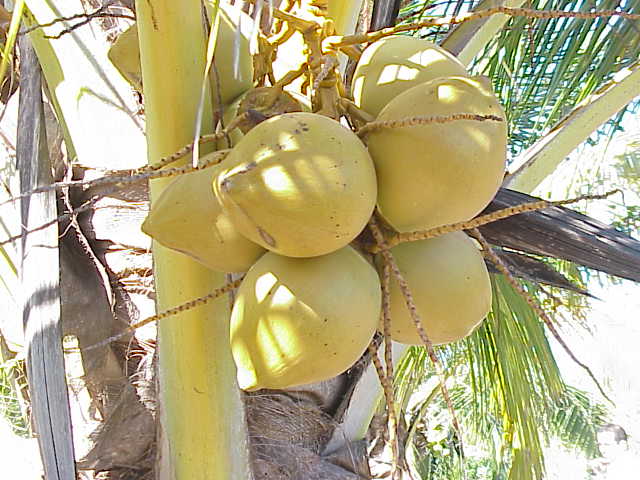
Harvest young green nuts for drinking (the water is sweetest before the flesh thickens) or mature brown nuts for flesh and milk — a mature nut sounds full of liquid when shaken. Use a pole harvester or hire an arborist for tall palms; climbing a coconut palm is not a home-gardener skill to improvise.
Browse all plant & pest guides
Saving seeds
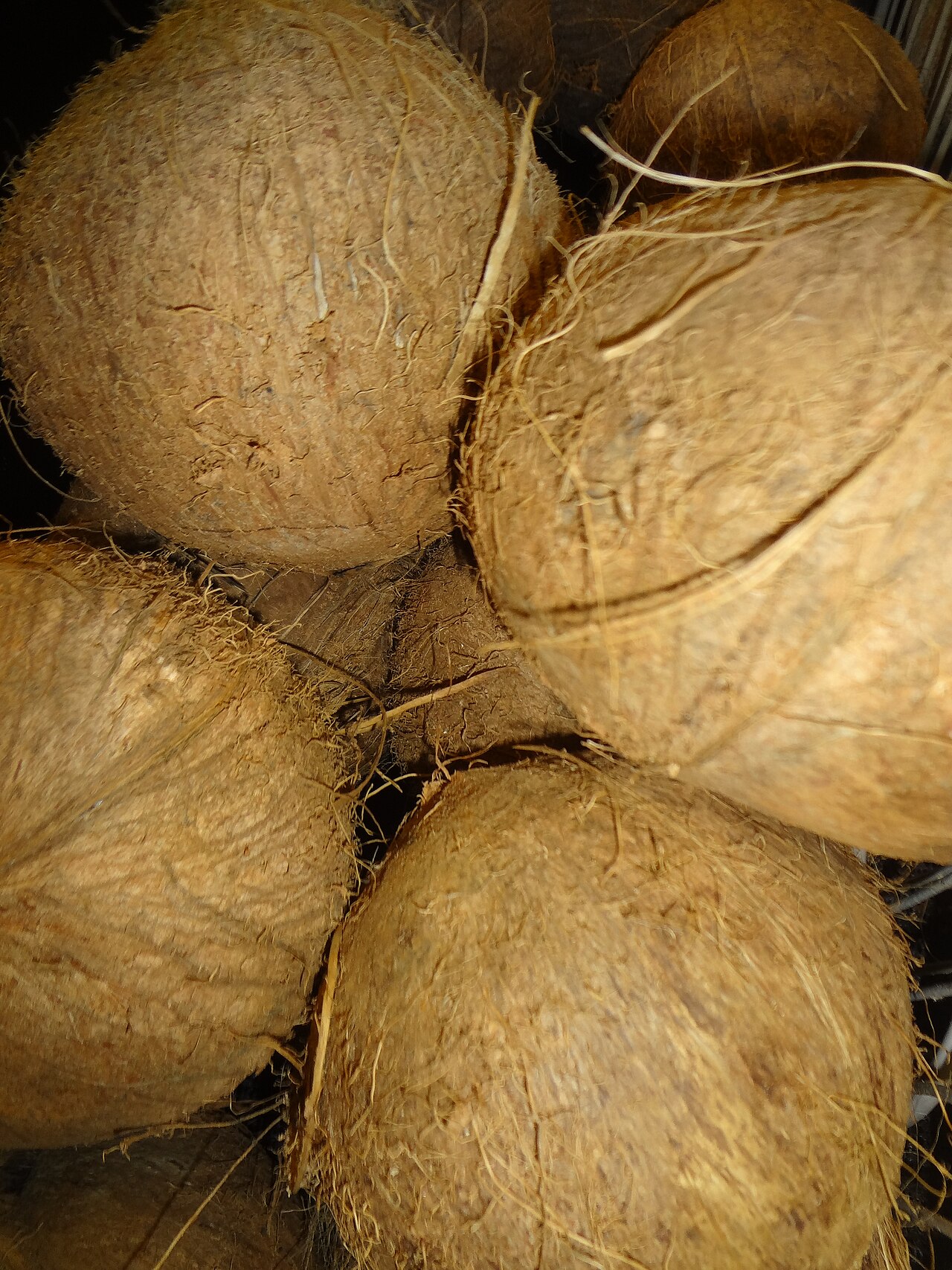
With coconut, the seed-saving section comes with a plot twist: the seed is the coconut. The whole nut — husk, shell, flesh, and the little embryo tucked under one of the shell’s three eyes — is a single giant seed, and it plays by completely different rules from the packet seeds in your drawer. Chief among them is that it refuses to be stored. Coconut seed is recalcitrant, which is the botanical term for a seed that dies if you dry it out: there is no cool, dry jar of coconut seed waiting for spring, because a dried-out coconut is copra, not a palm. If you want to grow a coconut palm from seed, you are planting a fresh nut, promptly, and that changes every step that follows.
Choose a mature brown nut from a healthy, productive palm, not a green drinking nut picked early — the nut needs its full time on the palm, roughly a year from flower to maturity, to finish building its embryo and its food reserves. Give it the shake test: a good seed nut still sloshes with coconut water inside, because that water is the seedling’s first drink, and a nut that sounds dry or hollow has already lost too much of it. Keep the husk on — it is insulation and a moisture reservoir, not packaging to remove — and plant within weeks of harvest, not months. Fast-germinating dwarf types are the most impatient of all and should go into soil almost immediately, while slower tall types tolerate a short rest in a shaded spot, stalk-end up on sand, as long as the water inside does not dry out. Never seal a seed nut in plastic or stash it in a refrigerator and expect it to wait politely; trapped moisture rots it, and drying kills it.
Plant the nut on its side or at an angle with about two-thirds of it buried in warm, sandy, well-drained soil, in full sun, and keep the soil moist but not waterlogged while you wait. Waiting is the operative word: germination is slow, with sources giving a range of roughly one to four months depending on type, and the sprout emerges from one of the shell’s eyes like a green periscope before the first fronds unfurl. Give the young palm the sunniest, frost-free spot you have — in Florida that means the far south, zones 10–11, with no frost whatsoever — and room to become a very large tree, well away from paths, patios, and parking, because falling nuts are a genuine hazard. A seed-grown palm takes years to fruit, so this is a project measured in birthdays, not weekends.
On trueness to type, honesty is required: a coconut seedling is not a clone of its mother. Tall types cross-pollinate freely, so a seedling from a tall palm is a genetic remix that may fruit differently, grow differently, and weather storms differently from its parent. Dwarf types, which mostly pollinate themselves, come much closer to their parents, but even they are not guaranteed copies. If you need an exact named variety — a particular dwarf for a small yard, say — buy a nursery palm of that variety instead of gambling on a nut. Save and plant nuts when the adventure is the point: a palm you grew from a nut you shook, planted sideways, and waited months for is a story no nursery tag can match, and it will outlive the telling of it.
Varieties
Every named variety of Coconut with its own growing guide:
- Malayan Dwarf Coconut — The shorter, pickable coconut: a semi-dwarf palm with green, yellow, or gold nuts you can actually harvest with a ladder.
- Fiji Dwarf Coconut — The true dwarf coconut: small, slow, dense-shaded — and the one UF/IFAS trials flagged as promising against lethal yellowing.