
💛 Winter Jasmine
What it looks like
How to grow
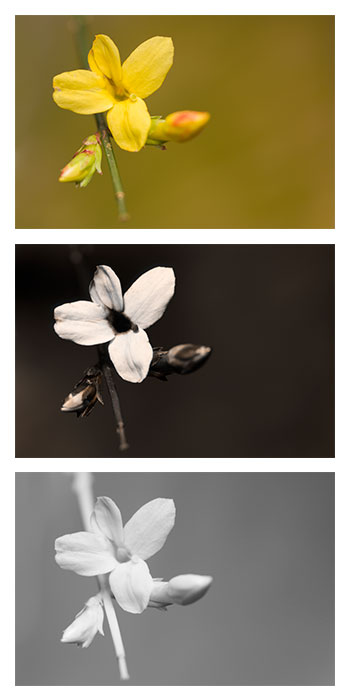
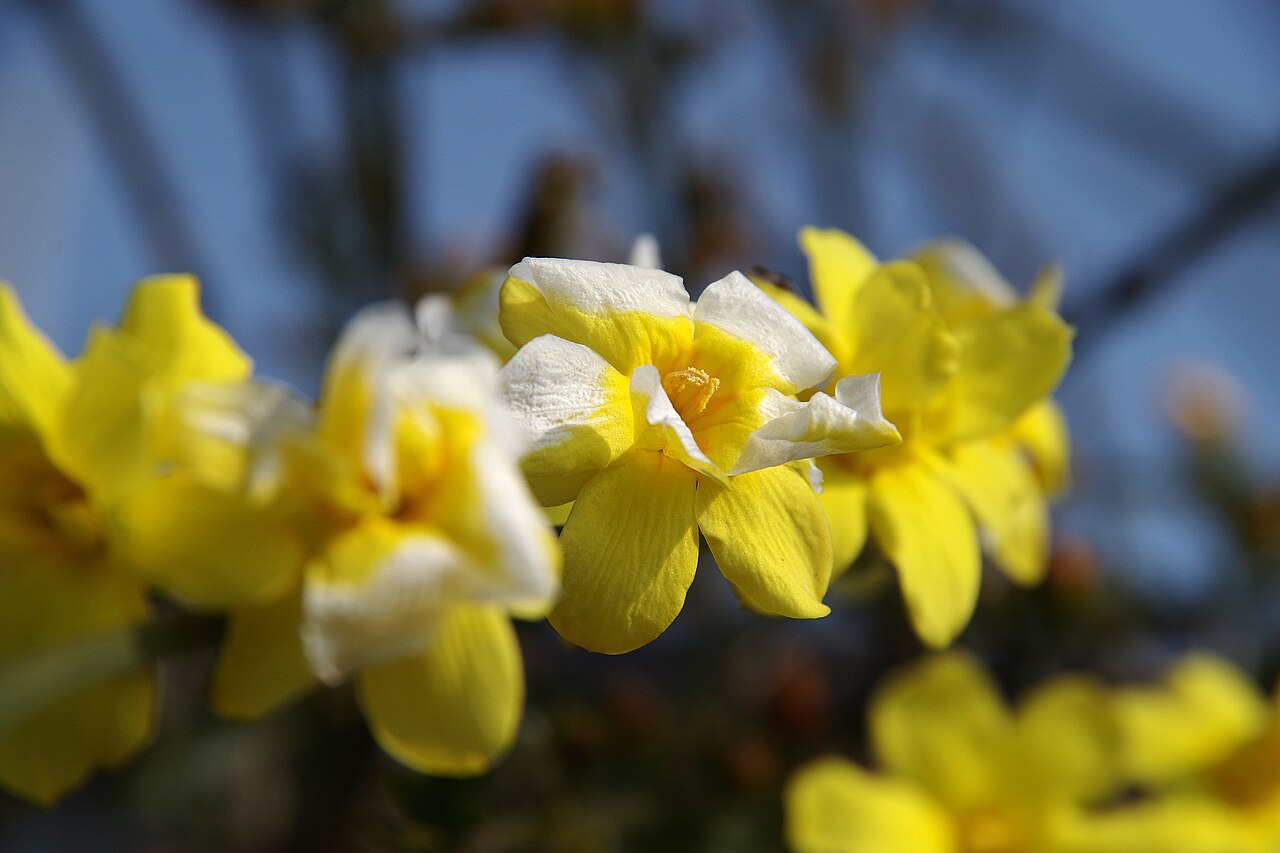
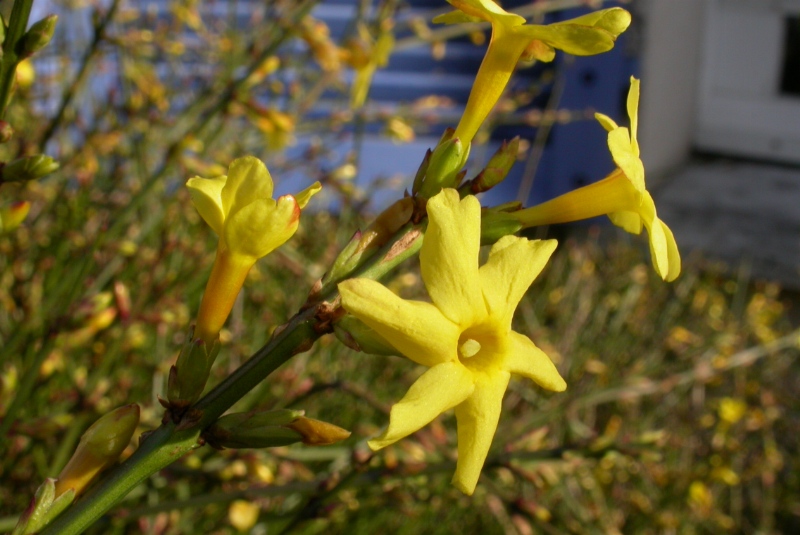
Winter jasmine is a tough, arching, deciduous shrub that behaves like a vine when you give it something to climb: its long green stems can be tied to a trellis, wall, or fence, or left to sprawl as groundcover on a slope. It is not a twiner and its flowers have no fragrance, which surprises people who expect jasmine perfume — its gift is timing instead. Bright yellow star flowers open on leafless stems in late winter to early spring, weeks before most shrubs wake up. Plant in spring or fall in well-drained soil of almost any type, including poor soil and clay, as long as it drains. Tie stems to the support as they grow, since they will not attach on their own.
Water & feeding
Water regularly in the first season, then only in dry spells; once established it is drought-tolerant and resents soggy soil more than neglect. Feed lightly in spring with compost if growth is weak — most plants need little or no fertilizer. Mulch to hold moisture and suppress weeds, and prune right after flowering, cutting back flowered stems to encourage the new wood that will carry next winter’s blooms.
Common problems
- Stems rooting wherever they touch soil — useful on a slope, a nuisance in a border. Lift and cut rooted tips, or let it be groundcover where that is the plan.
- Flowering on old wood cut at the wrong time — prune after bloom, not in fall or winter, or you will prune off the flowers you were waiting for.
- Few flowers in shade — it tolerates shade but blooms best in sun, so give it the sunniest wall you have for the winter show.
- Mealybugs and aphids — usually minor; wash off with water and improve air flow rather than spraying a plant that blooms when few pollinators are active.
Harvest & notes
Cut a few flowering stems in late winter for a vase — they open indoors and are one of the earliest cut flowers of the year. Otherwise the harvest is the sight of yellow against a grey garden, and the knowledge that something is already awake while the rest of the garden is still asleep. Compost prunings, and do not let rooted stems escape into beds where you do not want a groundcover.
Browse all plant & pest guides
Propagation
The honest headline: winter jasmine rarely sets seed, and layering is the route. Jasminum nudiflorum almost never flowers with seed in cultivation, and when it does, the seed is rarely viable. There is no seed to save, and no reason to try. If your plant is flowering, enjoy the yellow — do not plan a seed harvest around it.
Layering is how winter jasmine spreads itself: a stem that touches the ground roots where it lies, and a rooted layer is a plant by spring. Peg a low stem down to the soil, cover it with a little compost, and check it in a few months — once it has roots, cut it free and replant it. Cuttings are just as easy: take a stem cutting six to eight inches long in summer, strip the lower leaves, and stick it in moist mix — it roots in weeks.
Ask a friend growing it for a layer or a cutting, or buy a plant at a nursery — one plant becomes a hedge fast, and every plant is a clone, so the yellow flowers you love are the flowers you get. Winter jasmine is a scrambler, not a climber, so give it a wall or a bank to cascade over.
In Florida, winter jasmine is a warm-climate shrub for zones 6 to 10, happiest in full sun and well-drained soil. It blooms in late winter, before the leaves come out, which is a gift in a season when not much else is flowering.
Varieties
Every named variety of Winter Jasmine with its own growing guide:
- Aureum Winter Jasmine — The variegated winter jasmine: gold-splashed leaves, yellow winter flowers, and colour even when it is not blooming.
- Mystique Winter Jasmine — The silver-edged winter jasmine: dark green leaves edged in white, with the same bright yellow winter stars on bare stems — the winter jasmine for foliage first.
- Nanum Winter Jasmine — The dwarf winter jasmine: all the late-winter yellow stars in a plant that rarely tops three feet — the winter jasmine for small gardens and pots.