
☕ Cup-and-Saucer Vine
What it looks like
How to grow
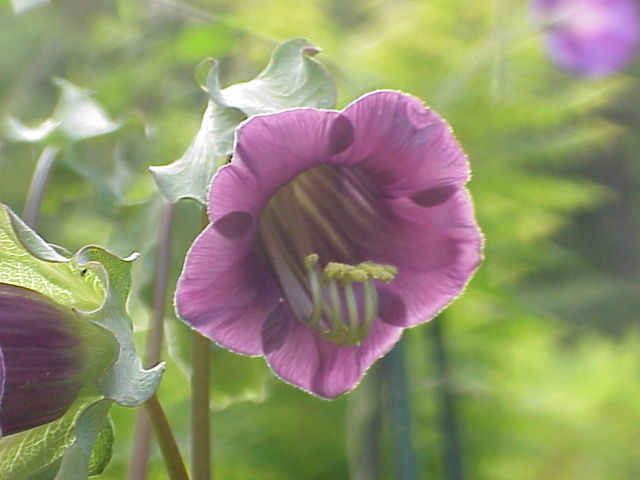
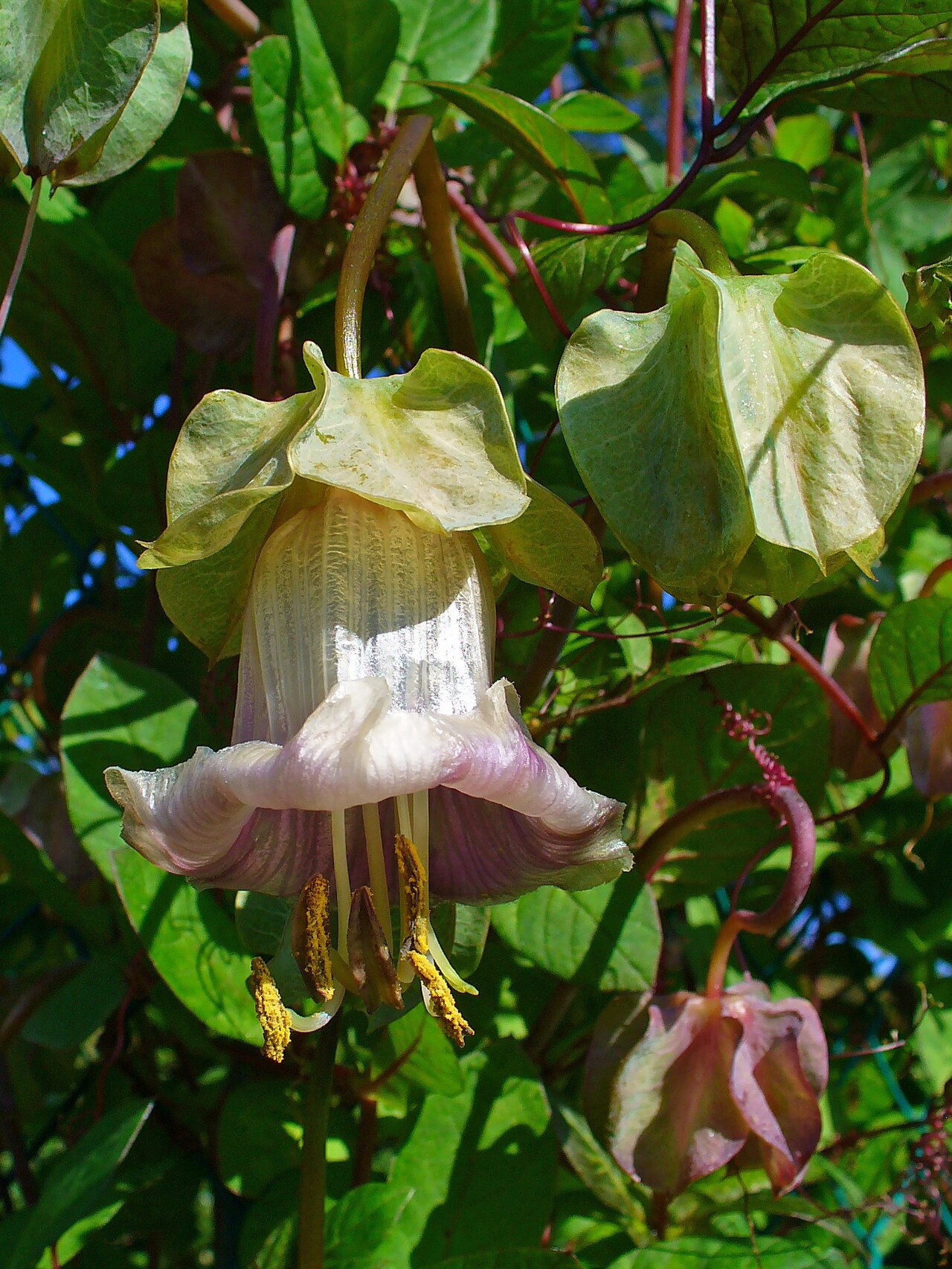
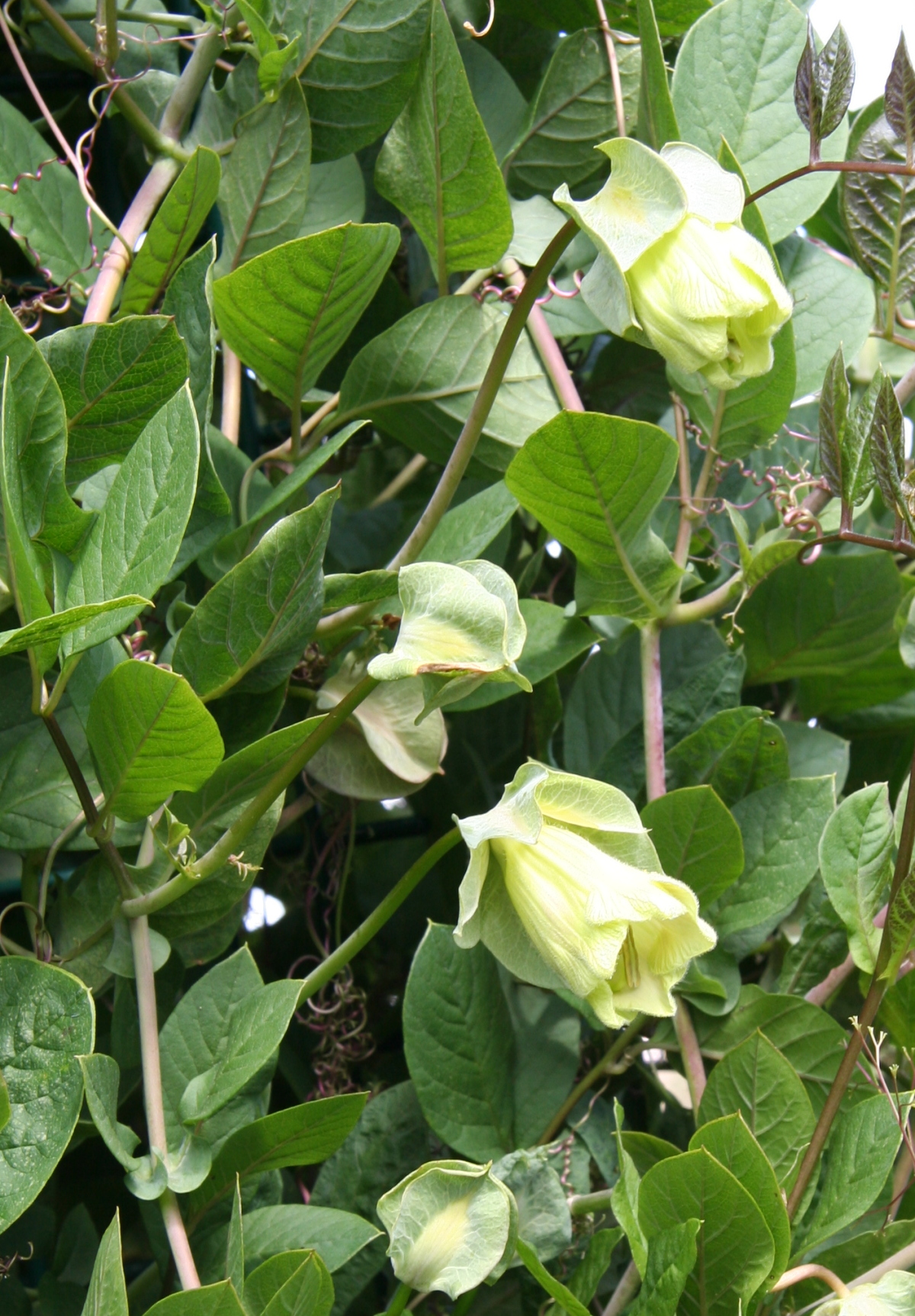
Cup-and-saucer vine, also called cathedral bells, is a tender perennial vine from Mexico, usually grown as an annual, with one of the most distinctive flowers in the garden: a cup of petals sitting in a large green saucer-like calyx, opening pale green and deepening to purple (or white in white forms) over a few days. Start seed indoors 6-8 weeks before last frost — soak seed for a couple of hours, sow on edge, and keep warm (70-75°F), since germination takes 10-24 days and sometimes longer. Set out after frost danger at the base of a tall, sturdy trellis or fence, and give it room: it climbs by tendrils at the leaf tips and will cover a structure fast once summer heat arrives.
Water & feeding
Keep soil moist but not soggy; water regularly in heat, and mulch to hold moisture. Feed lightly with compost at planting, and a balanced feed if growth stalls — this vine is vigorous without heavy feeding. Pinch shoot tips if you want bushier growth low on the trellis, and train young stems onto the support before they tangle. In cool summers, bloom may arrive late, so start early indoors and choose the sunniest spot you have.
Common problems
- Slow to start, then suddenly everywhere — start indoors, be patient with germination, and have the support ready before the growth spurt.
- Late bloom in short seasons — direct-sown plants flower later than transplants, so indoor sowing is worth it north of zone 7.
- Tangling — guide stems onto the trellis early; once tendrils grip each other, untangling tears leaves and buds.
- Few serious pests — this vine is usually unbothered, which is part of its charm; aphids, if they appear, wash off with water.
Harvest & notes
Cut a few flowering stems for a vase in late summer and fall, where the cup-and-saucer shape looks like something from a botanical illustration and the open flowers carry a honey scent. At frost, pull annual vines and compost them, or in frost-free zones cut back and let the vine regrow. Save seed by letting a few pods dry on the vine, but note that home-saved seed may be slower to germinate than fresh bought seed.
Browse all plant & pest guides
Saving seeds
Cup-and-saucer vine (Cobaea scandens) is one of those plants where saving seed feels like getting away with something: one vine, left to its own devices, hands you next year’s trellis full of purple bells for free. Let a few flowers alone at the end of the season instead of deadheading everything, and watch for the pods that follow. When a pod has dried on the vine until it feels papery and the seeds inside rattle, it is ready. Pick it before frost turns the vine to mush, because a frozen pod is a ruined pod. Split it open over a bowl and you will find flat, papery seeds that look like they were designed by someone with a fondness for origami.
Cleaning is simple: shake out the chaff, pick out any shrivelled seeds, and spread the good ones in a single layer indoors for a week or two until they feel thoroughly dry. Then comes the one fiddly bit, because cobaea seed wears a hard coat and can be stubborn about waking up. Gardeners disagree about the best wake-up call, and honestly both camps have a point: some nick the coat gently with a nail file, others give a short soak in room-temperature water. What everyone agrees on is the failure mode — a long soak in cold, soggy mix rots the seed instead of waking it. Whichever route you take, sow indoors six to eight weeks before your last frost, in warm mix kept moist but never waterlogged, and be patient: germination is erratic and can take two to four weeks, with stragglers popping up after you have mentally written them off. Sow a few extra and do not compost the pot early.
For storage, treat saved seed like the tropical perennial it comes from: fully dry, in an airtight container, cool and dark, with a desiccant packet if you have one — Florida humidity is the enemy of every seed envelope left on a shelf. Sources disagree about how long cobaea seed lasts, with some claiming several years and others warning that viability falls off fast, so the honest advice is to use your seed within a year or two and sow generously rather than rationing a precious old packet. One more honesty note: seedlings from a named colour form do not always match the parent, so if you grew a white-flowered selection and want guaranteed white flowers again, cuttings are the safer bet. And in frost-free corners, deadhead the vines you do not want seeding — a plant this vigorous will happily volunteer where you did not invite it.
Varieties
Every named variety of Cup-and-Saucer Vine with its own growing guide:
- Alba Cup-and-Saucer Vine — The white cup-and-saucer: large, bell-shaped white flowers over a green saucer, the moon-garden cobaea.