
🚩 Spanish Flag Vine
What it looks like
How to grow
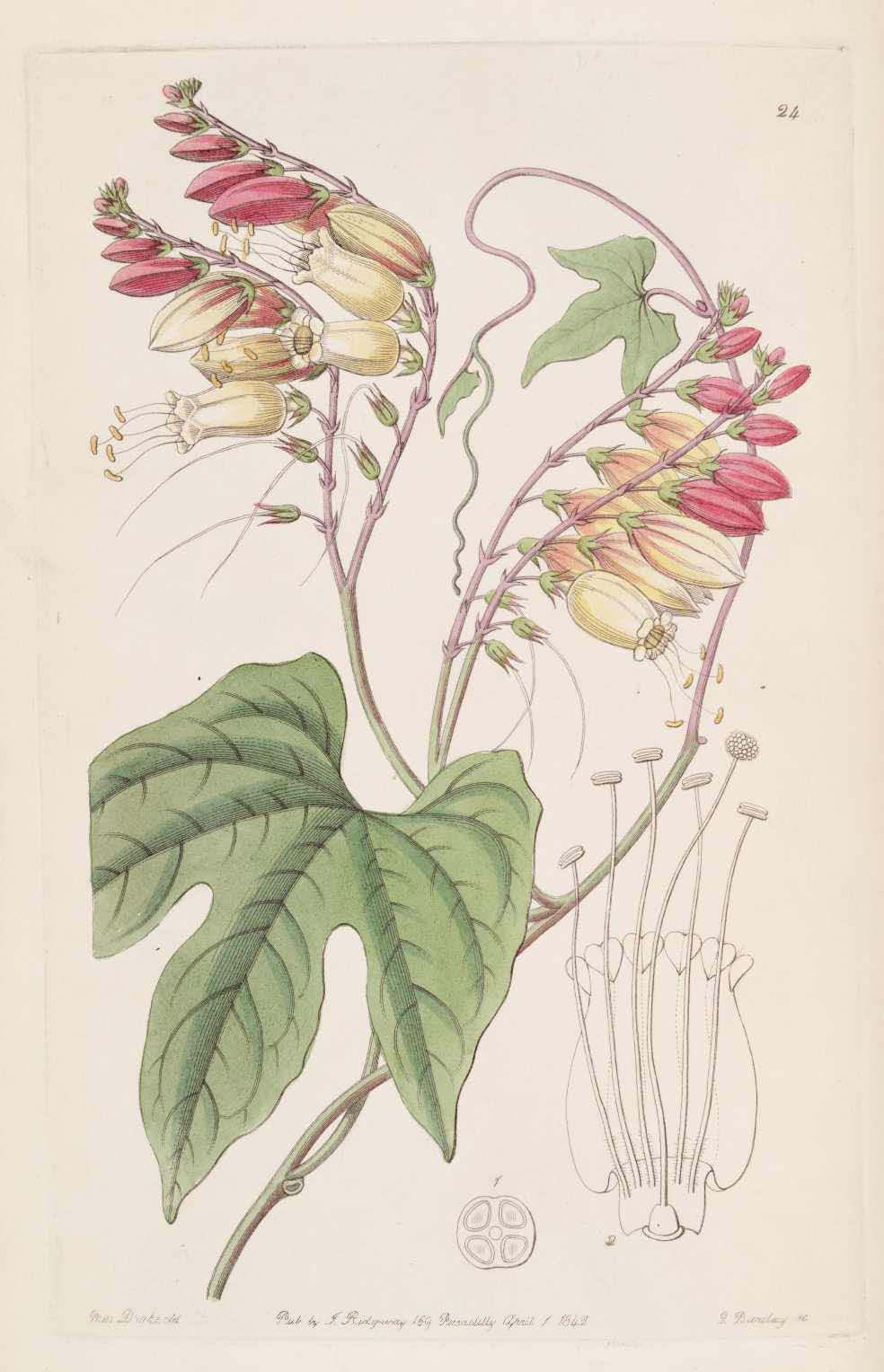
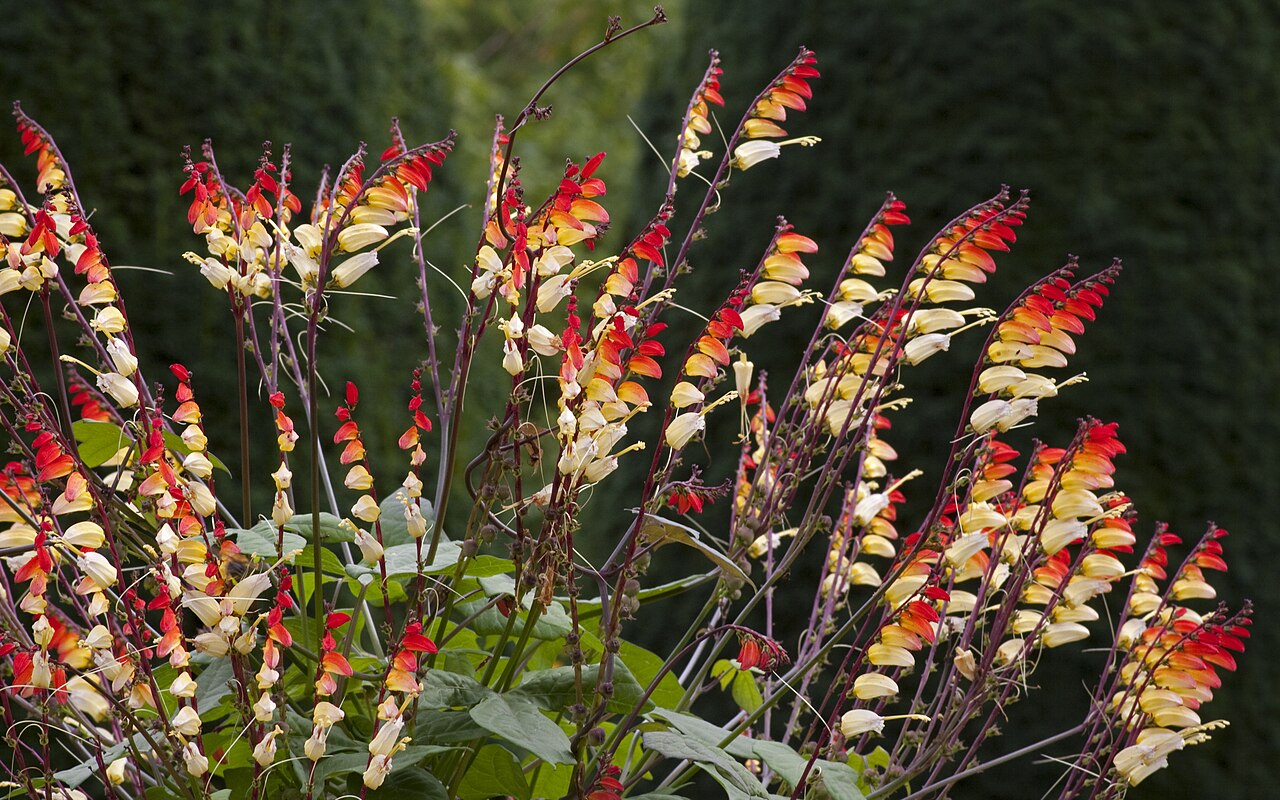
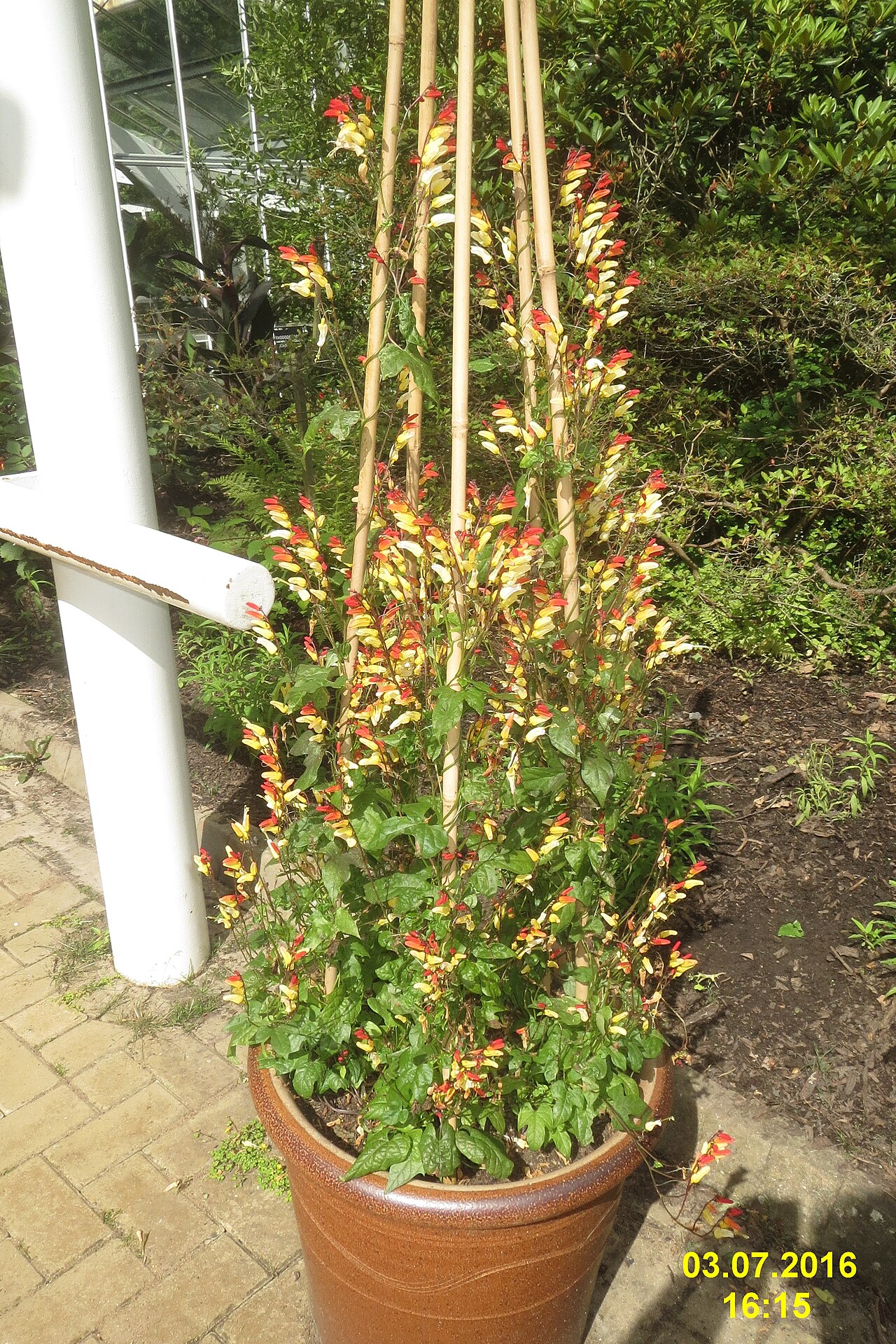
Spanish flag vine, also sold as firecracker vine and exotic love vine, is a tender twining vine from Mexico in the morning glory family. Its arching spikes carry tubular flowers that open scarlet-red and age through orange and yellow to cream, so one spike shows the whole gradient at once. Sow seed after last frost, nicking the coat and soaking overnight, or start indoors 4-6 weeks before last frost for earlier bloom — flowers take 90-120 days from seed, so an early start matters in short seasons. Plant in fertile, well-drained soil at the base of a trellis, fence, arbor, or large container with a support, and stand back: in a warm summer it can grow several feet in a month.
Water & feeding
Water regularly during active growth and keep soil evenly moist; it tolerates heat and brief drought once established, but dry soil slows flowering. Feed lightly with compost at planting and a balanced feed monthly if bloom is sparse — heavy nitrogen grows leaves instead of flags. Mulch to hold moisture, and guide young shoots onto the support before they wrap around each other, the fence, and anything else within reach.
Common problems
- Late bloom from late sowing — start indoors in cool climates, or accept a September show rather than a July one.
- Self-seeding in warm zones — remove spent spikes if you do not want volunteers next year.
- Toxicity in the morning glory family — do not eat any part of the plant, and keep seed away from children and pets.
- Aphids on shoot tips — wash off with water; hummingbirds and other pollinators visiting the spikes are worth protecting from broad sprays.
Harvest & notes
Cut arching spikes for a vase in summer and fall, where the red-to-cream gradient lasts well in water and looks like nothing else in the garden. Let a few spikes set seed for next year if you want to grow it again, collecting pods when dry. At frost, pull annual vines and compost them; in frost-free zones, cut back hard in late winter and let the vine regrow from the base.
Browse all plant & pest guides
Saving seeds
Spanish flag vine is a morning glory relative, and its seed playbook is the morning glory playbook: nick or soak the hard seed coat, then sow warm. Nick each seed with a file or soak it overnight in warm water, then sow about half an inch deep in warm soil — 70 to 80°F — and germination usually comes in one to two weeks. Cold soil rots the seed, so wait until the weather is reliably warm.
Let a few flower spikes ripen on the vine until the seed capsules are dry and brown, then collect them before they split and scatter — the vine drops its seed readily, which is why it self-seeds so well. Dry the seed thoroughly before storing; it keeps a few years in a cool, dry jar.
It will cross with other Ipomoea, so if you want pure seed, grow only one morning glory type for seed at a time, or accept the hybrids. Save from the plants with the best color show — the red-to-orange-to-yellow gradient is the whole point — and sow more than you need, since germination is good but not total.
In Florida, Spanish flag vine is a vigorous annual vine that grows fast in the heat and self-seeds freely; give it a strong trellis and keep an eye on where it wanders, because it will climb anything it touches. Deadhead if you do not want volunteers next year, or let it reseed itself into the same spot and enjoy the show again.