
💙 Bluebeard
What it looks like
How to grow
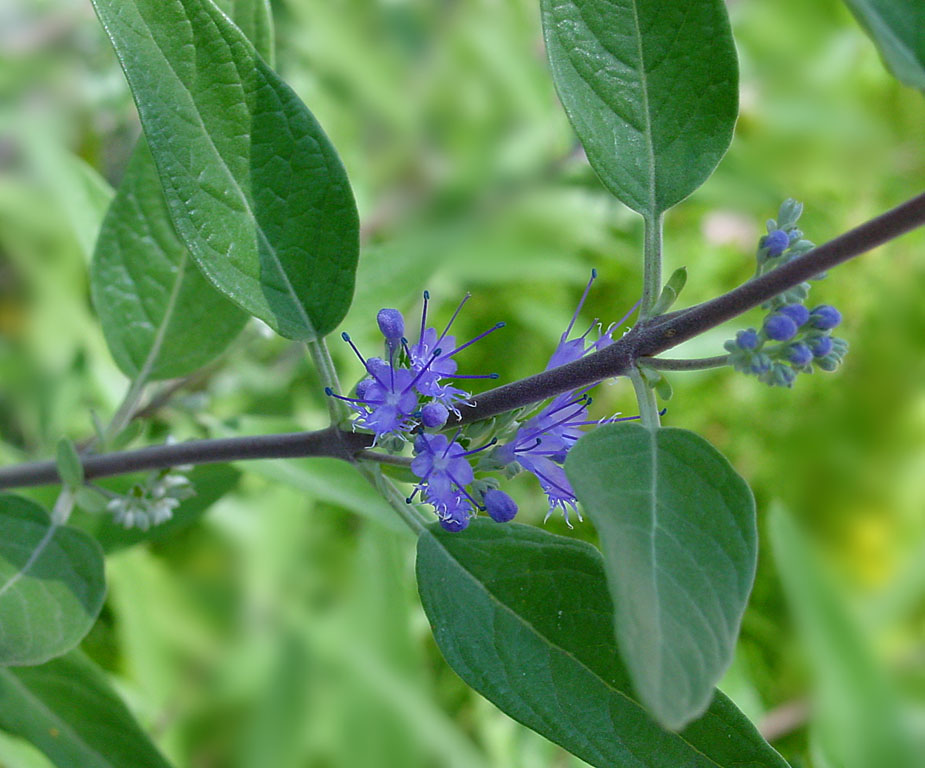
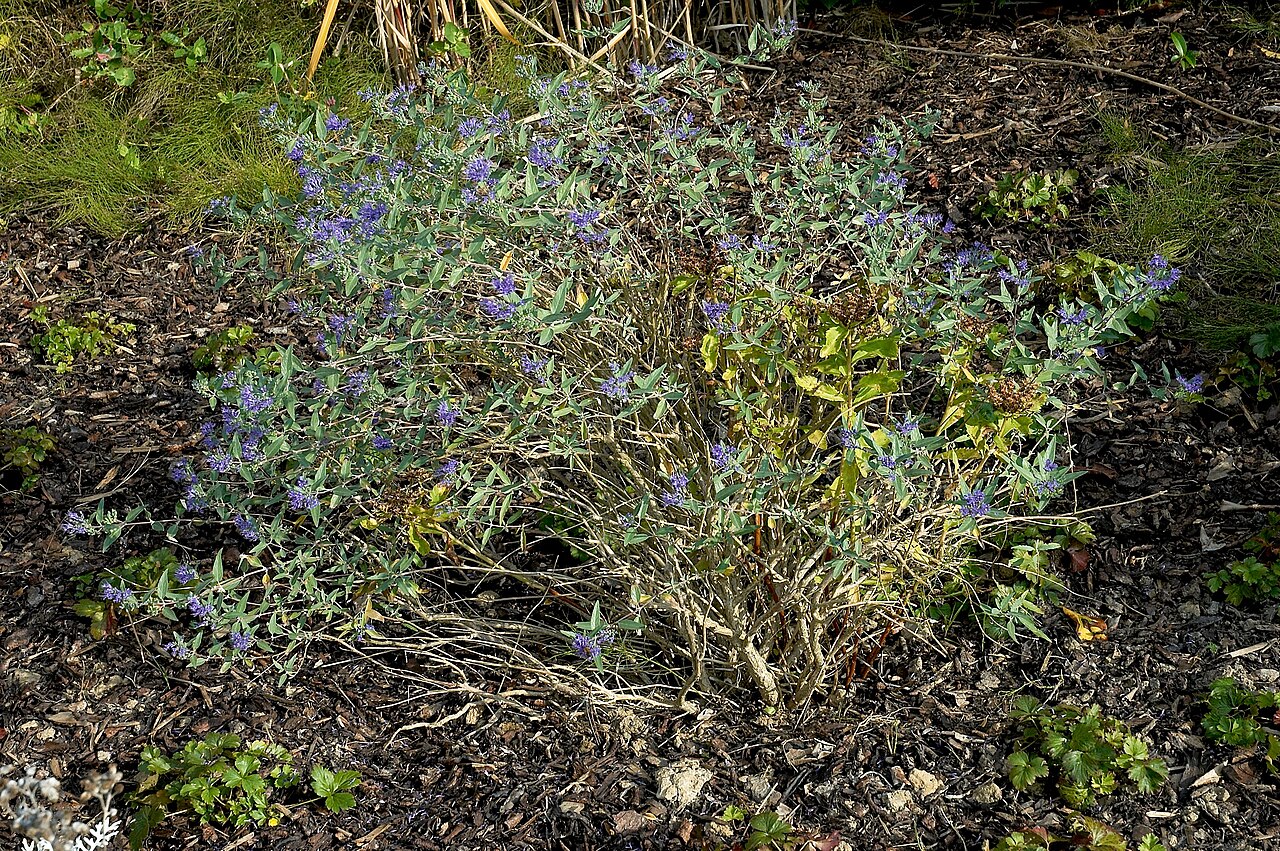
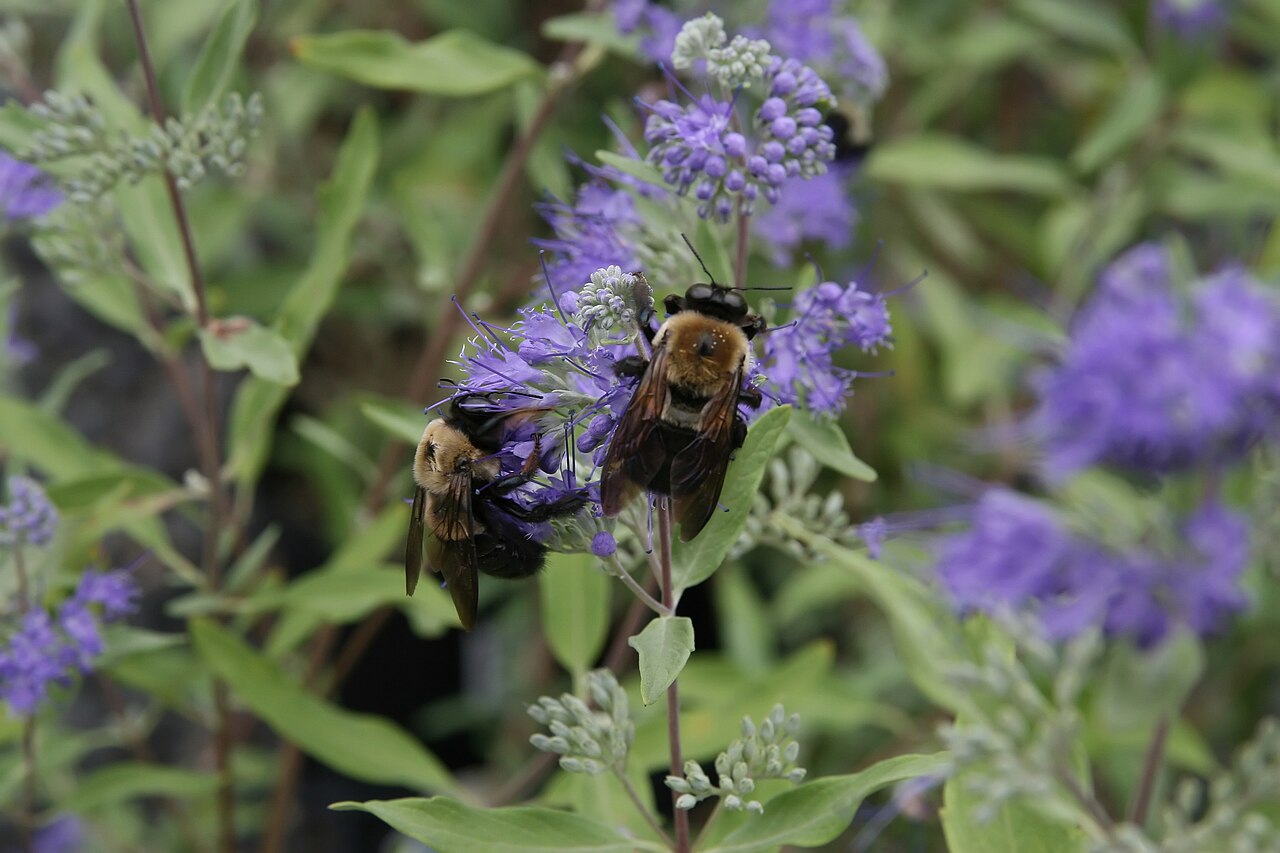
Bluebeard, also called blue mist shrub, is a small deciduous shrub with aromatic silvery-green leaves and clusters of powder-blue flowers in late summer to fall, right when bees and butterflies are looking for late nectar. It grows 2-3 feet tall and wide and fits neatly into sunny borders, rock gardens, and containers. Plant in spring in full sun and very well-drained soil — bluebeard’s great enemy is wet winter soil, not cold. In cold zones it may die back to the ground in winter and regrow from the base in spring, which is normal: treat it like a perennial that happens to be woody in mild climates.
Water & feeding
Water regularly for the first season, then water only during dry spells; established bluebeard is drought tolerant and dislikes soggy soil. Feed lightly, if at all — compost in spring is plenty, and rich soil produces floppy growth. Mulch with gravel or light organic mulch, keeping it away from the crown, and avoid heavy winter mulch that holds moisture against the stems.
Common problems
- Winter dieback — expected in cold zones; cut dead wood back hard in spring and let it regrow.
- Root rot — almost always wet soil; plant on a slope or raised bed if your soil stays wet.
- Floppy growth — usually too much shade, water, or fertilizer; move to full sun and feed less.
- Leggy older wood — cut back by half to two-thirds each spring before new growth for a compact, floriferous plant.
Harvest
There is no harvest, though the flowers are lovely cut for late-summer bouquets. Prune hard in spring — bluebeard flowers on new wood, so spring pruning is not only safe, it is the whole point. Propagate by softwood cuttings in summer.
Browse all plant & pest guides
Saving seeds (genus level — and why cuttings win for named varieties)
This section is written at genus level, because bluebeard in gardens is mostly the hybrid Caryopteris × clandonensis and its named varieties, and the seed story is the same across them: the seed is real, the offspring are a surprise, and the cuttings are the faithful copy.
Start with the seed, because it is the fun experiment. After the late-summer blue flowers fade, small dry seed heads form along the stems. Wait until they are brown and dry in late autumn, then clip them into a paper bag and shake or rub the tiny nutlets free. Sow them on the surface of damp seed compost — do not bury them deep — and leave the pot in a cold frame over winter. The cold season breaks their dormancy, and germination follows in spring. Some growers give stored seed a cold, damp chilling period of a few months in the fridge instead; either way, the principle is the same, because this shrub expects a winter before it wakes up.
Now the catch, and it is a big one: seed from a hybrid or a named variety will not come true. The seedlings may differ from the parent in flower color, foliage color, and habit, and they can lean back toward one of the hybrid’s parent species. That is not a defect — it is genetics doing its job — but it means seed is for gardeners who enjoy surprises, not for anyone trying to reproduce ‘Dark Knight’ or ‘Heavenly Blue’ exactly. If you want the exact plant, take softwood cuttings instead: in late spring or summer, snip a few inches of new growth that has not yet turned woody, strip the lower leaves, and stick the cuttings in a light, well-drained mix kept humid but not wet. New leaves mean roots, and a rooted cutting is the parent plant, photocopied.
One more practical note: keep young plants sheltered through their first winter, since rooted cuttings and seedlings are noticeably less hardy than an established shrub. And the Florida note for the seed jar: dry saved seed thoroughly before storing — bluebeard’s little nutlets look dry long before Florida humidity has finished with them — then store airtight with a desiccant packet, cool and dark. Seed saved damp is seed composted early.
So the rule of thumb is simple: sow seed for fun and for the lottery ticket of a new seedling worth keeping; take cuttings for certainty. A shrub that blooms blue in late summer, when the garden is running low on that color, deserves both kinds of gardener.
Varieties
Every named variety of Bluebeard with its own growing guide:
- Dark Knight Bluebeard — The deepest blue in the bluebeard family: dark violet-blue flower clusters in late summer, when the garden is running out of steam.