
🔴 Skimmia
What it looks like
How to grow
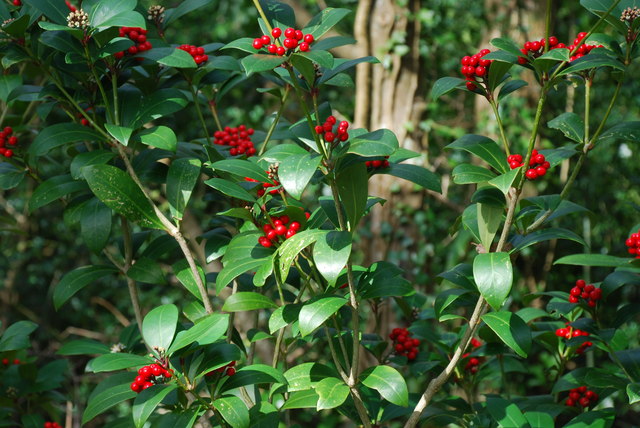
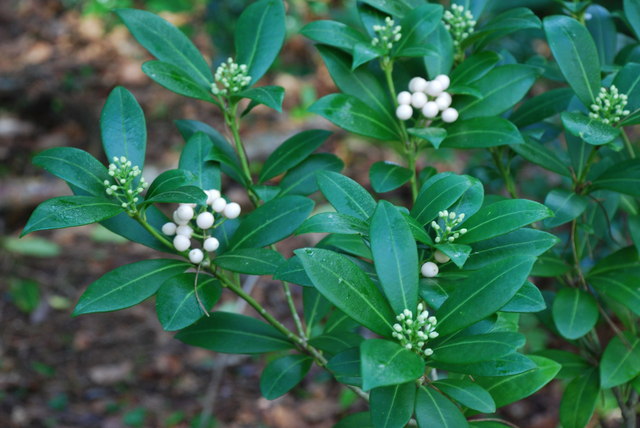
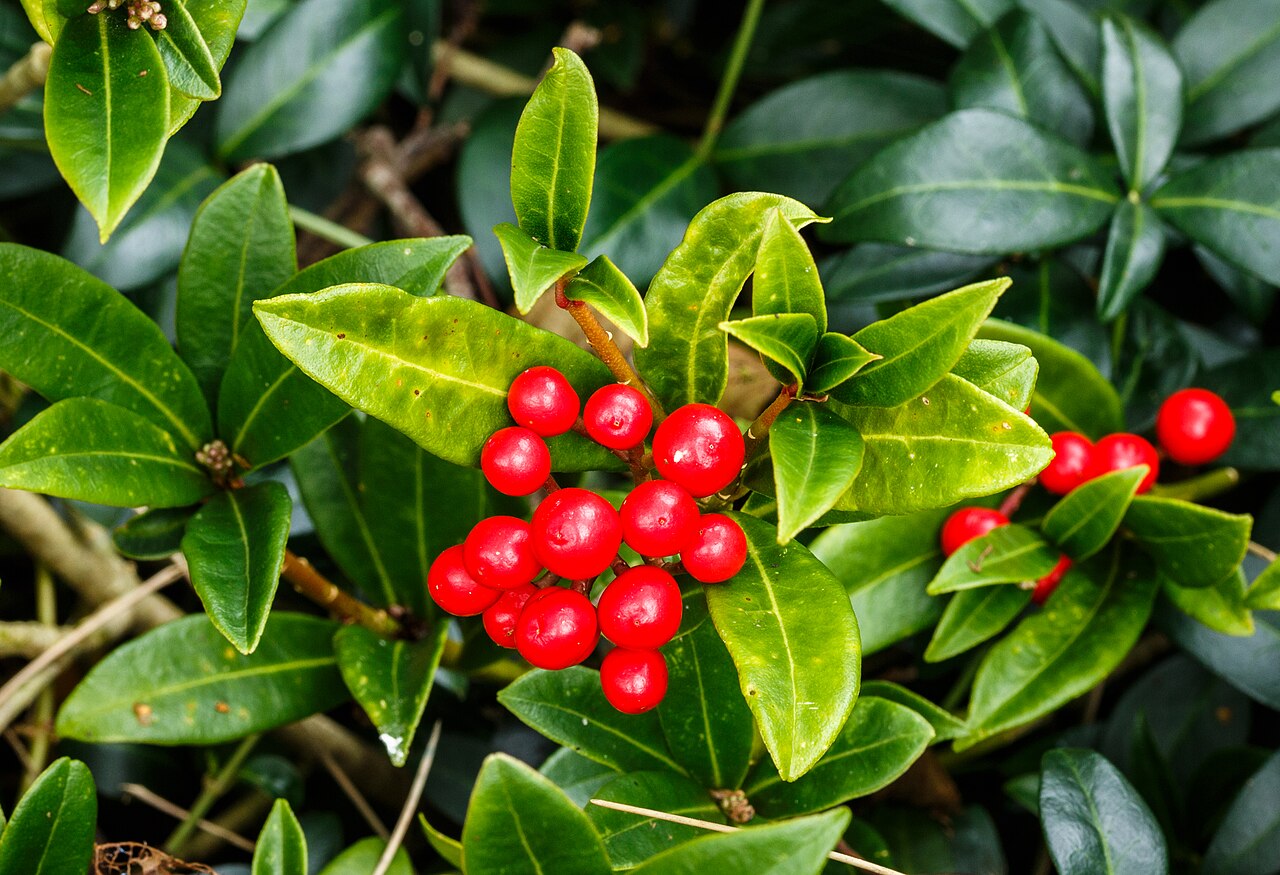
Japanese skimmia is a compact broadleaf evergreen shrub with glossy dark green leaves, fragrant white flower clusters in spring, and — on female plants — clusters of bright red berries that persist through winter. It grows 2-4 feet tall and wide, with male plants slightly larger and more floriferous. Skimmia is dioecious: only females fruit, and they need a male nearby for pollination, roughly one male per six females. Plant in spring or fall in part to full shade in moist, humus-rich, well-drained soil — skimmia is one of the few evergreens that genuinely prefers shade, and sun scorches its leaves, especially in cold winters.
Water & feeding
Keep the soil evenly moist; skimmia dislikes drought and needs regular water in dry spells. Mulch with compost in spring and keep plants mulched year-round to hold moisture and insulate roots. Feed lightly with a fertilizer for acid-loving plants in spring. Protect from winter wind and sun, which cause leaf burn — a sheltered, shaded site is the whole secret to skimmia.
Common problems
- No berries — almost always a missing male pollinator, or a planting of all-male or all-female plants; check tags at purchase.
- Winter leaf burn — sun and wind in cold weather; site in shade and shelter, and water before hard freezes.
- Yellow leaves — usually alkaline soil or drought; check pH and moisture before fertilizing.
- Scale insects — occasional; treat with horticultural oil if needed.
Harvest
Do not eat the berries: skimmia fruit is poisonous to people and pets. The harvest is ornamental — cut berry-laden branches for winter arrangements, and enjoy a shrub that looks good in the darkest corner of the garden.
Browse all plant & pest guides
Saving seeds
Dioecious honesty first: skimmia plants are male or female, and you need one of each for berries. If your plant never sets fruit, it is probably a lone female with no male nearby, or a male — and a male will never give you seed no matter how long you wait. Check which you have before you plan a seed harvest.
From a berried female, collect the red berries when they are fully ripe in fall, clean the pulp off the seed, and give it a cold, moist chill — two to three months is the common figure, though some sources recommend a warm spell first and then the cold, and the ranges disagree. Sow in fall outdoors and let winter do it, or fridge-stratify in damp vermiculite and sow warm in spring. Germination can be slow and staggered, so do not give up on the tray after a month.
Seedlings vary in berry production and form, and the named cultivars come only from cuttings. And a safety note: the red berries are poisonous if eaten, so keep them away from curious children and do not let the bright color fool anyone into tasting them.
And the Florida honesty: skimmia is a cool-climate shade shrub for zones 6 to 8 that struggles in Florida heat. Your best shot is north Florida, in deep shade with moist, acidic soil, and even there it is a stretch — a plant for the gardener who likes a challenge, not a sure thing.