
🌸 Catalpa
What it looks like
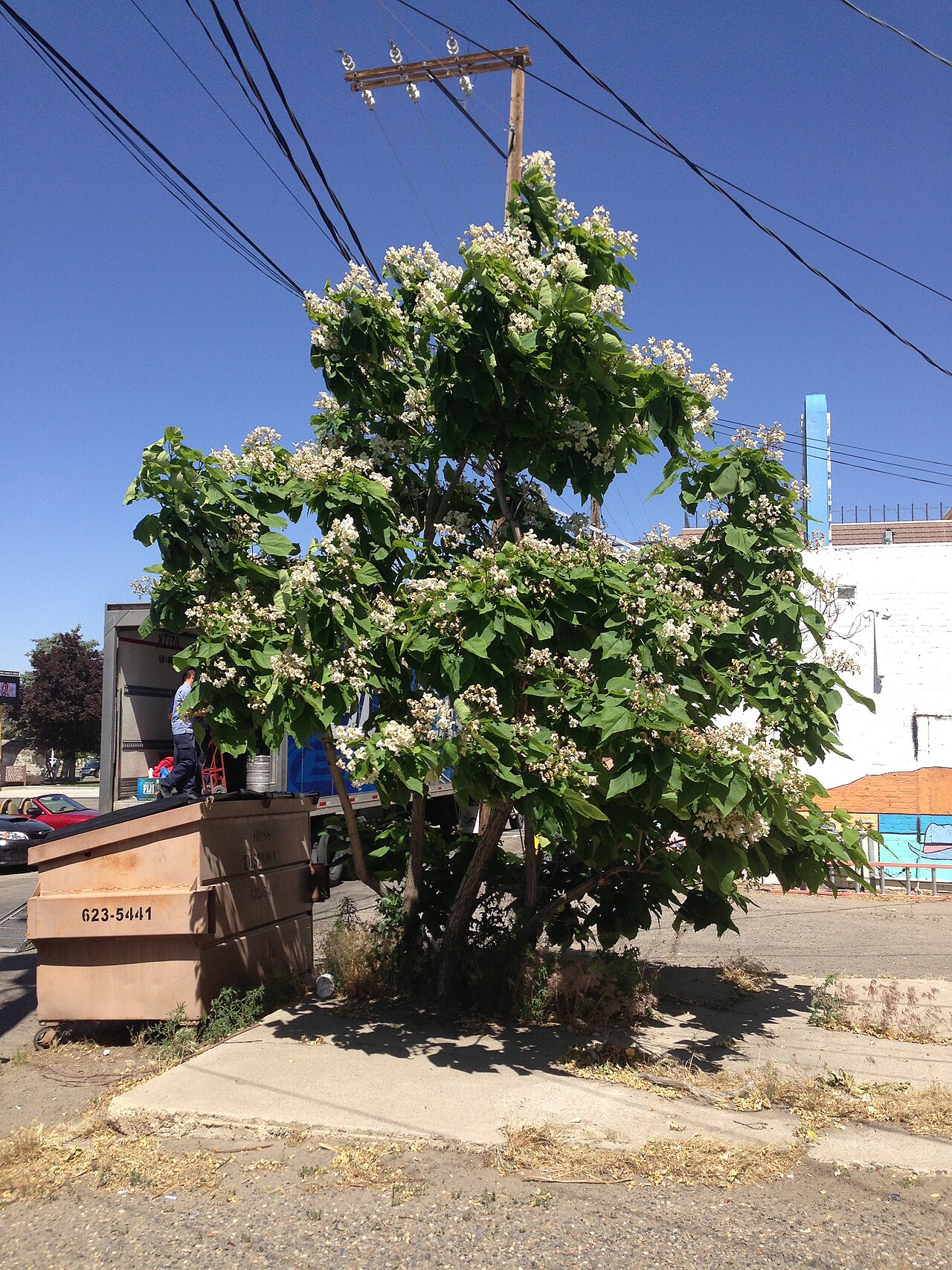
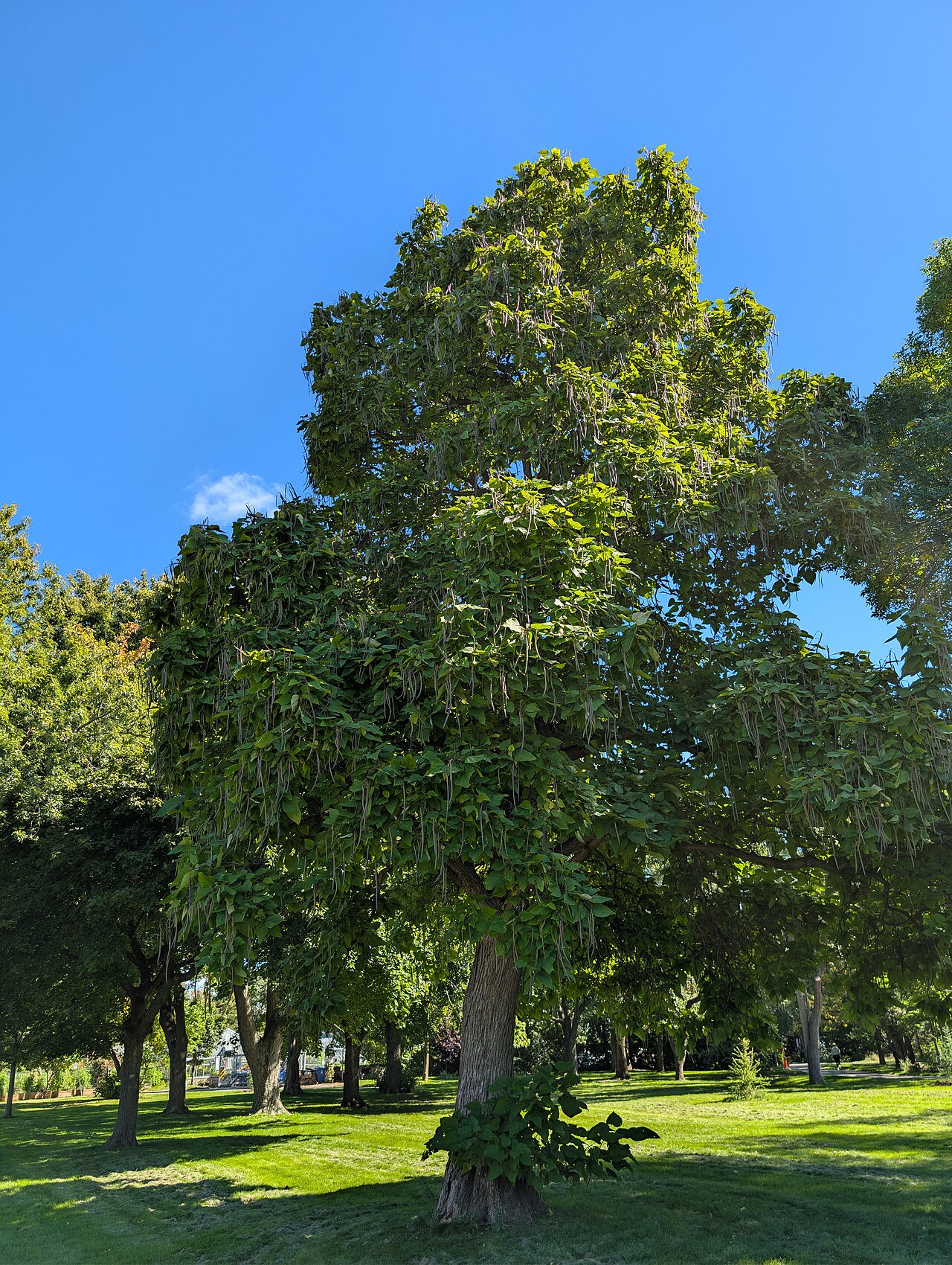
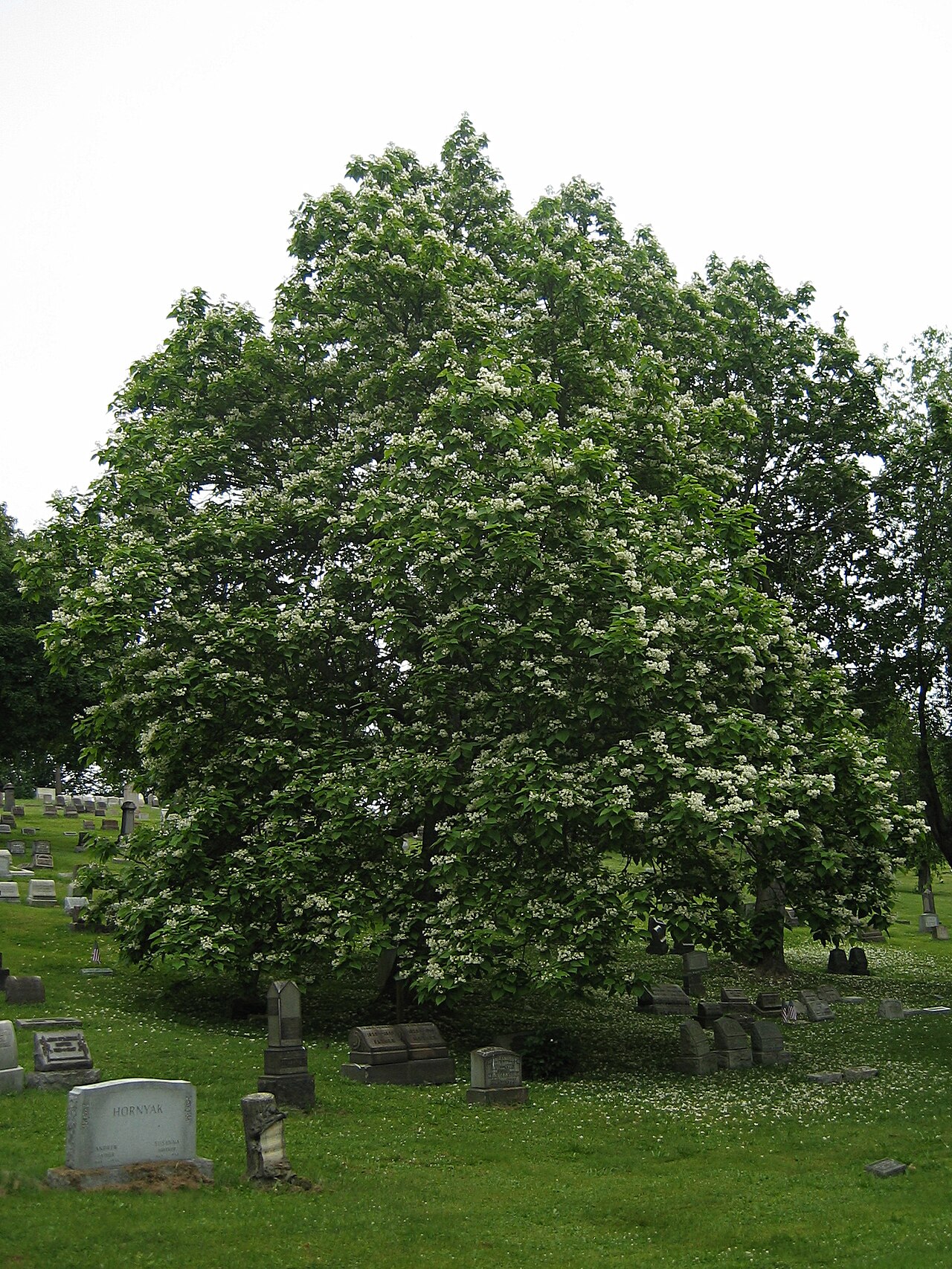
How to grow
Northern catalpa is a fast-growing, large shade tree, 40-60 feet tall, with leaves up to a foot long, showy white flower panicles splashed with yellow and purple in late spring, and long, bean-like seed pods that dangle all winter. Its southern cousin, Catalpa bignonioides, is smaller and a touch less hardy. Plant in full sun in deep, moist, well-drained soil if you can, though catalpa tolerates dry, wet and alkaline soils once established. Give it a big site: it is messy, dropping flowers, leaves and pods, and it comes into leaf very late and drops leaves early, so do not plant it where you need shade in May or a tidy lawn. Note that catalpa escapes cultivation and can become weedy in some regions, so check local guidance before planting near natural areas.
Water & feeding
Water deeply while establishing and in drought; a young tree grows fast with steady moisture. Feed only if growth is poor — compost in spring is usually enough — and prune in winter to build a strong structure while the tree is young, because its wood is brittle and its branches can be weak-angled.
Common problems
- Catalpa sphinx caterpillars defoliating the tree — the famous catalpa worms, prized as fish bait; trees usually leaf out again with no lasting harm.
- Leaf spot, powdery mildew and Verticillium wilt — keep the tree vigorous, avoid wounding roots, and remove affected wood.
- Twig blight and root rot in wet, poorly drained sites — plant where drainage is decent.
- Litter — flowers, leaves and pods; site it over lawn or beds, not over a pool or patio.
Notes
Catalpa is a beloved fishing tree in the South precisely because of its caterpillars: anglers collect catalpa worms, freeze them, and use them as bait all season. If you plant a catalpa, expect visits from fishermen who know what those caterpillars are worth.
Saving seeds
Catalpa seed is the easiest kind of tree seed there is: abundant, obvious, and patient. After the orchid-like flowers fade, the tree grows long, slender pods, the “cigar pods” that hang on the branches all winter and rattle in the wind. One pod holds hundreds of flat, papery, winged seeds, and one tree makes thousands, so you need only a few pods to start a small forest. Collect them in late fall or winter once they have turned brown and dry, before they split open and the wind does your sowing for you. If you miss the window, do not despair: pods that have hung on the tree all winter have already had their cold spell, and the seeds inside are generally ready to go in spring.
Cleaning is simple. Split the pods, shake out the winged seeds, and pick out the pod debris. Dry the seeds for a few days indoors, out of direct sun, then store them in a labelled paper envelope somewhere cool and dry. A note on Florida storage, since humidity is the quiet saboteur of every seed envelope in this state: seed that feels dry on a damp afternoon may not be dry at all, so finish drying indoors and keep the envelope somewhere genuinely dry, not in a shed that sweats. Fresh seed germinates best, so aim to sow within a year of collection rather than hoarding pods for a decade.
Here is where sources disagree, and the disagreement is worth stating rather than smoothing over. Some references say catalpa seed needs a period of cold, moist stratification, a few weeks in the refrigerator in damp sand or paper, before it will germinate well. Others, including university extension guidance, say no stratification is needed at all, because the seeds naturally disperse in spring and germinate immediately. The honest reconciliation is that fresh seed, especially seed from pods that overwintered on the tree, usually germinates readily without treatment, while stored or fall-collected seed may benefit from a few weeks of cold. Either way, sow shallowly in spring in moist, well-draining mix, barely covering the seeds, keep the soil evenly moist but not soggy, and expect sprouts within two to four weeks in warm soil. Sow more than you need and thin to the strongest, because a catalpa seedling’s first job is to outgrow its siblings.
Two honest caveats before you plant your forest. First, seedlings grown from seed will not necessarily repeat a named cultivar: a seedling of ‘Aurea’ may be a perfectly good catalpa, but it is not guaranteed to be a golden one, so named varieties need vegetative propagation to stay true. Second, catalpa is generous to a fault. A mature tree drops pods everywhere, and volunteers appear under it with enthusiasm. Saved seed is a gift, but a tree that plants itself across your yard is a chore wearing a gift’s clothing, so collect what you want, compost the rest, and pull the seedlings you did not invite.
Browse all plant & pest guides
Varieties
Every named variety of Catalpa with its own growing guide:
- Aurea Catalpa — The golden catalpa: huge heart-shaped leaves in chartreuse-gold, orchid-like flowers, and bean pods a foot long — for north Florida only.