
❄️ Snowdrop
What it looks like
How to grow
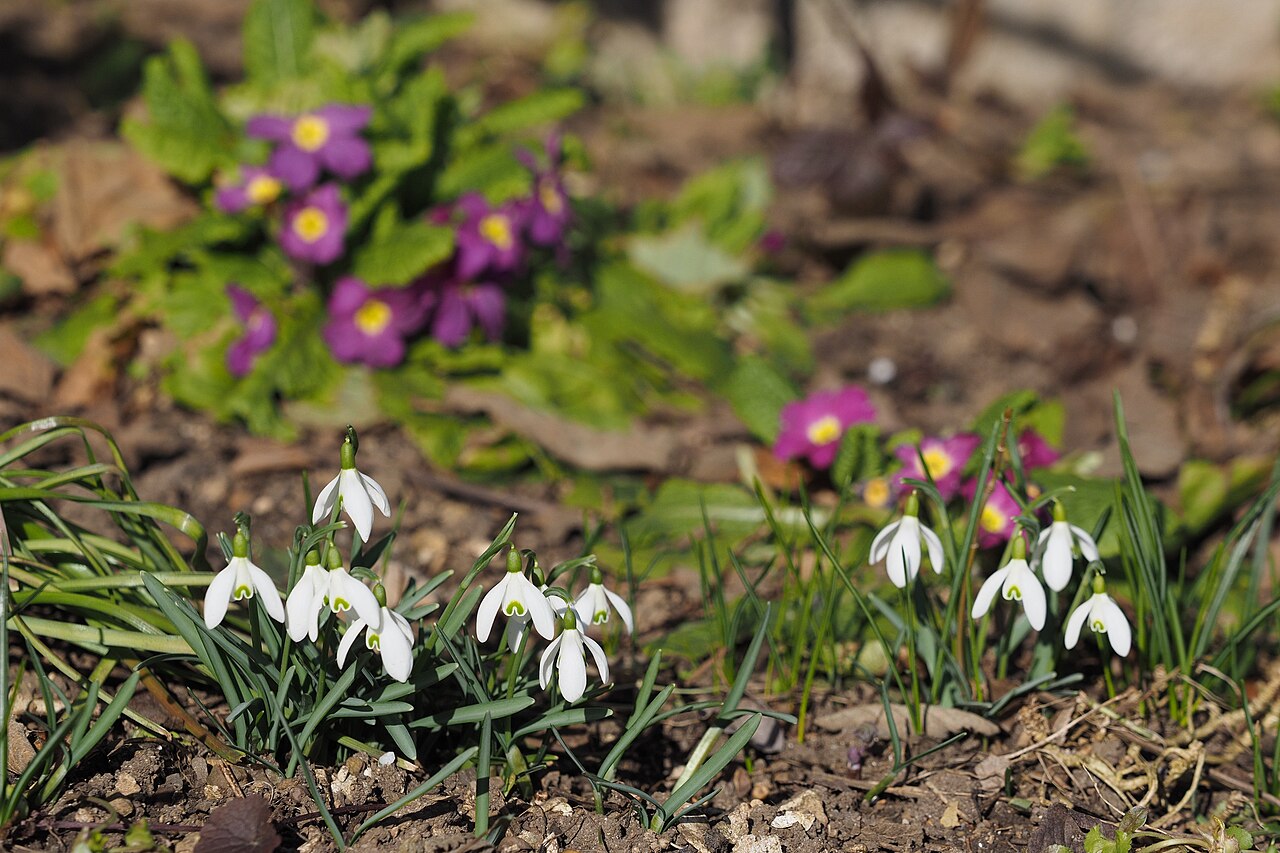
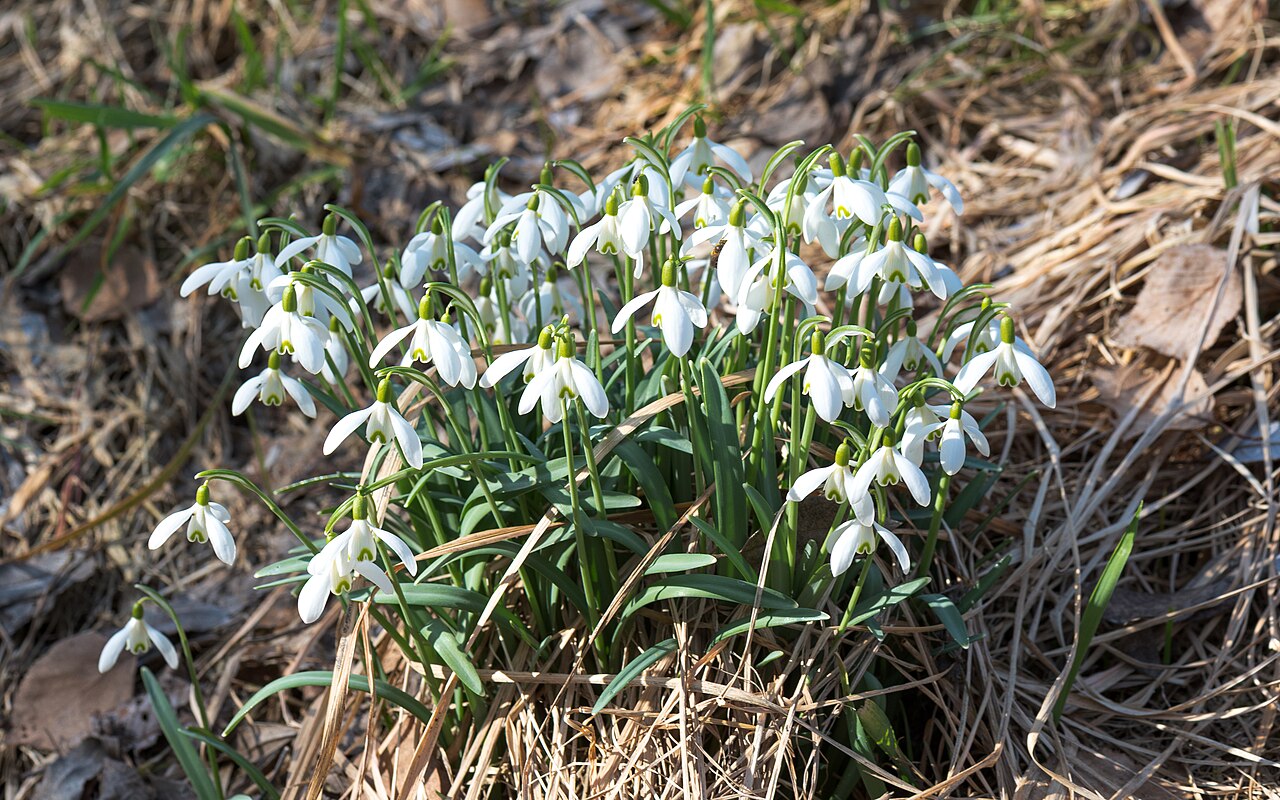
Snowdrops are small, brave, and early: 6–9 inches tall, each stem carrying a single nodding white flower with green markings on its inner petals, often blooming while snow still lies on the ground. They are at their best under deciduous trees and shrubs, where they get full sun in early spring and shade once trees leaf out, in moist, humus-rich, well-drained soil. Plant dry bulbs in fall, 2–3 inches deep and 2–3 inches apart, in generous drifts — a dozen snowdrops look sparse, fifty look like a snowfall in reverse. Even better, buy and plant them ‘in the green’ (in leaf, just after flowering) in spring: they establish far more reliably that way. Snowdrops prefer cool climates and tend to be short-lived south of zone 7.
Water & feeding
Keep soil moist through growth and bloom, and do not let it dry out in summer while bulbs rest — this is the mistake that kills more snowdrops than cold does. Water in dry spells in summer. Feed lightly: leaf mold or compost in fall is ideal; heavy fertilizer is unnecessary.
Common problems
- Bulbs failing to establish — dry bulbs are often the cause; plant ‘in the green’ for best results.
- Summer drought — mulch and water in dry summers; snowdrop bulbs must not bake.
- Short life in hot climates — south of zone 7, treat as a short-lived delight or choose a shadier, cooler spot.
- Foliage cut too soon — let leaves yellow fully after bloom before tidying.
Notes
Allow foliage to yellow and disappear naturally by late spring, then leave bulbs alone to naturalize by offsets and self-seeding into large colonies. Divide crowded clumps ‘in the green’ after flowering every few years. All parts are toxic if eaten — pretty, not edible — and the flowers are excellent early bee forage.
Browse all plant & pest guides
Saving seeds
The honest headline: snowdrops are grown from bulbs, not seed, and seed is the long game. A snowdrop grown from seed takes four to five years to flower, while a bulb flowers the first spring after planting. If you want more snowdrops, divide the bulbs — lift the clump after flowering, while the leaves are still green, and split it into pieces with bulbs attached. That is the faithful route.
Seed does exist, for the patient. Let the seed pods ripen on the plant until they split and the pale seed is visible, then sow fresh — snowdrop seed does not store well, and dried seed may never germinate. Sow in summer in a pot of moist mix and leave it outside; the seed wants a warm spell first and then a cold winter before it sprouts, and germination usually comes the following spring. Do not let the pot dry out in summer.
Seedlings will vary, and the named forms come only from bulbs. Sow more than you need, since germination is uneven, and mark the pot — snowdrop seedlings look like blades of grass for the first year or two, and it is easy to weed out your own work by mistake.
And the Florida honesty: snowdrops want a real winter, for zones 3 to 7, and Florida is mostly too warm for them. Your best shot is north Florida, in deep shade with moist soil, and even there they are a stretch — a plant for the gardener who likes a challenge, and for the bulbs, not the seed.
Varieties
Every named variety of Snowdrop with its own growing guide:
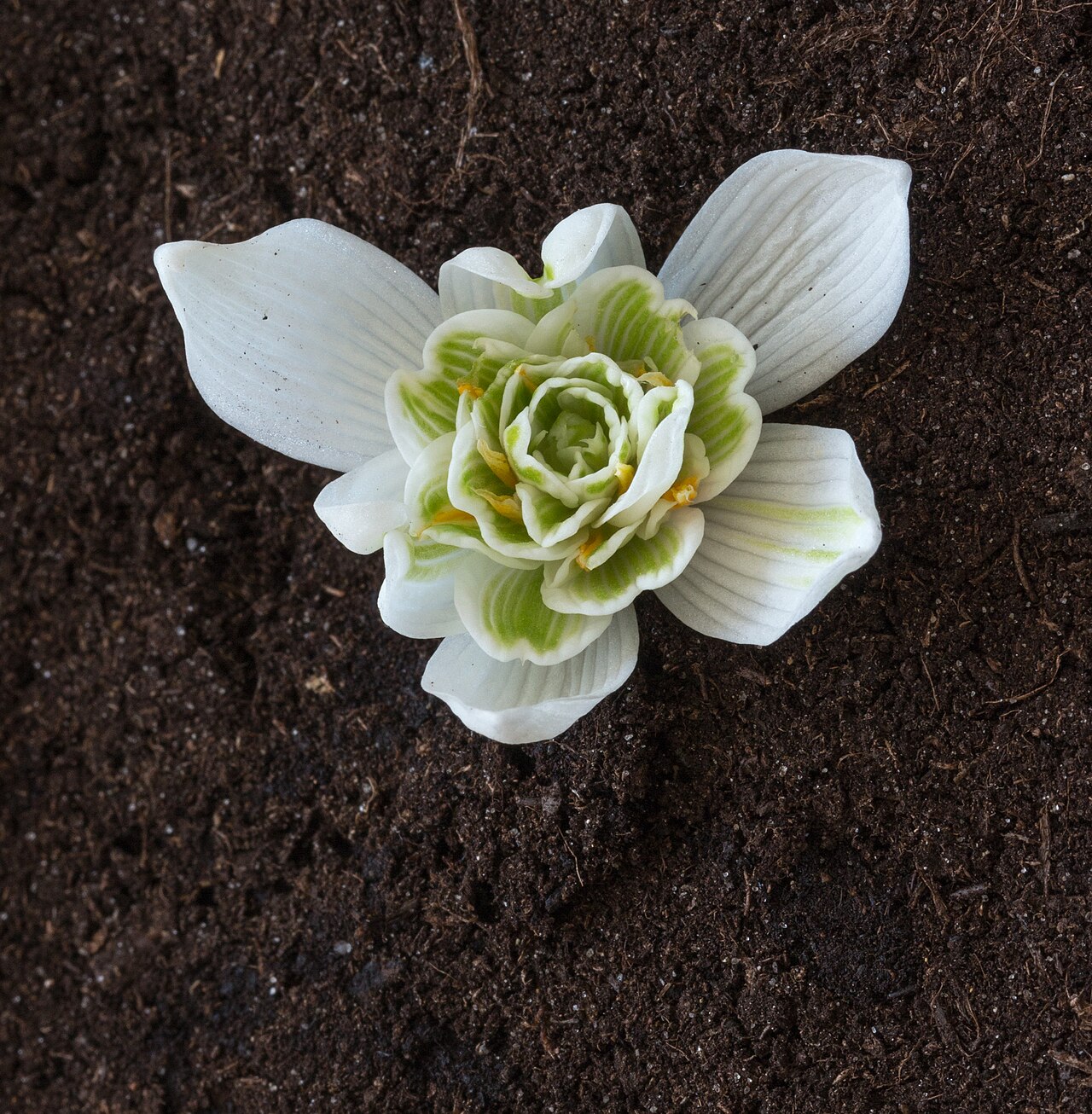
- Flore Pleno Snowdrop — The double snowdrop: rosette-like double white bells — the snowdrop that looks like a tiny white rose in late winter.
- S. Arnott Snowdrop — The big snowdrop: large, honey-scented single bells on tall stems — the snowdrop collectors plant by the hundred.
- Viridapice Snowdrop — The green-tipped snowdrop: white bells with a green blotch on every outer petal — the snowdrop with a secret handshake.