
💙 Camassia
What it looks like
How to grow
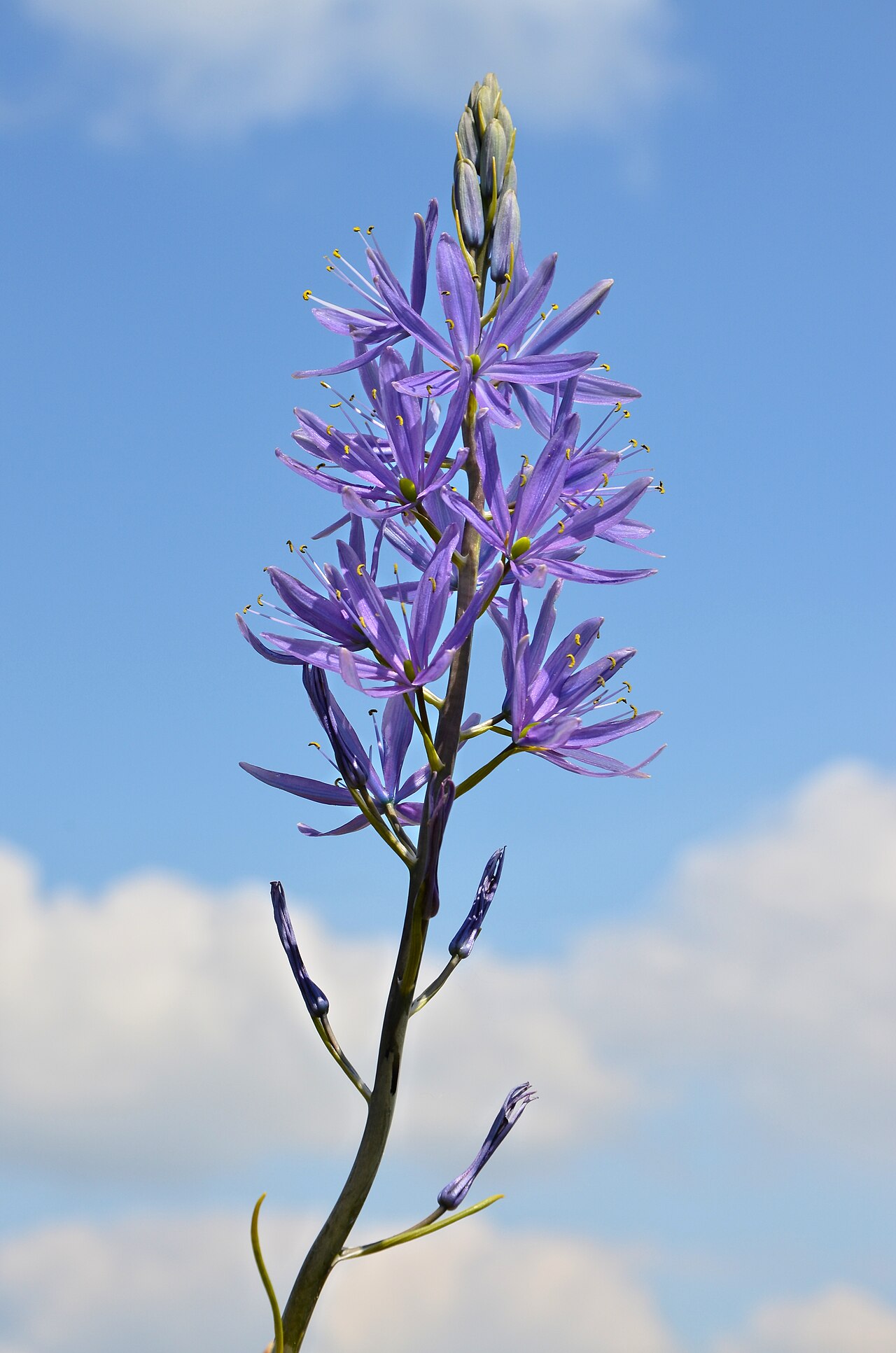
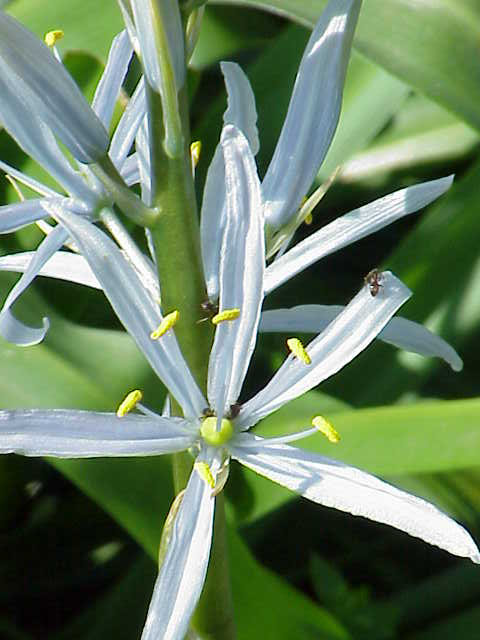
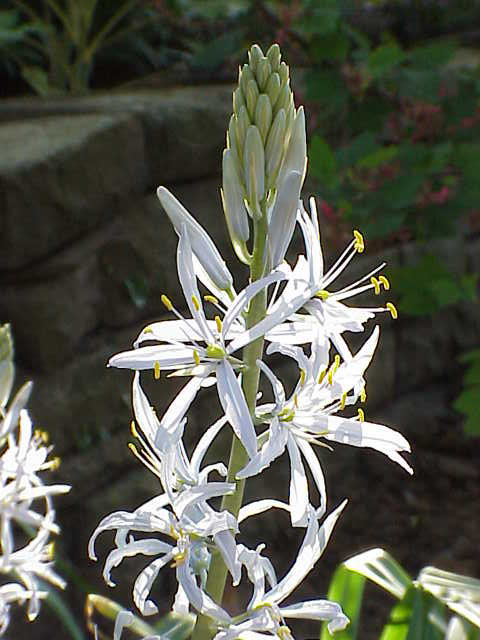
Camassia, or camas, is a North American native bulb that grows 2–4 feet tall with grassy leaves and tall spikes of star-shaped flowers in blue, violet, or white in late spring — a meadow plant that looks spectacular massed in drifts, naturalized in grass, or at the edge of a rain garden. Plant bulbs in fall, 4–6 inches deep and 6–12 inches apart, in full sun to part shade in moist, rich soil that stays damp through spring; camas tolerates seasonal wetness that would rot tulips, and it actually prefers soil that does not dry out until summer. It is slower to bulk up than daffodils, but colonies persist for decades once settled. Note the look-alike warning: camas is edible (a traditional Native food), but the poisonous death camas (Toxicoscordion) looks similar — never eat bulbs you did not plant and identify with certainty; this guide is for ornamental growing only.
Water & feeding
Keep soil moist through spring growth and bloom; camas wants damp spring soil and then tolerates summer dryness as it goes dormant. Feed with compost in fall. Do not mow or cut foliage until it yellows fully, especially in meadow plantings.
Common problems
- Bulbs rotting — rare; camas tolerates wet spring soil, but stagnant water still harms.
- Slow to bulk up — patience; colonies build over years.
- Foliage cut too early — let leaves yellow so bulbs recharge.
- Confusion with death camas — do not eat any wild bulb; grow only nursery stock for ornament.
Notes
Leave bulbs undisturbed to naturalize; divide only when clumps get crowded, in fall after foliage dies back. In a meadow, delay mowing until foliage yellows in early summer. Camas pairs beautifully with late tulips, alliums, and ornamental grasses that fill in as its foliage fades.
Browse all plant & pest guides
Saving seeds
Camas is a plant that rewards the gardener who can think in years, not weekends. After the blue stars fade, resist the urge to deadhead everything: the seed capsules that follow are your next generation, and they are worth the wait. Let the capsules ripen on the plant until they turn yellow-brown and split to reveal firm, dark seeds, then cut the whole head and shake or crush it gently over a tray. If you are collecting from a wild population rather than your own garden, get permission first and take no more than a tenth of what is there — the creatures that depend on that seed need their share, and the meadow needs its own reseeding.
Cleaning is simple: winnow away the light chaff and keep the plump, dark seeds. Dry them thoroughly before storage, and store them cool and dry — dry seed held near refrigerator temperature keeps for roughly two to five years, so a labeled paper envelope inside a sealed jar in the fridge is a perfectly respectable seed bank. Florida humidity is the enemy here, as always: dry the seed completely, then seal it airtight with a desiccant packet, or a damp Florida summer will quietly do your seeds in.
Now the part that separates camas from your average packet seed: dormancy. Camas seed will not simply wake up because you planted it. It needs a cold, moist winter first, and sources disagree on exactly how long — published figures range from about six weeks to around a hundred days of cold, moist stratification. The practical fix is to aim long rather than short: mix the seed with damp sand or vermiculite in a sealed bag, refrigerate for about three months, keep the medium moist, and discard anything that molds. Or skip the fridge entirely and sow outdoors in fall, letting a real winter do the work — the traditional method, and the reason fall sowing is the preferred route wherever winters are genuinely cold. Sow shallowly, keep the bed moist, and look for grass-like seedlings in spring; they need steady moisture through their first growing season, and hot, dry spells can be lethal to babies.
Isolation is barely a worry for the home gardener: different camas species can cross, but unless you are running a breeding program, a mixed drift of blue is a feature, not a flaw. Seedlings do grow true to species in the broad sense, but they take their time about everything — expect three to four years from seed to first flower. That is not a flaw in the seed; it is a bulb building an underground pantry one season at a time. If you want more camas sooner, divide the offsets — the baby bulbs clustered around a mature bulb — in fall, when the clump is dormant, and replant them about four inches deep. Division is instant, faithful, and the reason established clumps spread so obligingly. Florida note, honestly delivered: camas is a western bulb built for cold winters and seasonally wet meadows, so in most of Florida it is an experiment, not a sure thing. Fridge stratification is mandatory, not optional, and even then, treat seed-grown camas south of the Panhandle as a trial you are running for science, while division of an already-established clump remains your best bet.
Varieties
Every named variety of Camassia with its own growing guide:
- Alba Camassia — The white great camas: tall spikes of creamy-white stars, luminous in a spring meadow and lovely against blue camas.
- Caerulea Camassia — The tall blue camas: 3- to 4-foot spikes of deep blue stars, the classic great camas for meadows and damp borders.
- Semiplena Camassia — The double great camas: creamy-white, semi-double stars on tall spikes — the connoisseur's camas.